Introduction
In PCB assembly processes, handling printed circuit boards presents significant risks of physical damage, contamination, and component misalignment. Mechanical grippers often cause dents, scratches, or stress that lead to failures down the line. Vacuum-assisted methods offer a contact-minimal approach, using suction to lift and transport boards without applying uneven pressure. This technique aligns with the need for high-volume surface mount technology lines where precision and speed are critical. Electrical engineers must understand these systems to optimize yields and reduce rework. Vacuum PCB pick and place systems exemplify how gentle handling integrates seamlessly into automated workflows.
What Is Vacuum-Assisted PCB Handling and Why It Matters
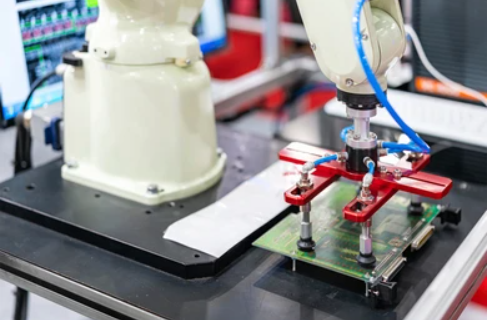
Vacuum-assisted PCB handling involves using suction cups or pads connected to a vacuum source to grip and move boards during assembly stages like loading, inspection, or transfer between machines. Unlike edge clamps or mechanical fingers, this method distributes holding force evenly across designated areas, reducing localized stress. It proves essential in preventing warpage exacerbation, especially for thin flex boards or those with high component density. Damage from mishandling accounts for substantial yield losses, often manifesting as microcracks or delamination post-reflow. Adhering to IPC-1601A guidelines emphasizes protecting boards from physical harm throughout the supply chain, extending into assembly. For electrical engineers, mastering suction cup PCB handling ensures compliance with quality benchmarks while boosting throughput.
The relevance intensifies with shrinking component pitches and multilayer designs, where even minor board flexure can displace parts or compromise solder joints. Non-marring PCB handling tools like soft-material suction cups prevent residue transfer or surface abrasion. Ultimately, these techniques safeguard electrical performance, minimizing field failures in end products.
Technical Principles Behind Vacuum PCB Pick and Place
Vacuum systems operate on the principle of differential pressure, where a pump creates negative pressure inside a sealed cup pressed against the PCB surface. This generates an attractive force proportional to the cup area and vacuum level, calculated as force equals pressure difference times effective area. Engineers select cup diameters based on board size and weight, ensuring sufficient hold without excessive pull-down that could warp substrates. Airflow control valves regulate vacuum buildup and release, preventing sudden jolts that shift components. Gentle PCB handling techniques incorporate porous or multi-zone pads to accommodate surface irregularities like solder mask textures.
Key to success lies in material selection for suction cups, favoring elastomers with low durometer ratings for compliance. Silicone or polyurethane variants conform to contours without marking copper traces or soldermask. ESD-safe formulations further protect sensitive circuits from charge buildup during contact. System feedback sensors monitor vacuum levels in real-time, adjusting for leaks or contamination. This closed-loop approach maintains consistent grip across production runs.
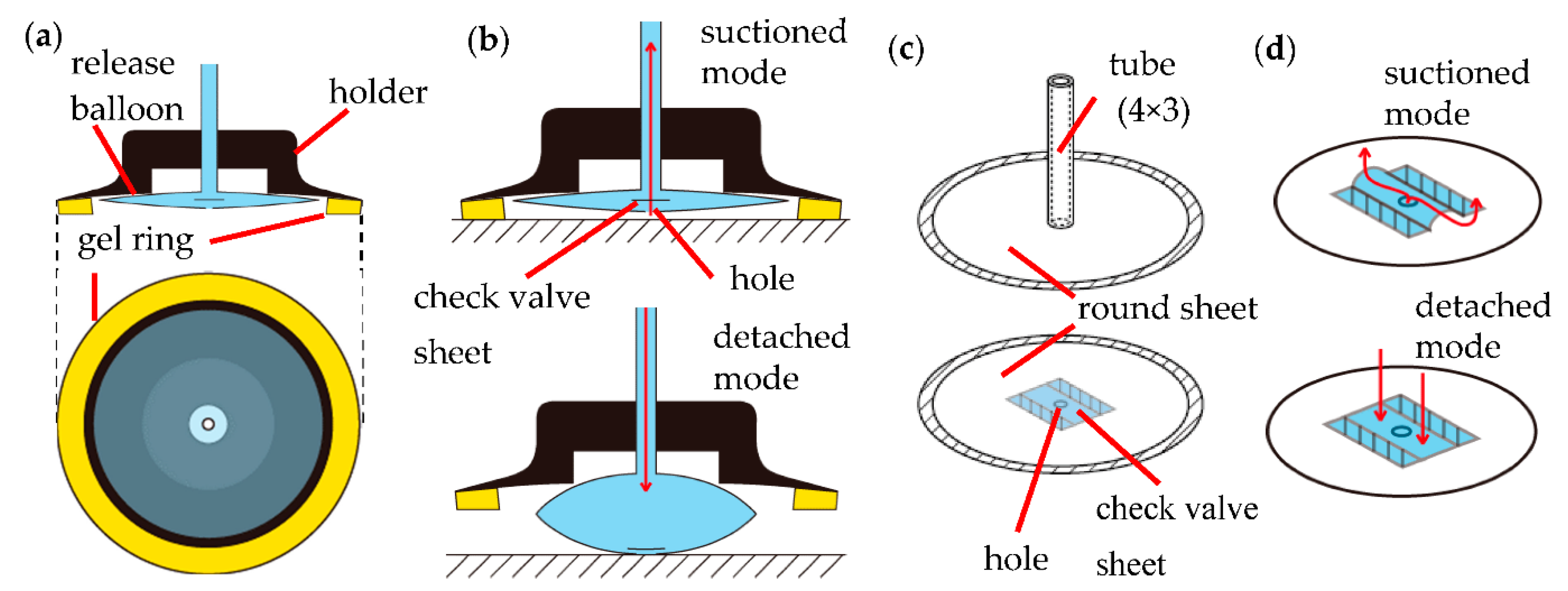
Suction Cup PCB Handling: Materials and Design for Non-Marring Performance
Non-marring PCB handling tools rely on specialized suction cup designs that prioritize surface integrity. Flat or bellows-style cups distribute vacuum uniformly, avoiding high-pressure points that dent thin boards. Materials like mark-free nitrile or urethane resist aging and chemical degradation from flux residues, ensuring longevity. Engineers troubleshoot cup selection by matching hardness to board rigidity; softer compounds suit rigid FR-4, while firmer ones handle flex circuits without slippage.
Cup geometry influences performance, with lip profiles optimized for sealing on glossy or matte finishes. Multi-cup arrays enable parallel handling of larger panels, reducing cycle times in high-mix lines. Regular inspection for tears or hardening prevents failures mid-process. Vacuum generators, often venturi-based, provide rapid response without bulky pumps. These elements combine to deliver reliable, damage-free transport.
Preventing Component Displacement with Gentle PCB Handling Techniques
Component displacement poses a primary risk during board handling post-paste printing or partial population. Excessive vacuum can draw loose parts inward or lift them slightly, misaligning before reflow. Preventing component displacement requires calibrated release sequences, where vacuum ramps down gradually to avoid suction rebound. Low-profile cups positioned in component-free zones, such as panel borders, minimize interference. Vision-guided systems verify placement integrity pre- and post-handling.
Board fixturing with vacuum pallets flattens warped substrates, stabilizing assemblies under suction. IPC-A-610 criteria classify such displacements as defects, underscoring the need for controlled forces. Troubleshooting involves logging vacuum profiles correlated with displacement rates, refining parameters iteratively. Hybrid mechanical-vacuum grippers offer redundancy for heavy boards. These strategies ensure preplaced components remain secure through transfers.
Best Practices for Implementing Vacuum-Assisted Systems
Start with workspace mapping to identify handling hotspots, prioritizing vacuum over clamps where feasible. Train operators on cup cleaning protocols, using isopropyl alcohol wipes to remove particulates without residue. Implement vacuum level thresholds, typically tuned via test lifts on production-like boards. Monitor system health with pressure transducers alerting to drops indicating wear. Integrate with conveyor systems for seamless handoffs, using soft-lip cups at transitions.
For populated boards, employ edge-only suction to bypass active areas entirely. Periodic audits per IPC-1601A verify handling integrity, checking for unseen stresses via dye penetrant or x-ray. Customize cup arrays for panel sizes, balancing hold force against acceleration forces in robotic motion. ESD grounding of vacuum lines prevents charge transfer. Document baseline yields pre-implementation to quantify improvements.
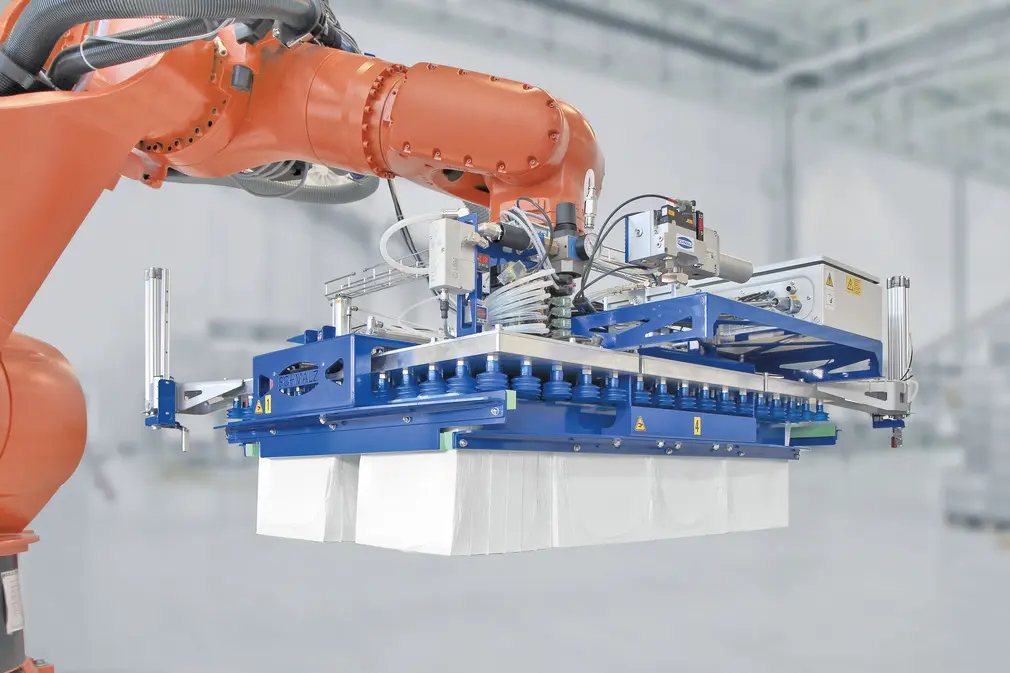
Troubleshooting common pitfalls includes addressing leaks from warped surfaces by using adaptive bellows cups. Overly aggressive vacuum triggers component pop-off; dial back via regulators while testing hold times. Contaminated cups leave oily films, promoting outgassing in reflow; enforce daily swaps. Uneven board thickness demands zoned vacuum to equalize pressure.
Conclusion
Vacuum-assisted PCB handling revolutionizes assembly by delivering precise, damage-free transport essential for modern electronics. From suction cup selection to pressure control, these methods address scratches, dents, and displacements head-on. Electrical engineers benefit from higher yields and reliable performance when integrating non-marring tools thoughtfully. Best practices grounded in standards like IPC-1601A ensure consistency across operations. Adopting gentle PCB handling techniques positions teams for scalable, high-quality production. Prioritize system tuning and maintenance to unlock full potential.
FAQs
Q1: What are the main advantages of vacuum PCB pick and place over mechanical grippers?
A1: Vacuum systems provide uniform, non-contact force distribution, eliminating dents and scratches common with grippers. They excel in handling thin or warped boards without inducing stress cracks. Suction cup PCB handling supports faster cycle times in automation while preventing component displacement through controlled release. Maintenance focuses on cup integrity, aligning with IPC guidelines for minimal downtime.
Q2: How do non-marring PCB handling tools prevent surface damage?
A2: These tools use soft elastomers like silicone that conform without abrasion, avoiding residue on soldermask or traces. Flat profiles ensure even vacuum, reducing peak pressures that mark boards. Regular cleaning sustains performance, preventing flux buildup. Engineers select based on board finish for optimal sealing. This approach meets acceptability standards for clean assemblies.
Q3: What techniques prevent component displacement during vacuum handling?
A3: Position cups in barren zones and use gradual vacuum ramp-down to avoid rebound effects. Vision feedback confirms stability post-lift. Low-vacuum pallets flatten boards pre-transfer, minimizing shift risks. Calibrate for board mass and acceleration. Troubleshooting logs correlate parameters with incidents for refinement. Gentle PCB handling techniques prioritize these for populated boards.
Q4: When should suction cup PCB handling be avoided?
A4: Avoid on heavily contaminated or excessively porous surfaces where sealing fails, risking drops. Populated boards with tall, loose components demand edge-only grips. Extreme warpage may require mechanical assist first. Test compatibility on samples. Standards like IPC-A-610 guide defect thresholds to inform decisions.
References
IPC-1601A — Printed Board Handling and Storage Guidelines. IPC, 2016
IPC-A-610G — Acceptability of Electronic Assemblies. IPC, 2017