Introduction
Potting plays a vital role in protecting electronic components from environmental and mechanical stresses. This process involves encasing delicate circuits in a protective material, often a resin or silicone compound, to ensure stabilization, insulation, and resistance to harsh conditions. For electric engineers, understanding potting is essential, as it directly impacts the reliability and longevity of electronic assemblies in diverse applications. From automotive systems to industrial controls, potting safeguards components against moisture, vibration, and thermal extremes. This article explores the significance of potting for electronic components, focusing on its contributions to stabilization, insulation, thermal conductivity, and resistance. By diving into the technical principles and practical applications, we aim to provide a comprehensive guide for engineers seeking to optimize their designs for durability and performance.
What is Potting and Why Does It Matter?
Potting refers to the process of filling an electronic assembly with a protective compound, typically a liquid resin that hardens into a solid barrier. This technique encapsulates components, shielding them from external factors like dust, moisture, and mechanical shock. For electronic components, potting is critical because it enhances durability in environments where failure is not an option. Industries such as aerospace, automotive, and telecommunications rely on potted assemblies to maintain functionality under extreme conditions. Without proper potting, components risk corrosion, short circuits, or physical damage, leading to costly repairs or system downtime. By providing stabilization and insulation, potting ensures that electronic components perform consistently, even in challenging settings. Its importance cannot be overstated for engineers aiming to meet stringent reliability standards.
Technical Principles of Potting for Electronic Components
Stabilization of Components
Stabilization is a primary benefit of potting for electronic components. During operation, electronic assemblies often face vibration and mechanical stress, especially in automotive or industrial applications. Potting compounds create a rigid or semi-rigid enclosure around components, holding them in place and minimizing movement. This reduces the risk of solder joint fatigue or wire disconnections. The compound absorbs shock, preventing physical damage to delicate parts like capacitors or integrated circuits. Engineers must select materials with appropriate hardness and flexibility to balance protection and stress distribution, ensuring long-term stability without cracking under thermal expansion.
Insulation Against Electrical Failures
Insulation is another critical function of potting. Electronic components are vulnerable to electrical shorts caused by moisture, dust, or conductive contaminants. Potting materials, often with high dielectric strength, form a barrier that prevents current leakage between adjacent conductors. This is particularly important in high-voltage applications where arcing could lead to catastrophic failure. Standards such as IEC 60664-1:2021, which addresses insulation coordination for equipment within low-voltage systems, provide guidelines for selecting materials with adequate insulating properties. Proper insulation through potting extends the lifespan of components by mitigating risks of electrical breakdown in humid or corrosive environments.
Thermal Conductivity for Heat Management
Thermal conductivity is a key consideration in potting, as electronic components generate heat during operation. Excessive heat can degrade performance or cause failure if not dissipated effectively. Some potting compounds are formulated with fillers to enhance thermal conductivity, allowing heat to transfer away from critical components. This is vital for power electronics or densely packed circuits where overheating is a concern. Standards like ASTM D5470-17, which outlines test methods for thermal transmission properties of insulating materials, help engineers evaluate the effectiveness of potting materials in managing heat. Choosing a compound with suitable thermal conductivity ensures components operate within safe temperature ranges.
Resistance to Environmental Factors
Resistance to environmental hazards is a cornerstone of potting's protective role. Electronic components often face exposure to moisture, chemicals, and temperature extremes, which can lead to corrosion or material degradation. Potting compounds create a sealed environment, blocking ingress of water or corrosive agents. They also provide resistance to thermal cycling, preventing cracks or delamination during temperature fluctuations. Guidelines from JEDEC J-STD-020E:2014, which addresses moisture and reflow sensitivity, highlight the importance of protective barriers in maintaining component integrity. By enhancing resistance, potting ensures reliability in harsh conditions, from marine environments to industrial plants.
Practical Solutions and Best Practices for Potting
Selecting the Right Potting Material
Choosing the appropriate potting material is crucial for achieving desired protection levels. Epoxy resins offer high strength and excellent insulation but may be rigid, risking stress on components during thermal expansion. Silicone compounds provide flexibility and better thermal resistance, ideal for applications with wide temperature swings. Polyurethane materials balance durability and flexibility, often used in vibration-prone settings. Engineers must assess the operating environment, electrical requirements, and mechanical stresses when selecting a compound. Testing material properties against standards like ASTM D257-14 for dielectric strength ensures compatibility with design needs.
Application Techniques for Optimal Coverage
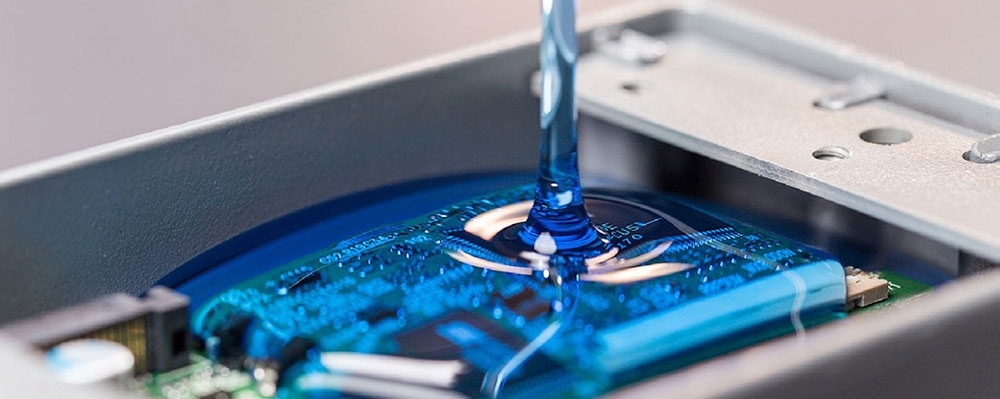
Effective potting requires precise application to avoid voids or incomplete coverage. Vacuum potting is a common method, removing air bubbles to ensure the compound fully encapsulates components. This technique is particularly useful for complex assemblies with tight spaces. Gravity potting, where the compound flows naturally over components, suits simpler designs. Engineers should follow controlled curing processes, adhering to manufacturer guidelines for temperature and time, to prevent defects like cracking. Proper surface preparation, including cleaning components to remove contaminants, enhances adhesion and sealing.
Design Considerations for Potted Assemblies
Incorporating potting into the design phase optimizes outcomes. Engineers should account for the compound's weight and volume, ensuring it does not interfere with enclosure dimensions or add excessive bulk. Providing adequate space for the material to flow around components prevents trapping air. Designing for thermal dissipation, such as integrating heat-conductive paths, complements the potting material's properties. Compliance with IPC-6012E:2020, which specifies performance requirements for rigid printed boards, ensures that potted assemblies meet industry benchmarks for reliability and structural integrity.
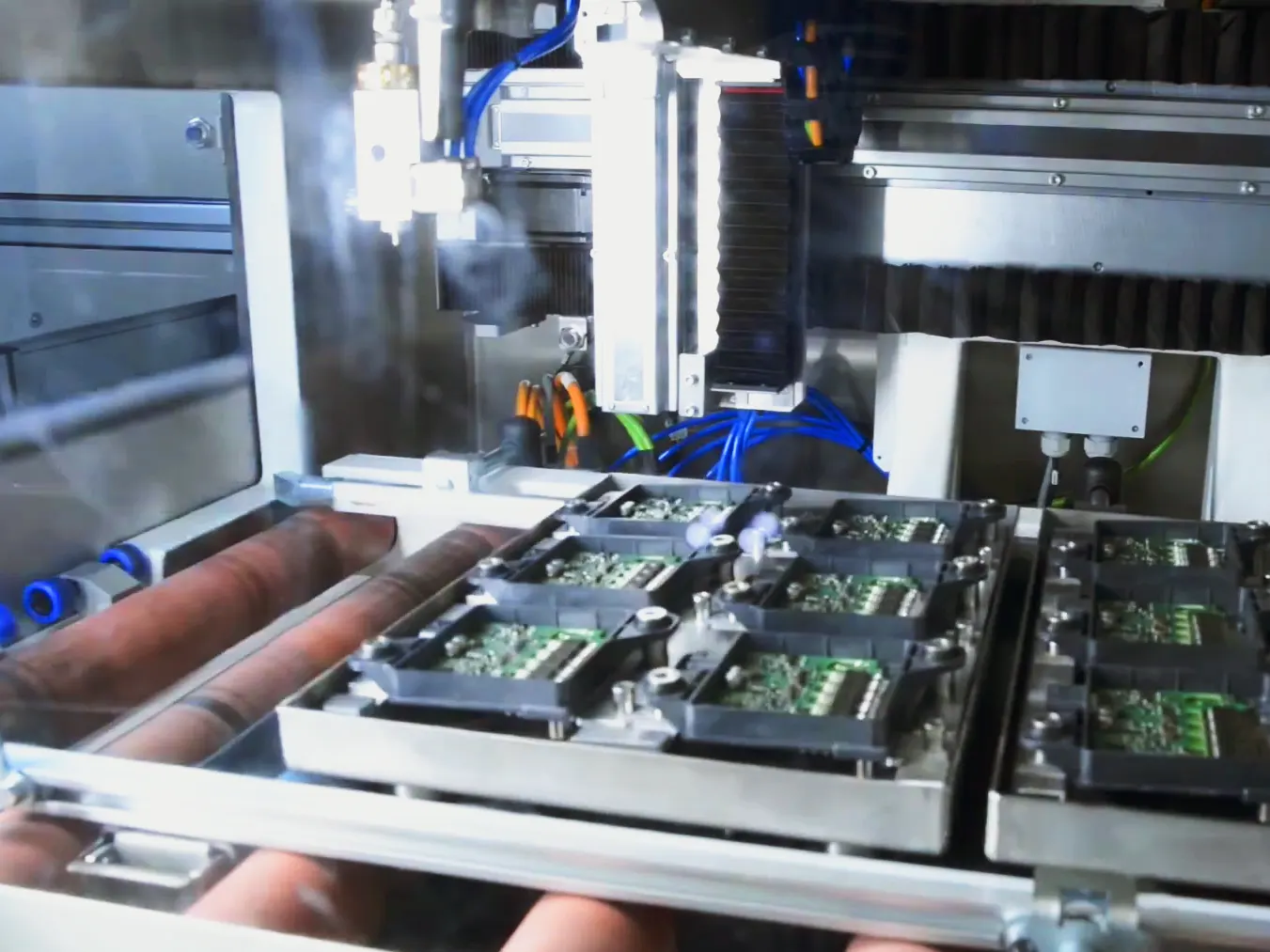
Testing and Validation of Potted Components
Post-potting validation is essential to confirm protection levels. Environmental testing, including thermal cycling and humidity exposure, assesses resistance to real-world conditions. Electrical testing verifies insulation by measuring dielectric strength and leakage current. Standards like IPC-A-600K:2020, which covers acceptability criteria for printed boards, provide a framework for evaluating potted assemblies. Engineers should document test results to identify potential weaknesses in material selection or application methods, refining processes for future projects.
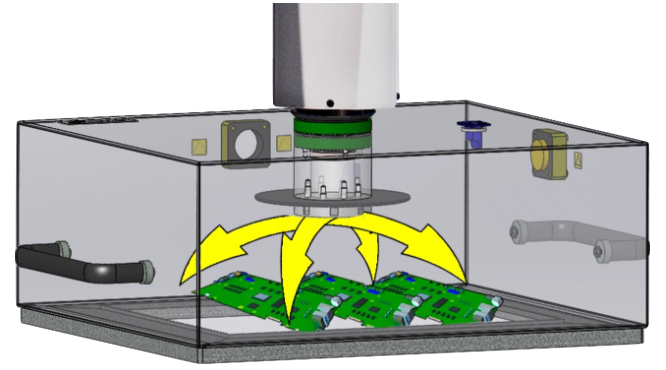
Troubleshooting Common Potting Challenges
Potting, while beneficial, can present challenges that electric engineers must address. Incomplete curing may lead to soft spots or poor adhesion, often due to incorrect mixing ratios or insufficient curing time. Adjusting environmental controls during curing resolves this issue. Air entrapment, causing voids, compromises insulation and stabilization. Using vacuum potting or degassing the compound before application minimizes this risk. Thermal mismatch between the potting material and components can induce stress, leading to cracks. Selecting materials with compatible thermal expansion coefficients, guided by standards like JEDEC J-STD-020E:2014, mitigates this concern. Regular inspection and testing ensure early detection of such issues.
Conclusion
Potting stands as a fundamental process for safeguarding electronic components against a range of threats, from mechanical stress to environmental hazards. By providing stabilization, insulation, thermal conductivity, and resistance, it ensures that assemblies perform reliably in demanding conditions. Electric engineers benefit from understanding the technical principles behind potting, selecting appropriate materials, and applying best practices in design and testing. Adherence to recognized standards guarantees that potted components meet rigorous industry expectations. As technology advances, potting remains a cornerstone of durable electronic design, enabling innovation across diverse sectors.
FAQs
Q1: How does potting improve stabilization of electronic components?
A1: Potting enhances stabilization by encasing electronic components in a protective compound, reducing movement during vibration or mechanical stress. This prevents damage to solder joints or delicate parts in harsh environments like automotive systems. Materials are chosen for their ability to absorb shock while maintaining structural integrity. Following proper application techniques ensures even coverage, providing consistent support across the assembly.
Q2: What role does insulation play in potting for electronic components?
A2: Insulation through potting protects electronic components from electrical shorts caused by moisture or contaminants. High dielectric strength materials form a barrier, preventing current leakage in high-voltage settings. This is critical for avoiding failures in humid or dusty conditions. Standards like IEC 60664-1:2021 guide material selection to ensure reliable insulation, extending component lifespan.
Q3: Why is thermal conductivity important in potting materials?
A3: Thermal conductivity in potting materials helps dissipate heat generated by electronic components, preventing overheating. Compounds with conductive fillers transfer heat away from critical areas, maintaining safe operating temperatures. This is vital for power electronics or compact designs. Testing per ASTM D5470-17 ensures the material's effectiveness, supporting performance and reliability in heat-intensive applications.
Q4: How does potting enhance resistance to environmental factors?
A4: Potting boosts resistance by sealing electronic components against moisture, chemicals, and temperature extremes. This barrier prevents corrosion and material degradation in harsh settings like marine or industrial environments. It also withstands thermal cycling without cracking. Adhering to guidelines like JEDEC J-STD-020E:2014 ensures components remain protected, maintaining functionality under challenging conditions.
References
IPC-6012E:2020 — Qualification and Performance Specification for Rigid Printed Boards. IPC, 2020.
IPC-A-600K:2020 — Acceptability of Printed Boards. IPC, 2020.
JEDEC J-STD-020E:2014 — Moisture/Reflow Sensitivity Classification. JEDEC, 2014.
IEC 60664-1:2021 — Insulation Coordination for Equipment within Low-Voltage Systems. IEC, 2021.
ASTM D5470-17 — Standard Test Method for Thermal Transmission Properties of Thermally Conductive Electrical Insulation Materials. ASTM, 2017.
ASTM D257-14 — Standard Test Methods for DC Resistance or Conductance of Insulating Materials. ASTM, 2014.