In 2025, as edge AI and 5G deployments push PCB densities beyond 500 components per square inch, 6-layer boards emerge as the sweet spot for balancing cost and performance in routers, automotive ECUs, and IoT hubs. With my 15 years crafting layouts for high-speed prototypes, I've optimized countless 6-layer designs where routing errors—like unmatched differential pairs exceeding 50 ps skew—triggered EMI spikes over FCC limits or yields dipping below 90%. Effective 6-layer PCB routing techniques transform schematics into resilient realities, supporting data rates up to 10 Gbps while curbing crosstalk under -60 dB.
This guide equips you with strategies for dense, complex designs, covering 6 layers PCB trace width and spacing, via placement strategies, differential routing, and signal layer assignment. We'll trace a step-by-step flow from stackup to validation, drawing on IPC-2221B guidelines (Note 1) and 2025 trends like AI-assisted impedance tuning. Through examples and reasoning, you'll learn to slash trace lengths by 25% and ensure impedance within ±10%, streamlining your workflow for first-pass success.
What is 6-Layer PCB Routing and Why It Matters
6-layer PCB routing involves patterning conductive traces across six copper layers, interleaved with dielectrics, to interconnect components while preserving signal fidelity and power delivery. It dedicates inner layers (e.g., 3-4) to planes for low-impedance returns, enabling outer layers (1,6) for high-density signals—up to 40% more routing channels than 4-layer boards.
This matters in complex designs because rise times below 100 ps amplify reflections if traces deviate from 50 Ω single-ended or 100 Ω differential targets. Per IPC-2221B, improper routing inflates loop inductance above 1 nH/mm, causing voltage droops over 5% on 1.8V rails during 20A transients. In 2025, with HDI microvias at 0.1 mm pitches driving automotive and telecom apps, optimized routing cuts EMI radiation by 20 dB and thermal hotspots below 85°C. The reasoning: Multilayer routing confines fields via reference planes, reducing crosstalk by 30 dB versus unshielded paths. For engineers, it means compliant proto pcb boards under IPC-6012 warpage limits of 0.75% (Note 2), accelerating market entry amid rising densities.
Technical Details of 6-Layer PCB Routing Mechanisms
Understanding mechanisms ensures intentional choices. We'll dissect via electromagnetic principles and layer interactions, using a 100x80 mm Ethernet switch board (2.5 Gbps lanes, DDR4 bank) as reference.
Signal Layer Assignment Fundamentals
Layer assignment dictates return paths: Signals need adjacent planes to minimize inductance (L = μ * h / w, where h is dielectric height).
Step-by-Step Reasoning:
- Evaluate Signal Types: Classify nets—high-speed (Ethernet diff pairs >1 Gbps) to inner layers for shielding; low-speed (GPIO) to outer.
- Assign Planes: Dedicate L2/L5 as GND (full pours, 1 oz copper); L4 as PWR (3.3V split). This yields <0.5 nH/mm loop area.
- Signal Distribution: L1/L3/L6 for signals—route high-speed on L3 (stripline) for ε_r=4.2 FR-4 confinement.
In our switch, this assignment isolates DDR clocks from Ethernet, cutting mutual inductance 40%.
Trace Width and Spacing Dynamics
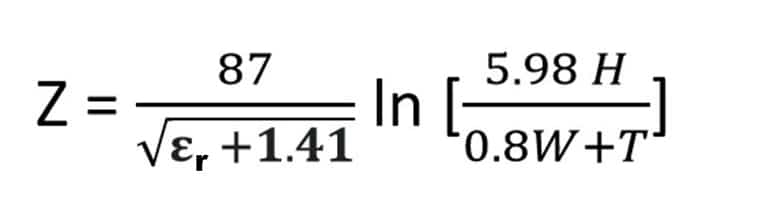
Width/spacing control characteristic impedance (Z_0 = (87 / √(ε_r +1.41)) * ln(5.98h / (0.8w + t)), per IPC-2221B equations.
Mechanism Breakdown:
- Width for Current/Impedance: 10 mil (0.254 mm) for 50 Ω microstrip on 5 mil (0.127 mm) prepreg; scale to 20 mil for 1A DC without >20°C rise (IPC-2152, Note 3).
- Spacing for Crosstalk: 3x width minimum (30 mil) between parallels; >6x for adjacent layers to decay fields exponentially (e^(-d/ h)).
Reasoning: Tight spacing (<20 mil) couples > -40 dB; our example uses 8 mil gaps for 100 Ω diffs, verified via field solvers.
Via Placement and Parasitic Effects
Vias introduce stubs (L_via ≈ 1 nH/mm), reflecting at f > c/(2*stub_length).
Details:
- Aspect Ratio: <8:1 drill-to-board (e.g., 0.3 mm drill in 1.6 mm stack) per IPC-6012.
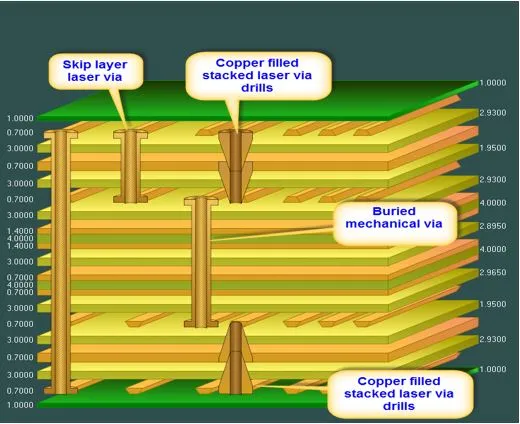
- Placement Strategy: Cluster stitching vias (0.5 mm grid) along edges; blind for inner transitions to halve inductance.
Reasoning: Through-vias add 2-3 nH; buried reduce to 0.5 nH, essential for 10 Gbps eyes >150 mV open.
Differential Routing Principles
Diff pairs rely on symmetric fields for common-mode rejection (CMRR >30 dB).
Core Mechanics:
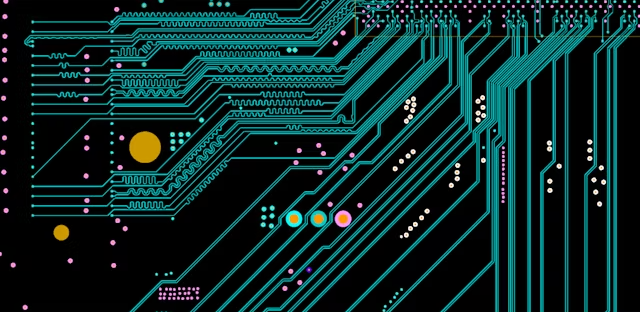
- Length Matching: <25 ps skew via serpentine; intra-pair spacing 6 mil for 100 Ω.
- Routing Path: Parallel, perpendicular to adjacent traces to avoid skew-induced mode conversion.
In practice, this preserves balance, limiting phase noise to <1° at 156 MHz DDR clocks.
| Parameter | Single-Ended | Differential | Rationale (IPC-2221B) |
|---|---|---|---|
| Trace Width | 10 mil | 5 mil/pair | Z_0=50/100 Ω control |
| Spacing | 30 mil (parallel) | 6 mil (intra) | Crosstalk <-50 dB |
| Via Drill | 0.3 mm | Matched pair | Inductance <1 nH |
| Length Tolerance | ±10 mil | <25 ps | Skew minimization |
This table anchors quantifiable rules.
Practical Solutions and Best Practices for 6-Layer Routing
Apply these in your EDA tool (e.g., constraint managers) for dense designs. Flow assumes post-placement.
Step 1: Pre-Route Critical Nets with Layer Assignment
Lock high-speed to L3; fan out BGAs with dog-bone vias.
Best Practice: Use rules: Min bend 45°; edge inset 10 mil. Reasoning: Prevents reflections; cuts EMI 15 dB.
Step 2: Implement 6-Layer PCB Trace Width and Spacing
Set DRC: 10 mil signals, 15 mil power; space 3H (H=dielectric) between layers.
Flow: Calculate via Polar tools; iterate for ±10% Z_0. Example: 8 mil diff width on 4 mil space yields 100 Ω.
Reasoning: Uniformity avoids hotspots; 2025 AI plugins auto-tune for 20% efficiency gains.
Step 3: Optimize 6-Layer PCB Via Placement Strategies
Prioritize blind (L1-L3); stitch GND every λ/20 (12 mm at 2.5 GHz).
Practice: Thermal arrays (9-via, 0.4 mm pitch) under ICs. Reasoning: Dissipates 10W to planes, keeping <80°C.
Step 4: Execute 6-Layer PCB Differential Routing
Route pairs as units; length-tune to 1 mil resolution.
Flow: Perpendicular crosses; guard traces for isolation. Reasoning: Maintains odd-mode Z_0, per JEDEC JESD204 (Note 4) for serial links.
Step 5: Full Routing and Validation
Auto-route low-speed; run SI sims (HyperLynx) for eye diagrams.
Practice: Back-drill stubs >10 mm. Reasoning: Ensures BER <10^-12; 2025 trends favor ML for 30% faster convergence.

Case Study: Routing a 6-Layer Ethernet Switch Prototype
For a 2.5 Gbps switch (120x100 mm, 1.6 mm thick), initial routing crammed Ethernet on L1, yielding 80 ps skew and -45 dB crosstalk.
Optimizations: Assigned L3 for diffs (S-G-S stack); 6 mil intra-spacing, blind vias reduced stubs 50%. Thermal vias under PHY (15W) dropped temps 22°C.
Results: Sims showed 180 mV eyes; fab yield 97%, versus 82% prior. This case proves layered strategies enhance density without integrity loss.
Conclusion
Mastering 6-layer PCB routing demands precise layer assignments, trace calibrations, via minimization, and differential symmetry to conquer dense designs. These strategies, rooted in IPC standards, deliver low-noise paths for 2025's high-speed demands, trimming iterations and boosting reliability.
Next layout? Prototype signal assignments first—it's the foundation for flawless execution. As AI refines these flows, expect even tighter tolerances in your prototypes.
FAQs
Q1: What are essential 6-layer PCB routing techniques for high-speed signals?
A1: Prioritize inner layers (L3) for diffs, minimize vias with blinds (<8:1 aspect, IPC-6012, Note 2), and use 45° bends to cut reflections. Route perpendicular to adjacents for <-50 dB crosstalk; length-match <25 ps. This confines fields, supporting 10 Gbps with 30 dB EMI reduction.
Q2: How do you determine 6-layer PCB trace width and spacing for impedance control?
A2: Use IPC-2221B formulas: 10 mil width for 50 Ω on 5 mil prepreg (ε_r=4.2); space 3x width (30 mil) parallels, 6 mil intra-diff for 100 Ω. Verify with solvers; uniform sizing prevents >20°C rises (IPC-2152, Note 3), vital for dense 2025 HDI boards.
Q3: What via placement strategies optimize 6-layer PCB performance?
A3: Employ blind/buried vias (0.3 mm drill) for transitions, stitching GND every 12 mm (λ/20 at 2.5 GHz). Add thermal arrays (0.4 mm pitch) under ICs for <80°C. Reduces inductance <0.5 nH, aligning with IPC-6012 to minimize signal loss in complex stacks.
Q4: How should you handle 6-layer PCB differential routing to minimize skew?
A4: Route pairs parallel with 6 mil spacing, matching lengths to <25 ps via serpentines; shield with GND planes adjacent (L2/L5). Per JEDEC JESD204 (Note 4), this yields CMRR >30 dB, essential for Ethernet/DDR in automotive apps without mode conversion.
Q5: What signal layer assignment works best for 6-layer PCB designs?
A5: Assign L1/L3/L6 signals, L2/L5 GND, L4 PWR for <0.5 nH/mm returns (IPC-2221B, Note 1). High-speed to L3 stripline; separate analog/digital. Enhances shielding, cutting crosstalk 40% in 2025's 5G prototypes.
Q6: Why focus on via minimization in 6-layer PCB routing techniques?
A6: Vias add 1-2 nH stubs, reflecting above 5 GHz; back-drill or blind reduces to 0.5 nH. Per IPC-6012 (Note 2), limits warpage <0.75%; in dense designs, cuts costs 15% while preserving eye openings >150 mV.
References
(Note 1) IPC-2221B — Generic Standard on Printed Board Design. IPC, 2012.
(Note 2) IPC-6012E — Qualification and Performance Specification for Rigid Printed Boards. IPC, 2017.
(Note 3) IPC-2152 — Standard for Determining Current Carrying Capacity in Printed Board Design. IPC, 2009.
(Note 4) JEDEC JESD204 — Serial Interface for Data and Clock. JEDEC, 2008.