Introduction
Through-hole components remain a cornerstone in printed circuit board assembly despite the dominance of surface-mount technology. These components feature leads that insert through drilled holes in the PCB, securing them mechanically before soldering. Electric engineers value through-hole parts for applications demanding high mechanical strength, elevated power handling, and straightforward rework. While surface-mount offers density advantages, through-hole excels in rugged environments like power electronics and prototyping. This guide explores a through-hole components list, delves into through-hole resistor types, and provides insights on through-hole capacitor selection. Understanding these elements ensures reliable designs and efficient troubleshooting.
What Are Through-Hole Components and Why Do They Matter?
Through-hole components, also known as through-hole technology or THT, involve parts with wire leads passing through plated holes on both sides of the PCB. Soldering occurs on the opposite side, creating robust electrical and mechanical connections. This method originated in early PCB designs and persists due to its reliability in high-stress scenarios. Engineers select through-hole for prototypes, high-voltage circuits, and assemblies requiring frequent modifications. Key benefits include superior heat dissipation, vibration resistance, and ease of inspection compared to surface-mount. However, larger footprints limit miniaturization, making hybrid assemblies common in modern boards.
In industry contexts, through-hole suits power supplies, automotive modules, and industrial controls where durability trumps space constraints. Troubleshooting becomes simpler as leads protrude for probing and replacement. Standards like IPC-A-610 define acceptability criteria for these solder joints, ensuring consistent quality. For electric engineers, mastering through-hole prevents common failures like barrel cracks or insufficient wetting during wave soldering.
A Comprehensive Through-Hole Components List
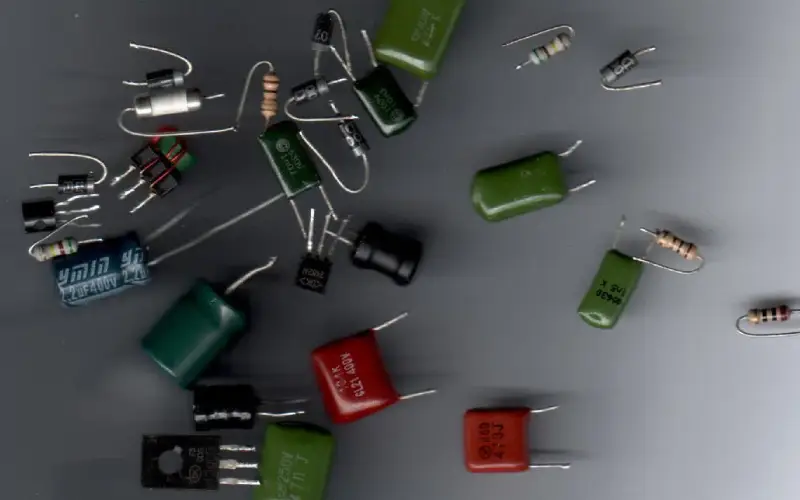
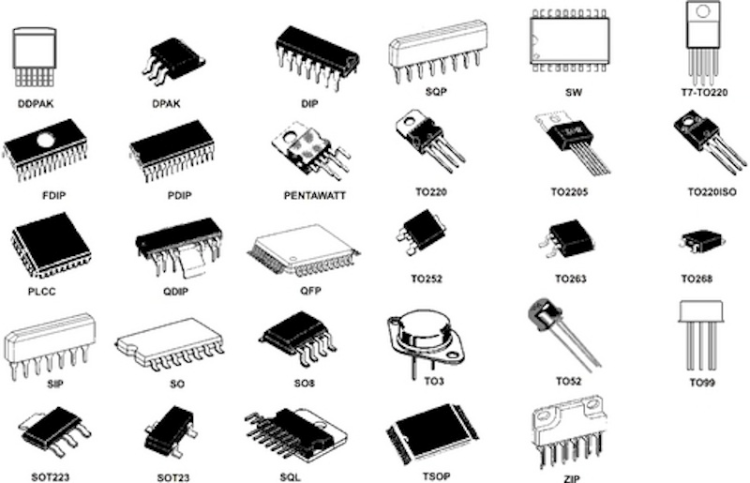
A thorough through-hole components list includes passive and active devices suited for various circuit functions. Resistors limit current, capacitors store charge, and inductors manage magnetic fields. Diodes provide rectification, transistors amplify signals, and integrated circuits handle complex logic. Connectors facilitate interfacing, while potentiometers enable adjustment. Each type demands specific hole sizing and pad geometry for optimal assembly.
Passive components dominate the list due to their simplicity and availability. Axial-leaded resistors and radial capacitors fit most boards, while DIP-packaged ICs support legacy designs. Electromechanical parts like relays and transformers add functionality in power sections. Engineers reference this list during schematic capture to balance performance and manufacturability. Hybrid boards combine through-hole with SMT for versatility.
Through-Hole Resistor Types
Through-hole resistor types vary by construction, offering trade-offs in precision, power rating, and stability. Carbon film resistors provide general-purpose use with moderate tolerance and low cost. Metal film versions deliver higher accuracy and lower noise, ideal for signal paths. Wirewound resistors handle high power dissipation through a coiled resistive wire, suiting heat-generating applications. Thick film resistors balance cost and performance for industrial controls.
Selection hinges on factors like wattage, temperature coefficient, and voltage rating. Troubleshooting tip: Inspect for color band shifts indicating overheating, common in undersized selections. Axial leads bend easily for vertical or horizontal mounting, but pre-forming prevents stress cracks. J-STD-001 outlines lead forming requirements to avoid solderability issues. Engineers pair resistor types with circuit needs, such as metal oxide for surge protection.
- Carbon Film — Low cost, 5% tolerance — General bypassing
- Metal Film — 1% tolerance, low TCR — Precision analog
- Wirewound — High power (5W+), inductive — Power supplies
- Thick Film — Stable, pulse tolerant — Automotive modules
Through-Hole Capacitor Selection Guide
Through-hole capacitor selection requires evaluating capacitance, voltage rating, ESR, and environmental factors. Electrolytic capacitors offer high capacitance in aluminum or tantalum forms, perfect for bulk storage but polarity-sensitive. Ceramic disc capacitors provide stability across frequencies with non-polar operation. Film capacitors excel in high-voltage AC circuits due to low losses and self-healing properties.
Radial leads dominate for ease of insertion, while axial suits tight spaces. Common pitfalls include derating voltage by 50% for longevity and avoiding mechanical stress on leads. For power decoupling, select low-ESR types to minimize ripple. Troubleshooting involves checking for bulging electrolytics signaling overvoltage or drying out. IPC-7251 guides land patterns to ensure reliable soldering without tombstoning.
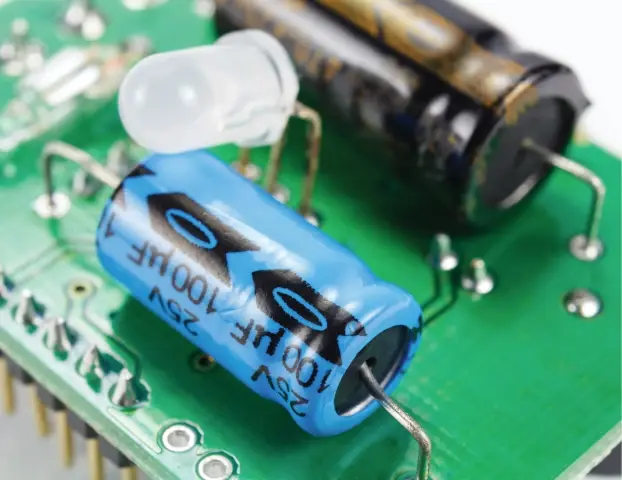
Factors influencing selection include operating temperature and ripple current. Tantalum capacitors demand careful handling to prevent ignition risks, while polyester film suits audio crossovers. Engineers simulate ESR impact on stability before committing. Proper selection extends MTBF in harsh conditions.
Key Applications of Through-Hole Components
Through-hole components thrive in high-reliability sectors like aerospace, defense, and medical devices. Power inverters use wirewound resistors and electrolytic capacitors for thermal management. Automotive ECUs incorporate DIP ICs and connectors for vibration-prone environments. Prototyping benefits from quick lead insertion and hand-soldering.
In RF applications, stable metal film resistors minimize noise, paired with mica capacitors. Legacy equipment maintenance relies on through-hole availability. Hybrid designs leverage through-hole for connectors and high-power discretes alongside SMT passives. This flexibility addresses diverse engineering challenges.
Best Practices for Through-Hole Assembly
Achieve reliable through-hole assembly by adhering to hole-to-lead ratios and solder fillet criteria. Drill holes 0.2 to 0.4 mm larger than lead diameter for easy insertion. Pre-form leads to avoid board stress, following J-STD-001 guidelines. Wave soldering demands flux application and conveyor speed control for uniform wetting.
Inspect joints per IPC-A-610 for voids, bridging, or cold solder. Preheat boards to prevent thermal shock, especially multilayer stacks. Troubleshooting cold joints involves reflow profiles matching component ratings. Automated insertion machines handle high volumes, but manual for prototypes.
Clean flux residues post-assembly to prevent corrosion. Bake hygroscopic parts before soldering to avoid popcorning.
Troubleshooting Common Through-Hole Issues
Engineers encounter lifted pads from excessive heat or poor adhesion. Verify pad size per design rules and reduce dwell time in soldering. Solder wicking up leads shortens protrusions, violating minimum length specs. Clip leads post-insertion or use standoffs.
Barrel fill under 75% indicates plating voids; cross-section analysis confirms. Vibration loosens joints without mechanical clinch. Retrofitting epoxy secures legacy boards. Systematic checks during prototyping catch issues early.
Conclusion
Through-hole components offer enduring value for demanding applications, from power handling to mechanical robustness. A solid through-hole components list, knowledge of through-hole resistor types, and precise through-hole capacitor selection form the foundation of successful designs. Best practices in assembly and troubleshooting ensure longevity. Electric engineers benefit from blending through-hole with modern techniques for optimal performance. Stay aligned with standards for quality assemblies.
FAQs
Q1: What is a through-hole components list and why is it essential?
A1: A through-hole components list catalogs parts like resistors, capacitors, diodes, transistors, and connectors designed for PCB holes. It guides procurement and design, ensuring compatibility with assembly processes. Engineers use it to match mechanical and electrical specs, avoiding mismatches that cause failures. This list supports hybrid boards, blending with SMT for versatility.
Q2: Can you explain the main through-hole resistor types?
A2: Through-hole resistor types include carbon film for cost-effective use, metal film for precision, wirewound for high power, and thick film for stability. Each suits specific needs like noise reduction or pulse handling. Select based on wattage, tolerance, and TCR to prevent overheating. Troubleshooting involves visual checks for discoloration.
Q3: How do you approach through-hole capacitor selection?
A3: Through-hole capacitor selection starts with capacitance, voltage derating, and ESR requirements. Choose electrolytic for bulk storage, ceramic for decoupling, or film for AC. Consider temperature range and lead form for assembly fit. Avoid polarity reversal in electrolytics during troubleshooting. Simulate ripple effects for reliability.
Q4: When should electric engineers prefer through-hole over SMT?
A4: Prefer through-hole for high-power, vibration-heavy, or rework-intensive applications like power supplies and prototypes. It offers better heat sinking and inspection access. Use in hybrids for connectors. Standards ensure joint integrity in harsh environments.
References
IPC-A-610H — Acceptability of Electronic Assemblies. IPC, 2018
J-STD-001GS — Requirements for Soldered Electrical and Electronic Assemblies. IPC, 2020
IPC-7251D — Generic Requirements for Through Hole Design and Land Pattern Standard. IPC, 2018