Introduction
Polytetrafluoroethylene, known as PTFE, serves as a premier substrate material for high-frequency printed circuit boards, particularly in applications demanding minimal signal loss and superior electrical performance. PTFE PCBs excel in radio frequency and microwave circuits where traditional materials like FR4 fall short due to higher dielectric losses. Engineers specify PTFE for its unique combination of low dielectric constant Dk, ultra-low loss tangent Df, and robust thermal stability, including controlled coefficient of thermal expansion CTE. These properties directly influence signal integrity, impedance control, and reliability under thermal stress. Understanding PTFE PCB dielectric constant Dk, PTFE PCB loss tangent Df, and PTFE PCB thermal expansion CTE proves essential for designing reliable high-speed systems. This article delves into these material characteristics, drawing from established industry practices.
What Are PTFE PCBs and Why Do They Matter?
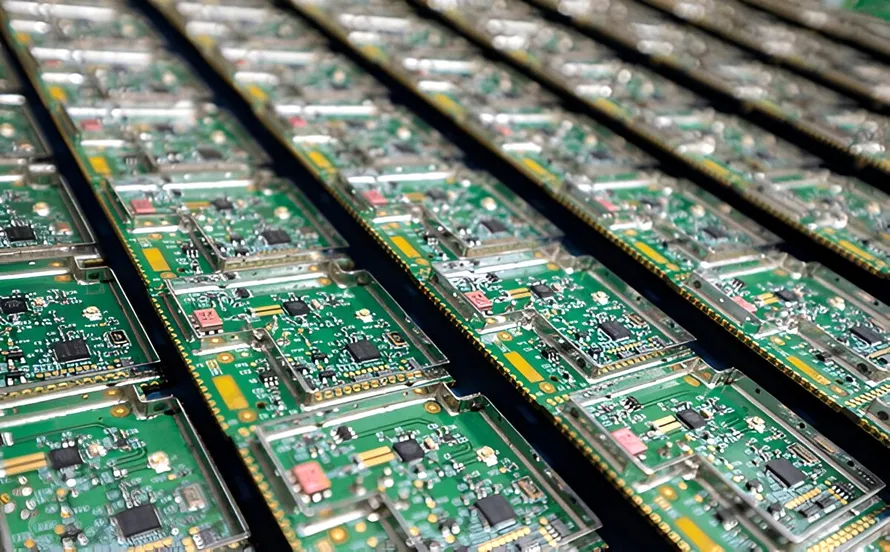
PTFE PCBs utilize polytetrafluoroethylene as the core dielectric, often reinforced or filled to enhance mechanical properties while preserving electrical advantages. Unlike epoxy-based laminates, PTFE maintains consistent performance across a broad frequency spectrum, making it ideal for 5G infrastructure, radar systems, and satellite communications. The material's inert nature resists moisture absorption and chemical degradation, ensuring long-term stability in harsh environments. Factory processes for PTFE demand specialized handling due to its softness and high thermal expansion, yet adherence to standards like IPC-4103 ensures qualification for high-speed applications. Engineers prioritize PTFE when signal speeds exceed 10 GHz, as its properties minimize attenuation and phase distortion. Ultimately, these boards enable compact, high-performance designs that standard materials cannot achieve.
Understanding PTFE PCB Dielectric Constant Dk
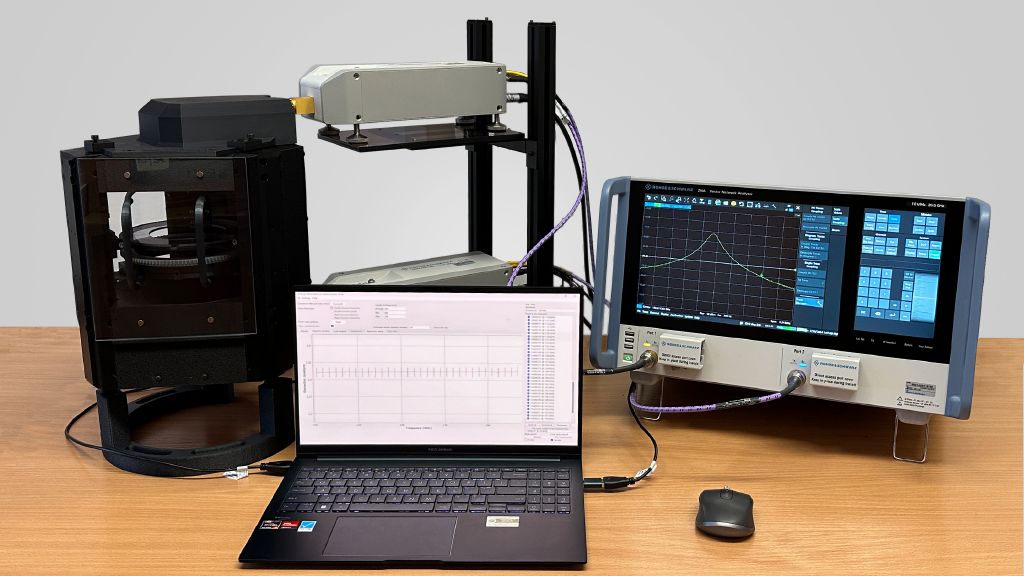
The dielectric constant, or Dk, quantifies a material's ability to store electrical energy in an electric field, directly affecting signal propagation speed and impedance in PTFE PCBs. Pure PTFE laminates typically exhibit Dk values between 2.1 and 2.6, significantly lower than FR4's 3.5 to 4.5, allowing faster signal velocities and reduced crosstalk. This low PTFE PCB dielectric constant Dk remains stable from 1 MHz to beyond 40 GHz, with minimal variation due to the material's non-polar structure. Frequency dependence is low, unlike resin-glass composites where Dk rises at higher frequencies. Ceramic-filled PTFE variants show slightly higher Dk, ranging from 3.0 to 10.0, to balance electrical and mechanical needs. IPC-TM-650 method 2.5.5.5 standardizes Dk measurement using stripline or clamped resonator techniques, ensuring consistent factory qualification. Variations in filler content or processing can shift Dk by 0.02 to 0.05, so precise control during lamination proves critical for matching design simulations.
In practice, a lower Dk reduces the effective capacitance per unit length in transmission lines, enabling tighter routing and higher data rates. Engineers model stackups using Dk data at operating frequencies to predict characteristic impedance accurately. Factory inspections verify Dk uniformity across panels to prevent batch-to-batch inconsistencies. For multilayer PTFE PCBs, hybrid constructions with low-Dk cores and prepregs maintain overall stackup performance. Thermal effects on Dk are negligible up to 150°C, supporting reliable operation in elevated environments.
Delving into PTFE PCB Loss Tangent Df
Loss tangent, or Df, measures the dissipative energy in a dielectric during signal propagation, making it a key metric for high-frequency efficiency. PTFE PCBs boast exceptionally low Df values, typically 0.0001 to 0.002 at 10 GHz for pure variants, compared to 0.002 to 0.02 for non-PTFE materials. This ultra-low PTFE PCB loss tangent Df translates to minimal attenuation, preserving signal amplitude over long traces or antennas. Df increases slightly with frequency but remains far superior to alternatives, ideal for millimeter-wave applications. Ceramic-filled versions exhibit Df of 0.001 to 0.005, still advantageous for most RF needs. Standardized testing per IPC-TM-650 2.5.5.5 captures Df accurately, guiding material selection in production.
Moisture has virtually no impact on Df due to PTFE's absorption below 0.01%, unlike hydrophilic epoxies. Factory processes control Df through filler dispersion and cure uniformity, as voids elevate losses. Designers calculate insertion loss using Df alongside conductor surface roughness for total link budget. In multilayer builds, matching Df across layers prevents skew in differential pairs. Thermal excursions minimally affect Df, ensuring stability during reflow or operation.
Thermal Stability and PTFE PCB Thermal Expansion CTE
Thermal stability in PTFE PCBs encompasses resistance to degradation, low outgassing, and controlled expansion under heat. PTFE lacks a distinct glass transition temperature Tg, behaving viscoelastically from -60°C to over 200°C, with decomposition above 400°C. This enables operation in extreme environments like aerospace. The coefficient of thermal expansion CTE for pure PTFE spans 50 to 200 ppm/°C, higher than copper's 17 ppm/°C, posing challenges for via reliability and warpage. Filled PTFE reduces CTE to 30 to 80 ppm/°C, improving matching in X-Y planes while Z-axis remains elevated. IPC-4101 specifications address CTE through test methods like IPC-TM-650 2.4.41, verifying dimensional stability post-bake.
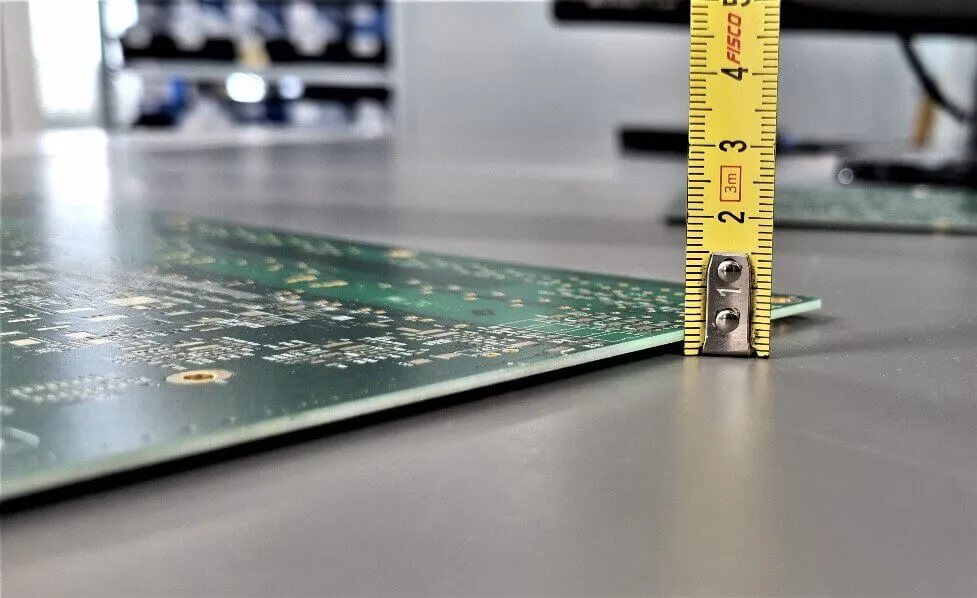
High CTE demands careful stackup design to mitigate warpage during lamination or soldering. Factories employ low-stress bonding and symmetric builds to control bow and twist below 0.75% per IPC standards. Thermal conductivity is low at 0.2 to 0.3 W/m·K, necessitating vias or metal planes for heat spreading. Reliability testing simulates cycles from -55°C to 125°C, confirming no delamination. Engineers select filled grades for applications with dense components to minimize CTE mismatch stresses.
Factors Influencing Properties and Material Variants
Filler type and content profoundly affect PTFE properties; pure PTFE prioritizes lowest Dk and Df but suffers mechanical softness, while ceramics enhance rigidity at minor electrical cost. Processing parameters like sintering temperature and pressure uniformity dictate final Dk uniformity. Reinforcement with glass or random fibers introduces anisotropy, slightly elevating Df but stabilizing CTE. Factory qualification per IPC-4103 ensures variants meet high-speed slash-sheet requirements. Aging and humidity tests confirm long-term stability.
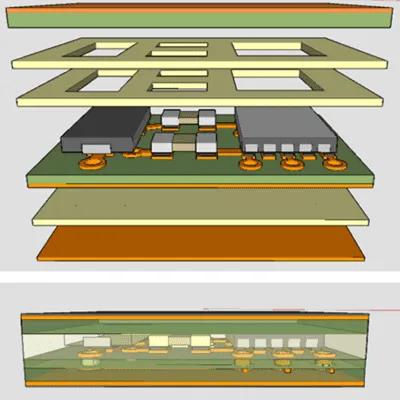
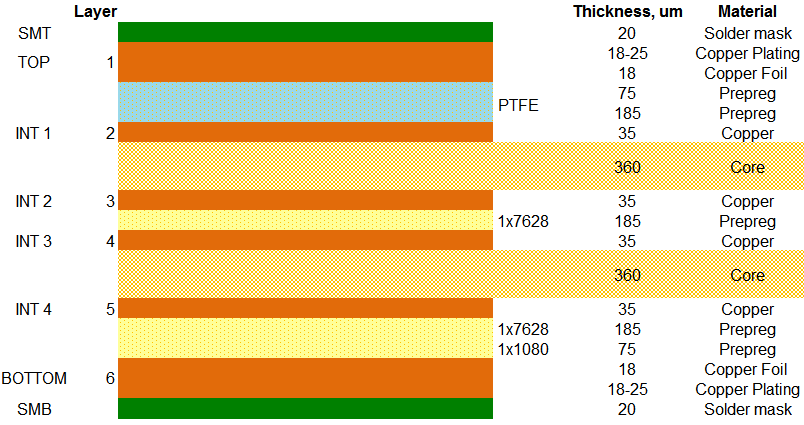
Hybrid stacks combine PTFE cores with compatible prepregs for multilayer complexity. Surface treatments improve copper adhesion, critical given PTFE's low energy. Impedance control tightens with precise Dk/Df data from coupons.
Best Practices for Design and Manufacturing
Select materials based on frequency, loss budget, and thermal profile; simulate with vendor Dk/Df curves at target GHz. Design symmetric stackups to counter CTE differences, using blind vias for Z-expansion relief. Factories use plasma etching for drill smear removal and low-angle lamination to avoid voids. Bake panels pre-plating to stabilize dimensions. Qualify per IPC-6012 for performance specs. Monitor warpage post-laminate.
For assembly, avoid high reflow peaks exceeding 260°C; use low-alpha flux. Post-process inspections verify Dk via TDR. Document CTE-matched builds for reliability predictions.
Conclusion
PTFE PCBs stand out for their low dielectric constant Dk, minimal loss tangent Df, and inherent thermal stability, enabling cutting-edge high-frequency designs. Balancing pure and filled variants optimizes PTFE PCB dielectric constant Dk, PTFE PCB loss tangent Df, and PTFE PCB thermal expansion CTE against mechanical demands. Adhering to IPC standards ensures factory reproducibility and field reliability. Engineers gain predictable performance, reduced losses, and extended lifespans in demanding applications. Prioritizing these properties unlocks superior signal integrity and thermal resilience.
FAQs
Q1: What is the typical PTFE PCB dielectric constant Dk range for high-frequency applications?
A1: Pure PTFE laminates offer Dk from 2.1 to 2.6 at 10 GHz, stable across frequencies, far below FR4's 4.0 plus. This low value speeds signals and aids impedance control. Factory testing per IPC-TM-650 confirms uniformity. Select based on simulation needs for RF precision.
Q2: How does PTFE PCB loss tangent Df impact signal loss?
A2: Df of 0.0001 to 0.002 minimizes attenuation in high-speed traces, preserving amplitude versus higher-loss materials. It rises modestly with frequency but stays low. Critical for 5G and radar. Verify with stripline tests during production.
Q3: Why is PTFE PCB thermal expansion CTE a design consideration?
A3: High CTE, 50 to 200 ppm/°C in pure PTFE, risks warpage and via stress from copper mismatch. Filled types lower it to 30 to 80 ppm/°C. Symmetric designs and standards testing mitigate issues. Essential for thermal cycling reliability.
Q4: How do standards guide PTFE PCB material qualification?
A4: IPC-4101 and IPC-4103 specify slash-sheets for PTFE laminates, covering Dk, Df, and CTE tests. IPC-TM-650 methods ensure consistent measurement. Factories use them for process control and acceptance.
References
IPC-4101B - Specification for Base Materials for Rigid and Multilayer Printed Boards. IPC, 2006
IPC-4103C - Specification for Nonhalogenated Base Materials for High-Speed/High-Frequency Applications. IPC, 2015
IPC-TM-650 - Test Methods Manual. IPC, 2020
IPC-6012E - Qualification and Performance Specification for Rigid Printed Boards. IPC, 2017