Introduction
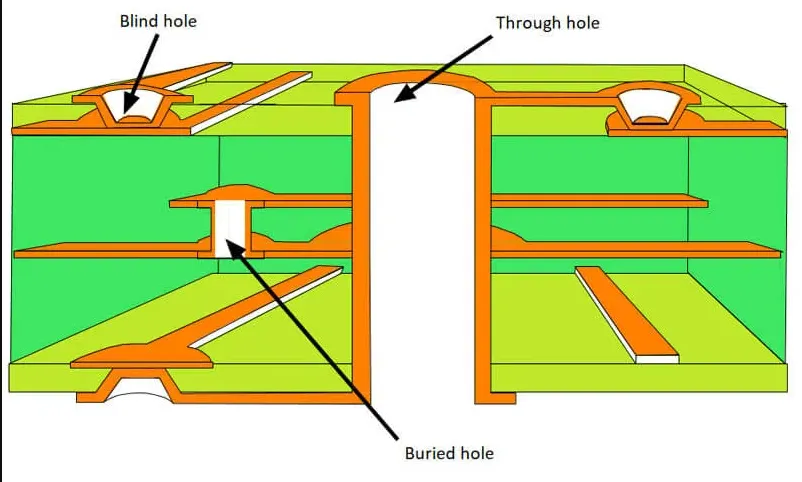
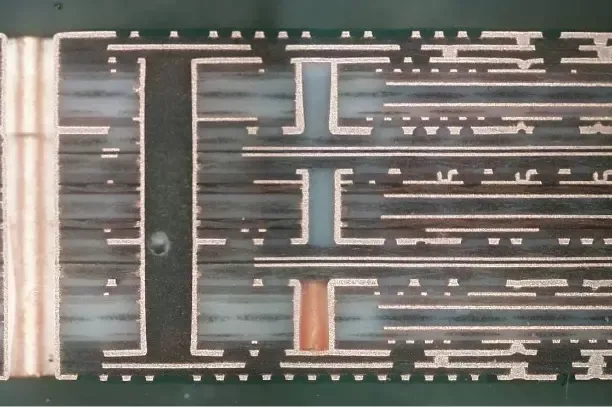
Edge computing devices are transforming industries by processing data close to its source, reducing latency, and enhancing efficiency. In medical diagnostics, these devices are critical for real-time data analysis, enabling rapid decision-making in patient care. However, designing printed circuit boards (PCBs) for such applications presents unique challenges. Engineers must address tight power budgets, ensure real-time data processing, integrate radio frequency (RF) components, manage thermal control, select rugged materials, and guarantee airtight security. Each of these factors plays a vital role in ensuring reliability and performance under demanding conditions. This article explores the technical hurdles in PCB design for edge computing devices in medical diagnostics. It also provides practical solutions to help electrical engineers navigate these complexities and bring robust designs from concept to field deployment.
What Is Edge Computing in Medical Diagnostics and Why It Matters
Edge computing refers to decentralized data processing at or near the source of data generation, as opposed to relying on distant cloud servers. In medical diagnostics, edge computing devices are embedded in equipment like portable ultrasound machines, wearable health monitors, and point-of-care testing systems. These devices collect, process, and analyze patient data instantly, often in environments with limited connectivity. The ability to handle real-time data is essential for timely interventions, especially in critical care scenarios.
The significance of edge computing in this field lies in its capacity to minimize latency, reduce bandwidth demands, and enhance data privacy. However, the HDI PCBs within these devices must meet stringent requirements. They need to operate within a tight power budget to extend battery life, withstand harsh conditions using rugged materials, and incorporate RF integration for wireless communication. Additionally, thermal control and airtight security are non-negotiable to ensure consistent performance and protect sensitive patient information.
Technical Challenges in PCB Design for Edge Computing Devices
Tight Power Budget Constraints
Edge computing devices in medical diagnostics often rely on battery power for portability. This imposes a tight power budget, requiring PCBs to minimize energy consumption without sacrificing performance. High-power components like processors and RF modules can drain batteries quickly if not optimized. Engineers must balance the need for computational power with energy efficiency, ensuring that the device remains operational for extended periods, especially in remote or emergency settings.
Real-Time Data Processing Demands
Medical diagnostics depend on real-time data processing to deliver immediate results. For instance, a wearable device monitoring heart rhythms must detect anomalies instantly. PCBs must support high-speed signal integrity and low-latency data paths. This requires careful routing, minimal signal interference, and the use of high-performance microcontrollers or processors. Any delay in processing can compromise patient outcomes, making this a critical design priority.
RF Integration for Wireless Connectivity
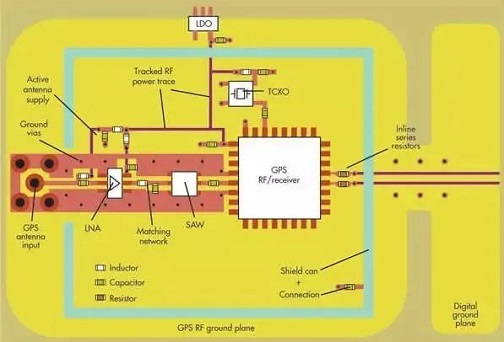
Many edge computing devices in medical diagnostics require RF integration for wireless data transmission to central systems or mobile applications. Integrating RF components on a PCB introduces challenges like electromagnetic interference (EMI), signal loss, and impedance mismatches. Engineers must design layouts that isolate RF sections, use proper grounding techniques, and select materials with suitable dielectric properties to maintain signal quality.
Thermal Control in Compact Designs
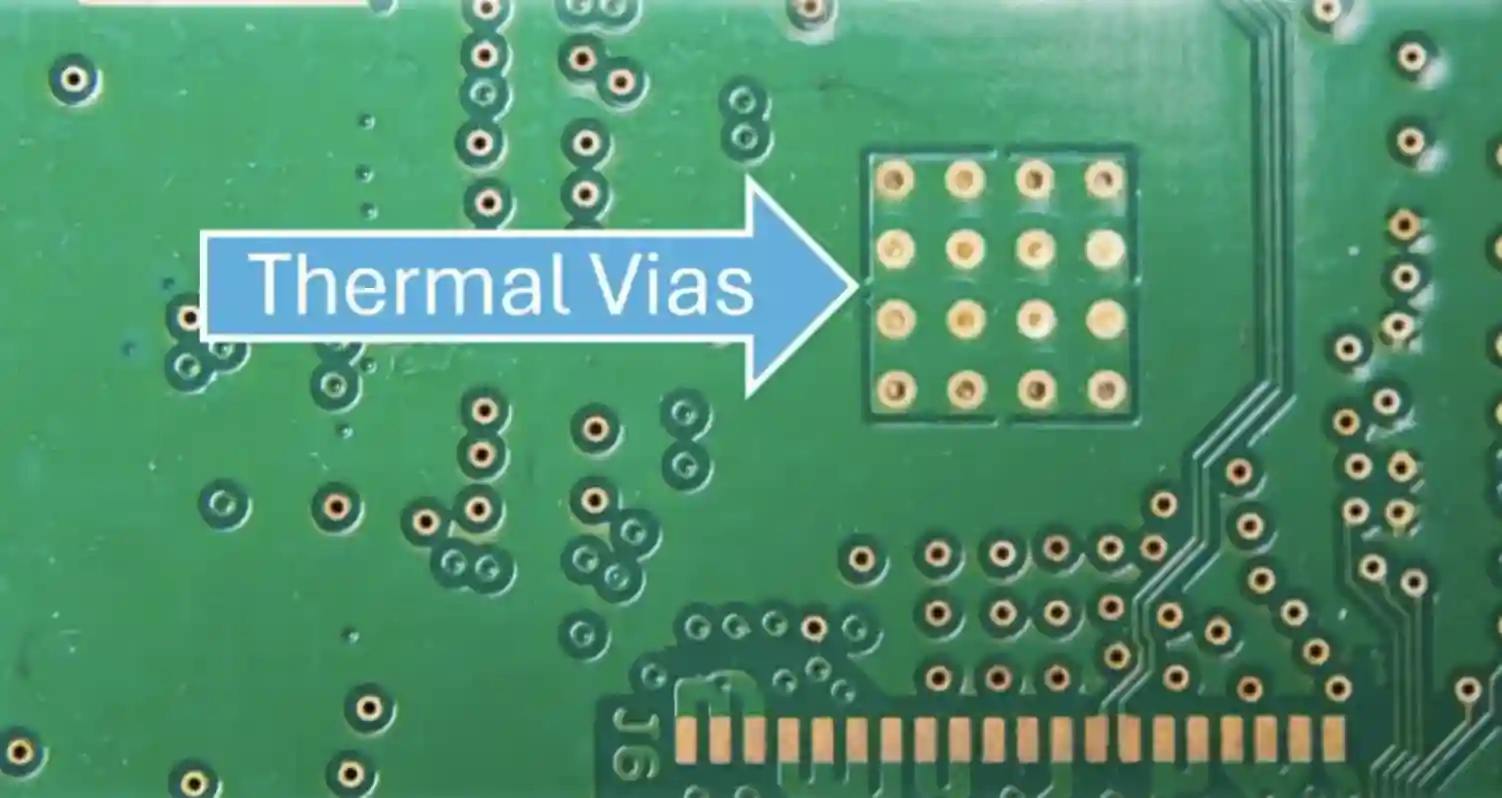
Compact edge devices often have limited space for heat dissipation, yet they house power-intensive components. Poor thermal control can lead to overheating, component degradation, and unreliable operation. In medical diagnostics, where precision is paramount, temperature fluctuations can also affect sensor accuracy. PCBs must incorporate thermal vias, heat sinks, or other cooling mechanisms while adhering to size constraints.
Rugged Materials for Harsh Environments
Medical diagnostic devices may be used in diverse environments, from sterile hospital rooms to outdoor emergency sites. PCBs must be constructed with rugged materials to withstand vibration, moisture, and temperature extremes. Material selection, such as high-Tg laminates, and protective coatings are crucial to prevent failures due to environmental stress. Compliance with industry standards ensures durability under such conditions.
Airtight Security for Data Protection
Patient data in medical diagnostics is highly sensitive, and edge computing devices are potential targets for cyber threats. Airtight security at the hardware level is essential to prevent unauthorized access or data breaches. PCBs must support secure boot mechanisms, encrypted communication, and tamper-resistant designs. Integrating security features without increasing power consumption or design complexity adds another layer of challenge.
Practical Solutions and Best Practices for PCB Design
Optimizing for Tight Power Budget
To address tight power budgets, engineers can prioritize low-power components and implement power management circuits. Techniques like dynamic voltage scaling and sleep modes for idle components help conserve energy. Additionally, careful selection of microcontrollers with built-in power-saving features can significantly extend battery life. Simulation tools aligned with industry standards, such as those outlined in IPC-2152, aid in predicting power dissipation and optimizing trace widths for efficiency.
Ensuring Real-Time Data Performance
Achieving real-time data processing starts with high-speed PCB design practices. Engineers should minimize trace lengths for critical signals, use differential pairs for high-speed data, and avoid crosstalk through proper layer stacking. Adhering to signal integrity guidelines in IPC-6012E ensures that the board supports the necessary performance for medical diagnostics. Selecting processors with adequate clock speeds and memory also contributes to seamless data handling.
Effective RF Integration Strategies
For successful RF integration, engineers must design medical PCB with dedicated RF zones, separated from digital and analog sections to reduce EMI. Using multilayer boards with ground planes beneath RF traces helps maintain signal integrity. Materials with low dielectric loss are recommended for high-frequency applications. Following layout guidelines from standards like IPC-A-600K ensures consistent performance of RF modules in wireless medical devices.
Implementing Thermal Control Measures
Thermal control can be achieved through strategic PCB design. Placing thermal vias near heat-generating components facilitates heat transfer to outer layers or heat sinks. Engineers can also use metal-core PCBs for better heat dissipation in compact designs. Thermal simulation during the design phase, guided by standards such as IPC-2221B, helps identify hotspots and refine layouts before prototyping.
Selecting Rugged Materials for Durability
Choosing rugged materials involves selecting high-Tg laminates and applying conformal coatings to protect against moisture and dust. Boards should comply with environmental testing standards like IPC-6012E, which specifies performance under stress conditions. For medical diagnostics in harsh environments, additional mechanical reinforcements, such as thicker substrates, can prevent warpage or cracking during use.
Building Airtight Security Features
To ensure airtight security, engineers can integrate hardware-based security modules directly onto the fast turn PCB. Features like secure element chips for encryption and physical tamper detection circuits add protection. Layouts should minimize access to critical data lines, reducing the risk of probing. Compliance with security standards, such as those in ISO/IEC 27001:2013 for information security management, provides a framework for safeguarding patient data in edge computing devices.
Insight: Balancing Competing Priorities in PCB Design
Designing PCBs for edge computing devices in medical diagnostics often involves trade-offs. For instance, optimizing for a tight power budget might limit the processing power needed for real-time data analysis. Similarly, rugged materials may increase board thickness, complicating thermal control in compact designs. Engineers must prioritize based on the specific application, using iterative testing and simulation to fine-tune designs. Standards like IPC-2221B offer valuable guidance on balancing electrical, thermal, and mechanical requirements. A systematic approach, starting with clear design specifications and progressing through rigorous validation, ensures that all challenges, from RF integration to airtight security, are addressed without compromising overall performance.
Conclusion
PCB design for edge computing devices in medical diagnostics is a complex endeavor requiring careful consideration of multiple factors. Tight power budgets demand energy-efficient designs, while real-time data processing necessitates high-speed signal integrity. RF integration, thermal control, rugged materials, and airtight security each add layers of complexity that engineers must navigate. By applying best practices, adhering to industry standards, and leveraging simulation tools, designers can overcome these challenges. The result is a robust PCB that supports critical applications in medical diagnostics, ensuring reliability from concept to field deployment.
FAQs
Q1: How does a tight power budget impact PCB design for medical diagnostics devices?
A1: A tight power budget significantly influences PCB design by necessitating low-power components and efficient power management circuits. In medical diagnostics, where devices often rely on batteries, engineers must implement techniques like sleep modes and dynamic voltage scaling. This ensures extended operation without compromising performance, maintaining the device's ability to deliver critical data in portable or remote settings.
Q2: What are the key considerations for real-time data processing in edge computing PCBs?
A2: Real-time data processing in edge computing PCBs requires high-speed signal integrity and minimal latency. For medical diagnostics, this means short trace lengths, differential signaling, and crosstalk prevention through proper layer stacking. Selecting high-performance processors and adhering to standards like IPC-6012E ensures the board can handle immediate data analysis, crucial for timely patient care decisions.
Q3: Why is RF integration challenging in PCBs for medical diagnostics?
A3: RF integration poses challenges due to electromagnetic interference and signal loss risks in PCBs for medical diagnostics. Isolating RF sections, using ground planes, and selecting materials with low dielectric loss are essential to maintain wireless communication quality. Following layout guidelines from standards like IPC-A-600K helps ensure reliable performance in transmitting patient data securely.
Q4: How can thermal control be achieved in compact edge computing devices?
A4: Thermal control in compact edge computing devices involves placing thermal vias near heat-generating components and using metal-core PCBs for better dissipation. Simulation tools, guided by standards like IPC-2221B, help identify hotspots early. For medical diagnostics, maintaining stable temperatures ensures sensor accuracy and prevents overheating in space-constrained designs.
References
IPC-6012E: Qualification and Performance Specification for Rigid Printed Boards. IPC, 2020.
IPC-A-600K: Acceptability of Printed Boards. IPC, 2020.
IPC-2221B: Generic Standard on Printed Board Design. IPC, 2012.
IPC-2152: Standard for Determining Current Carrying Capacity in Printed Board Design. IPC, 2009.
ISO/IEC 27001:2013: Information Security Management Systems. ISO, 2013.