Introduction
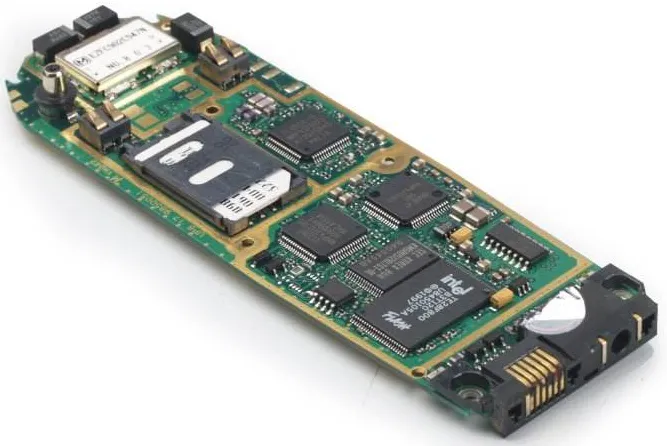
Mobile phone printed circuit boards represent the core of modern smartphones, integrating processors, memory, sensors, and RF modules into ever-smaller form factors. The substrate material forms the foundation of these PCBs, influencing signal integrity, thermal dissipation, and mechanical reliability under daily use conditions. As devices incorporate 5G connectivity, high-resolution cameras, and foldable displays, selecting the appropriate substrate becomes critical for engineers balancing performance and manufacturability. Factory processes must align substrate choices with high-volume production demands, ensuring consistency across batches. This guide explores key substrate options like FR-4 PCB, polyimide PCB, and high-frequency laminates, focusing on material selection criteria tailored to mobile applications. By understanding these elements, electrical engineers can optimize designs for longevity and efficiency.
Why Substrate Selection Matters in Mobile Phones
Substrate materials directly impact the electrical performance of mobile PCBs, where high-speed signals and RF paths demand low loss and controlled impedance. In compact designs, thermal expansion mismatches between substrates and components can lead to failures during reflow soldering or operational heating. Mechanical flexibility is increasingly vital for foldable phones and wearables, where rigid substrates like FR-4 PCB suffice for main boards but fall short in dynamic areas. High-frequency laminates address signal propagation needs for antennas and modems, minimizing dielectric losses. Poor material choices result in issues like warpage, delamination, or signal crosstalk, compromising device reliability in consumer environments. Factory insights reveal that aligning substrates with application requirements reduces rework and enhances yield rates.
Key PCB Substrate Materials for Mobile Applications
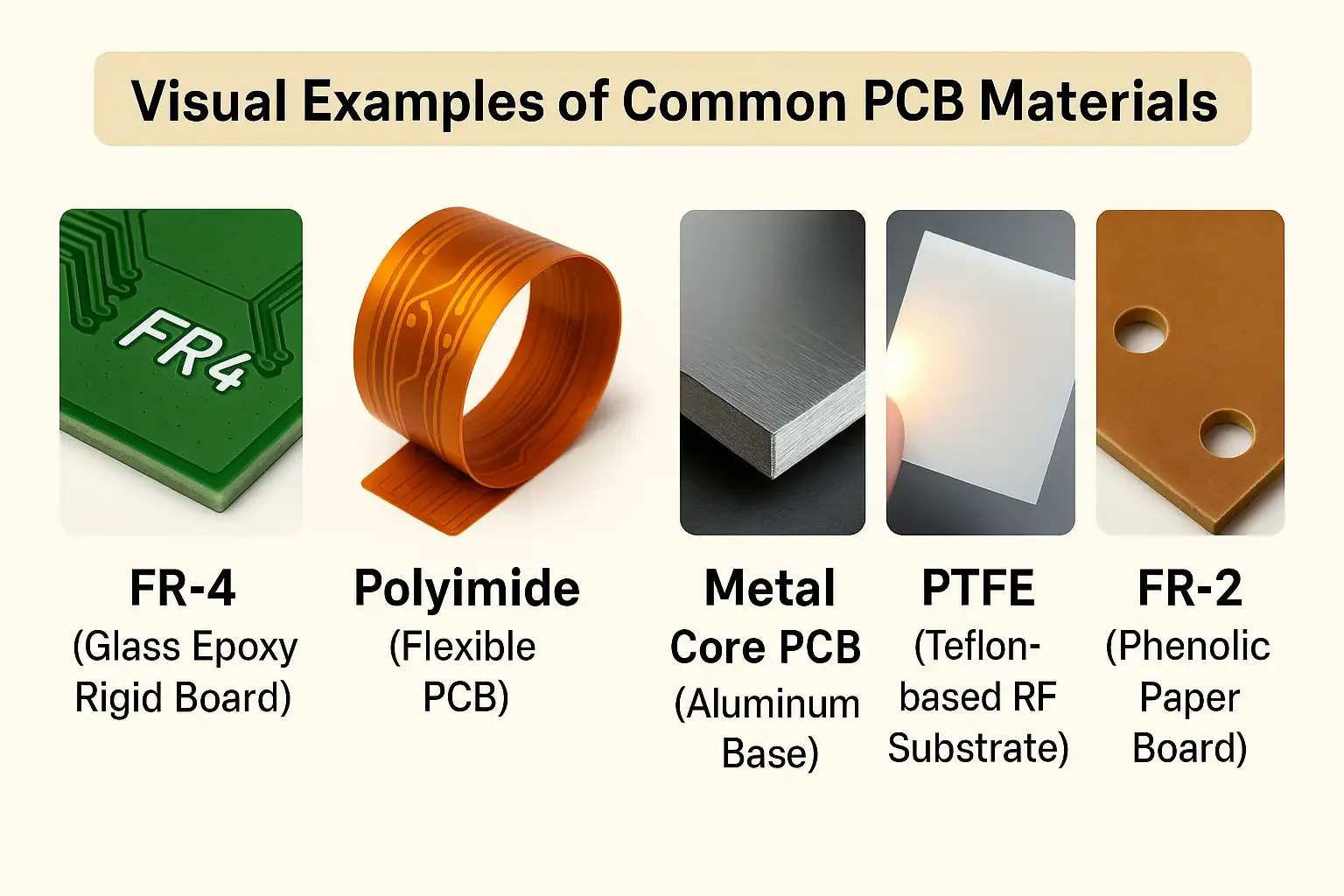
FR-4 PCB remains the workhorse for rigid sections of mobile boards due to its balanced properties and compatibility with standard fabrication flows. Composed of woven glass fabric impregnated with epoxy resin, FR-4 offers sufficient rigidity and electrical insulation for digital circuits and power delivery networks. However, its higher dielectric constant limits use in RF-heavy zones, prompting hybrids with specialized layers. Polyimide PCB excels in flexible and rigid-flex configurations, providing superior bend endurance for connectors to displays or cameras. This material withstands repeated flexing without cracking, ideal for slim phone chassis. High-frequency laminates, with tailored resin systems, support millimeter-wave signals in 5G modules by offering stable electrical characteristics across frequencies.
Essential Material Properties and Their Role
The dielectric constant defines how a substrate stores electrical energy, directly affecting signal speed and impedance control in high-density mobile layouts. Lower dielectric constants in high-frequency laminates reduce phase shifts and attenuation for RF paths, while FR-4 PCB suits lower-speed basebands. Dissipation factor complements this by quantifying energy loss as heat, critical for battery-powered devices where efficiency matters. Thermal properties like glass transition temperature ensure stability during soldering peaks, preventing softening or voids. Coefficient of thermal expansion matching between substrate and copper foils minimizes stress in multilayer stacks. Moisture absorption influences reliability, as absorbed water can degrade insulation resistance under humidity exposure common in handheld use.
Mechanical attributes determine suitability for assembly and end-use: FR-4 provides stiffness for via drilling precision, polyimide PCB enables tight bends without fatigue. Factory testing per IPC-TM-650 methods verifies these traits, guiding qualification. In mobile phones, combining materials in hybrid stacks addresses diverse zone requirements, from rigid processor areas to flexible hinges.
Material Selection Criteria for Mobile Phone PCBs
Engineers evaluate material selection criteria across electrical, thermal, mechanical, and processing dimensions to match mobile design constraints. Electrical criteria prioritize dielectric constant and dissipation factor for signal integrity, favoring high-frequency laminates where GHz operations prevail over FR-4 PCB baselines. Thermal criteria assess glass transition temperature and conductivity to handle processor hotspots without warping. Mechanical criteria include flexural strength for polyimide PCB in dynamic zones and dimensional stability for high-layer counts. Cost and availability factor in, as FR-4 dominates for volume production while specialized options add expense. Process compatibility, such as laser drillability and plating adhesion, ensures smooth factory transitions.
Standards like IPC-4101 outline qualification for base materials, specifying tests for these properties in rigid and flexible formats. Designers weigh trade-offs: polyimide PCB offers thermal resilience but higher cost than FR-4. High-frequency laminates demand precise control of resin content for low variation.
Best Practices in Substrate Selection and Implementation
Start with application mapping: assign FR-4 PCB to cost-sensitive digital areas, polyimide PCB to flex zones, and high-frequency laminates to RF-critical paths. Conduct design reviews incorporating simulation for dielectric constant impacts on trace widths. Prototype with small panels to validate CTE matching via thermal cycling per IPC-6012 guidelines for rigid boards. For flex-rigid hybrids, ensure polyimide adhesion layers meet peel strength requirements. Factory-driven best practices include prepreg selection for flow control in multilayers and bake-out to mitigate moisture per JEDEC J-STD-020 handling. Monitor warpage post-lamination, as substrate choices influence bow and twist in thin mobile panels.
Collaborate early with fabrication partners to confirm material traceability and compliance. Iterative testing refines choices, balancing performance gains against yield impacts. Document rationale against material selection criteria for design handoff.
Challenges and Troubleshooting in Mobile Substrates
Mobile PCBs face unique hurdles like high component density amplifying thermal stresses on FR-4 substrates. Troubleshooting delamination often traces to Tg mismatches; solutions involve higher-grade resins or fillers. RF crosstalk in high-frequency laminates arises from inconsistent dielectric constant; uniform curing processes mitigate this. Flex circuits in polyimide PCB suffer fatigue from over-bending; reinforce with coverlay and strain relief. Factory data shows via failures in hybrids from drill smear; plasma cleaning resolves this. Adhering to IPC-6013 for flex boards standardizes inspection, catching issues early.
Conclusion
Choosing the right substrate elevates mobile phone PCB performance, reliability, and manufacturability. FR-4 PCB anchors rigid sections economically, polyimide PCB enables flexibility, and high-frequency laminates secure RF excellence. Key material selection criteria—dielectric constant, thermal stability, mechanical endurance—guide decisions aligned with standards like IPC-4101 and IPC-6012. Engineers benefit from structured evaluation, prototyping, and factory collaboration to navigate trade-offs. Ultimately, informed choices yield robust devices ready for consumer demands, minimizing field failures and supporting innovation in compact electronics.
FAQs
Q1: What is an FR-4 PCB and when should it be used in mobile phones?
A1: FR-4 PCB is a standard epoxy-glass laminate offering rigidity and cost-effectiveness for rigid multilayer boards. Use it in mobile phones for main logic areas, power planes, and connectors where high-frequency performance is secondary. Its balanced dielectric constant supports digital signals up to GHz ranges effectively. Factory processes favor FR-4 for high yields in volume production. Ensure compliance with IPC-4101 for qualification.
Q2: How does polyimide PCB differ from FR-4 in mobile applications?
A2: Polyimide PCB provides flexibility and higher thermal resistance compared to rigid FR-4, ideal for foldable displays and camera modules in phones. It endures repeated bending without cracking, unlike FR-4 which suits static boards. Material selection criteria emphasize polyimide's superior Tg for harsh soldering. Drawbacks include higher cost and processing complexity. Standards like IPC-6013 guide flex PCB fabrication.
Q3: Why prioritize dielectric constant in high-frequency laminate selection for mobiles?
A3: Dielectric constant governs signal velocity and impedance in 5G antennas and modems on mobile PCBs. Lower values in high-frequency laminates minimize losses and distortion at multi-GHz frequencies. Combine with low dissipation factor for optimal RF paths. Evaluate via material selection criteria including frequency range and stackup needs. Factory testing verifies stability per IPC-TM-650.
Q4: What are core material selection criteria for mobile phone PCB substrates?
A4: Core criteria include electrical properties like dielectric constant, thermal metrics such as CTE and Tg, mechanical flex endurance, and cost-process balance. Tailor to zones: FR-4 for rigidity, polyimide for bends, high-frequency laminates for RF. Reference IPC-4101 for specs. Prototype to confirm interactions in hybrids.
References
IPC-4101C — Specification for Base Materials for Rigid and Multilayer Printed Boards. IPC
IPC-6012DS — Qualification and Performance Specification for Rigid Printed Boards. IPC
IPC-6013E — Qualification and Performance Specification for Flexible and Rigid-Flex Printed Boards. IPC
JEDEC J-STD-020E — Moisture/Reflow Sensitivity Classification for Nonhermetic Surface Mount Devices. JEDEC