Introduction
The rollout of 5G networks has transformed wireless communication, demanding printed circuit boards that handle frequencies from sub-6 GHz to millimeter-wave bands above 24 GHz. Rogers PCB materials stand out in this landscape due to their exceptional high-frequency performance, making them ideal for Rogers PCB 5G applications. These materials address critical challenges like signal loss and thermal management in dense telecom environments. Electric engineers designing 5G infrastructure rely on such substrates to ensure reliable data rates exceeding gigabits per second with minimal latency. This article explores how Rogers PCB materials enable robust 5G PCB design, focusing on their role in base stations, antennas, and backhaul systems.
Understanding Rogers PCB Materials and Their Relevance to 5G
Rogers PCB materials are specialized laminates engineered for high-frequency operations, distinct from standard FR-4 due to their reinforced compositions like hydrocarbon ceramics or PTFE with fillers. These materials provide stable dielectric properties across wide frequency and temperature ranges, essential for 5G where signal integrity degrades rapidly at higher bands. In telecom PCB designs, they minimize insertion loss and maintain controlled impedance, supporting massive MIMO configurations in infrastructure. Engineers select them for PCB for wireless communication because of low moisture absorption, which prevents performance shifts in humid deployments. Their mechanical stability also aids multilayer stackups common in high-frequency PCB 5G systems.
The push toward 5G infrastructure amplifies the need for such materials, as traditional substrates suffer from increased dielectric losses above 10 GHz. Rogers materials bridge this gap by offering process compatibility with conventional fabrication flows while delivering microwave-grade performance. This makes them a cornerstone for next-generation wireless, from urban small cells to rural macro sites.
Key Technical Properties Driving 5G Performance
At the heart of Rogers PCB materials lies their low and consistent dielectric constant, which governs signal propagation speed and wavelength on transmission lines. In 5G PCB design, this stability reduces phase shifts in phased array antennas, ensuring precise beamforming for user tracking. Coupled with a low dissipation factor, these properties curb energy loss, vital for power amplifiers operating continuously in base stations. Thermal conductivity variations across z-axis further support heat dissipation from high-power RF components, preventing hotspots that could detune circuits.
Surface roughness and copper foil treatments in Rogers laminates optimize conductor losses, particularly at mmWave frequencies where skin effect dominates. Engineers model these using field solvers to predict return loss, aligning traces and vias for 50-ohm impedance. Material anisotropy, carefully controlled in Rogers substrates, minimizes crosstalk in dense routing for telecom PCB layouts. Qualification under IPC-6012E ensures these boards meet rigid performance specs for high-reliability applications.
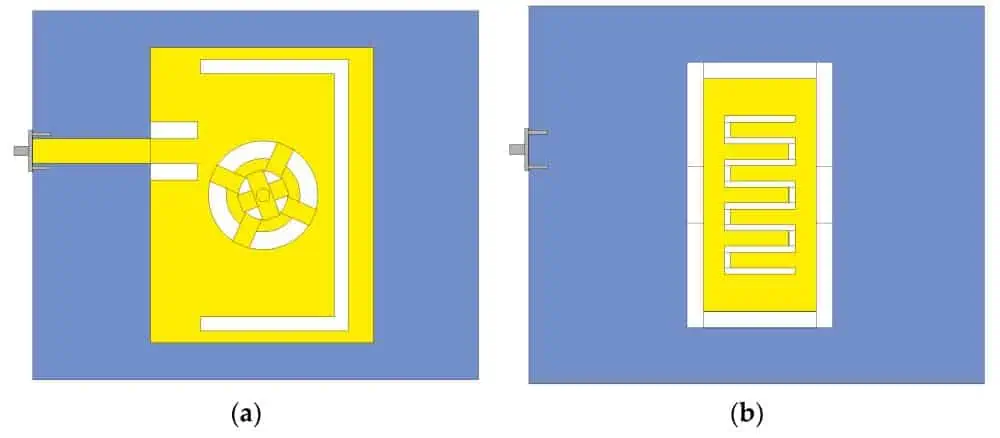
Frequency-dependent behavior demands careful selection: lower bands tolerate slightly higher losses, while mmWave requires ultra-low tangent materials. Rogers offerings span series tailored to these needs, with some optimized for cost-effective sub-6 GHz power amps and others for precision mmWave front-ends. This versatility empowers logical stackup decisions, balancing electrical and mechanical demands.
Design Best Practices for Rogers PCB in 5G Infrastructure
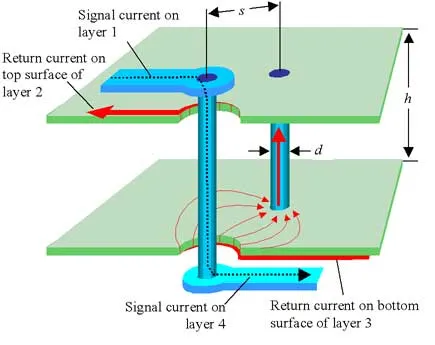
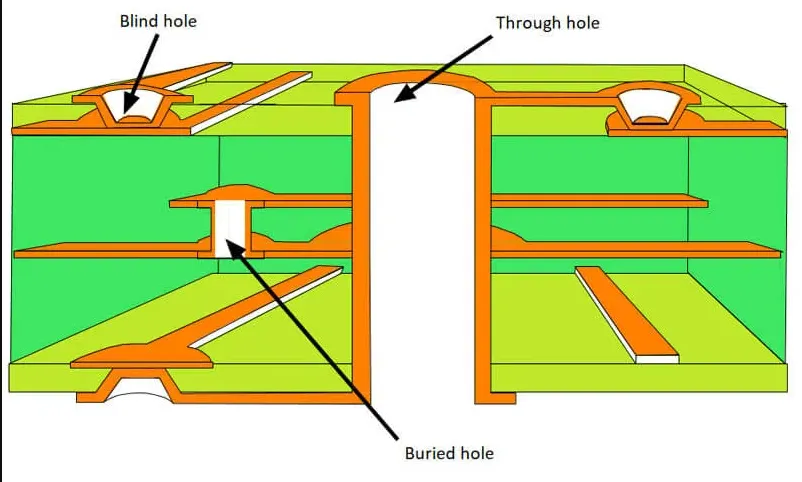
Effective 5G PCB design with Rogers materials starts with stackup planning, prioritizing symmetry to control warpage during reflow. Engineers specify core and prepreg thicknesses to achieve target impedances, using hybrid builds where FR-4 handles low-speed sections and Rogers layers manage RF paths. Via optimization, such as blind or buried types, reduces stubs that cause resonances at 28 GHz bands. Ground plane stitching and defected ground structures further enhance isolation in antenna modules.
Fabrication tolerances tighten for high-frequency PCB 5G: drill aspect ratios stay below 10:1, and plating uniformity follows IPC-A-600 guidelines for acceptability. Solder mask selection avoids high-Dk overlays that skew microstrip characteristics. Thermal via arrays under PAs distribute heat, leveraging the substrate's stability. Simulation validates these against real-world parasitics before prototyping.
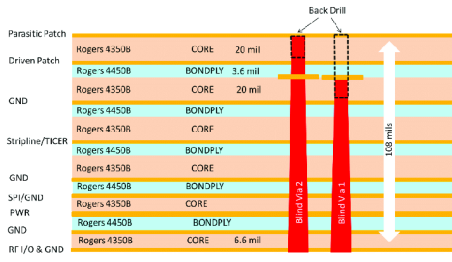
Multilayer transitions pose challenges, addressed by tapered lines or embedded components for seamless signal paths. Power integrity demands wide planes with decoupling caps near ICs, ensuring clean supplies for linear amplifiers. Environmental factors like vibration in tower mounts necessitate low CTE matching between layers.
Applications in 5G Infrastructure
In massive MIMO base stations, Rogers PCB materials form the backbone of active antenna units, integrating thousands of elements on compact boards. Their low loss supports longer feeder runs from transceivers to radiators, boosting efficiency. Small cell deployments in urban areas benefit from compact, high-density layouts enabled by stable dielectrics.
Backhaul links operating at 60 GHz use these substrates for point-to-point modules, where phase noise sensitivity demands precise timing. Front-end modules combine filters, switches, and amps on Rogers laminates, minimizing group delay variations. Overall, they elevate PCB for wireless communication in edge computing nodes tied to 5G cores.
Challenges and Mitigation Strategies
Higher costs of Rogers materials versus FR-4 require value engineering, focusing them on critical RF sections. Processing differences, like longer bake times for moisture control per J-STD-020E, demand fab partner alignment. CTE mismatches in hybrids risk reliability, mitigated by low-z CTE prepregs.
Signal integrity troubleshooting involves TDR measurements and VNA sweeps to baseline losses. Mechanical stress from mounting solves via conformal coatings. These strategies ensure robust deployment.
Conclusion
Rogers PCB materials are pivotal in realizing 5G infrastructure's promise through superior high-frequency traits and design flexibility. They enable efficient 5G PCB design by tackling loss, stability, and thermal hurdles head-on. Electric engineers gain reliable telecom PCB solutions for antennas, base stations, and beyond. As networks evolve, these substrates will underpin sustained performance in wireless communication.
FAQs
Q1: What makes Rogers PCB 5G materials suitable for high-frequency PCB 5G applications?
A1: Rogers PCB 5G materials feature low dielectric loss and stable dielectric constants, ideal for mmWave bands in base stations. They support precise impedance control and minimal signal degradation, aligning with engineering needs for phased arrays and amplifiers. Fabrication compatibility with standard processes helps reduce integration risks in telecom deployments.
Q2: How do Rogers materials improve 5G PCB design in wireless infrastructure?
A2: In 5G PCB design, Rogers materials offer thermal stability and low moisture uptake, preventing detuning in outdoor deployments. Engineers can achieve tighter tolerances for trace routing and vias, enhancing MIMO performance. Hybrid stackups optimize cost while prioritizing RF paths for low-loss signal transmission.
Q3: Why choose Rogers for telecom PCB in 5G base stations?
A3: Telecom PCBs using Rogers materials excel in power handling and efficiency for continuous operation. Low dissipation ensures high data throughput with reduced heat generation. Mechanical reliability suits harsh environments and aligns with industry qualification standards for high-reliability applications.
Q4: What are common challenges in PCB for wireless communication with Rogers 5G?
A4: Challenges include higher material cost and specialized processing steps, which are addressed by selective layering of Rogers only in critical RF sections. Engineers mitigate risks through simulations, TDR and VNA measurements, and adherence to standard inspections, ensuring that signal integrity benefits outweigh implementation hurdles at high frequencies.
References
IPC-6012E — Qualification and Performance Specification for Rigid Printed Boards. IPC, 2017
IPC-A-600K — Acceptability of Printed Boards. IPC, 2020
J-STD-020E — Moisture/Reflow Sensitivity Classification. JEDEC, 2014