Introduction
In PCB rework processes, cleaning removes flux residues, solder paste remnants, and other contaminants introduced during component removal and replacement. These residues can compromise electrical performance, promote corrosion, and lead to field failures if not addressed properly. Electronic engineers often face the challenge of selecting equipment that balances efficiency, thoroughness, and compatibility with delicate assemblies. This buyer’s guide explores key types of PCB cleaning equipment tailored for rework environments, including ultrasonic PCB cleaners for rework, manual PCB cleaning tools, spray-in-air cleaning systems, and benchtop cleaning stations. By understanding their mechanisms and selection criteria, engineers can ensure compliance with industry standards and optimize rework workflows. Proper cleaning not only enhances reliability but also supports subsequent inspections and reassembly steps.
Why PCB Cleaning Matters in Rework Processes
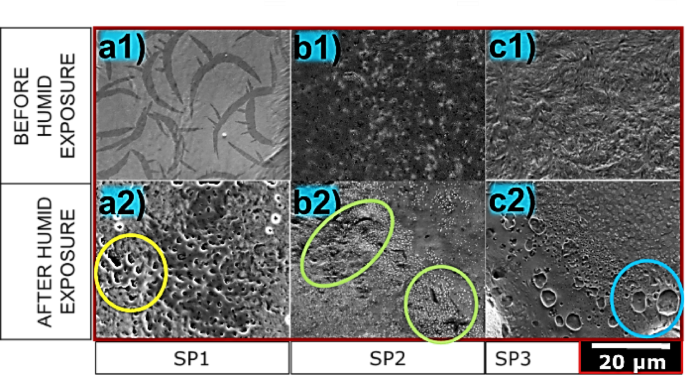
Rework involves desoldering components, which activates fluxes that leave ionic and organic residues capable of causing electrochemical migration or dendritic growth over time. In high-reliability applications, such as aerospace or medical devices, uncleaned boards risk short circuits or intermittent failures under humidity or thermal cycling. IPC J-STD-001 outlines cleanliness requirements for soldered assemblies, emphasizing the need to minimize residues that could affect performance categories. Cleaning during rework prevents contamination transfer to new components and ensures pads are prepared for reliable soldering. Engineers must prioritize equipment that achieves verifiable cleanliness levels, often assessed through visual inspection or ion chromatography testing. Ultimately, effective cleaning extends PCB lifespan and reduces warranty returns.
Technical Principles of PCB Cleaning Equipment for Rework
Cleaning equipment operates on principles like mechanical agitation, cavitation, or pressurized solvent delivery to dislodge and remove contaminants from board surfaces, vias, and under components. Flux residues, typically rosin-based or water-soluble, require solvents or aqueous solutions that dissolve activators while avoiding damage to masks or laminates. Ultrasonic systems generate high-frequency sound waves in a liquid bath, creating microscopic bubbles that implode to scrub surfaces without physical contact. Spray-in-air systems propel cleaning fluids through nozzles onto the board in an open chamber, relying on impingement and runoff for residue removal. Manual tools depend on human precision with solvents and abrasives, suitable for spot cleaning. Benchtop stations integrate these methods in compact units, often with heated tanks or dryers for complete processes.
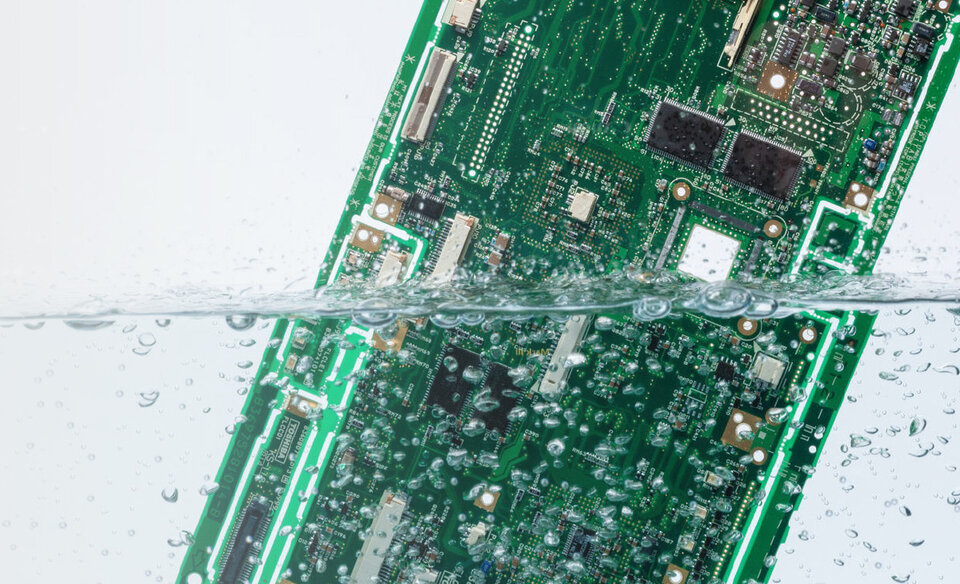
Overview of Key PCB Cleaning Equipment Types
Manual PCB Cleaning Tools
Manual PCB cleaning tools include lint-free swabs, nylon brushes, and precision applicators paired with isopropyl alcohol or specialized flux removers. These tools excel in targeted cleaning of small areas, such as around fine-pitch leads or BGA sites post-rework. Engineers appreciate their low entry cost and control, allowing immediate verification during the process. However, they demand skilled operators to avoid residue smearing or component damage. For low-volume rework, these tools suffice when combined with magnification and good ventilation. Limitations arise in high-contamination scenarios, where thoroughness depends on technique consistency.
Ultrasonic PCB Cleaners for Rework
Ultrasonic PCB cleaners for rework use frequencies between 25 and 40 kHz to produce cavitation that penetrates tight spaces under components and into vias. Boards are placed in perforated baskets submerged in a heated cleaning solution, with cycles typically lasting 5 to 15 minutes followed by rinsing and drying. This method effectively removes tenacious flux residues without mechanical stress, making it ideal for densely populated assemblies. Engineers should select units with variable power and degas functions to optimize for different board sizes and contamination levels. Drainable tanks prevent cross-contamination between chemistries. While powerful, care is needed to protect sensitive parts like crystals or relays from prolonged exposure.
Spray-in-Air Cleaning Systems
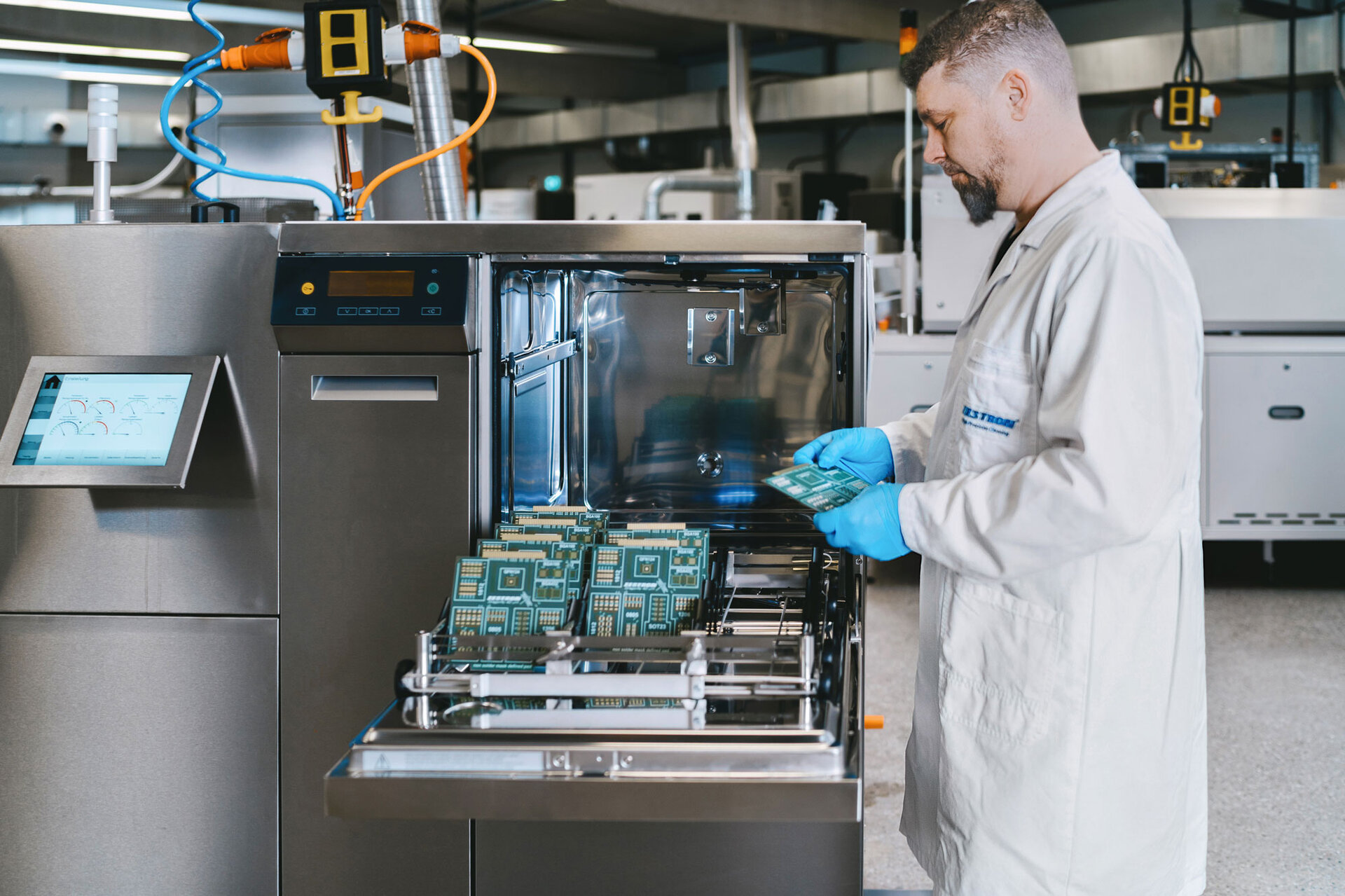
Spray-in-air cleaning systems direct high-pressure streams of solvent or aqueous media onto rotating or fixed PCBs in an open cabinet, ensuring even coverage without immersion. Nozzles create turbulent flow to lift residues, followed by fresh water rinses and hot air drying to prevent watermarks. This approach suits temperature-sensitive boards, as it avoids prolonged liquid contact and supports inline configurations for higher throughput. Per IPC-CH-65B guidelines, these systems provide controlled cleaning for rework sites with heavy flux activation. Adjustable pressure and chemistry flow rates allow customization for no-clean or water-soluble fluxes. Maintenance involves regular nozzle checks to sustain performance.
Benchtop Cleaning Stations
Benchtop cleaning stations combine ultrasonic, spray, or immersion capabilities in compact footprints, often with integrated dryers and filtration for lab or small production rework. These all-in-one units streamline workflows by handling pre-clean, wash, rinse, and dry in sequence. Engineers value their programmability for repeatable cycles, reducing variability in cleanliness results. Capacities typically accommodate single or small batches of PCBs up to 12 by 18 inches. Filtration systems recycle chemistry, lowering operational costs. Selection hinges on power supply compatibility and exhaust requirements for solvent vapors.
Key Considerations for Buying PCB Cleaning Equipment
When evaluating ultrasonic PCB cleaners for rework or other systems, start with board dimensions and throughput needs; larger baskets or conveyor options scale for production volumes. Chemistry compatibility is critical, as equipment must handle both solvent and aqueous media without corrosion. Drying mechanisms, such as forced hot air or vacuum, prevent ionic residues from redepositing during cooldown. Energy efficiency and noise levels matter in benchtop environments shared with testing stations. Validation features like temperature controls and timers support process qualification under IPC-7711/7721 rework standards. Budget for accessories like baskets, pumps, and monitoring tools to ensure long-term usability.
Budget allocation should cover initial cost, ongoing consumables, and maintenance intervals. Ultrasonic units require transducer checks, while spray systems need pump rebuilds. Operator training minimizes downtime and ensures consistent results. Space constraints favor benchtop models, but verify ergonomics for frequent loading. Warranty and service support are essential for mission-critical rework.
Best Practices for Implementing PCB Cleaning in Rework
Begin with residue characterization using black light or scope inspection to select appropriate chemistry and equipment. For manual PCB cleaning tools, use short strokes and fresh solvent to avoid redistribution. In ultrasonic setups, preload with degassed solution and limit cycles to prevent erosion of thin masks. Always follow with deionized water rinses and full drying to meet J-STD-001 cleanliness thresholds. Document parameters for traceability, including solution conductivity monitoring. Post-clean inspection verifies no bridging or whitening, adjusting processes iteratively.
Integrate cleaning into rework stations with ESD-safe handling to prevent static damage. Chemistry disposal complies with environmental regulations, favoring biodegradable options. For spray-in-air systems, optimize nozzle patterns for under-component access. Benchtop stations benefit from automated logging for audits.
Troubleshooting Common Issues in PCB Rework Cleaning
Persistent residues often stem from incompatible chemistries; test small areas first and switch to higher pH for water-soluble fluxes. Ultrasonic pitting indicates excessive power or frequency mismatch, so calibrate per board density. Water spots in spray systems signal inadequate drying; extend air knife times or add dehumidification. Manual cleaning streaks result from saturated swabs, remedied by multiple passes with low-lint media. Cloudy solutions require immediate filtration replacement. Consistent logging pinpoints root causes, aligning with IPC rework procedures.
Conclusion
Selecting the right PCB cleaning equipment for rework demands balancing technical capabilities with practical workflow needs. Ultrasonic PCB cleaners for rework offer deep cleaning for complex boards, while manual tools provide precision for prototypes. Spray-in-air systems and benchtop stations deliver efficiency for varied volumes. Adhering to standards like IPC J-STD-001 and IPC-CH-65B ensures reliability. Engineers equipped with this knowledge can minimize defects, enhance assembly quality, and support high-performance electronics production.
FAQs
Q1: What are the advantages of ultrasonic PCB cleaners for rework over manual methods?
A1: Ultrasonic PCB cleaners for rework use cavitation to remove flux from hard-to-reach areas under components and in vias, achieving uniform cleanliness faster than manual scrubbing. They reduce labor while minimizing physical damage risks. Ideal for high-density boards, these systems support short cycles with proper basketing. However, verify component tolerance to frequencies around 40 kHz.
Q2: How do spray-in-air cleaning systems improve PCB rework efficiency?
A2: Spray-in-air cleaning systems propel solvents precisely onto boards without submersion, preventing thermal stress on sensitive parts during rework. They integrate rinse and dry stages for immediate handling. Engineers benefit from adjustable pressures tailored to flux types, ensuring compliance with cleanliness standards. Throughput suits mid-volume operations better than batch immersion.
Q3: When should engineers choose benchtop cleaning stations for rework?
A3: Benchtop cleaning stations consolidate ultrasonic or spray functions in compact units, perfect for labs or low-volume rework where space is limited. They offer programmable cycles for repeatability and chemistry recycling to cut costs. Practical for troubleshooting assemblies, these stations handle mixed board sizes efficiently. Pair with ROSE testing for validation.
Q4: What role do manual PCB cleaning tools play in rework processes?
A4: Manual PCB cleaning tools like swabs and brushes enable spot treatment of rework sites, preserving nearby components from aggressive cleaning. They suit prototypes or final touch-ups with solvent precision. Technicians use them alongside automated systems for hybrid approaches, ensuring no residue bridging before reballing.
References
IPC J-STD-001GS — Requirements for Soldered Electrical and Electronic Assemblies. IPC, 2020
IPC-7711/7721C — Rework, Repair and Modification of Electronic Assemblies. IPC, 2020
IPC-CH-65B — Guidelines for Cleaning of Printed Boards and Assemblies. IPC, 2011