Introduction
Solder paste plays a pivotal role in surface mount technology assembly, enabling precise deposition of solder joints on printed circuit boards. Ensuring solder paste safety during handling is essential to prevent health risks from flux vapors and metal particles, as well as environmental contamination from improper disposal. Engineers must prioritize these practices to comply with solder paste regulations and maintain workplace standards. Leaded solder paste, while offering advantages in certain applications, introduces additional toxicity concerns compared to lead-free alternatives. Consulting the MSDS solder paste document provides specific hazard information tailored to the product formulation. By adopting structured handling protocols, teams can minimize exposure and support sustainable manufacturing.
What Is Solder Paste and Why Does Safety Matter?
Solder paste consists of fine metal alloy powder suspended in a flux medium, designed to form reliable electrical connections during reflow soldering. Common compositions include leaded variants like tin-lead alloys and lead-free options such as tin-silver-copper, each with distinct melting behaviors and regulatory implications. Leaded solder paste typically melts at lower temperatures, facilitating easier processing in high-volume production, but solder paste regulations increasingly mandate lead-free materials to reduce environmental persistence. Safety matters because mishandling can lead to acute irritation from flux activation or chronic effects from heavy metal accumulation. In PCB assembly lines, poor practices contribute to defects like bridging or voids, compounding risks during rework. Adhering to established protocols ensures both product quality and personnel protection.
Key Hazards Associated with Solder Paste
Flux components in solder paste release volatile organic compounds during printing and reflow, irritating eyes, skin, and respiratory systems upon inhalation. Leaded solder paste poses heightened risks due to lead's neurotoxic properties, which can enter the body through skin absorption, ingestion, or inhalation of fumes. Even lead-free pastes generate hazardous decomposition products, necessitating ventilation to dilute airborne particulates. Environmental hazards arise from improper solder paste disposal, where heavy metals leach into soil or waterways, violating waste management standards. Physical hazards include paste separation or splattering, potentially causing slips or equipment contamination. Reviewing the MSDS solder paste for each batch reveals precise exposure limits and first-aid measures.
Technical Principles of Solder Paste Hazards
The flux in solder paste activates at elevated temperatures to remove oxides, but this process evolves rosin or synthetic vapors that inflame mucous membranes. Metal powders, especially in leaded solder paste, oxidize minimally under controlled conditions, yet aerosolization during mixing or printing increases inhalation risks. Solubility of lead compounds in sweat amplifies dermal exposure, underscoring the need for barrier protection. Environmentally, lead's bioaccumulation disrupts ecosystems, prompting strict solder paste regulations on emissions and waste. Thermal stability governs paste rheology, where improper storage accelerates flux degradation, heightening volatility. Understanding these mechanisms allows engineers to implement targeted controls per industry process guidelines.
Personal Protective Equipment and Workspace Setup
Select nitrile gloves resistant to solvents for handling solder paste, changing them frequently to avoid cross-contamination. Safety goggles or face shields protect against splashes during stencil loading, while lab coats or aprons shield clothing and skin. Ensure local exhaust ventilation captures fumes at the source, maintaining air quality below permissible exposure limits. Workbenches should feature spill containment trays, and floors require anti-slip mats to manage paste drips. Prohibit eating, drinking, or smoking in assembly areas to prevent incidental ingestion. Regular housekeeping with approved cleaners prevents residue buildup, aligning with safe operational flows.

Storage and Transportation Best Practices
Refrigerate unopened solder paste at 2 to 10 degrees Celsius to preserve viscosity and activity, using a dedicated unit to avoid cross-contamination. Implement first-in, first-out inventory rotation, labeling jars with receipt dates for traceability. Allow paste to acclimate to room temperature for four hours before dispensing, preventing condensation that degrades performance. Transport in sealed secondary containers to contain leaks, storing vertically with tips down for cartridges. Avoid exposure to temperatures exceeding 25 degrees Celsius, as this shortens shelf life significantly. These measures, informed by process control requirements in IPC J-STD-001G, minimize degradation risks.
Safe Application and Printing Procedures
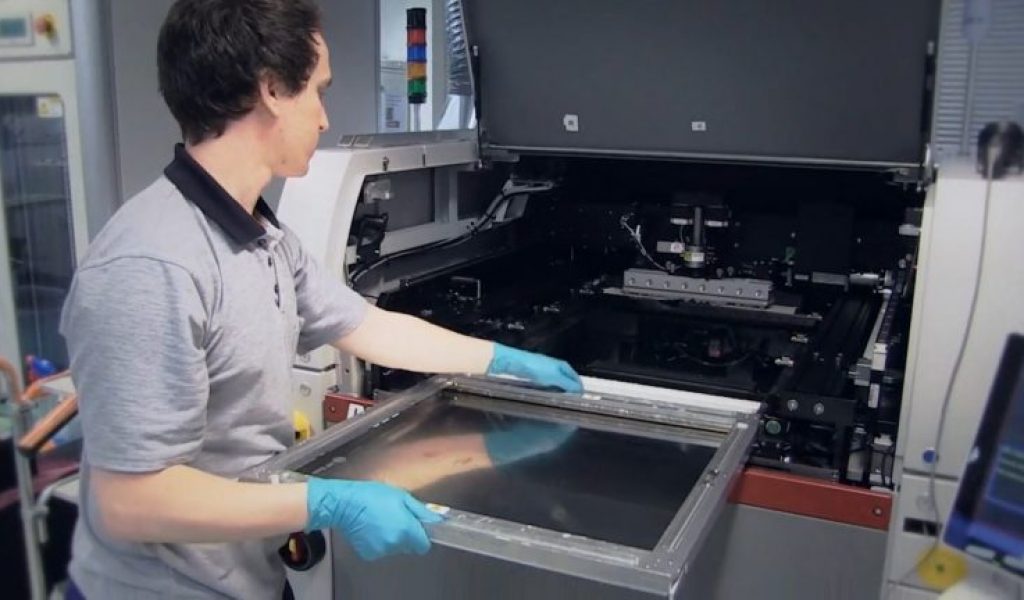
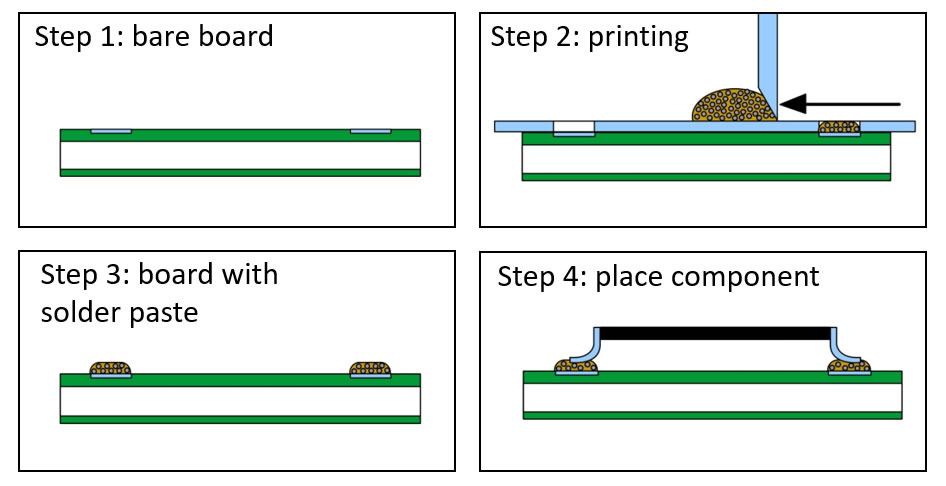
Clean stencils thoroughly before and after use to eliminate residual paste, inspecting for damage that could cause uneven deposits. Dispense small quantities onto the stencil, adding fresh paste incrementally to maintain consistency during printing. Use automated or manual squeegees with controlled pressure and speed, wiping blades clean between passes. Monitor printer parameters to avoid overheating, which activates flux prematurely. Inspect printed boards for excess paste or bridging before reflow, reducing rework exposure. Proper reflow profiles, verified per soldering standards, ensure complete volatilization without excessive residue.
Cleaning and Spill Response Protocols
Employ isopropyl alcohol or specialized cleaners for stencil and equipment wipe-downs, capturing rinsate in designated containers. Vacuum dry residues with HEPA-filtered units to prevent aerosolization, avoiding compressed air. For spills, contain with absorbent pads neutral to metals, transferring to labeled hazardous waste bins. Decontaminate surfaces with lead-specific removers if using leaded solder paste, followed by wet mopping. Document incidents for process improvement, integrating lessons into training. These steps safeguard against secondary exposures.
Solder Paste Disposal and Environmental Compliance
Segregate leaded solder paste waste from lead-free to comply with hazardous material classifications, directing leaded residues to licensed recyclers or treatment facilities. Empty containers may qualify for recycling if triple-rinsed, but consult local solder paste disposal guidelines to confirm. Avoid sewer disposal, as metals persist and bioaccumulate. Implement closed-loop cleaning systems to recapture solvents, reducing effluent volume. Track waste generation for regulatory reporting, supporting audit readiness. Adherence to environmental management principles minimizes ecological impact.
Troubleshooting Common Handling Issues
Paste thickening signals flux separation, often from temperature fluctuations; remix gently or discard if unrecoverable. Contamination from unclean tools leads to poor reflow and increased fume hazards, so enforce dedicated utensils. Leaded solder paste oxidation appears as discoloration, prompting immediate replacement to avert lead dust. Excessive viscosity during printing indicates over-refrigeration; extend acclimation time accordingly. Fume complaints point to ventilation shortfalls, requiring duct checks and flow verification. Systematic logging per J-STD-004 flux testing resolves root causes proactively.
Advanced Considerations for Leaded Solder Paste
Leaded solder paste offers superior wetting on challenging surfaces, but demands stringent controls due to toxicity. Regulations permit its use in exempt sectors like aerospace, balancing performance against risks. Enhanced monitoring includes air sampling for lead particulates and biological surveillance for operators. Transition protocols to lead-free involve alloy qualification and profile adjustments. Hybrid processes require clear labeling to prevent mix-ups. J-STD-001G process indicators ensure consistent safety across formulations.
Conclusion
Mastering safe handling practices for solder paste protects engineers from chemical exposures while safeguarding the environment through responsible disposal. Key actions include proper storage, PPE usage, ventilation, and waste segregation, all grounded in industry standards. Leaded solder paste requires extra vigilance amid evolving regulations, with MSDS solder paste serving as the primary reference. Integrating these protocols into daily workflows enhances reliability and compliance. Ultimately, proactive measures yield defect-free assemblies and sustainable operations.
FAQs
Q1: What are the primary storage conditions for solder paste safety?
A1: Store unopened solder paste refrigerated at 2 to 10 degrees Celsius in sealed containers, using FIFO rotation. Acclimate to room temperature for several hours before use to prevent moisture issues. Avoid refreezing opened paste, as this degrades flux activity. These practices maintain stability and reduce handling hazards.
Q2: How does MSDS solder paste guide safe handling?
A2: The MSDS solder paste details composition-specific hazards, exposure limits, and emergency procedures for fumes, skin contact, or ingestion. It specifies compatible PPE and first-aid steps, such as eye irrigation for splashes. Engineers should review it before each shift and update for new batches. This ensures tailored solder paste safety measures.
Q3: What are key solder paste disposal practices for leaded types?
A3: Treat leaded solder paste residues as hazardous waste, storing in sealed, labeled containers for professional disposal or recycling. Rinse empties with solvent into waste streams, avoiding drains. Segregate from lead-free to meet regulations. Local authorities dictate final handling for environmental protection.
Q4: How do leaded and lead-free solder paste differ in safety handling?
A4: Leaded versions heighten lead exposure risks via absorption or fumes, requiring gloves and rigorous cleaning. Lead-free pastes focus on flux irritation, with similar ventilation needs but lower toxicity. Both demand MSDS review, but leaded enforces stricter waste protocols under regulations. Process controls per standards unify approaches.
References
IPC J-STD-001G — Requirements for Soldered Electrical and Electronic Assemblies. IPC, 2017
J-STD-004B — Requirements for Soldering Fluxes and Cleansers. IPC, 2008
IPC-A-610H — Acceptability of Electronic Assemblies. IPC, 2019