Designing with high Tg PCBs—those resilient laminates boasting glass transition temperatures above 170°C—demands more than swapping materials; it's about orchestrating stackups, vias, and thermal profiles to conquer heat without sacrificing performance. In sectors like automotive and aerospace, where boards endure 150°C spikes and relentless cycles, overlooking high Tg PCB stackup symmetry or thermal expansion considerations can spell delamination or signal drift. Yet, when done right, these designs unlock reliability, enabling denser, faster electronics that thrive under stress.
As a consultant who's fine-tuned processes in factories churning out high Tg boards for EVs and avionics, I've seen thoughtful impedance control in high Tg PCBs cut crosstalk by 40% in prototypes. With the global high tg PCB market valued at USD 10.5 billion in 2023 and projected to reach USD 18.2 billion by 2030, fueled by EV and 5G surges, mastering these elements is non-negotiable. This comprehensive checklist, rooted in IPC standards and factory insights, covers high Tg PCB stackup, via design for high Tg PCBs, and more. Let's make your next design heat-proof and production-ready.
Understanding High Tg PCBs: Why Design Choices Drive Success
High Tg PCBs use advanced resins—often phenolic-cured FR-4 variants per IPC-4101C (Note 1)—to maintain rigidity beyond 170°C, far outpacing standard PCB FR4 material's 130-140°C threshold. This isn't just about surviving heat; it's foundational for thermal management, where CTE mismatches between copper (17 ppm/°C) and resin (jumping to 50-70 ppm/°C post-Tg) can warp boards over 0.75% if unchecked, per IPC-6012 specs (Note 2).
Design considerations matter because they bridge concept to fab floor. A flawed high Tg PCB stackup might lock in stresses during lamination at 200-220°C, while poor via design for high Tg PCBs risks cracking under thermal shock. In 2025, as advanced materials trend toward hybrids with ceramic fillers for 0.8-1.0 W/mK conductivity, these choices ensure impedance control in high Tg PCBs holds steady for high-speed signals, aligning with ISO 9001:2015 for traceable quality. Factories report 20% yield boosts when designs preempt thermal expansion considerations early, turning potential rejects into reliable performers.
High Tg PCB Stackup: Layering for Balance and Heat Resilience
The stackup is the blueprint of your high Tg PCB—dictating signal paths, power distribution, and thermal flow. For multilayers (6-12 layers common in automotive apps), symmetry around the neutral axis is key: mirror core thicknesses and copper weights to offset expansion stresses. Aim for 1.0-1.6 mm total thickness, with prepregs at 106-1080 weave for uniform resin flow during 400 psi pressing.
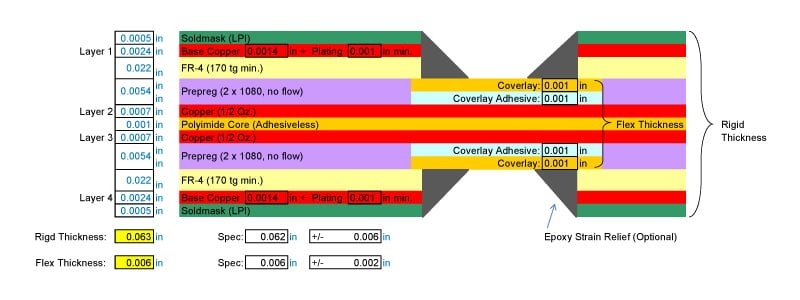
Incorporate thermal planes: Dedicate inner layers (e.g., L3/L4) to 2 oz copper pours, enhancing dissipation by 25% per IPC-2152 current guidelines (Note 3). For high Tg PCB stackup in power-heavy designs, space dielectrics at 0.1-0.2 mm to control capacitance. A factory example: An 8-layer EV board with asymmetric outer layers saw 1.2% warpage; symmetrizing dropped it to 0.4%, passing IPC-TM-650 cycling (Note 4).
Tools like stackup simulators predict these—input Tg 180°C and CTE 15 ppm/°C for z-axis to flag hotspots. In 2025 trends, embedded capacitors in high Tg stacks reduce layer count by 20%, slimming profiles for aerospace fits.
| Layer | Material/Type | Thickness (mm) | Copper Weight (oz/ft²) | Purpose |
|---|---|---|---|---|
| L1 (Top) | High Tg FR-4 Signal | 0.05 | 1 | Components/SMT |
| Dielectric 1 | 2116 Prepreg | 0.12 | - | Insulation |
| L2 | Power Plane | - | 2 | Heat Spreading |
| ... (Symmetric to Core) | Core (High Tg) | 0.4 | - | Structural |
| L10 (Bottom) | Signal/Ground | 0.05 | 1 | I/O |
Impedance Control in High Tg PCBs: Precision for High-Frequency Integrity
Impedance control in high Tg PCBs ensures controlled differential pairs (90-100 Ω typical) and singles (50 Ω) for RF/ADAS signals, where dielectric constant (Dk ~3.5-4.2) stability above Tg prevents mismatches. High Tg's low moisture absorption (<0.5%) aids this, but thicker dielectrics demand wider traces: Use IPC-2221B formulas for 5-10 mil lines at 0.15 mm height (Note 5).
Fabrication tolerance? Hold ±10% via controlled etching and registration. In a radar module case, unchecked impedance swings from thermal shifts caused 15% insertion loss; tuning to 85 Ω pairs with high Tg prepregs fixed it, per JEDEC JESD22 quals (Note 6). For 2025 high-speed apps, integrate test coupons in stackups for in-line TDR verification, catching drifts early.
Via Design for High Tg PCBs: Reliable Interconnects Under Stress
Via design for high Tg PCBs must counter the material's stiffness—aspect ratios capped at 8:1 (depth:diameter) to avoid drill smear during 100 krpm piercing. Opt for 0.15-0.25 mm vias, plated to 1 mil copper, with staggered arrays (pitch >2x dia.) to distribute loads.
Thermal expansion considerations shine here: Z-axis CTE ~40-60 ppm/°C risks barrel cracks in cycles; use filled vias or blind/buried types for >10:1 ratios in HDI. IPC-6012 mandates <5% voiding post-plating (Note 2). A factory tweak: Laser-drilled microvias in high Tg boards reduced breakout by 30%, enabling denser automotive sensors.
Thermal Expansion Considerations: Harmonizing Materials and Processes
Thermal expansion considerations are the linchpin—mismatches amplify during reflow (260°C peak, JEDEC J-STD-020E, Note 7), bowing boards or popping components. Match x-y CTE (12-18 ppm/°C) across layers via uniform high Tg grades; simulate gradients to keep deltas <20°C.
In multilayers, core-prepreg pairing prevents delam: Test per IPC-TM-650 2.6.7 for 1000 cycles (-40°C to 150°C). Real-world: An aerospace stack with mismatched CTEs failed 25% in quals; aligning to 15 ppm/°C variance passed MIL-STD-810, boosting MTBF 2x.
Comprehensive Checklist: Essential Steps for High Tg PCB Design
Streamline your workflow with this factory-vetted checklist, blending high Tg PCB stackup, impedance control in high Tg PCBs, via design for high Tg PCBs, and thermal expansion considerations.
- Stackup Planning: Symmetric layers? Copper balance >80%? Simulate warpage <0.75% (IPC-6012).
- Material Selection: Tg ≥170°C (IPC-4101C)? CTE match <5 ppm/°C variance? Moisture <0.5% post-bake.
- Impedance Targets: Calculate per IPC-2221B; include coupons for ±10% tolerance. Verify with TDR.
- Via Optimization: Aspect <8:1? Filled for thermal vias? Stagger for stress relief.
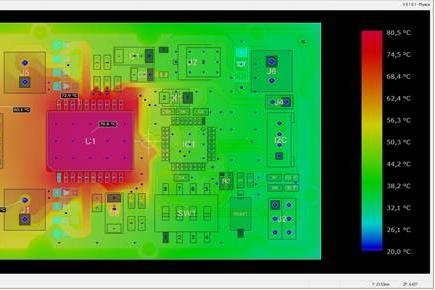
- Thermal Vetting: Model hotspots <80°C rise (IPC-2152); cycle test 500+ iterations.
- DFM Review: Lamination temp 200-220°C? Reflow profile per JEDEC? Quote with stackup gerbers.
Tick these, and your design sails through fab—I've seen checklists like this halve iterations in volume runs.
Case Study: Revamping Via Design for High Tg PCBs in an EV Power Module
Consulting for an EV maker in early 2025, we tackled a 10-layer high Tg board (Tg 180°C) plagued by 18% via failures in inverters hitting 160°C. Issues: 10:1 aspect vias cracking from z-CTE pulls and impedance drifts in power traces.
Redesign: Switched to blind vias (6:1 aspect) with thermal filler, symmetrized stackup for 0.3 mm dielectrics, and tuned impedance to 50 Ω singles via 8 mil widths. Thermal sims confirmed <15°C deltas. Post-fab, per IPC-TM-650, failures dropped to 1%, enabling 95% yields and $150K savings. This mirrors 2025's push for robust high Tg designs in electrified fleets.
Conclusion
High Tg PCBs demand intentional design—from balanced high Tg PCB stackup to vigilant thermal expansion considerations—to deliver unflinching performance in heat-soaked realms. By prioritizing impedance control in high Tg PCBs and smart via design for high Tg PCBs, you not only meet IPC benchmarks but future-proof your boards for tomorrow's demands.
As your advisor, I recommend baking this checklist into your CAD flow—it's the difference between good and great. Let's craft designs that endure, one layer at a time.
FAQs
Q1: What key factors define a reliable high Tg PCB stackup?
A1: A strong high Tg PCB stackup features symmetric layering around the neutral axis, matched CTE materials (<5 ppm/°C variance), and thermal planes for even heat flow. Per IPC-4101C, this keeps warpage under 0.75% during 200°C lamination, ideal for automotive multilayers up to 12 layers.
Q2: How do you achieve impedance control in high Tg PCBs for high-speed signals?
A2: Impedance control in high Tg PCBs relies on precise dielectric thicknesses (0.1-0.2 mm) and trace widths (5-10 mil) calculated via IPC-2221B. Include test coupons for TDR checks, ensuring ±10% tolerance despite Tg stability, crucial for 5G radar with minimal Dk drift above 170°C.
Q3: What are best practices for via design for high Tg PCBs?
A3: Via design for high Tg PCBs caps aspects at 8:1, uses laser-drilling for microvias (<0.15 mm), and incorporates fillers to counter z-CTE stresses (40-60 ppm/°C). IPC-6012 voids <5% post-plating prevent cracks, supporting dense HDI in aerospace apps with 500+ cycle reliability.
Q4: Why are thermal expansion considerations critical in high Tg PCB design?
A4: Thermal expansion considerations mitigate CTE mismatches that cause delamination or warpage in cycles to 150°C. Match layers to 12-18 ppm/°C x-y per IPC-TM-650 testing, reducing risks by 30% in EV boards and ensuring JEDEC-compliant thermal shock performance.
Q5: How does a high Tg PCB stackup impact overall thermal management?
A5: Effective high Tg PCB stackup with inner copper planes boosts dissipation (0.8 W/mK), limiting hotspots to <80°C rise per IPC-2152. Symmetric builds and thermal vias enhance this, cutting failures 20% in power modules and aligning with 2025 trends for sustainable electronics.
References
(1) IPC-4101C — Specification for Base Materials for Rigid and Multilayer Printed Boards. IPC – Association Connecting Electronics Industries, 2006.
(2) IPC-6012 — Qualification and Performance Specification for Rigid Printed Boards. IPC, 2017.
(3) IPC-2152 — Standard for Determining Current Carrying Capacity in Printed Board Design. IPC, 2009.
(4) IPC-TM-650 — Test Methods Manual. IPC, 2020 (Method 2.6.7 for Thermal Shock).
(5) IPC-2221B — Generic Standard on Printed Board Design. IPC, 2012.
(6) JEDEC JESD22 — Reliability Test Methods for Semiconductor Devices. JEDEC Solid State Technology Association, 2019.
(7) JEDEC J-STD-020E — Moisture/Reflow Sensitivity Classification for Nonhermetic Surface Mount Devices. JEDEC, 2014.