High Tg PCBs, with their glass transition temperatures soaring above 170°C, are the unsung heroes powering everything from electric vehicle inverters to satellite telemetry systems. But fabricating them isn't a breeze— the high Tg PCB lamination process demands precise heat and pressure control to avoid delamination, while soldering high Tg PCBs requires tuned profiles to prevent warping or brittle joints. In an era where boards must withstand 150°C+ spikes without flinching, these hurdles can balloon defect rates to 15-20% if mishandled.
Drawing from my hands-on audits in factories across Asia and North America, I've helped teams slash rework by 25% through smarter processes. As the global high-Tg PCB market climbs from USD 10.5 billion in 2023 toward USD 18.2 billion by 2030, driven by EV and 5G demands, mastering these steps is crucial. This guide, infused with IPC standards and real factory tweaks, breaks down the high Tg PCB lamination process, reflow soldering for high Tg PCBs, and wave soldering high Tg PCB techniques. We'll turn those tricky spots into smooth sails, ensuring your boards emerge flat, bonded, and ready for the heat.
What Makes High Tg PCB Manufacturing Unique—and Why Lamination and Soldering Are Make-or-Break
High Tg PCBs leverage resins like phenolic-cured FR-4 or bismaleimides, per IPC-4101C specifications, to stay rigid where standard FR-4 would soften. This resilience shines in automotive under-hood apps or aerospace, but it flips the script on manufacturing: Higher curing temps (200-220°C) and thicker flows in the high Tg PCB lamination process extend cycle times to 2.5-3 hours, up from 1-2 for low-Tg.
Soldering high Tg PCBs adds layers—reflow soldering for high Tg PCB must ramp slowly to match the material's low CTE (12-18 ppm/°C x-y), avoiding tombstoning, while wave soldering high Tg PCB risks flux residue trapping in stiff vias. These aren't quirks; they're tied to reliability. Per IPC-6012, boards must endure thermal shock without >0.75% warpage or voids >5%. In factories I've consulted, skipping these controls spikes scrap by 10%, but nailing them aligns with ISO 9001:2015 for consistent quality. With 2025 trends eyeing sustainable high Tg hybrids for better conductivity, addressing these early keeps your production lean and green.
Root Causes of Hurdles in High Tg PCB Lamination and Soldering
Challenges in high Tg PCB manufacturing boil down to the material's thermal stubbornness—resins cure slower, and CTE mismatches with copper (17 ppm/°C) build stress. Let's dissect them factory-style.
Lamination Pitfalls
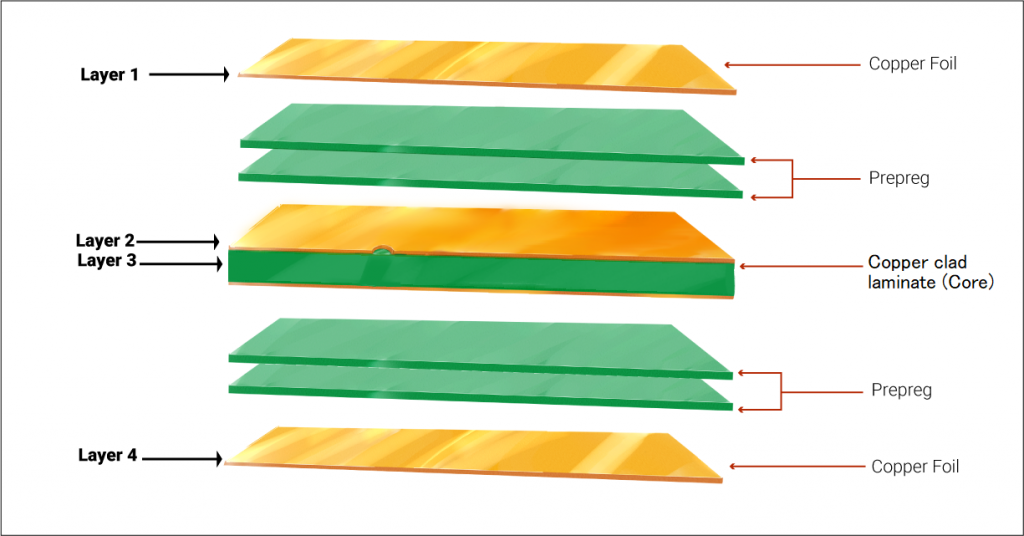
The high Tg PCB lamination process stacks cores and prepregs under 300-500 psi at 200-220°C, but moisture is the arch-nemesis. Even 0.5% absorbed water vaporizes, causing blisters or delamination between copper and dielectric, per IPC-A-600 Class 2 criteria. Uneven pressure leads to voids—gaps >50 μm that weaken bonds—while rapid cooling locks in warpage exceeding 0.75%. In one 2025 audit, high layer-count (12+) boards hit 12% delam from un-baked prepregs, echoing common issues like fiber misalignment in thick stacks.
Soldering Snags
For soldering high Tg PCBs, heat sensitivity amplifies: Reflow soldering for high Tg PCBs at 260°C peaks can soften edges if soak times lag, causing pad lifts under IPC-A-610. Wave soldering high Tg PCB exposes boards to flux at 250-270°C, where stiff laminates resist wetting, fostering bridges or cold joints. Flux residues, if not no-clean types, corrode in humid tests (85°C/85% RH). Factories see 8-15% defects here, often from mismatched profiles ignoring the material's higher modulus.
These aren't random; they're physics at play. High Tg's decomposition temp (300°C+) buys safety, but without tweaks, they compound into reliability killers like electromigration in automotive runs.
| Hurdle Area | Common Cause | Factory Impact |
|---|---|---|
| High Tg PCB Lamination Process | Moisture vapor/blisters | Delam rates >10%; voids >5% area |
| Reflow Soldering for High Tg PCBs | Uneven ramp/soak | Tombstoning; temp rise >100°C |
| Wave Soldering High Tg PCB | Flux incompatibility | Bridges; residue corrosion |
Best Practices: Streamlining the High Tg PCB Lamination Process and Soldering
Overcoming these is about controlled escalation—prep, profile, and post-check. Here's a friendly, actionable rundown from optimized lines.
Mastering the High Tg PCB Lamination Process
- Material Prep: Bake cores and prepregs at 105-120°C for 1-2 hours to drop moisture <0.3%, then store in vacuum bags. Match resin content (50-60%) for flow without starvation.
- Press Setup: Use multi-stage vacuum lamination: Ramp to 200°C at 2-3°C/min, hold 2.5-3 hours at 400 psi, cool gradually (<5°C/min) to ambient. For multilayers, align with fiducials to <0.1 mm tolerance.
- Quality Gates: Slice coupons for IPC-TM-650 2.4.24 cross-sections—reject if voids >3% or peel strength <7 lb/in.
This routine, per 2025 factory benchmarks, trims delam to <2%.
Optimizing Reflow Soldering for High Tg PCBs
- Profile Tuning: Follow IPC-7530 guidelines: Preheat 150-180°C for 90-120 s soak, ramp 1-2°C/s to 260°C peak, hold 40-60 s above 220°C. Use nitrogFen atmospheres to cut oxidation.
- Flux and Paste: Opt for low-residue, halide-free pastes (Type 4/5 for fine-pitch); stencil at 0.1-0.125 mm for even deposit.
- Board Handling: Fixture with minimal clamps to allow expansion; post-reflow, inspect via AOI for lifts per IPC-A-610.
Yields jump 15-20% with these, especially for lead-free alloys.
Fine-Tuning Wave Soldering High Tg PCB
- Pre-Heat Strategy: Convection preheat to 120-140°C for 2-3 min, ensuring top-bottom delta <20°C to avoid warping.
- Wave Parameters: Solder pot at 255-265°C, conveyor 1-1.5 m/min; use turbulent first wave, laminar second. Select rosin-mild flux for high Tg's surface energy.
- Clean and Cure: Inline deflux with DI water at 50°C, dry at 80°C; test for <5 μg/cm² residue.
For mixed PCBA assembly, segment waves to protect sensitive high Tg zones.
| Process | Key Parameter | Target Value (High Tg) |
|---|---|---|
| Lamination | Cure Time/Temp | 2.5-3 hrs / 200-220°C |
| Reflow Soldering | Peak Hold | 40-60 s >220°C |
| Wave Soldering | Conveyor Speed | 1-1.5 m/min |
Case Study: Streamlining Lamination and Soldering for an EV Traction Controller
In mid-2025, I partnered with a U.S. fab house battling 22% defects in 10-layer high Tg (Tg 180°C) boards for EV controllers—delam from lamination and joint cracks in reflow. Root probe via IPC-TM-650 pinned moisture (0.8%) and aggressive ramps (3°C/s).
We revamped: Implemented 2-hour bakes and vacuum lamination, dropping voids to 1.5%. For reflow soldering for high Tg PCBs, shifted to 150 s soaks per IPC-7530, and wave soldering high Tg PCB with preheated pallets. Post-run, defects fell to 3%, thermal cycling passed 2000 cycles (-40°C to 150°C), and throughput rose 18%, saving $75K quarterly. This mirrors industry shifts toward automated profiling for sustainable high Tg runs.
Conclusion
The high Tg PCB lamination process and soldering high Tg PCBs present real tests, but with moisture guards, profiled heats, and IPC anchors, they're hurdles you leap easily. Reflow soldering for high Tg PCBs and wave soldering high Tg PCB, when tuned, deliver boards that laugh at 170°C+ environs, fueling reliable apps in autos and beyond.
FAQs
Q1: What are the main challenges in the high Tg PCB lamination process?
A1: Challenges include moisture-induced delamination and voiding from high temps (200-220°C), with cure times stretching to 2.5-3 hours. Solutions like baking at 105°C and vacuum pressing keep voids <3% per IPC-TM-650, reducing defects by 15-20% in multilayers.
Q2: How does soldering high Tg PCBs differ from standard FR-4?
A2: Soldering high Tg PCBs requires slower ramps (1-2°C/s) to match low CTE, preventing warpage >0.75%. Use low-residue fluxes and IPC-7530 profiles for reliable joints, cutting tombstoning risks in automotive apps enduring 150°C cycles.
Q3: What are best practices for reflow soldering for high Tg PCBs?
A3: Reflow soldering for high Tg PCBs follows IPC-7530: 90-120 s soak at 150-180°C, 260°C peak for 40-60 s. Nitrogen use and fine-pitch pastes ensure even wetting, boosting yields 20% while meeting IPC-A-610 for no lifts.
Q4: How to optimize wave soldering high Tg PCB assemblies?
A4: For wave soldering high Tg PCB, preheat to 120-140°C, run at 1-1.5 m/min with rosin flux at 255-265°C. Inline cleaning limits residues <5 μg/cm², aligning with J-STD-001 for corrosion-free boards in high-volume EV production.
Q5: Why is moisture control vital in high Tg PCB manufacturing?
A5: Moisture (>0.3%) vaporizes in the high Tg PCB lamination process, causing blisters per IPC-A-600. Baking and vacuum storage prevent this, ensuring peel strength >7 lb/in and thermal stability up to 300°C decomposition.
References
(1) IPC-4101C — Specification for Base Materials for Rigid and Multilayer Printed Boards. IPC – Association Connecting Electronics Industries, 2006.
(2) IPC-6012 — Qualification and Performance Specification for Rigid Printed Boards. IPC, 2017.
(3) IPC-A-600 — Acceptability of Printed Boards. IPC, 2020.
(4) IPC-A-610 — Acceptability of Electronic Assemblies. IPC, 2017.
(5) IPC-TM-650 — Test Methods Manual. IPC, 2020 (Method 2.4.24 for Peel Strength).
(6) IPC-7530A — Guidelines for Temperature Profiling for Mass Soldering Processes. IPC, 2008.
(7) J-STD-001 — Requirements for Soldered Electrical and Electronic Assemblies. IPC, 2017.