Overview
This diagram shows the charger section for an electric scooter battery. Although not complex, it can be confusing for beginners. The circuit charges the battery with an appropriate charging current. At the start of charging, the red LED lights and the fan runs to cool the charger. When charging is complete or when the charger enters trickle mode, the red LED goes off, the green LED turns on, and the fan stops.
Main functional blocks
The circuit includes an indicator control circuit, a fan control circuit, and an overcurrent protection circuit. With a basic understanding of transistors and operational amplifiers, focus on the following two points to clarify the circuit behavior.
Key points
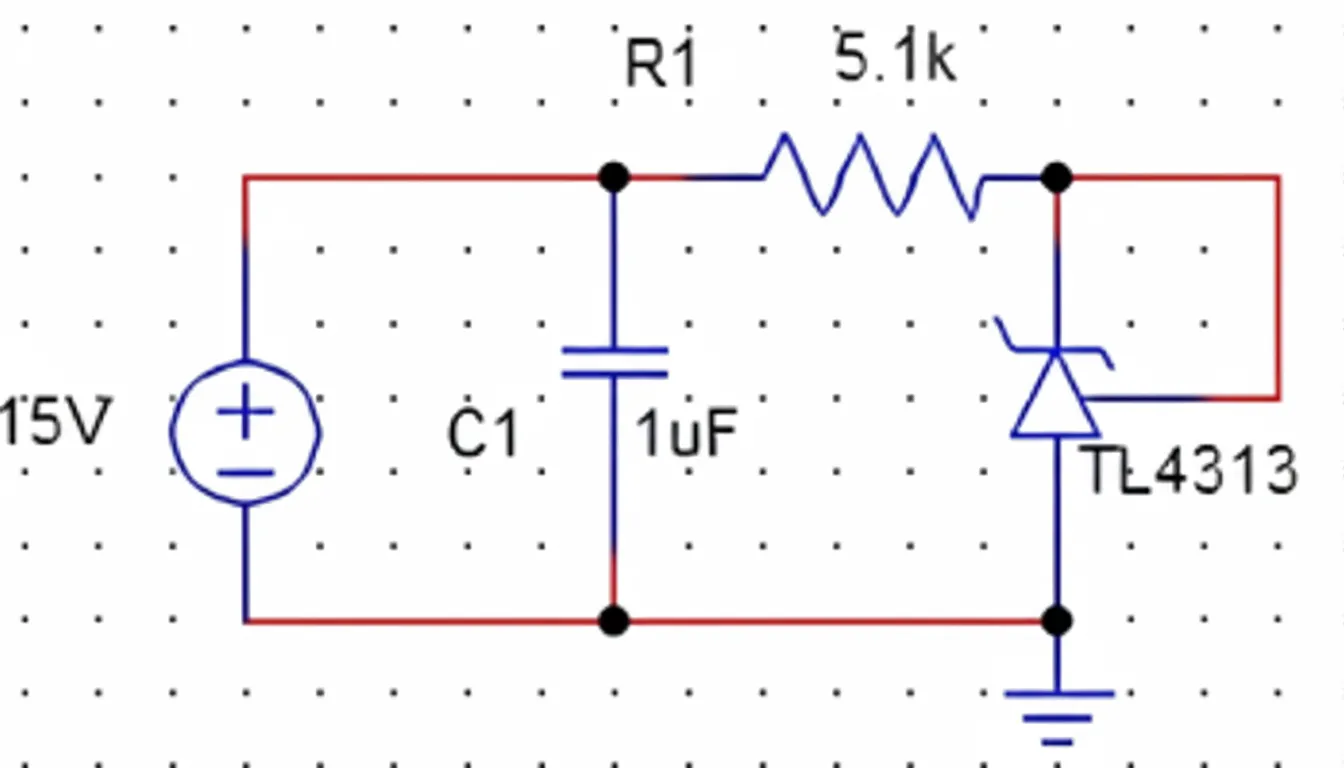
1. ZD1 is a 12 V Zener diode used as a voltage reference. With the Zener cathode connected into the circuit and its anode grounded, the voltage at point A is fixed at 12 V regardless of the voltage above R19. Points B, C, D, E, F (VCC+ of the LM358), G, H, and the outputs J and K of the LM358 op amp channels are also at 12 V. Knowing G and H are at 12 V, resistor divider networks yield voltages of 55 mV and 240 mV at points M and N respectively, which correspond to the inverting inputs (pins 2 and 6) of LM358 channels 358A and 358B.
2. The charging current flows from the battery negative terminal through resistor R1 to ground, producing a voltage across R1 that increases or decreases with charging current. R1's voltage can be calculated from the current using Ohm's law. Using these voltages, the circuit behavior is as follows.
How it works
When 358A's non-inverting input (pin 3) exceeds its inverting input (pin 2), i.e., charging current > 2.4 A, the output at pin 1 goes high. Through the feedback network to the PWM module, this reduces the duty cycle of the power-control IC, decreasing the secondary-side current so that the charging current does not exceed 2.4 A, providing overcurrent protection.
When 358B's non-inverting input (pin 5) exceeds its inverting input (pin 6), i.e., charging current > 0.55 A, the output at pin 7 goes high (12 V), making point J 12 V. Through R25 this powers the red LED, lighting it. Because the red LED clamps the voltage, the top of R41 is at about 2.2 V; after R41 and R40 form a divider, the base of the 8050 transistor receives a high level, turning on its C-E path and completing the fan supply circuit, so the fan starts.
When 358B's non-inverting input (pin 5) is below its inverting input (pin 6), i.e., charging current < 0.55 A, the circuit enters trickle charging. The output at pin 7 goes low (0 V), so point J is at ground potential; the red LED is unpowered and turns off; the 8050 transistor base is unpowered and its C-E path is cut off, stopping the fan. A PNP1050 device goes low to drive the base of NPN9013 high; NPN9013 conducts from C to E, creating a supply path from point C (12 V) through NPN9013 C-E, R32, and the green LED, lighting the green LED.