What is ground resistance?
Ground resistance is the resistance encountered when current flows from a grounding electrode into the earth, then through the earth to another grounding body or disperses to a distant point. It includes the resistance of grounding conductors and electrodes, the contact resistance between electrodes and soil, and the earth resistance between grounding bodies or to remote earth. Ground resistance indicates how well an electrical installation is connected to earth and reflects the scale of the grounding network. In single-point grounding systems or under strong interference conditions, measurement can be performed using auxiliary electrodes.
Types of grounding
- Protective grounding: Grounding of metallic enclosures of electrical equipment, concrete structures, utility poles, etc., to prevent danger to personnel if insulation fails and live parts contact the enclosure.
- Antistatic grounding: Grounding of flammable liquid or gas storage tanks and pipelines, and of electronic equipment, to prevent hazards from static charge.
- Lightning protection grounding: Grounding of lightning protection devices (such as lightning rods) to divert lightning into the earth and reduce overvoltage hazards to equipment and people; also called overvoltage protection grounding.
- Functional (system) grounding: Connecting a point of an electrical power system (for example, a neutral point) directly to earth or via neutral grounding reactors, resistors, etc., such as grounding the neutral of transformers and instrument transformers.
Ground resistance requirements
- Independent lightning protection grounding resistance should be ≤ 10 Ω.
- Independent safety protective grounding resistance should be ≤ 4 Ω.
- Independent AC functional grounding resistance should be ≤ 4 Ω.
- Independent DC functional grounding resistance should be ≤ 4 Ω.
- Antistatic grounding resistance is generally required to be ≤ 100 Ω.
- Shared grounding electrodes (combined grounding) should not exceed 1 Ω.
- Instruments should be handled carefully during transport and use to avoid severe vibration.
Note: The ground conductor of a lightning rod belongs to lightning protection grounding. If the lightning rod grounding resistance and the antistatic grounding resistance meet their respective requirements, the antistatic equipment grounding may be connected to the lightning rod grounding conductor. Because the lightning rod grounding resistance is typically much lower than the antistatic grounding resistance, most lightning current will discharge through the lightning rod grounding, and the current through the antistatic grounding is negligible.
Why is the ground resistance generally limited to 4 Ω?
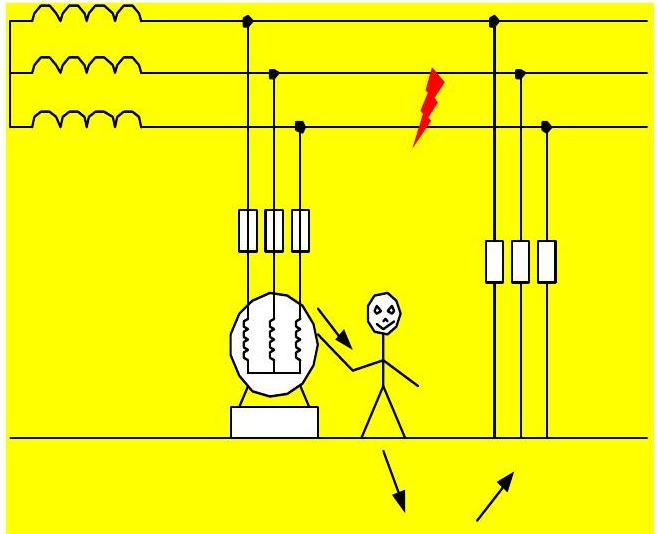
Ground resistance provides a discharge path to earth to ensure safety. Many household appliances have metal enclosures that users may touch, such as refrigerators or washing machines. If an appliance develops a fault, the enclosure may become energized and present a shock hazard. Grounding directs fault current into the earth, reducing the risk.
Ideally, ground resistance should be as low as possible. According to Ohm's law, for a fixed voltage, current is inversely proportional to resistance. With a given operating voltage, a smaller grounding resistance allows more fault current to flow into earth, improving the discharge effect.
Calculation basis
Under normal conditions, fault current in electrical systems typically does not exceed 10 A. If ground resistance is 4 Ω, the fault voltage across the grounding resistance is 4 × 10 = 40 V. Standards based on experimental data specify that under normal and fault conditions, the voltage between any two conductors or between any conductor and earth should not exceed 50 V AC (rms) for 50–500 Hz. A fault voltage below 50 V is generally considered safer and is unlikely to cause harmful electric shock. Therefore, the maximum allowable ground resistance is specified as 4 Ω in those cases where the expected fault current is around 10 A.
Important considerations
Compliance with applicable laws and industry standards is a key reason for maintaining prescribed grounding resistance values. Power system construction, operation, and management must follow a set of legal and industry regulations. These requirements are derived from extensive practical experience, particularly safety-related clauses that are informed by past incidents. Standards that specify grounding resistance aim to reduce safety hazards and protect personnel.
For example, electrical safety standards define grounding resistance requirements for different types of electrical equipment. If grounding resistance exceeds the specified value, the equipment may present a safety hazard and fail to meet regulatory requirements, creating a risk to nearby personnel.
Appropriate grounding methods
Choosing an appropriate grounding method helps ensure ground resistance remains ≤ 4 Ω. Different installations require different grounding approaches. For example, for dry-type transformers, busbar grounding can reduce bus inductance and improve interference immunity, which helps maintain a low grounding resistance.
Soil environment and grounding materials
Soil resistivity, moisture content, temperature, and other environmental factors affect ground resistance. Selecting suitable grounding materials and a proper grounding configuration can adjust the resistance to meet the required value and keep it ≤ 4 Ω.
Application scenarios
Common grounding scenarios include:
- Lightning protection grounding: Lower grounding resistance provides a faster path for lightning current to dissipate into the earth, improving safety during a strike.
- Appliance safety grounding: Many large household appliances (refrigerators, washing machines, air conditioners) require grounding of the enclosure. If the enclosure becomes energized, a low grounding resistance directs leakage current into earth. If grounding resistance is too high, and exceeds human body resistance, a person touching the enclosure may become the discharge path and suffer electric shock.
- Functional and antistatic grounding: Electronic equipment often requires low ground resistance to prevent static buildup and ensure reliable operation.