Introduction
If you have been active in amateur radio for a long time, you will have spent a lot of time discussing antennas. Topics include how they work, where to get them, how to build them, how rugged they are, how cheap they are, how efficient, and how they resonate. We have discussed almost every aspect you can imagine.
Why Antennas Differ
It may not be obvious why antennas attract so much attention. Antennas are not all the same. Like the wide variety of cars on the road or the many choices of mobile phones, antennas are designed and built for specific purposes. By changing an antenna's size, we change characteristics such as frequency response, gain, weight, cost, and many other parameters.
Step back and compare two antennas, for example a vertical dipole and a horizontal dipole. Even if they are intended for exactly the same frequency range, they differ physically. Aside from cost and construction, how do you meaningfully compare the two?
Simple On-Air Comparison Is Misleading
In the past, I suggested using a coaxial switch to switch between two connectors and connect one antenna or the other to the transceiver. With this kind of A/B test you can listen to one antenna, then switch to the other and hear the difference. If the difference is large enough you will notice it; sometimes the differences are obvious. You might find that a station on the other side of the world is much stronger on one antenna than the other, or that the noise level on one antenna is much higher than on the other. Based on such a comparison you might conclude that one antenna is "better" than the other.
If you do reach that conclusion, I can almost guarantee you are wrong. The reason is that antenna performance depends on something you cannot control: the ionosphere, which is constantly changing.
Collecting Reliable Data
A more effective method is to set up your station and configure it to monitor WSPR or other weak-signal transmissions using one antenna (for example, for a week), and then repeat the measurement using the other antenna. If you collect data for a long enough period you will gather meaningful data about antenna performance under different conditions. That knowledge helps you make more reliable choices when trying to contact rare stations or chasing contest multipliers at 2 a.m.
You do not need to spend much or any money to do these tests and collect data.
Practical Setup Options
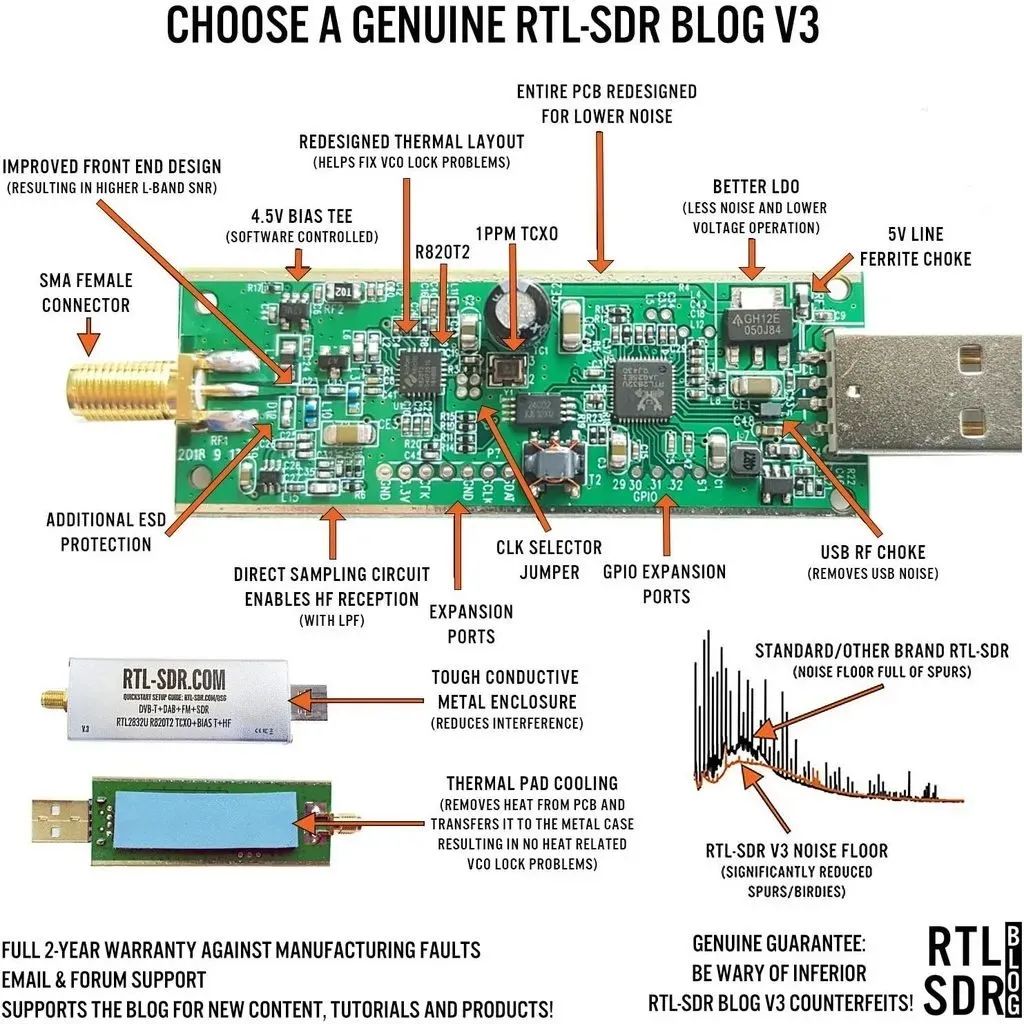
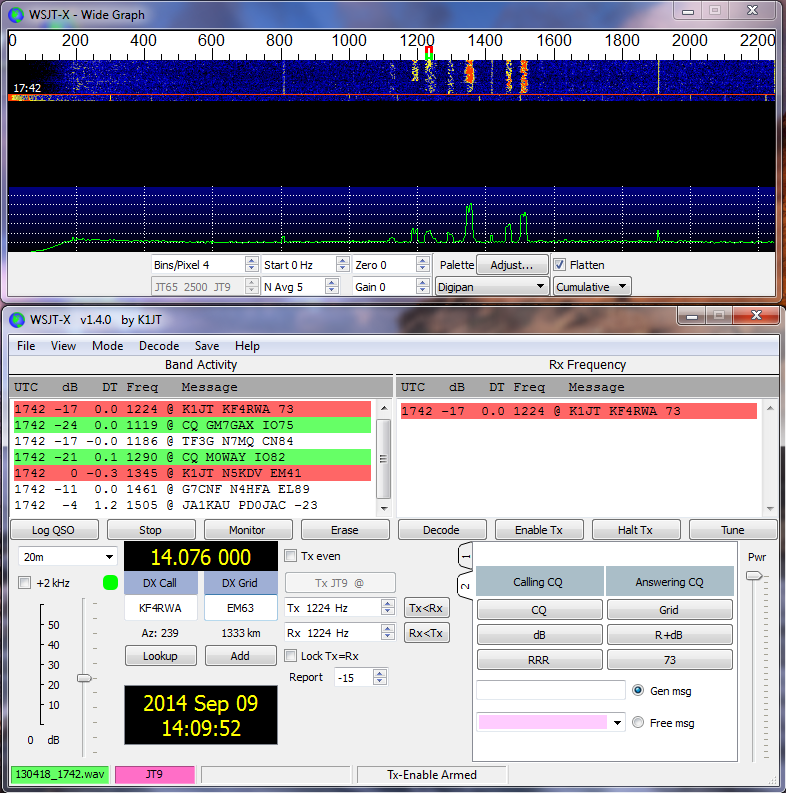
You can use a conventional radio and a computer running WSJT-X, or a single-board computer such as Raspberry Pi with an external DVB-T tuner, an RTL-SDR dongle, or a full-featured PC. There are ready-made hardware options that integrate these elements on a single board.
Modes and Automation
WSJT-X implements modes such as FT8, JT4, JT9, JT65, QRA64, ISCAT, MSK144, and WSPR, and includes an Echo mode for detecting and measuring signals you reflect from the Moon. These modes are designed to make reliable, confirmable QSOs under extremely weak-signal conditions.
If desired, you can automate antenna switching to change antennas multiple times per hour and observe the test in near real time. You do not need two antennas at a station to perform useful tests; groups can perform comparative measurements during field events.
If you are experimenting, you can even connect a wire to the back of an SDR dongle and begin receiving immediately. The more you measure, the better you will understand how bands vary over time and how to choose the right antenna for current conditions.
Note
WSJT-X and related weak-signal measurement techniques provide a practical way to gather repeatable data on antenna performance despite ionospheric variability.