Overview
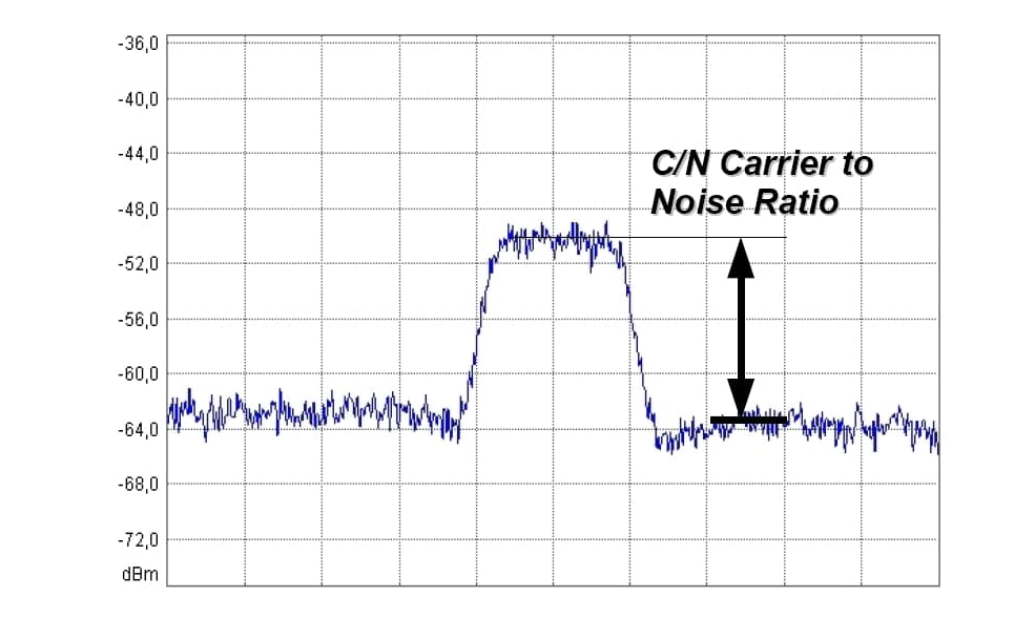
When discussing receiver sensitivity, one common communications term is the carrier-to-noise ratio, usually written CNR or C/N. As the name implies, CNR is the ratio of carrier power to noise power. It describes the received carrier strength relative to the received noise level, as shown below. Generally, a higher CNR corresponds to better communication quality and greater receiver stability and reliability.
Calculating and Measuring CNR
Based on the definition above, CNR is the ratio of received carrier power C to total received noise power N, i.e. C/N. In the dB representation commonly used by RF engineers:
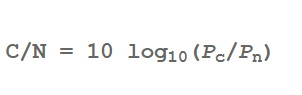
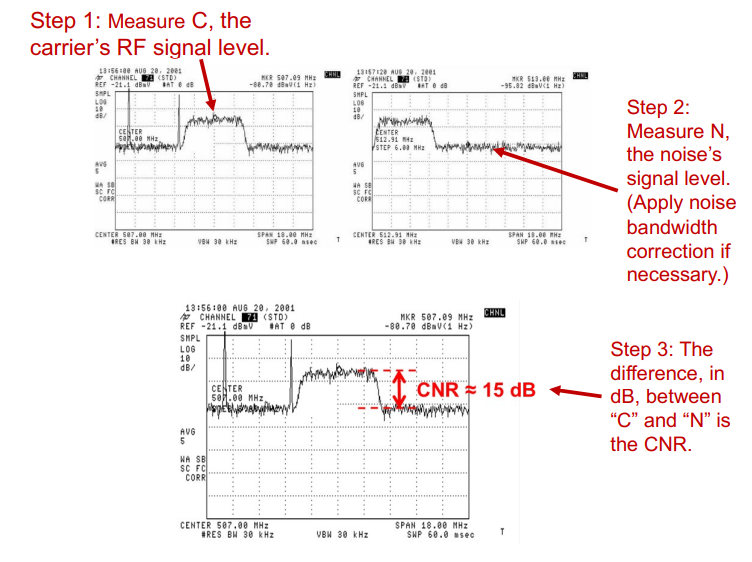
Thus, after measuring the received carrier power and the total noise power, CNR can be obtained directly. The measurement process is illustrated below.
Difference Between CNR and SNR
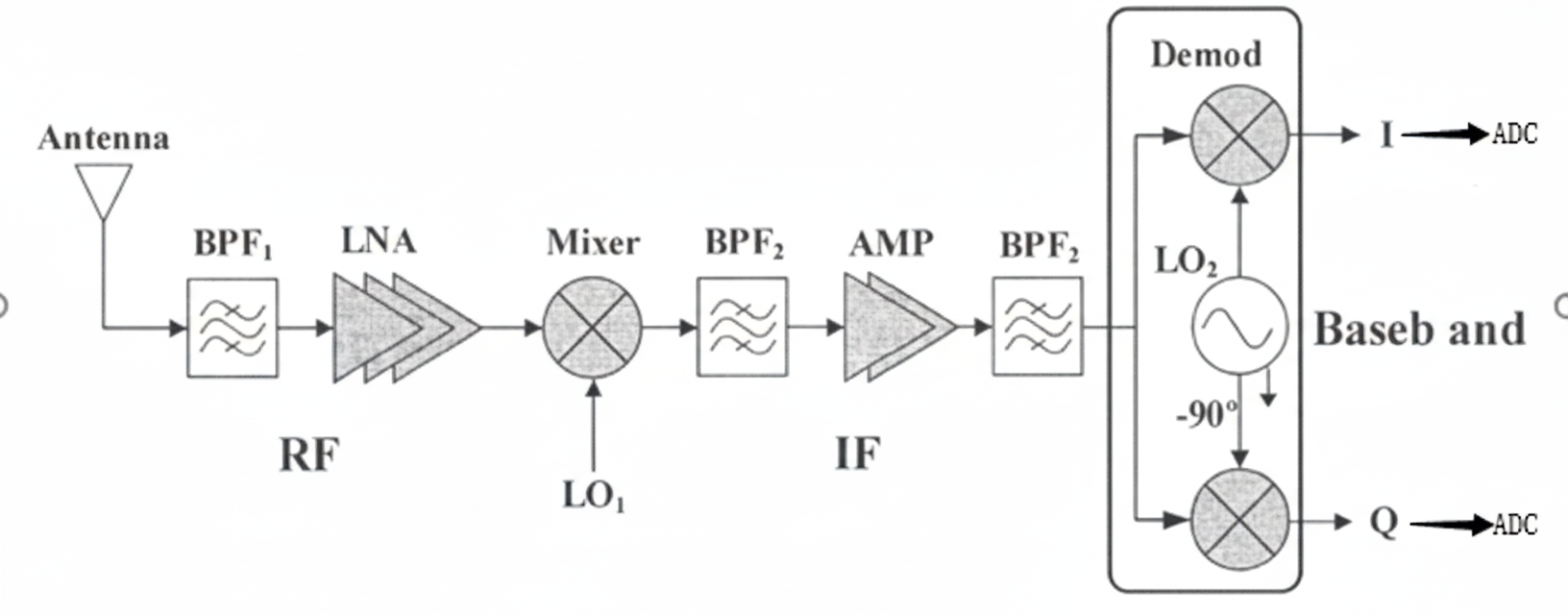
Unlike the signal-to-noise ratio calculated before digital modulation, carrier-to-noise ratio (CNR) is calculated after modulation. Modulation is the process of loading information onto a carrier, and that carrier is the "carrier" in CNR. Therefore, modulation and demodulation form the boundary between SNR and CNR in a communication system. CNR relates to signal quality in the analog RF domain, while SNR relates to signal quality in the digital baseband.
Conclusion
SNR and CNR are both key parameters for describing signal quality in communication systems, and both are important in RF design. Improving signal quality and communication reliability are primary goals in RF engineering.