Overview
Argotec and the Jet Propulsion Laboratory are developing relay satellites to provide bandwidth for more than 90 planned lunar missions.
Since the Apollo era, the Moon has become the target of an unprecedented number of missions. Space agencies and commercial entities are planning robotic and crewed lunar missions. For example, NASA has multiple missions planned that use robotic access and crewed landings, and has considered establishing a small lunar orbital outpost with international partners within the next decade. That outpost, sometimes referred to as a lunar gateway or station, would be used to store supplies, host visiting astronauts, and support communications between the Moon and Earth.
By 2030, there are more than 90 planned lunar missions; the orbital outpost could be among the largest. Not all planned missions will necessarily fly, but many will proceed in some form. We expect interest in the Moon to grow, potentially leading to long-term human presence on the lunar surface.
Why a Relay Network Is Needed
If permanent or long-duration lunar presence develops, residents and assets on the Moon will need reliable communications with Earth. Apollo-era missions used direct radio links to Earth, but direct-line communication is not always possible. Large portions of the far side and the polar regions cannot see Earth directly. Even on the near side, hills and crater walls block line of sight. Long-distance direct communication over hundreds of thousands of kilometers requires a powerful terminal with a large antenna or a high-power amplifier, or both. Small robotic assets cannot accommodate such large systems due to volume and power constraints. A better approach is to establish a network of relay spacecraft in lunar orbit to provide continuous, ubiquitous coverage. Argotec and JPL are collaborating on a relay constellation concept called the Perseus constellation.
Constellation Concept
Argotec is developing the spacecraft concept; one of this article's authors leads Argotec's R&D. JPL is providing radio and antenna subsystems; another author is a JPL project manager. The proposed system uses 24 relay satellites distributed across four orbital planes, with six satellites per plane. This configuration provides continuous coverage over the poles and near-continuous coverage nearly everywhere else, with only brief, infrequent outages. With such a relay system, missions anywhere on the lunar surface could maintain reliable, near-continuous contact with Earth.
Orbital and Coverage Challenges
There are several challenges to placing relay satellites in lunar orbit. First, the orbits should be stable, requiring little or no stationkeeping. Second, the chosen orbits must provide continuous or near-continuous physical line-of-sight to lunar surface "hot spots" where human or robotic activity is likely. Third, while maximizing visibility to those hotspots, the constellation should not forgo connectivity to other parts of the lunar surface.
The lunar south pole is a likely hotspot because some crater interiors contain water ice. For long-duration crewed missions, extracting water on the Moon may be easier than transporting water from Earth. Water can also be electrolyzed into hydrogen to produce rocket propellant. Another potential hotspot is the far-side equatorial region, where large radio telescopes may be deployed. Besides communication, astronauts, rovers, and scientific instruments will need positioning information. Relay satellites can serve as a lunar-positioning system by measuring signal time-of-arrival from multiple satellites to a surface point. In general, more relays and orbits improve navigation and coverage, but each additional satellite incurs launch and operations cost. The objective is to provide the best possible service and coverage with the fewest satellites.
Frozen Orbits and Coverage Metrics
Argotec's relay network concept uses a class of stable orbits called frozen orbits. Stable orbits make it easier for satellites to remain on the specified orbit for five years or longer. The proposed orbits are elliptical, with a 12-hour period and a 57° inclination, a periselene (closest point) altitude of 720 km, and an aposelene (farthest point) altitude of 8,090 km. Satellites move slowest near aposelene and fastest near periselene. To maximize contact time, the orbit's aposelene should be roughly above potential hotspots. Using the selected orbit, both lunar poles have simultaneous coverage by three satellites 94% of the time and at least one satellite at any time. Over the lunar equator, at least one satellite is overhead 89% of the time, and three-satellite coverage occurs 79% of the time.
Even at aposelene, relay satellites are less than 10,000 km from the lunar surface, compared with roughly 400,000 km between Earth and Moon. For users with direct Earth visibility, a lunar-orbit relay shortens the Earth-link distance by about a factor of 40. Shorter distances let humans or robots on the surface maintain low-data-rate links to Earth without large communication terminals. With relays, small surface terminals can forward signals back to Earth. Relays also enable near-real-time voice and video between two locations on the lunar surface. Without relays, communications must route via Earth, causing a round-trip delay of about 3 seconds, which is disruptive for interactive voice and video.
Bandwidth and Use Cases
Different missions have different bandwidth needs. Simple text or voice requires only a few kilobits per second, while high-definition video or radio astronomy can require multiple megabits per second. Given the number of planned lunar missions, relay satellites must handle multiple simultaneous connections. For low-bandwidth applications such as text and voice, one satellite can aggregate and forward multiple streams. Conversely, a single radio telescope can generate data volumes approaching a single satellite's capacity.
Far-side Radio Telescopes and Data Demand
NASA is studying two radio telescopes deployable on the Moon's far side. The Lunar Crater Radio Telescope, or LCRT, is an ultralow-frequency radio telescope concept proposed by JPL engineers. LCRT would observe below 30 MHz, a frequency range blocked by Earth's ionosphere. Robots would deploy a 1 km-diameter metal wire mesh in the center of a 4 km-wide crater to create a dish-like radio telescope. LCRT would be the largest dish-style radio telescope in the solar system.
The FARSIDE array is another proposed far-side instrument for radio science investigations of the Dark Ages and exoplanets. FARSIDE is a low-radio-frequency interferometer composed of multiple antennas. By correlating observations, FARSIDE can produce high-resolution images and accurate source locations. The system would use 128 dual-polarized antennas deployed within an approximately 10 km circular area and connected to a central processing and power hub. The hub would forward collected data to orbital relays such as the proposed Perseus constellation. FARSIDE can image the entire sky every minute across 100 kHz to 40 MHz, extending into frequency ranges much lower than ground-based radio astronomy can observe. Both LCRT and FARSIDE would generate large volumes of data that must be transmitted to Earth.
Ground Segment Considerations
After a relay satellite receives data from a far-side radio telescope or any lunar surface asset, it must forward the data to Earth. Ground stations need large antennas with sufficient gain and sensitivity to support links of at least 100 Mbps. Ideally, each costly ground antenna could receive signals from multiple relays simultaneously to reduce the number of ground stations required.
Nasa's Deep Space Network (DSN) is one example of the required ground infrastructure. The DSN has three complexes worldwide, in California, Australia, and Spain, each with several large, high-sensitivity antennas. However, the DSN is designed for deep-space missions beyond the Moon and may be oversized for a lunar relay system. Many current and planned missions also have high DSN demand. While DSN access could be a reasonable interim solution, leasing or building commercial ground stations may be cheaper and more efficient in the long term.
Spacecraft Design
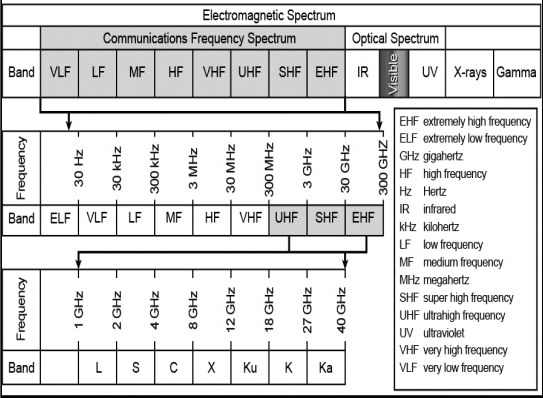
A lunar relay spacecraft could weigh only 50 to 60 kg, which classifies it as a small satellite. We developed a concept spacecraft with stowed dimensions of 44 cm × 40 cm × 37 cm and a mass of 55 kg including propellant. The system carries a four-channel radio developed by JPL: two channels operate in the K band (about 26 GHz), and two channels operate in the S band (about 2 GHz). One K-band channel connects to Earth at 100 Mbps downlink and 30 Mbps uplink; the other three channels connect to the lunar surface. The S-band channels provide 64 kbps downlink to the lunar surface and 256 kbps uplink from the lunar surface. The remaining K-band channel provides a 16 Mbps downlink to the lunar surface and a 100 Mbps uplink from the lunar surface.
The K band is used for Earth-satellite links for two reasons. First, K-band offers more available bandwidth than many other bands. Second, for the same antenna size, K-band provides higher antenna gain. In other words, a K-band antenna converts received signal energy to electrical power more efficiently. The downside is greater sensitivity to weather, such as rain-induced attenuation, requiring additional power margin to maintain the link. The current satellite design includes three antennas: a steerable 50 cm K-band antenna for Earth-satellite communication, a fixed K-band "ultra-surface" antenna with low profile and low mass that is cost-effective to manufacture and tolerant of the space environment, and a fixed S-band antenna array. An X-band antenna (about 7 GHz) is also being considered for Earth-satellite communication to add redundancy. X band is less susceptible to rain attenuation than K band, though it supports lower data rates.
New Technologies and Development
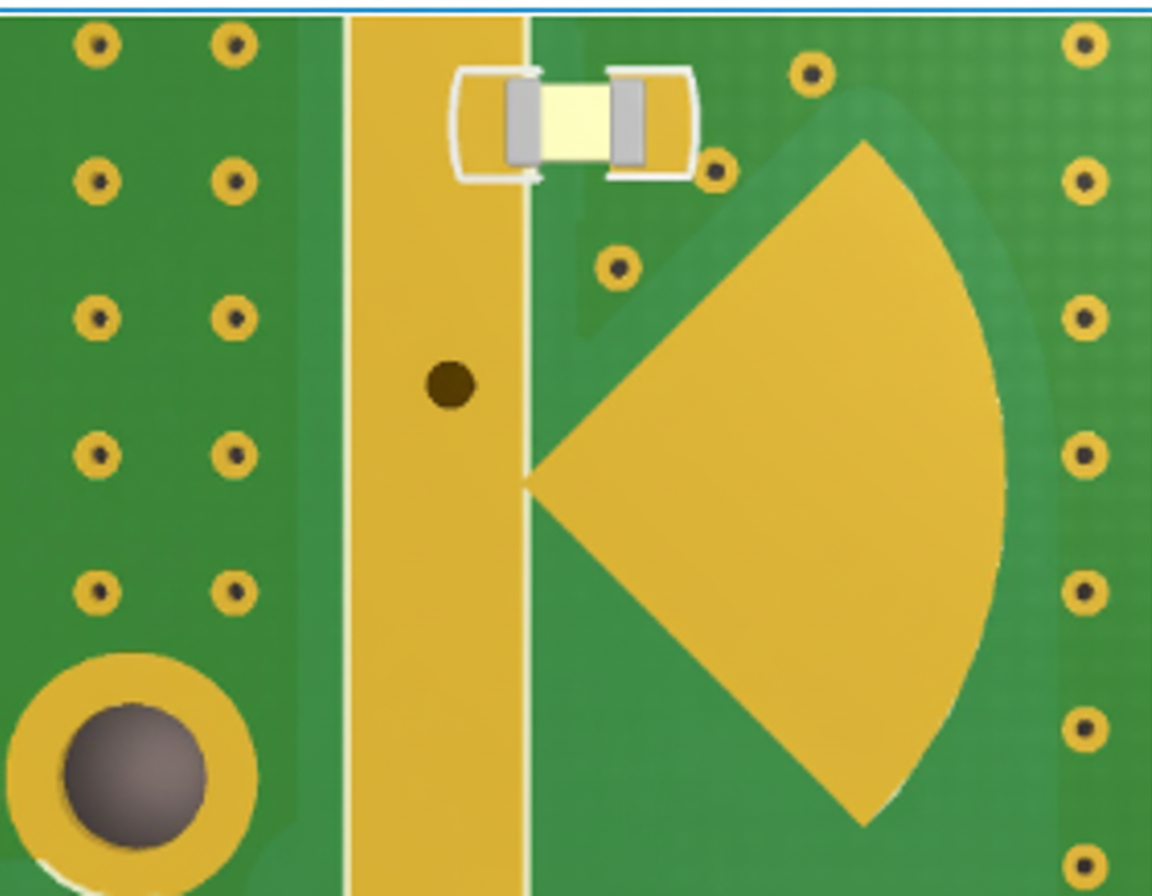
The spacecraft designs are nearing completion. The intent is to use off-the-shelf hardware where possible to reduce cost, while developing or improving specific technologies to meet performance, mass, and power requirements. A 3D-printable ultra-surface antenna is a JPL development for small-satellite applications. A usable 2 cm transmit antenna measured an isotropic gain exceeding 32 dBi at 32 GHz; recent design improvements are expected to raise that gain to 34 dBi. Work is also underway on dual-frequency capability so the antenna can transmit and receive simultaneously.
Efforts are also focused on a smaller, lighter software-defined space transponder, UST-Lite. JPL completed initial thermal testing of a UST-Lite prototype to verify dissipated heat will not degrade performance. Additional tests characterized the prototype's receiver thresholds, bit-error-rate behavior, and transmit waveforms. Development will continue to optimize receiver parameters and add a K-band module; S-band and X-band modules have already been developed.
Work is in progress to address the network software requirements. For example, there is no existing protocol standard for S- and K-band communications between relay satellites and lunar users. To address this, the project has begun collaborating with the Consultative Committee for Space Data Systems to introduce such a standard.
Path Toward a Lunar Communication Network
The goal for lunar communications equipment is to create a capability analogous to terrestrial cellular networks, using available technologies where appropriate. This could include deploying cellular-style base stations on the Moon to supplement relays, enabling many additional device types to join the lunar network, such as low-power IoT sensor networks and autonomous vehicles. A relay network is only the first step. Over successive generations, lunar inhabitants should be able to send and receive text, place calls, and transfer data routinely, while robots and sensors communicate wirelessly as on Earth. Robots could be remotely controlled and sensors could automatically upload measurements.
Realizing this lunar communications vision will likely require several generations of lunar networks. However, a robust wireless infrastructure will be essential for sustained scientific, technical, and commercial activities on the Moon.