1. Introduction
Recently I encountered TDD and FDD wireless transmission technologies at work. Readers familiar with communications will recognize these terms. This article gives a basic introduction to TDD and FDD; deeper analysis may follow when more material is available.
2. Definitions
TDD (Time Division Duplexing) uses the same RF frequency for uplink and downlink but separates them in time. In operational terms it resembles a half-duplex scheme.
TDD advantages include high flexibility, efficient spectrum use, and simplified deployment and management. Challenges include timeslot configuration and uplink/downlink resource coordination, typically addressed by dynamic timeslot configuration and resource scheduling algorithms.
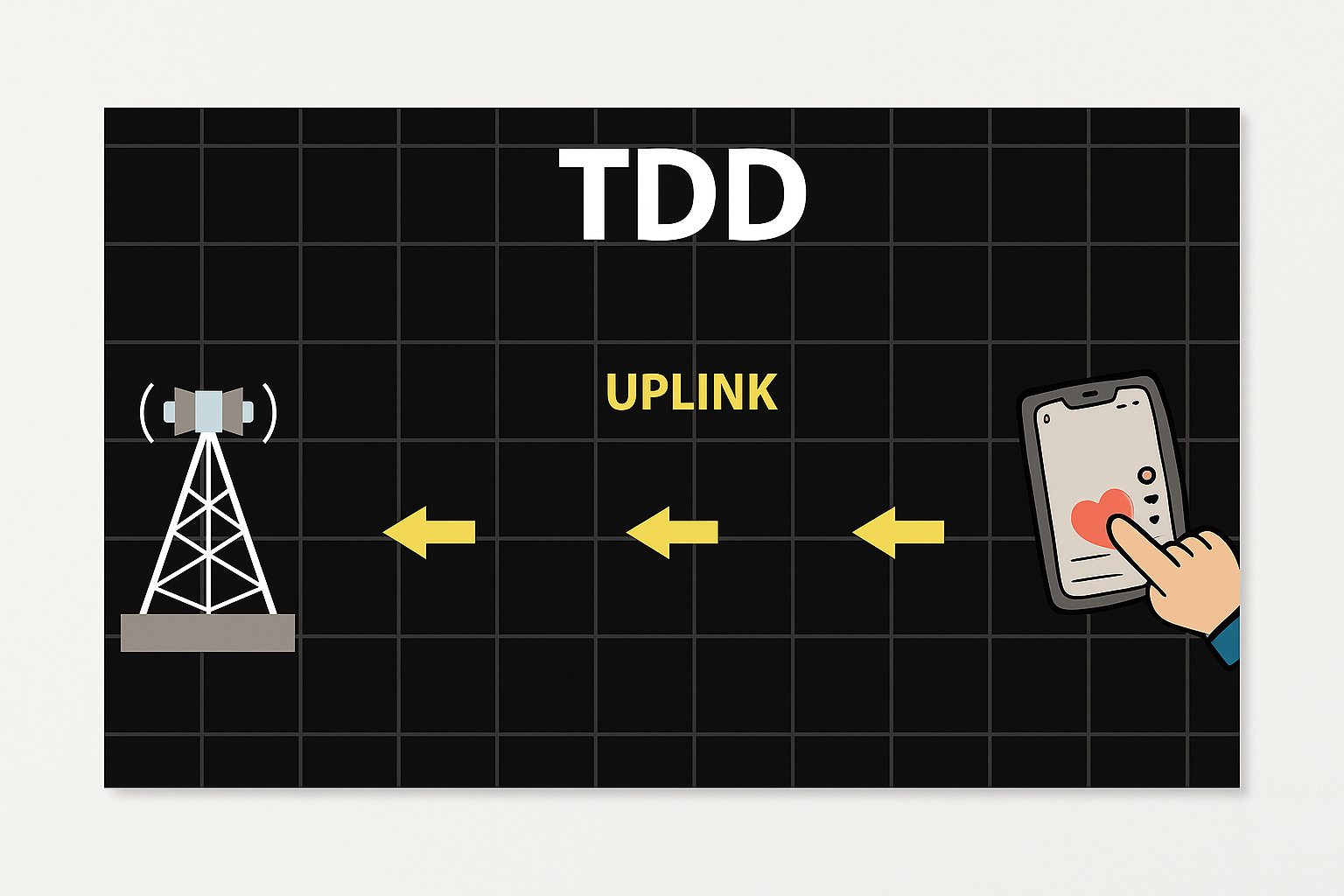
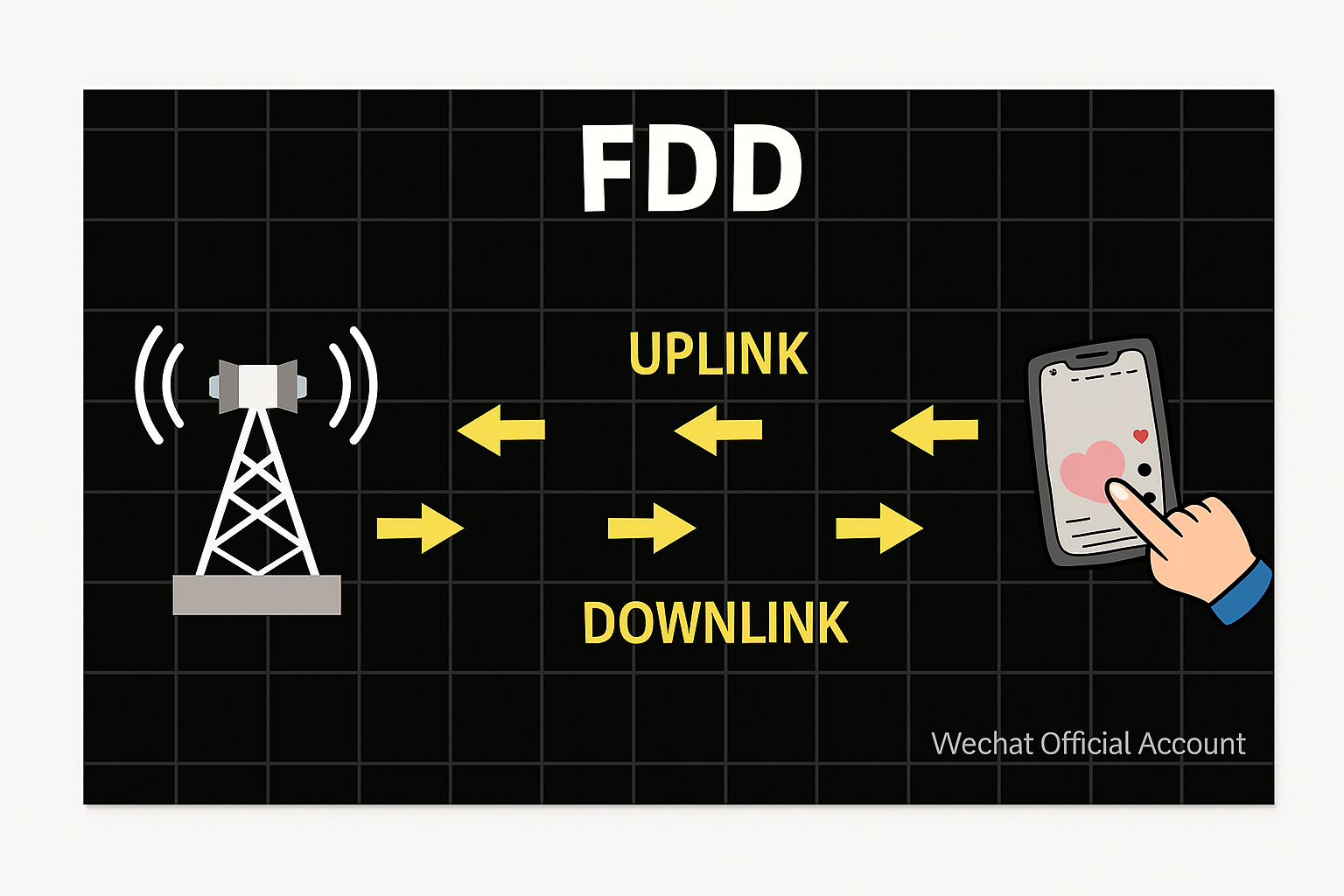
FDD (Frequency Division Duplexing) uses separate RF frequencies for uplink and downlink and supports simultaneous transmission and reception, i.e., full duplex.
FDD advantages include stable data transmission, stronger interference resilience, and suitability for long-distance links. Its drawbacks include more complex spectrum allocation and potential adjacent-band interference, usually mitigated by dynamic spectrum allocation and intelligent interference management techniques.
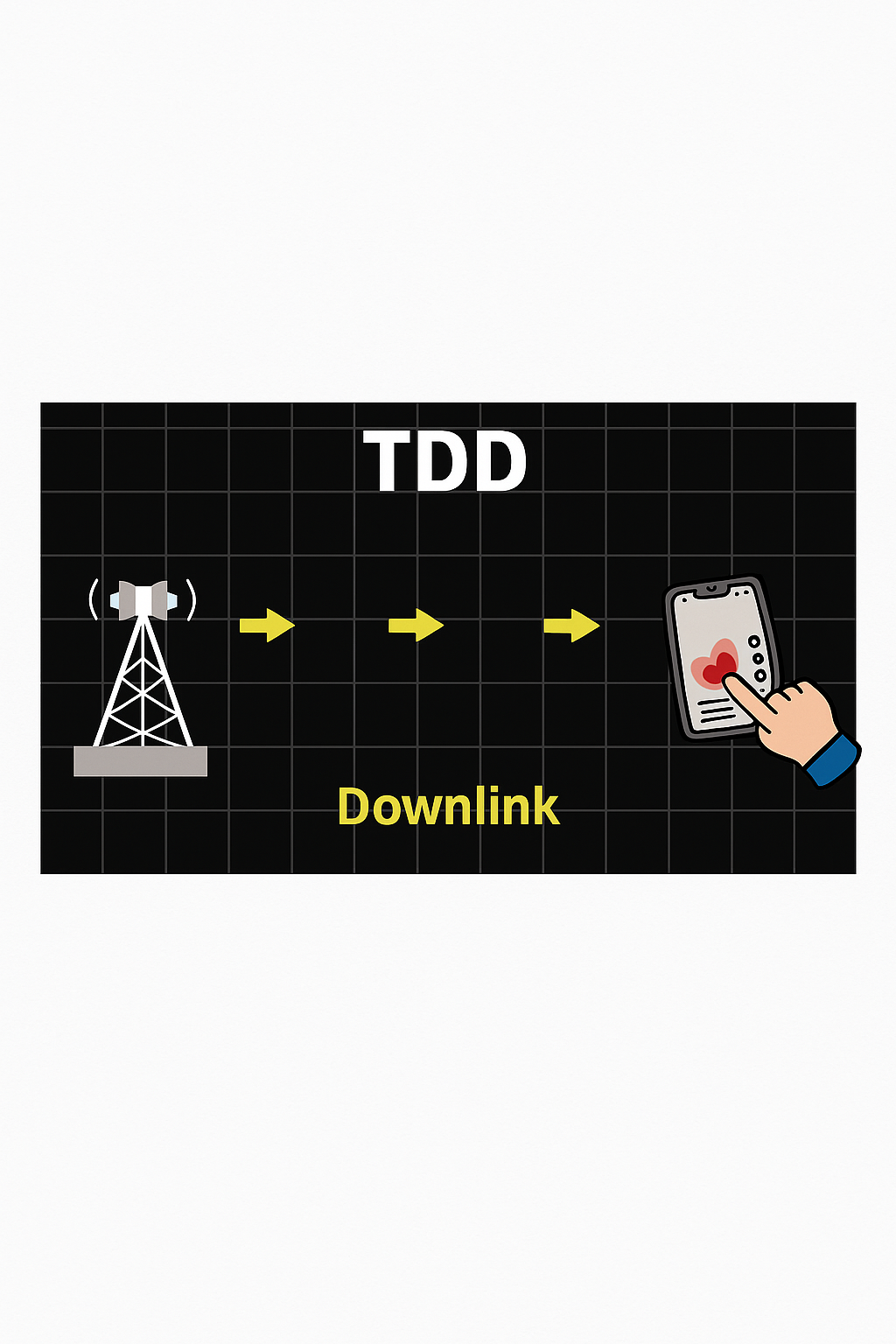
By analogy, TDD is like a reversible traffic lane that changes direction over time, while FDD is like a dual carriageway with separate lanes for each direction. Thus, TDD is typically assigned a single band used for both uplink and downlink at different times, whereas FDD is allocated paired bands—one for uplink and another for downlink.
3. Physical Layer
The familiar 4G LTE system includes TD-LTE and FDD-LTE variants. From a system perspective, differences are minor: the core network is the same and most radio interface protocols are identical; the main differences lie in the physical layer (PHY).
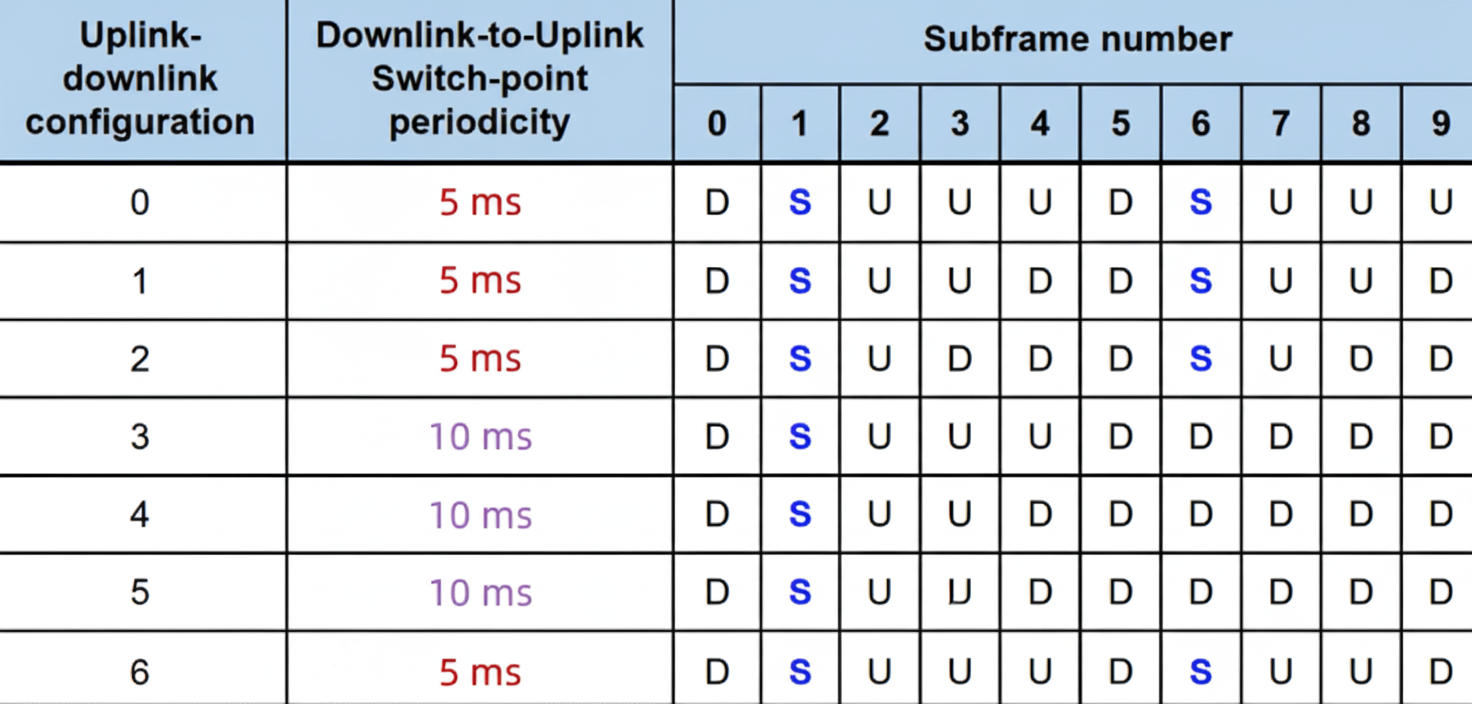
Frames are the basic data transport unit at the PHY. TDD frame structures are more complex than FDD frames: TDD includes DwPTS, GP, and UpPTS, known as special subframes. DwPTS is the downlink pilot time slot, GP is the guard period, and UpPTS is the uplink pilot time slot.
TDD faces scheduling and control challenges similar to managing a reversible lane. To reduce overhead, TD-LTE uses special subframes for control: DwPTS and UpPTS carry system control information, while GP isolates uplink and downlink transmissions.
TDD defines different ratio patterns for special subframes. In charts D denotes Downlink subframe, U denotes Uplink subframe, and S denotes Special subframe. The 5 ms and 10 ms values represent the repetition period: a special subframe appears every 5 ms or 10 ms. The 5 ms option is suitable for low-latency scenarios; the 10 ms option has slightly weaker latency guarantees but reduces capacity loss. In short, there is a trade-off between latency and capacity.
4. Use Cases
Using the lane analogy for clarity, the same lane can support asymmetric traffic (A->B much heavier than B->A) or symmetric traffic (A->B and B->A balanced).
In real wireless environments, asymmetric scenarios are more common. With FDD, one paired link can remain underused, wasting resources. TDD can better utilize limited spectrum for asymmetric traffic by flexibly allocating uplink and downlink timeslots.
For asymmetric services such as video streaming and internet access, TDD has an advantage because timeslots can be dynamically adjusted to meet traffic demand, offering higher spectrum utilization under constrained resources.
For symmetric services such as voice and two-way video calls, FDD has advantages. Using separate frequencies for uplink and downlink avoids mutual interference, improving transmission stability. FDD also performs better for long-distance links and offers more consistent throughput.
5. Advantages and Disadvantages
Choice between TDD and FDD depends on spectrum resources, traffic patterns, data requirements, and network capacity.
TDD advantages over FDD
- Flexible use of fragmented spectrum that is hard to allocate for FDD.
- Adjustable uplink/downlink timeslot boundaries to support asymmetric traffic.
- Consistent uplink/downlink channel characteristics allow sharing some RF units at the base station, reducing equipment cost.
- TDD can switch between transmit and receive with a simple RF switch instead of an isolator, reducing hardware complexity.
TDD disadvantages compared to FDD
- Uplink transmission time per interval is shorter than in FDD, so TDD base stations typically have smaller coverage than FDD base stations.
- Sharing the same frequency for transmit and receive makes interference isolation more difficult, increasing the potential for intra-system and inter-system interference.
- TDD requires larger guard bands to avoid interference with other systems, reducing overall spectrum efficiency.
- Under high mobility, channel variations are faster; TDD’s time-division nature causes delayed channel feedback from the mobile device, making TDD less suitable than FDD for high-speed scenarios.
On high-mobility scenarios: moving devices induce Doppler effects and fast fading. The faster the movement, the quicker the channel changes, increasing requirements on channel estimation and resource scheduling response times. In FDD, uplink and downlink are simultaneous, so the mobile can rapidly report deteriorating downlink conditions to the base station. In TDD, due to timeslot separation, channel quality reports experience delay and cannot immediately trigger uplink feedback in the same radio frame.
The push-to-talk experience illustrates this: during the peer's continuous transmission you cannot interrupt with a timely response; by the time your turn comes, earlier content may be forgotten, causing mismatched responses. Therefore, in high-mobility scenarios FDD has a clear advantage.
6. Power Consumption
With similar data rates and noise conditions, the two duplexing schemes have different impacts on device power consumption.
At hardware level, TDD shares RF spectrum between uplink and downlink, allowing some RF components to be common. The power amplifier is typically the most power-hungry component in RF modules. Therefore, TDD designs can reduce both cost and power consumption. FDD requires transmit/receive isolation and additional hardware, increasing complexity and power consumption.
In practice, most traffic is asymmetric. If one FDD link stays idle, it still consumes hardware resources and power. TDD can process only the active direction, improving energy efficiency.
These are theoretical points; empirical validation is necessary. Prior published tests include comparisons of power consumption between networks using different duplexing schemes.
Experiment 1
Test platform: Qualcomm Snapdragon 821
Test device: Asus Zenfone 3 (flagship)
Method: Under identical conditions, send a chat message to the test device every 10 seconds and record power consumption curves and average power for two 4G networks. Each measurement lasted 1 minute. The same phone was used and all other networked apps and push services were disabled. Signal strength for both networks was checked prior to testing to ensure a relatively good signal environment.
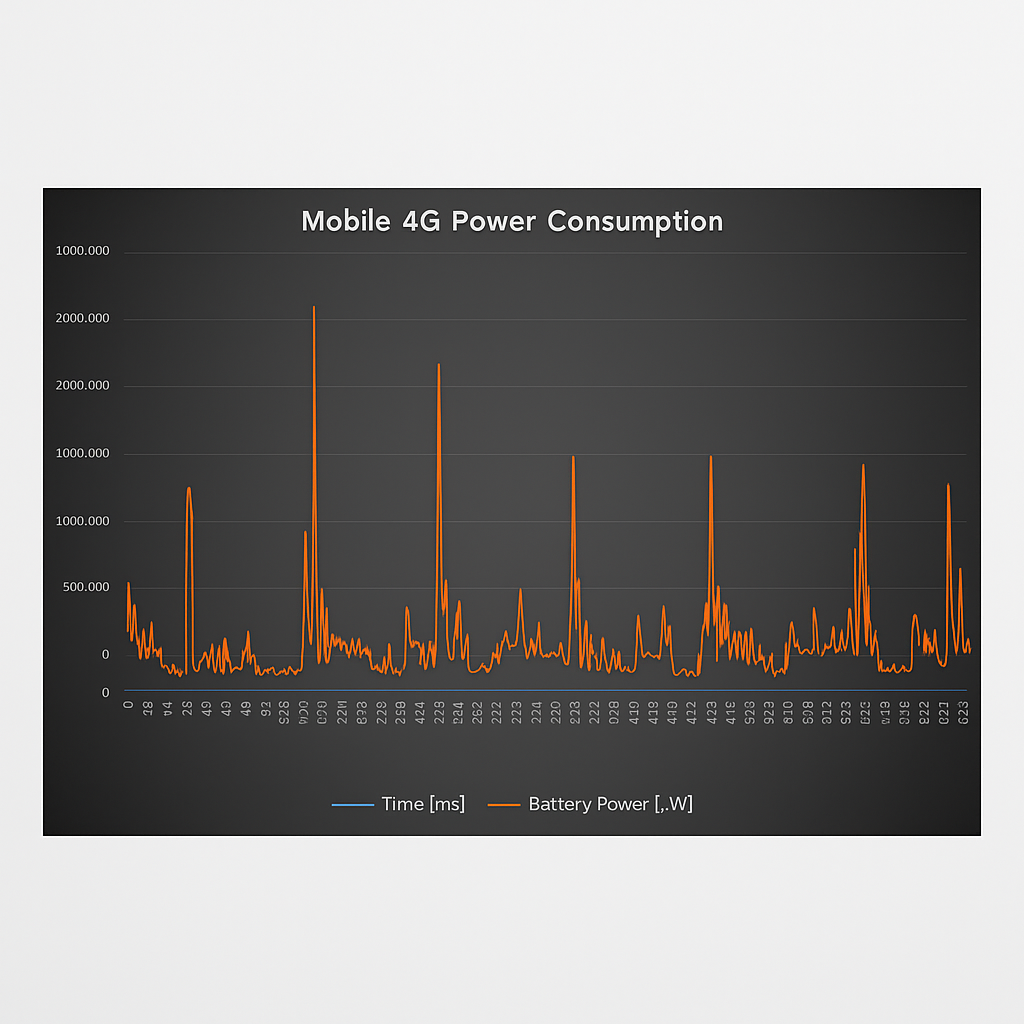
Results showed small differences. Average power for one network was approximately 421 mW and for the other about 407 mW, indicating the first network consumed slightly more power in this test. However, the test duration was short and the sample size limited, so a second download test was conducted for more evidence.
Experiment 2
Test platform: Qualcomm Snapdragon 821
Test device: Asus Zenfone 3 (flagship)
Download app: a mobile download manager
Method: Using the same device and conditions, download the same file twice—once rate-limited to 50 KB/s and once without limit. Each test lasted 1 minute and all other networked apps were disabled.
Measured average power during the 50 KB/s limited download was about 520 mW for the first network and 452 mW for the second. For unlimited download the averages were about 979 mW and 705 mW respectively, widening the power gap. In these tests, the first network consumed more power than the second under download load.
7. Conclusion
TDD and FDD are commonly used duplexing techniques in wireless communications with different application scenarios. Understanding their principles and characteristics helps select the appropriate approach for specific deployments.
This article aimed to provide a clearer understanding of TDD and FDD. Both techniques will continue to evolve to meet changing communications requirements.