Introduction
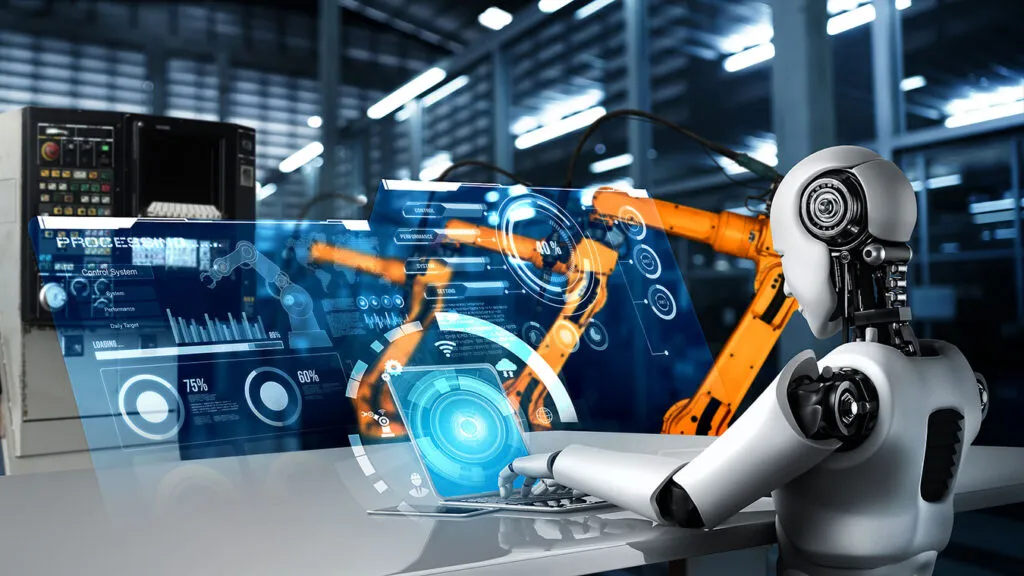
Until late 2022, when ChatGPT became widely known, the humanoid robot sector showed limited momentum. After a wave of interest last year, the humanoid robot concept surged again starting in June, with multiple stocks reaching significant gains. ChatGPT not only reenergized the AI community but also raised expectations for stronger synergies between AI and humanoid robots.
How AI Advances Enable Humanoid Robots
Humanoid robots serve as a practical embodiment for AI, acting as a physical output interface. A major development bottleneck has been the mismatch between robot mobility and real application scenarios, largely due to algorithmic complexity and limited data scale that constrain intelligence. The emergence of large language and multimodal models can deliver step changes in robot intelligence, including improved human-machine interaction, enhanced autonomous learning and decision-making, and the potential closure of perception-to-action loops.
Longer term, some industry figures predict large demand for humanoid robots and view them as a significant long-term value source for certain companies. Nvidia's Jensen Huang has described the next wave of artificial intelligence as "embodied intelligence."
Embodied Intelligence: Perception and Action
Embodied intelligence covers embodied perception and embodied action. Vision sensors, auditory and speech sensors form the foundation of embodied perception. Mobility and spatial vision are key capabilities for embodied action. The humanoid form is an effective shape for realizing embodied intelligence because it can operate in many real-world environments, enabling a shift from specialized to more general-purpose robots and potentially improving economies of scale.
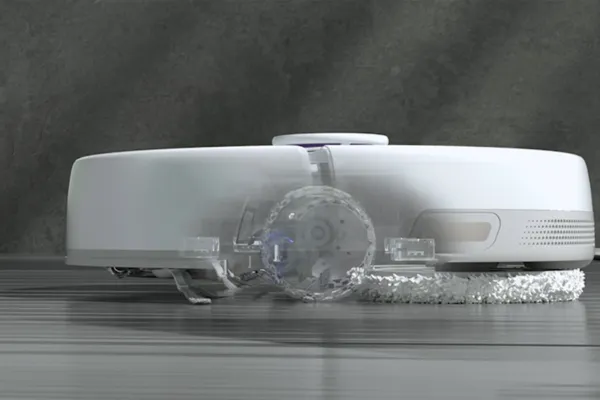
Humanoid robots are one manifestation of embodied intelligence; other forms, such as floor-cleaning robots integrated with mature large models, can also be embodied intelligent systems. The emphasis of embodied intelligence is changing how machines interact with the external world, moving away from passive data reception and preprogrammed actions toward more adaptive interaction modes. The humanoid form provides a physical "body" and higher-fidelity motion sensing to support these capabilities.
Market Demand Driven by Labor Shortages
Labor shortages in manufacturing are a key driver for humanoid robot demand. Data indicate an increasing shortfall in manufacturing workers, which could expand significantly by 2030. This gap is expected to drive the humanoid robot market to grow over the next 10 to 15 years, with initial demand coming from industrial applications. Forecasts suggest humanoid robots could fill a share of manufacturing labor shortages and address parts of the aging care demand in coming decades.
Some projections estimate that humanoid robots could see broader uptake in manufacturing scenarios by 2025, with small-batch deployments in electronics and automotive production. Other market forecasts predict substantial growth over the next decade and beyond.
Market estimates vary by source. For example, one report projected approximately $21.9 billion for the China humanoid robot market by 2025. The China Electronics Society shows the China humanoid robot market could reach about CNY 100 billion by 2030.
Spillover Effects Across Robotics
If humanoid robots achieve commercial traction, the industrialization inflection for action-oriented intelligent systems could accelerate. From the software perspective, modeling humans is among the most challenging general intelligence tasks, so algorithmic progress will strongly influence product maturity and deployment speed. As hardware platforms mature, the relative importance of software algorithms will increase. Algorithms proven on humanoid platforms can often be generalized to other scenarios, effectively reducing complexity for downstream applications.
On the hardware side, shared production lines for actuators and other components can lower per-unit costs through scale, reducing marginal costs for developing action-capable intelligent interaction hardware tailored to different scenarios and accelerating wider industrial adoption.
Industry Efforts and Large Models for Robots
Major technology companies are contributing resources and accelerating innovation in the humanoid robot space. Google DeepMind released a robot model called RoboticsTransformer2 (RT-2), a multimodal model that integrates vision, language, and action capabilities. With large-scale pretraining on web knowledge, RT-2 can enable robots to perform tasks on unseen objects or in novel scenes.
Tesla has positioned its humanoid robot to balance performance and cost, targeting a price point around $20,000 and advancing development rapidly. Small-batch production aimed at factory applications was expected to begin after the B-sample stage, with wider volume increases anticipated in a later multi-year window.
Current Leaders: Automotive and Tech Firms
Among players developing humanoid robot bodies, notable participants include automotive companies such as Tesla, Honda, and Toyota, and technology firms such as Xiaomi, Google, and Amazon. Examples of representative platforms include:
- Tesla Optimus, which can perform complex object-handling tasks such as picking up objects and environment discovery and memory.
- Honda ASIMO, a more human-like walking robot with a reported height of 120 cm and weight of 43 kg.
- KAIST HUBO+, at about 1.7 m and 80 kg with 32 degrees of freedom.
- Boston Dynamics Atlas, at about 1.8 m and 80 kg with 28 joints.
Barriers to Commercial Entry
Two major challenges stand in the way of mass commercial adoption. First, AI must effectively meet practical use cases; humanoid robots have accumulated relatively limited real-world deployment data, which complicates iterative AI improvement. Household environments and user habits vary widely, so "out-of-the-box" usability is essential for consumer adoption but remains difficult to achieve.
Second, high costs are a persistent obstacle. Historically, humanoid robots have been expensive to build. For example, Honda's ASIMO and Boston Dynamics' Atlas were cited with very high per-unit costs, which hinder commercial scaling.
Potential Breakthrough Directions
Key areas where humanoid robots could achieve practical breakthroughs include:
- Extending operational endurance to over 20 hours or enabling fast charging.
- Improving mobility and agility, and refining neural and sensory systems such as cameras, force feedback, vision, and speech sensors.
- Increasing onboard computation to enhance obstacle avoidance, path planning, and rapid response.
- Training and refining task-specific work capabilities.
- Reducing production costs to shorten investment payback periods.
Conclusion
The recent speculative interest in humanoid robot stocks essentially represents an extension of the AI narrative. Technical breakthroughs continue to emerge, and more are in development. The general-purpose potential of humanoid robots could break the limitations of industrial and service robots. With substantial capital flow from China and abroad in recent years, the industry trend for the next two decades appears to be forming.