Overview
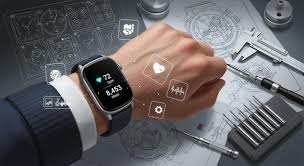
With rapid economic growth and a rising population, healthcare has become a prominent concern. In recent years, smart electronic health monitoring devices have become widespread. Wearable medical devices, the most representative category, have appeared widely in public spaces. They combine attention-grabbing designs with features that encourage users to track health metrics, and they are increasingly part of home health monitoring. This article examines the underlying aspects of wearable medical devices.
Behind this trend, in addition to advances in sensing, communication, and data analytics, highly integrated hardware architectures play a crucial enabling role. Modern wearable medical devices rely on HDI (High-Density Interconnect) PCB technology to integrate sensors, processors, wireless modules, and power management circuits into compact, lightweight, and wearable form factors. HDI PCBs support fine-pitch components, multilayer routing, and reliable signal transmission, making it possible to achieve continuous physiological monitoring without compromising comfort or device reliability. This article examines the underlying aspects of wearable medical devices from both technological and industry perspectives.
Origins and Technology
The history of wearable medical technology traces back to the 1960s, originating from a project at the MIT Media Lab. The concept embeds multimedia information, sensors, and wireless communication into everyday personal items. When worn correctly, these devices collect data rapidly and share recorded information; after processing and analysis by companion software, they produce health metrics. They also synchronize data with electronic displays to enable real-time monitoring of the wearer’s health.
Industry Perspective
Researchers at the EVERY laboratory consider that wearable medical devices have broad potential in healthcare and could become as ubiquitous as smartphones. Wearable medical devices are essentially interventions and improvements to human health, performing a direct process from data collection to transmission. They can help prevent common diseases in urban populations. Developers should keep up with industry insights and understand market needs.
Privacy and Data Risks
Dependence on the Internet is increasing, and wearable medical devices play a supporting role. The Internet continuously generates massive amounts of data, whether about company developments, individual consumption patterns, or identity features; these become stored in various forms. As health indices, activity traces, and habits are recorded everywhere, the risk of user privacy exposure increases. The more data uploaded, the greater the amount of sensitive information. With enough data, comparative analysis can reveal a wearer’s life patterns. This is a major challenge for the future development of wearable medical devices.
Emissions and Safety
Do emissions from wearable medical devices affect the wearer’s health? Research indicates that smart wristbands use sensors to convert pulse pressure, temperature, and other physiological information into electrical signals, which are then transmitted via electromagnetic waves to data terminals such as smartphones. Because transmission distances are short, signal strength is weaker than that of typical smartphone signals, and associated radiation is correspondingly lower. Therefore, wearable medical devices used in daily life operate within established safety limits.