Abstract
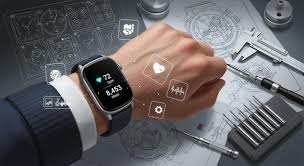
With the development of information technology and commercial influences, smartwatches have emerged in the growing wearable device market and attracted public attention. Research on smartwatch styling is still at an early stage, and technology companies have not settled on solutions that meet consumer expectations. As functional differences among smartwatches narrow, industrial design and styling become increasingly important. This article analyzes factors that affect smartwatch styling from three perspectives: reference to traditional watch design features, human-machine interaction of smartwatches, and smartwatch styling genres, providing theoretical context and design perspectives.
1 Overview of Smartwatch Styling Design
Rapid advances in Internet technologies have brought wearable computing into broader view. Many technology companies have entered this still-exploratory industry. Because the wrist is an ideal location for a lightweight interactive and leisure device, smartwatches are among the faster-developing products in the wearable field. However, research into smartwatch styling design is still nascent. Most companies that design and sell smartwatches are information technology firms that originally intended to integrate Internet applications and services based on user data into a wrist-worn device, thus adopting the watch form factor. Early smartwatch designs therefore emphasized a technological and futuristic aesthetic. Beyond tech enthusiasts, many consumers were not attracted to early models that looked inexpensive or oddly shaped, often wrapped in black plastic.
Technology companies gradually recognized the gap between early smartwatch styling and the traditional watch image held by the public, and began to incorporate traditional watch design elements into smartwatch styling. Examples that draw on traditional watch aesthetics include Motorola's Moto 360, Apple's Apple Watch, and the Geak Watch 2. However, smartwatches differ from traditional watches in their input/output-based human-machine interaction, so styling cannot simply copy traditional watch features. In traditional watch styling, strongly decorative elements can impair the user experience of a smartwatch. Therefore, smartwatch styling must account for its unique interaction modes. The primary factors affecting smartwatch styling are: reference to traditional watch design features, human-machine interaction factors, and styling genre considerations.
2 Reference to Traditional Watch Design Features
Early smartwatch designs that emphasized a futuristic, high-tech look tended to prioritize functionality, sometimes at the expense of styling. Examples include adapting to large displays to handle information, using inexpensive plastic to improve hardware performance cost-efficiency, or changing external shapes to accommodate internal electrical components. This functional-first approach created an aesthetic gap with traditional wristwatch users, leaving impressions of low quality and failing to attract consumers. Given the smartwatch's unique wearing and use patterns, devices released by information technology firms cannot be treated solely as electronic gadgets; they must inherit some attributes of traditional watches. Consequently, smartwatch styling is influenced by traditional watch design features, and borrowing these features helps convey the nonfunctional attributes of a watch.
Besides the familiar timekeeping function, traditional watches convey several other attributes. First, decorative attribute: in the late 19th century, craftsmen mounted pocket watches as decorative elements on bracelets, forming the prototype of the wristwatch. Watches have long served as decorative jewelry, satisfying aesthetic preferences and social signaling. This decorative quality leads buyers to evaluate craftsmanship and visual refinement in addition to timekeeping accuracy. Second, symbolic attribute: as sociologist Lewis Mumford noted, the portable watch played a central role in the industrial era by enabling precise timekeeping and coordinated work. Watches became important to managers, military personnel, surgeons, and officials, symbolizing social status. The use of precious metals and pursuit of exceptional craftsmanship further reinforced watches as symbols of wealth and status. Third, cultural attribute: traditional watches are objects of art, suitable for appreciation, collection, and gifting. Their association with time also makes them meaningful commemorative objects.
Smartwatches need to reflect these attributes through styling, which requires analysis and selective borrowing from traditional watch design. For example, Apple Watch adopts a rounded rectangular case that echoes vintage shapes, reminiscent of the Patek Philippe 3649/1 case. In other details, Apple Watch uses linear lugs compatible with quick-release straps, inheriting a classic appearance while supporting strap interchangeability. The retention and reuse of the crown is notable: the crown is carefully detailed and has been developed into a distinctive interaction mechanism for the smartwatch, creating a bridge between traditional and digital watch interactions. The button layout also mirrors that of some traditional models, such as the Jaeger-LeCoultre Reverso series. Using a range of materials, including precious metals, and a variety of quick-release straps increases stylistic differentiation and broadens usage scenarios beyond tech enthusiasts. Borrowing traditional watch design features helps convey the multiple attributes of a watch and reduces the perceived distance between consumers and new smartwatch products.
3 Human-Machine Interaction Factors
While borrowing from traditional watch design gives smartwatches familiar and desirable attributes, it does not justify directly copying all traditional styling features. Smartwatches differ greatly from traditional watches in functionality, resulting in different interaction methods and experiences. Compared with traditional watches, smartwatches add input capabilities, so styling must accommodate those needs. Some exaggerated or highly decorative features from traditional watches are incompatible with smartwatch interaction. For example, Geak Watch 2 borrowed classic Panerai-style case design and upgraded from a previously cheap-looking “digital watch” to a more classic appearance. However, the oversized, heavily crafted case creates a recessed surface that disrupts the continuity of touch gestures. Overly decorative design elements can negatively affect the touchscreen interaction and reduce efficiency when users process information.
Advanced human-machine interaction in smartwatches is inseparable from the underlying hardware architecture. HDI PCBs support the dense integration of touch controllers, sensors, microphones, wireless modules, and power management ICs, enabling fast signal transmission and low-latency interaction. This high level of integration allows interaction components—such as the touchscreen, crown, buttons, and sensors—to be positioned more freely and ergonomically, directly influencing styling decisions and interaction efficiency.
Functionally, smartwatches enable quick access to and handling of information, timely notifications, filtering of irrelevant content, and rapid processing of minor tasks so users can focus on important matters. These characteristics pose design challenges: the wearable nature requires social acceptability when interacting in public; limited display area and input constraints demand immediate, efficient, and simple "light-interaction" models. For instance, Tickle's Ticwatch introduced a unique "scratch" interaction: users can slide or tap a touch strip on the right side of the case to perform operations like zooming and menu selection. Such interactions are compact and efficient, minimizing movement while enabling effective control.
Design principles for smartwatch human-machine interaction include: first, interaction methods should resemble common traditional watch behaviors, such as wrist raise to wake the screen or using the crown for interaction. This lowers learning cost and improves social acceptance. Second, interaction should reduce complexity and emphasize function-oriented interaction logic: avoid excessive on-device information selection, surface core functions at primary interaction levels, and leverage voice, sensors, environmental interaction, and Internet data interfaces as much as possible.
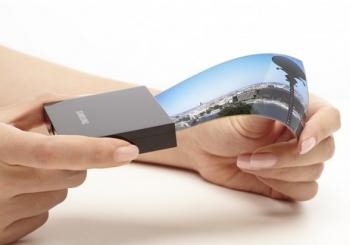
From the interaction perspective, styling implications include: 1) emphasizing the screen as the visual focal point and ensuring the surface supports touch interaction with smooth, coherent gestures; 2) careful design of buttons and the crown to reflect their role in interaction; and 3) thoughtful placement of microphones, sensors, cameras, and other electronic components to ensure efficient operation of human-machine interaction.