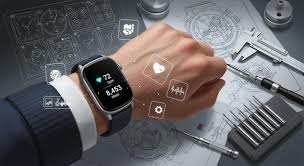
Recently, China's state broadcaster CCTV-2 reported on its program "First Time" that children's GPS watches can emit much higher radiation at the moment of answering a call compared with mobile phones, potentially exceeding phones by up to 1,000 times. CCTV tested three children's GPS watches purchased from physical stores and online, priced at 148 yuan, 380 yuan, and 798 yuan. The sample tests also showed that radiation values did not correlate directly with price.
Why the broadcaster focused on children's GPS watches
This exposure can be understood from several perspectives. From a topical standpoint, CCTV selected an area that attracts public attention—wearable devices—and focused on the segment with the highest interest, children's smart watches, which naturally draws public concern. From a commercial perspective, established brands and influential media can help establish industry thresholds and encourage standardization. From a responsibility perspective, the broadcaster's attention to the approaching Internet of Things era can be seen as an attempt to provide guidance for healthier industry development.
Viewed more charitably, the exposure may aim to promote industry standardization. Since wearable devices began gaining attention after early initiatives by large technology companies, the sector has been rapidly evolving. Both end products and technology in the supply chain are still in exploration and evolution. However, limitations in the supply chain, talent, and market environment have concentrated most activity in familiar wearable forms such as smart watches and fitness bands.
Market concentration and segmentation
When telecommunications firms, internet companies, appliance manufacturers, medical firms, or startups enter the wearable market, many choose wrist-worn devices as their entry point. As a result, product forms in the current wearable market are relatively concentrated and product differentiation is limited. This clustering has driven vertical segmentation within the smart watch and band market. For example, the smart watch segment already shows distinct niches targeting seniors, office workers, fitness users, runners, and children.
Seniors and children represent relatively special segments. Children differ physiologically from adults, and adults typically make purchasing decisions for children, which attracts many companies to explore the children's market. From one angle, this shows industry attention to children; from another, it may suggest the market is easier to take shortcuts in. In this context, CCTV's exposure of high radiation in children's GPS watches can be seen as providing useful information to consumers who were previously unaware.
Two perspectives on the radiation issue
From a short-term industry perspective, CCTV's reporting will certainly affect the wearable market. From a long-term perspective, regardless of the technical thoroughness of the exposure, it will to some extent push the industry toward greater standardization. More importantly, companies that are not pursuing opportunistic gains but instead have genuine technical competence and design products with children's needs in mind need not fear such exposures.
Given that the wearable device industry has not yet fully industrialized and the supply chain remains in an exploratory stage, many startups lack R&D and testing capabilities. Many are asset-light, outsourcing product design, parts procurement, assembly, algorithms, and cloud services to third parties while focusing internally on marketing and packaging. This approach reflects limitations in funding, talent, experience, and industry knowledge, and explains why some teams opt for a quicker path to revenue.
Some entrants may adopt an opportunistic mindset, hoping to capitalize on the IoT trend with low-priced products. In either case, products are constrained by the current supply chain and the capabilities of their creators, so resulting products often reveal various shortcomings.
By contrast, larger companies typically have advantages in technology, supply-chain integration, capital, and talent. Brand considerations also make the cost of errors higher for them, which tends to produce greater control during product development. Relative to existing communication standards, many established companies can meet, and in some cases already meet, relevant communication reference standards. It is difficult to judge whether the broadcaster's exposure reflects deliberate targeting or simple scrutiny; perhaps it indicates high expectations for a nascent industry.
From a regulatory standpoint, smart watches that include communication functions are generally required to obtain a network access license. In that process, products are obliged to meet current communication standards and obtain relevant regulatory testing and certification. Those requirements represent the basic baseline for children's wearables; if specific standards for children's wearable devices were to be introduced, radiation limits would likely need to be stricter than those for general mobile communication products. At present, some products exist in regulatory gaps, which has led to radiation issues being highlighted by the broadcaster.