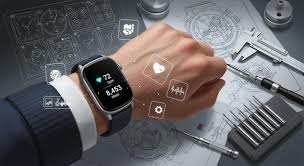
Detective Conan's futuristic smart glasses were how many people first became aware of wearable devices. Today, products such as the Apple Watch and Xiaomi Mi Band have made wearables more familiar. After the recent smartphone boom, interest in smart wearables has increased again.
The first time wearables entered the public eye was in April 2012, when Google released a pair of "augmented reality" glasses. They supported voice-controlled photography, video calls, web browsing, and processing of text information and electronic mail. If Google Glass left the general public with only a vague idea of wearable devices, the Apple Watch released in September 2014 made the concept clearer.
However, both Google Glass and the Apple Watch had price points that put them out of reach for many consumers.
The Xiaomi Mi Band helped bring wearables into mainstream use. Its main functions include activity tracking, sleep monitoring, and a smart alarm. Its low price level made basic wearable functionality accessible to a wider audience.
A search of patent databases found more than 800 patents related to smart wearables. Below are several wearable patent concepts that go beyond the familiar smart glasses, watches, and bands.
1. Smart Belt: a waist-mounted body monitor
This design places an accelerometer and a temperature sensor on the belt to measure steps and cadence, which, together with body-weight data, are used to estimate activity and calories burned. A pressure sensor measures heart rate and pre/post-meal abdominal pressure differences. A central processor computes dietary intake from these signals and alerts the wearer via speaker or vibration.
2. Smart Glove: multifunctional and energy-harvesting
The smart glove design integrates a display, GPS module, microprocessor, and solar cells in the palm area. The fingers include LED lights. The glove can provide touch input, navigation, and illumination, and supports energy self-sufficiency through solar harvesting. The design also offers thermal insulation and physical protection for the hand.
3. Smart Shoe: health monitoring and on-the-go diagnostics
The shoe integrates an intelligent sensing system. An integrated circuit board in a sole cavity connects via cable to a peripheral board on the shoe upper. The main board hosts a microprocessor and sensors for temperature, blood pressure, heart rate, pressure distribution, and step counting. The peripheral board includes GPS, GSM, Bluetooth, and an alarm. A rechargeable power source is housed in the cavity. The system can simultaneously monitor heart rate, blood pressure, body weight, and body temperature, and provides step counting, positioning, and alarm functions. Data from the shoe can be transmitted over Bluetooth channels, GPS, or a 3G network to an external terminal.
4. Smart Clothing: driving and cycling assistant
This smart garment includes turn-signal lights to communicate the wearer's intended direction to nearby vehicles, helping to avoid misinterpretation. Cameras mounted outward on the shoulders can record riding activity and feed environmental data to signal-processing modules for safety assessment.
Products designed for specific groups have already appeared on the market, such as waist belts that monitor vital signs for older adults and shoes for children with anti-lost functions. Smartphone manufacturers such as HTC and Samsung have also indicated plans to introduce gloves with displays. Athletic- and apparel-focused companies are developing smart garments: Athos has released performance shirts and shorts that measure heart rate, respiratory rate, and muscle activity; a well-known lingerie brand has introduced a heart-rate-monitoring bra; and Adidas previously developed heated thermal shorts for a cycling team.
Smart wearables are progressively entering daily life. Future developer efforts may produce more user-centered and convenient wearable products.