Summary
The wearable devices market has grown rapidly over the past two years but remains at an early stage. Startups, investors, and large companies continue to enter the wearable and intelligent device space, yet gaining broad market acceptance remains difficult. This article examines the future path for wearable intelligent devices through the lens of artificial intelligence, the highest-level application for intelligent hardware aimed at integrating technology and human experience.
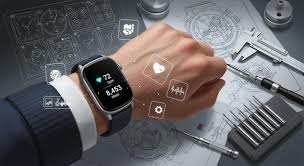
AI represents the highest-level application of intelligent hardware, transforming wearables from passive devices into active service platforms. However, the realization of AI-driven services depends not only on algorithms and cloud infrastructure, but also on the hardware foundation within the device itself. As wearable devices increasingly integrate multiple sensors, wireless modules, power management systems, and interaction components within extremely limited space, HDI (High-Density Interconnect) PCB technology becomes a critical enabler. HDI PCBs support high component density, compact multilayer routing, and reliable high-speed signal transmission, forming the physical basis for continuous data acquisition and real-time interaction.
AI Combined with Wearables Gives Devices Intelligence
Hardware alone has limited value; the core is the data the device generates. Any wearable or intelligent device can increase its value by using data to enhance product and service offerings, delivering products as services via IoT connections and data. The biggest market opportunity for wearable intelligent devices lies in services rather than hardware itself. Services materialize through wearables to enhance user experience, and through data collection and analysis supported by AI algorithms the device can provide a refined technology experience for the wearer. Data will drive the convergence of the physical and virtual worlds.
Human-machine interaction is essential for delivering that experience. Wearable intelligent devices are becoming part of the user, acting as carriers for sensors and enabling more advanced, seamless interaction between person, device, and cloud. Context awareness will allow wearables to be perceived as "intelligent." As AI and wearables converge, human sensing capabilities are extended. Context-aware features will become a major trend in intelligent hardware, with many wearables soon offering context-aware application functions powered by AI.
Global AI Developments and Interaction Trends
Mature AI efforts in regions such as the United States and Japan focus on natural interaction. IBM's Watson has generated substantial business by addressing natural-language interaction in enterprise contexts. Google's neural network initiatives are among the largest globally; Google has stated that advanced AI systems can allow machines to converse with humans based on contextual relevance. In practical terms this implies devices like smartwatches could support natural, conversational interactions rather than basic functions like telling time.
Japan has emphasized realistic human interaction through humanoid robots. Progress in lifelike robotics demonstrates the potential for increasingly natural exchanges between humans and machines, expanding use cases from companionship to social interaction.
AI Teams and Platforms in China
In China there are several strong AI teams and companies, including Baidu, BGI, iFlytek, Horizon Robotics, and others focused on building AI for areas such as life data and natural-language processing. Baidu has developed the "Baidu Brain" platform and applied AI across search, big data, image recognition, machine translation, and voice interaction. Andrew Ng joined Baidu as chief scientist to lead a China-based AI initiative. iFlytek has been active in speech technologies and has developed an open platform for developers and device makers to integrate voice wake-up, speech recognition, synthesis, and semantic understanding into hardware such as robots, smart speakers, and wearables.
Wearable HMI Entry Points: Voice and Image Recognition
For wearables and other intelligent devices, including robots, voice represents a primary human-machine interaction entry point. Voice input enables natural, hands-free operation and can be combined with semantic processing to perform contextual recommendations and actions based on sensor-collected information. Products such as the Nest thermostat illustrate AI applied to consumer devices: by recording temperature and user habits, Nest learns preferred settings and can adjust temperatures automatically without manual input.
Speech wake-up and far-field voice recognition enable devices to respond from a sleep state to natural-language prompts. This capability can be embedded in smartphones, smart glasses, watches, robots, smart speakers, and home appliances, enabling seamless voice-driven activation and control. Voice interaction is particularly important in automotive systems, where hands-free operation is essential.
Open AI, Machine Learning, and Ecosystems
Technology companies and research institutions globally consider AI a strategic focus. Machine learning allows software to infer or predict outcomes from large datasets. Several major organizations have open-sourced machine learning technologies, publishing model parameters and code for engineers and researchers. Open-source AI is likely to accelerate innovation in the field.
Platforms that open AI capabilities to external developers, research groups, and industrial partners help integrate speech recognition, synthesis, semantic understanding, face recognition, speaker recognition, and other interaction technologies into broader ecosystems. Such open platforms facilitate the development of end-to-end intelligent human-machine interactions across devices and services.
What Is an IoT "Super Entry"?
The term "entry" is often overused, but for IoT the key entry points that enable devices to understand users are voice and image recognition, including biometric and video/image analysis. For wearable and other IoT devices, human-machine interaction is central, and voice and image recognition are strong paths to enable machines to interpret user intent and execute precise commands. Combined, these two entry points form a natural gateway for devices to connect to the cloud and backend services, enabling AI-driven analysis and personalized services such as health alerts or other timely support.
AI Enabling Wearables to "Think"
Wearables are a major consumer segment within IoT. Networking and interaction are fundamental features, but AI and cloud computing that support backend processing are the core technologies enabling advanced user experiences. Historically, AI research dates back to the 1956 Dartmouth workshop. Over recent decades, mobile internet, cloud computing, and big data have driven renewed global interest in AI. In the current wave, companies and research groups are positioned to lead next-generation human-machine interaction.
AI applied to wearables can mimic aspects of human thought, drawing timely insights from backend systems and presenting them to users via wearable form factors. There are also efforts to provide robots and intelligent hardware with human-like reasoning, emotion modeling, and learning capabilities, enabling richer interactions and services for connected devices.