Definition
An analog-to-digital converter (ADC) is an electronic device or circuit that converts a continuous analog signal into a discrete digital signal. It performs sampling and quantization on the input analog signal, converting the signal amplitude into corresponding digital values so that digital systems can process, store, or transmit the data.
Structure
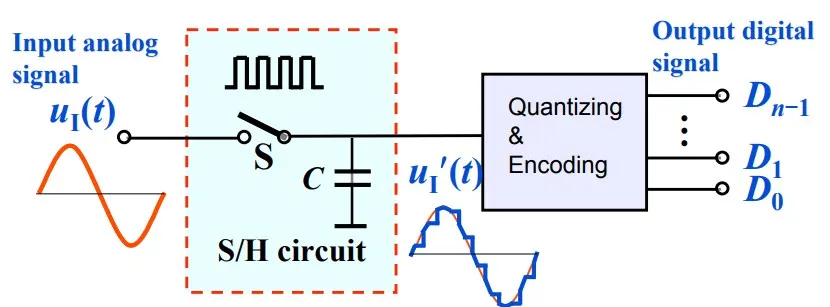
An ADC typically consists of two main parts: a sampler and a quantizer. The sampler takes samples of the analog signal at fixed time intervals, producing a series of discrete points. The quantizer converts the amplitude of each sampled point into a corresponding digital value, usually represented as a set of binary digits.
Output and Applications
The ADC output is digital data intended for processors, microcontrollers, memory, and other digital systems for further processing. This conversion is essential in many applications such as audio signal processing, communication systems, sensors, and data acquisition.
Performance Factors
ADC performance depends on several factors, including resolution, sampling rate, signal-to-noise ratio (SNR), and linearity. Resolution refers to the precision of the digital values the ADC can represent, usually expressed in bits. Sampling rate denotes the number of samples taken per second, indicating the frequency at which the analog signal is discretized. SNR measures the ratio of useful signal to noise in the ADC output; a higher SNR means the digital output more closely represents the input analog signal. Linearity describes the linear relationship between the ADC output and the analog input, reflecting the converter's accuracy and precision.
Functions of an ADC
The primary function of an ADC is to convert continuously varying analog signals into digital form for processing, storage, and transmission by digital systems. Typical roles include:
- Data acquisition and measurement: Converting analog measurement signals from sensors or instruments into digital form for digital signal processing, analysis, and storage. For example, converting temperature, pressure, or humidity signals into digital values for recording and analysis.
- Communication systems: Converting analog audio, video, or other analog signals into digital formats for transmission, compression, and processing. Examples include voice signals in mobile calls and image signals in videoconferencing.
- Audio and music processing: Converting analog audio signals into digital audio data for digital signal processing, audio encoding, compression, storage, and transmission.
- Control systems: Converting analog sensor signals into digital form for control, monitoring, and feedback in digital control systems. For example, converting temperature, pressure, or speed sensor signals in industrial automation for processing by controllers.
- Sensor networks and the Internet of Things: Converting analog signals from various sensors into digital form for data collection, transmission, and analysis in sensor networks and IoT applications, enabling environmental monitoring, remote monitoring, and automated control.
Basic Principle
An ADC converts an analog input into a digital output by sampling the input signal and quantizing each sample into discrete digital levels. The choice of conversion method affects conversion speed, resolution, power consumption, and noise immunity.
Common ADC Conversion Methods
The following are several common ADC conversion methods:
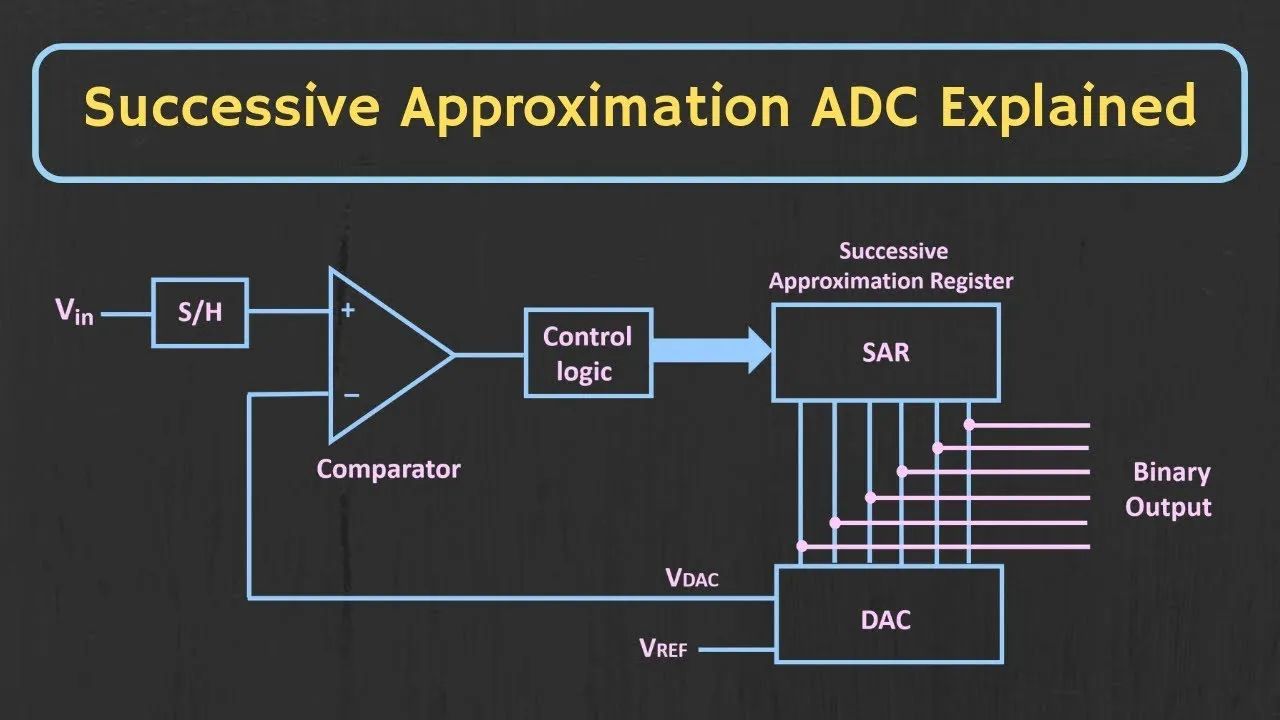
- Successive approximation (SAR): A successive approximation ADC approximates the input amplitude by successively adjusting a comparator threshold to converge on the input level. These converters typically offer moderate-to-high conversion speed with low power consumption and are commonly used in low to medium resolution applications.
- Flash: A flash ADC uses an array of parallel comparators to divide the input range into multiple intervals and compares the input simultaneously against each threshold to produce the digital output in one step. Flash converters provide very high conversion speed but have higher complexity and power consumption, often used in high-speed applications.
- Ramp (single-slope): A ramp ADC uses a gradually increasing or decreasing analog reference signal (the "ramp") and compares it to the input signal to determine the amplitude. Ramp converters offer low power consumption and good precision but are usually slower in conversion speed.
- Weighted and reverse-weighted: These ADCs use a series of weighted resistors or capacitors and perform additive or subtractive operations with the input signal to approximate the analog value. They can provide good linearity and resolution but tend to be more complex and costly.
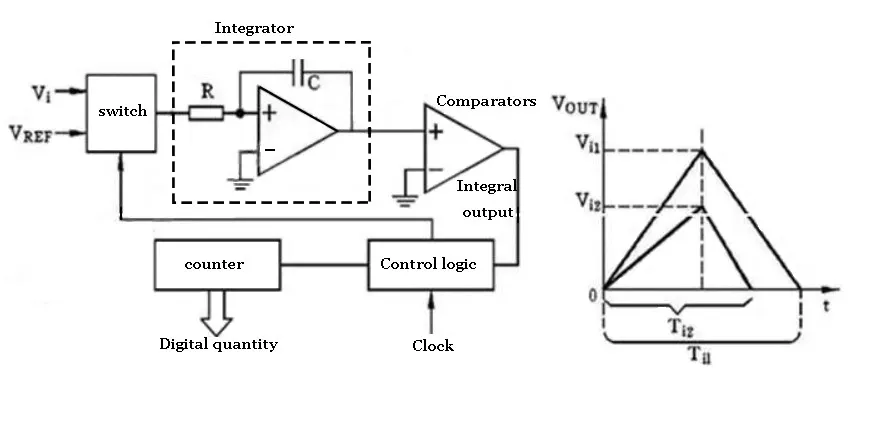
- Integrating: An integrating ADC uses the principle of integration, integrating the input signal over a fixed time period and then comparing the result with a reference voltage to obtain a digital output. Integrating converters have good noise rejection for noisy inputs but generally have slower conversion speeds.