Analog vs. Digital Signals
Analog signals are continuous in both time and amplitude, closely mirroring real-world phenomena such as sound, light, temperature, pressure, or biological signals. When plotted, they form smooth, continuous curves.
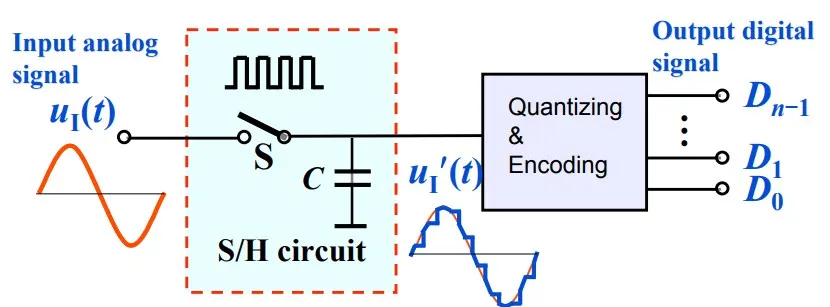
Digital signals are discrete. They are sampled at specific time intervals and quantized into distinct levels - typically binary (0 and 1). This discretization enables robust processing, storage, and transmission but requires conversion steps for interaction with the physical world.

Circuit Classification
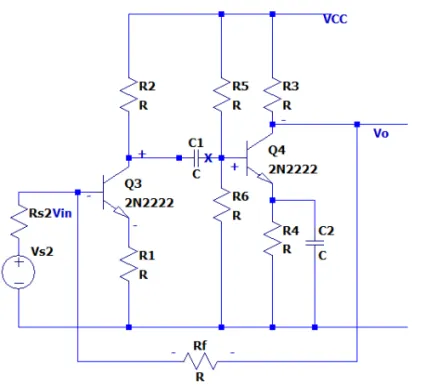
- Analog circuits process continuous signals, performing functions like amplification, filtering, modulation, and signal conditioning.
- Digital circuits manipulate discrete signals using logic gates, performing computation, data storage, and control.
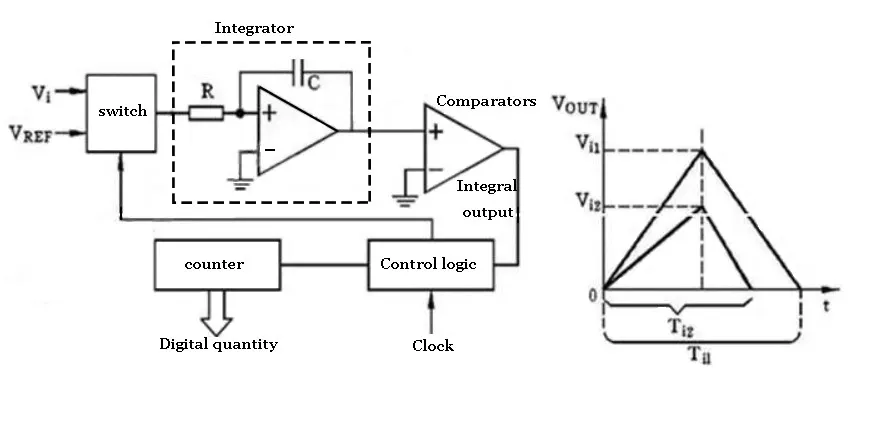
- Mixed-signal circuits combine both domains (e.g., ADCs, DACs, PLLs, and numerically controlled oscillators). These are often categorized under analog due to their sensitivity to noise and precision requirements.
The distinction is based on signal processing approach rather than specific components. Transistors (MOSFETs, BJTs) can implement either type, and modern ICs frequently integrate analog and digital sections on the same die.

Practical Distribution and Use Cases
Digital circuits dominate high-volume, large-scale designs due to easier scalability, automation, repeatability, and noise immunity. Analog circuits excel in precision, real-time interfacing, and power management, typically concentrated in:
- Input/output interfaces (sensors, transceivers).
- Clock generation (PLLs, oscillators).
- Power regulation (bandgap references, LDOs, DC-DC converters).
- RF and wireless front-ends.
In System-on-Chip (SoC) designs, analog blocks handle critical front-end and interface functions, while digital logic manages computation and processing. Mixed-signal integration is essential for applications in IoT, automotive, industrial control, medical devices, and communications.
Design and Manufacturing Considerations for PCB and Electronics
Analog Circuits: Highly sensitive to noise, layout parasitics, component tolerances, and thermal effects. PCB design requires careful partitioning, grounding (e.g., star or split planes), shielding, and low-noise power distribution. Component selection and placement are critical.
Digital Circuits: More tolerant of variations but demand high-speed considerations such as controlled impedance, termination, length matching, and signal integrity for high data rates.
Mixed-Signal Systems: Demand hybrid strategies - separation of domains, strategic via stitching, decoupling, and simulation of SI/PI interactions. Advanced PCB fabrication (impedance control, HDI, low-loss materials) is vital to preserve analog performance while supporting digital density.
Manufacturing high-reliability mixed-signal boards requires expertise in tolerances, testing (e.g., noise measurements), and process control to ensure consistent performance across production volumes.
Industry Trends
The growth of edge AI, sensors, 5G/6G, and automotive electronics continues to drive demand for sophisticated analog and mixed-signal solutions. While digital scaling provides density, analog innovation enables new interfaces and efficiency gains in power-constrained environments.
Frequently Asked Questions
Q1: Can the same components build both analog and digital circuits?
A1: Yes. The circuit behavior depends on design topology, biasing, and signal handling rather than the devices themselves.
Q2: Why are analog circuits still necessary despite digital dominance?
A2: Analog excels at interfacing with the real world, precision amplification, and low-power signal conditioning - functions difficult to replicate purely digitally, especially at high speeds or low power.
Q3: What are the biggest PCB challenges in mixed-signal designs?
A3: Managing noise coupling between analog and digital sections, maintaining signal integrity, and providing clean power/ground references.