Help
  • FAQ
    browse most common questions
  • Live Chat
    talk with our online service
  • Email
    contact your dedicated sales:
0

Resistor Principles and Manufacturing Types

Author : AIVON | PCB Manufacturing & Supply Chain Specialists March 06, 2026


01 Resistor basic principles

Resistors, together with inductors and capacitors, are three fundamental passive components in electronics. From an energy perspective, a resistor dissipates electrical energy as heat. Resistors are usually defined by Ohm's law, which relates a constant applied voltage to the resulting current. They can also be characterized by Joule's law, which quantifies the heat generated when current flows through a resistor per unit time. Real resistors are nonideal and include parasitic lead inductance and inter-electrode capacitance; these parasitics cannot be ignored at high frequencies.

For example, some thin-film resistors have excellent high-frequency characteristics with inter-electrode capacitance around 0.03 pF and lead inductance around 0.002 nH; a 75 Ω resistor of this type can operate up to 30 GHz. In contrast, common chip resistors are usually thick-film types whose parasitic inductance can be several nH and inter-electrode capacitance several pF, typically usable only up to a few hundred MHz or a few GHz.

Thin film resistor frequency characteristic


Standard resistor values

Resistor values follow standardized series. The table below shows standard values for different tolerances. Multiplying or dividing these base values by powers of ten yields the full set of resistor values.

Resistor standard values table

Key points to remember:

  • Different tolerances correspond to different E-series. Typical examples: 10% tolerance corresponds to E12, 2% and 5% to E24, 1% to E96, and 0.1%, 0.25%, and 0.5% to E192.
  • The series number indicates how many standard values the series contains, usually a multiple of 6. For example, E12 has 12 values, E192 has 192 values.
  • Each series approximates a geometric sequence with common ratio equal to the 10th root for that series. For example, E12 uses the 12th root of 10 as the step between adjacent values; E96 uses the 96th root of 10.


Value marking

Common chip resistors in 5% and 1% tolerance often include markings on packages. For E24 series (5%), values greater than 10 Ω are usually marked with three digits: the first two digits are the base value and the last digit is the power-of-ten multiplier. For example, 100 represents 10 Ω, not 100 Ω; 472 represents 4.7 kΩ. Values below 10 Ω commonly use the letter R as the decimal point, for example 2R2 denotes 2.2 Ω.

For the E96 series (1%), a common marking uses two digits plus a letter. The two digits indicate the ordinal position within the E96 table, and the letter denotes the power-of-ten multiplier: Y = 10^-1, X = 10^0, A = 10^1, B = 10^2, C = 10^3, and so on. For example, 47C corresponds to the 47th entry in the E96 table, which equals 30.1; C indicates multiply by 10^3, so the value is 30.1 kΩ.

For axial lead resistors, value marking is by colored bands. From left to right the first two or three bands represent digits, the next band is the multiplier, the following band the tolerance, and the final band the temperature coefficient.

Resistor color code bands


02 Resistor manufacturing and structure

Resistor processes are diverse. One classification divides resistors by whether their resistance is fixed or variable.

2.1 Fixed resistors

Fixed resistors have a set resistance value that cannot be adjusted. Most resistors used in circuits are fixed-value and can be further classified by package and construction.

2.1.1 Axial lead resistors

Wirewound resistor

Wirewound resistor

Wirewound resistors are made by winding a nichrome or similar alloy wire around an alumina ceramic core, allowing precise control of resistance. Wirewound types can achieve very high precision, down to 0.005% tolerance, and have low temperature coefficients. Their drawback is relatively large parasitic inductance, which makes them unsuitable for high-frequency applications. Large wirewound resistors can be fitted with heatsinks for high-power dissipation.

Carbon composition resistor

Carbon composition resistor

Carbon composition resistors are formed by mixing carbon powder with a binder and molding it into a cylindrical resistive element; the carbon concentration determines the resistance. They are inexpensive but have relatively poor performance: wide tolerance, poor temperature characteristics, and higher noise. They have good voltage-withstand properties and do not typically fail by thermal breakdown in the same way as film types.

Carbon film resistor

Carbon film resistor

Carbon film resistors are produced by depositing a carbon-based film onto a ceramic rod. The film thickness and carbon concentration control resistance. A helical groove can be cut into the film to fine-tune the value, then leads are attached and the part is packaged. Carbon film allows higher precision than carbon composition but still has relatively poor temperature behavior due to the carbon material.

Metal film resistor

Metal film resistors are similar in structure to carbon film but use a vacuum-deposited nichrome or similar metal alloy film on a ceramic substrate. The film is trimmed by cutting a spiral groove to achieve precise resistance. Metal film resistors offer high precision, low noise, good temperature stability, and can be made to E192 series tolerance.

Metal oxide film resistor

Metal oxide film resistor

Metal oxide film resistors use tin oxide or similar oxide films on a ceramic substrate. To increase resistance, an antimony oxide layer may be added. A spiral trim is used for precise values. Metal oxide film resistors are notable for high temperature resistance.

2.1.2 Chip resistors

Metal foil resistor

Metal foil resistor

Metal foil resistors are made by vacuum melting a metal alloy and rolling it into a thin foil, which is then bonded to an alumina substrate. Photolithography defines the foil pattern to set resistance. Metal foil offers the best controllable performance among resistor technologies.

Thick film resistor

Thick film resistor

Thick film resistors are produced by screen printing a resistive paste, usually ruthenium dioxide, onto a ceramic substrate with conductive terminations. The resistive film is typically about 100 μm thick. Thick-film resistors are low cost and are the most commonly used chip resistors, available in 5% and 1% tolerances.

Thick film process

Thin film resistor

Thin film resistor

Thin film resistors are produced by vacuum-depositing a metal alloy film, typically nichrome, onto an alumina substrate. The film thickness is usually around 0.1 μm, about one-thousandth that of thick-film resistors, and photolithography is used to define the resistance pattern.

Thin film process

2.2 Variable resistors

Variable resistors have changeable resistance. Two categories exist: adjustable resistors controlled manually, and sensors whose resistance changes with physical conditions.

2.2.1 Adjustable resistors

Common adjustable resistors include:

  • Potentiometer / voltage divider: a three-terminal device where a wiper divides the resistive element into two resistances, allowing voltage division.
  • Rheostat: similar to a potentiometer but used as a two-terminal adjustable resistor for current control.
  • Trimmer: a potentiometer intended for infrequent adjustment, usually requiring a screwdriver or special tool.

2.2.2 Sensitive resistors (sensor-type)

These resistors change value in response to a physical parameter and are commonly used as sensors: photoresistors, humidity-sensitive resistors, magneto-sensitive resistors, etc. In circuit design, thermistors and varistors are widely used, often for protection.

Thermistors

PTC thermistor

PTC thermistors have positive temperature coefficients. Two common PTC types are ceramic (CPTC) for high-voltage, high-current applications and polymer PTC (PPTC) for low-voltage, low-current applications. Ceramic PTCs are made from sintered polycrystalline ceramics such as barium carbonate and titanium dioxide mixtures. PTCs exhibit strong nonlinear temperature coefficients: when temperature exceeds a threshold, resistance rises sharply, acting like an open circuit for short-circuit and overcurrent protection. NTC thermistors, which have negative temperature coefficients, are also commonly used but are not detailed here.

Varistors (MOV)

MOV varistor

Varistors are typically metal-oxide resistive elements made from sintered zinc oxide and ceramic particles. A varistor's resistance drops rapidly when voltage exceeds a threshold, allowing large transient currents and making it suitable for surge and overvoltage protection. Multilayer varistors made with processes similar to multilayer ceramic capacitors (MLCC), called MLVs, are smaller and have lower voltage and current ratings than bulk MOVs, suitable for low-voltage DC protection.


03 Resistor applications and selection

Major resistor manufacturers include Yageo, Panasonic, ROHM, Vishay, and China-based Fenghua High-Tech.

3.1 Resistor applications

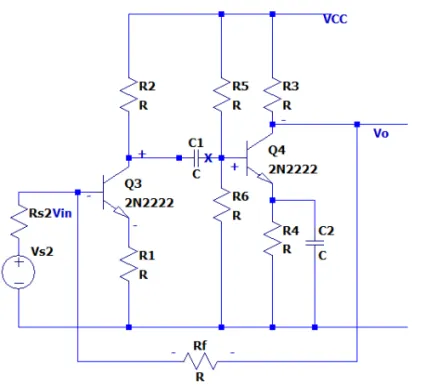
Resistors are ubiquitous on PCBs; they and capacitors are the most common components. Typical uses include pull-up/pull-down resistors, feedback resistors, and many others.

Thermal preheating

By Joule heating, resistors are used in heating applications such as electric blankets and kettles. In electronics deployed outdoors or in very cold environments, systems with high-performance SoCs may need preheating to reach operational temperature. Designers sometimes add a high-power resistor as a preheater that is disabled once the device has warmed up, since normal device power dissipation will then maintain temperature. For lab troubleshooting, simple setups using cement resistors and a DC power jack can simulate elevated temperatures to reproduce intermittent failures.

Zero-ohm resistor

Zero-ohm resistors, also called jumper resistors, are used for debugging and compatibility. They are helpful to split power rails for measurement or to configure options on a board. When using zero-ohm resistors, check datasheet parameters: for example, an RC0402 zero-ohm resistor may have resistance no greater than 50 mΩ and a rated current up to 1 A, so 0402 zero-ohm parts typically support currents below 1 A.

RC0402 zero ohm resistor

Current limiting

When only tens of milliamps are needed and adding a separate DCDC or LDO is impractical, a resistor-based solution or a simple regulator can be used to limit current.

Voltage division

Resistors are used in ADC sampling circuits, DCDC output feedback, and level shifting via resistor dividers.

Impedance matching

For high-speed signals, PCB traces behave as transmission lines and require impedance matching to prevent reflections that degrade signal integrity. A common simple method is source-series termination: place a resistor in series with the signal source such that the series sum of the resistor and source impedance equals the characteristic impedance of the transmission line. This attenuates reflections returning to the source. Sensitive nonlinear resistors are also used in sensors and protection circuits.

3.2 Resistor selection

Selection involves extracting key parameters from datasheets and verifying they meet application requirements.

3.2.1 Fixed resistors

A comparison of common resistor types shows thick-film and metal-film chip resistors have the largest shipment volumes.

Resistor type comparison

3.2.2 Thermistors (PTC)

PTCs function similarly to fuses for overcurrent protection but are resettable. Unlike one-time fuses, PTCs recover after heat dissipation, which avoids field replacement. Many PTCs must meet safety standards such as UL 1439.

PTC temperature resistance curve

Key selection parameters for PTCs include:

  • Hold current: the maximum current at which the PTC remains in the low-resistance state. Hold current decreases with increasing ambient temperature, so operating temperature must be considered.
  • Trip or actuation current: the current at which the PTC transitions to the high-resistance state for protection.
  • Rated voltage: the maximum voltage the PTC can withstand. If exceeded, the PTC may fail by breakdown. Choose a rated voltage higher than the system voltage, with typical derating to around 80% (for a 12 V system, select a PTC rated above 15 V).
  • Rated current: the maximum short-circuit current the PTC can tolerate at the rated voltage without damage.
  • DC resistance: the PTC's low-state resistance introduces voltage drop in normal operation and must be considered in power budgets. Compared with fuses, PTCs typically have higher series resistance and may allow small leakage currents in the tripped state.

PTC specifications table

3.2.3 Varistors (MOV)

Varistors are clamping devices similar in role to Zener diodes or TVS diodes and are used for transient overvoltage protection such as surge suppression.

MOV V-I characteristic

Selection considerations focus on two aspects: a) the protective device must not trigger or be damaged during normal operation, and b) it must provide adequate protection under fault or transient conditions.

MOV selection criteria

  • Rated working voltage: the maximum continuous voltage at which the MOV remains in its high-resistance state. Choose MOVs with appropriate AC or DC rated voltages for the application. Using a DC-rated MOV in AC applications is not generally recommended unless specified.
  • Clamping voltage: under transient conditions, the MOV conducts and clamps the voltage to a level typically 2–3 times its nominal working voltage. Ensure the clamping voltage does not exceed the maximum voltage rating of the protected circuitry; if necessary, use multi-stage protection such as a series damping resistor followed by a TVS diode for a lower residual voltage.
  • Surge current and energy rating: MOVs must dissipate surge energy without overheating. Surge capability is usually specified using an 8/20 μs waveform. Typical specifications might list single large pulses and multiple smaller pulses the device can withstand. MOVs also have significant parasitic capacitance and slower response than TVS diodes, so they are unsuitable for very high-speed signal lines or certain fast transients like some ESD events.
AIVON | PCB Manufacturing & Supply Chain Specialists AIVON | PCB Manufacturing & Supply Chain Specialists

The AIVON Engineering and Operations Team consists of experienced engineers and specialists in PCB manufacturing and supply chain management. They review content related to PCB ordering processes, cost control, lead time planning, and production workflows. Based on real project experience, the team provides practical insights to help customers optimize manufacturing decisions and navigate the full PCB production lifecycle efficiently.

Related Tags


2026 AIVON.COM All Rights Reserved
Intellectual Property Rights | Terms of Service | Privacy Policy | Refund Policy