MLCC — multilayer ceramic chip capacitors, commonly called chip capacitors, can produce audible squeal. What causes this issue?
How audible noise is generated
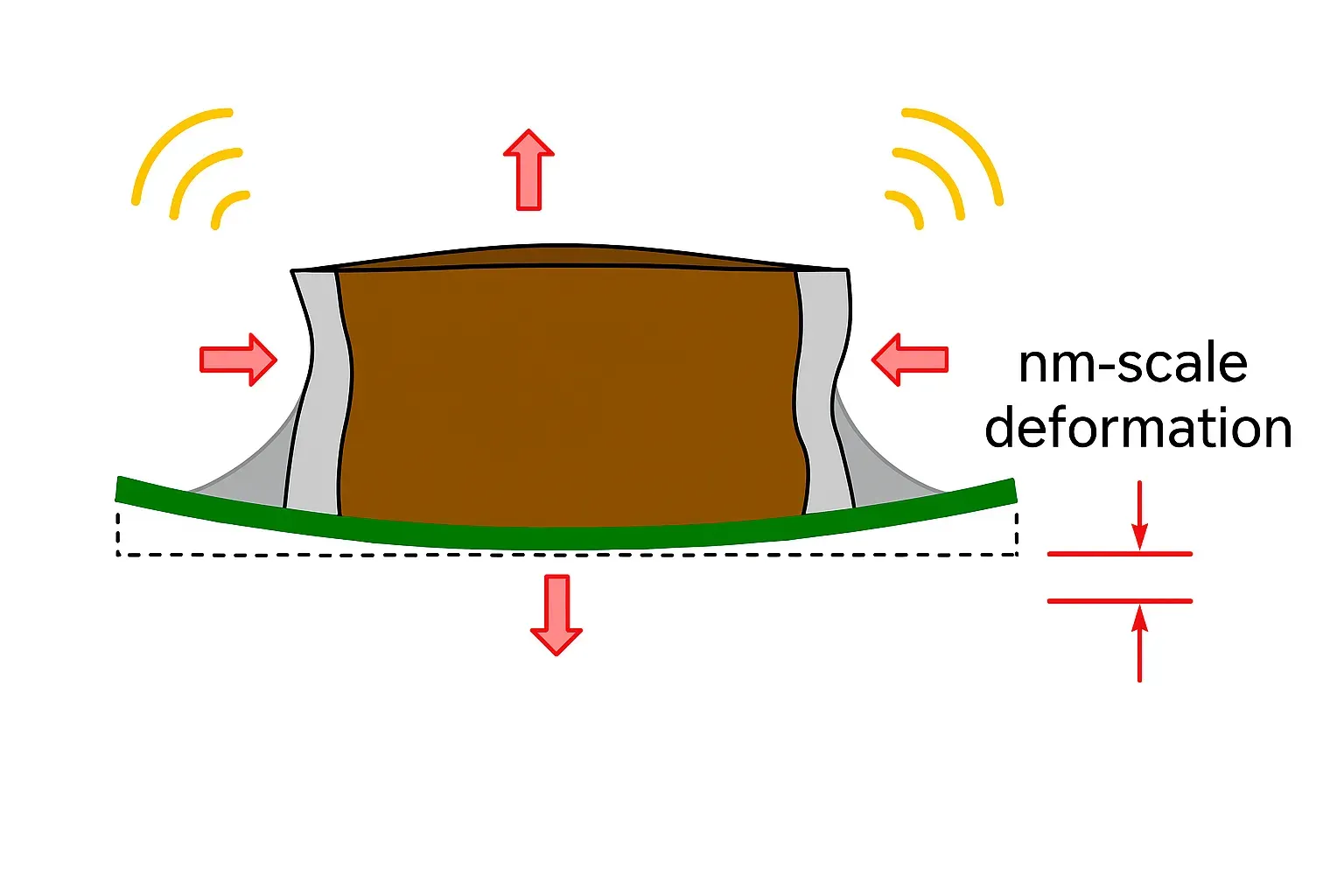
Sound is generated by mechanical vibration. Sound waves with frequencies between 20 Hz and 20 kHz can be perceived by the human ear. When an MLCC emits a squeal, it means the capacitor undergoes relatively large mechanical vibration under an applied voltage (large on a microscopic scale, typically less than 1 nm).
Why does an MLCC vibrate?
Under an external electric field, all materials exhibit electrostrictive strain. For certain high-permittivity ferroelectric materials, the electrostrictive effect is pronounced; this is referred to as the piezoelectric effect.
The piezoelectric effect is defined as follows: in non-centrosymmetric crystals, applying mechanical stress produces polarization proportional to the stress and generates charges on crystal faces; this is the direct piezoelectric effect. Conversely, applying an electric field can induce polarization and cause deformation proportional to the field strength; this is the inverse piezoelectric effect. Both phenomena are collectively called the piezoelectric effect.
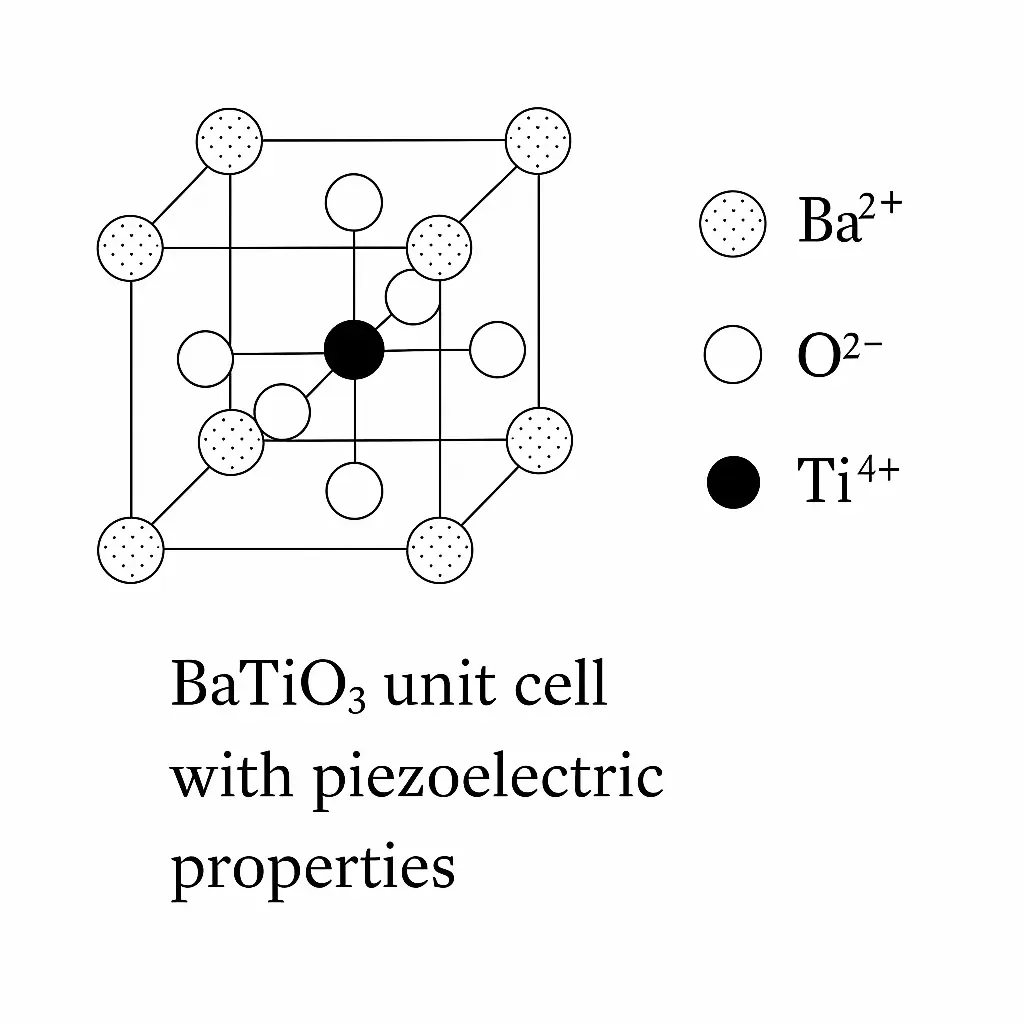
Direct piezoelectric effect: applying mechanical pressure to a piezoelectric material causes structural rearrangement in the crystal lattice, inducing surface charge and a potential difference.
Inverse piezoelectric effect: applying a voltage to a piezoelectric material produces mechanical stress and deformation.
Do all MLCCs squeal?
MLCC dielectric materials are generally classified into two categories: paraelectric (Class I) dielectrics and ferroelectric (Class II) dielectrics.
Paraelectric dielectrics (Class I)
Also called Class I materials, examples include SrZrO3 and MgTiO3. Paraelectric dielectrics exhibit very small electrostrictive strain; under normal operating voltages, the induced deformation is insufficient to generate audible noise. Therefore, MLCCs manufactured with Class I dielectrics, such as NPO (COG) temperature-stable parts, do not produce audible squeal.
Ferroelectric dielectrics (Class II)
Also called Class II materials, examples include BaTiO3 and BaSrTiO3. Ferroelectric dielectrics have pronounced electrostrictive behavior and a significant piezoelectric effect. Consequently, MLCCs made with Class II dielectrics, such as X7R or X5R parts, can produce noticeable audible squeal under large alternating electric fields.
For example, when an X7R MLCC is subjected to a high-amplitude varying voltage, the BaTiO3 dielectric undergoes the inverse piezoelectric effect, the MLCC deforms and vibrates, and that vibration can be transmitted to the PCB and cause resonance.
When the vibration frequency falls within the 20 Hz to 20 kHz audible range, medium-to-high capacitance X7R/X5R MLCCs can produce audible squeal. This is commonly observed in applications such as switching power supplies and high-frequency power supplies.
Mitigation strategies
There are several approaches to reduce audible noise from MLCCs. All practical solutions typically add cost, so selection should consider size, reliability, and budget constraints.
1. Change capacitor type. The most direct method is to replace Class II MLCCs with components that do not exhibit the piezoelectric effect, such as Class I ceramic capacitors, tantalum capacitors, or film capacitors. Considerations include board space, reliability, and cost.
2. Modify the circuit. Reduce or eliminate large alternating voltage across the MLCC, or move the excitation frequency outside the most sensitive audible band of the human ear. The human ear is most sensitive in the 1 kHz to 3 kHz range.
3. PCB layout and board specifications. Careful PCB layout and mechanical design can help reduce the level of audible squeal.
4. Use low-noise or no-noise MLCCs.
There are three current MLCC design measures aimed at reducing squeal:
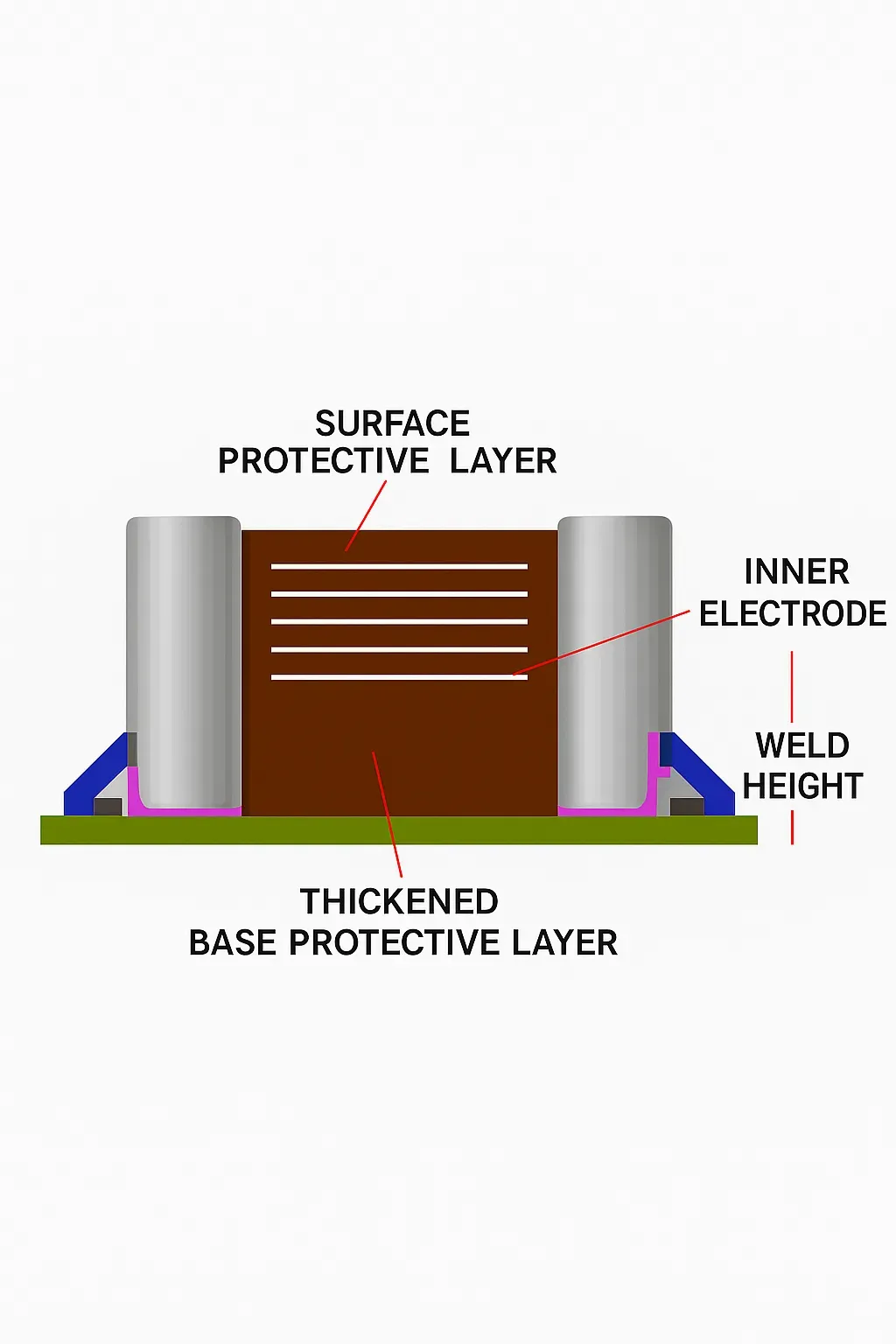
-1. Thicken the bottom protective layer
Because the thicker protective layer has no internal electrodes, the BaTiO3 in that region does not deform. If the solder fillet height at the ends does not exceed the thickness of the bottom protection layer, the deformation transmitted to the PCB is reduced, which effectively lowers noise.
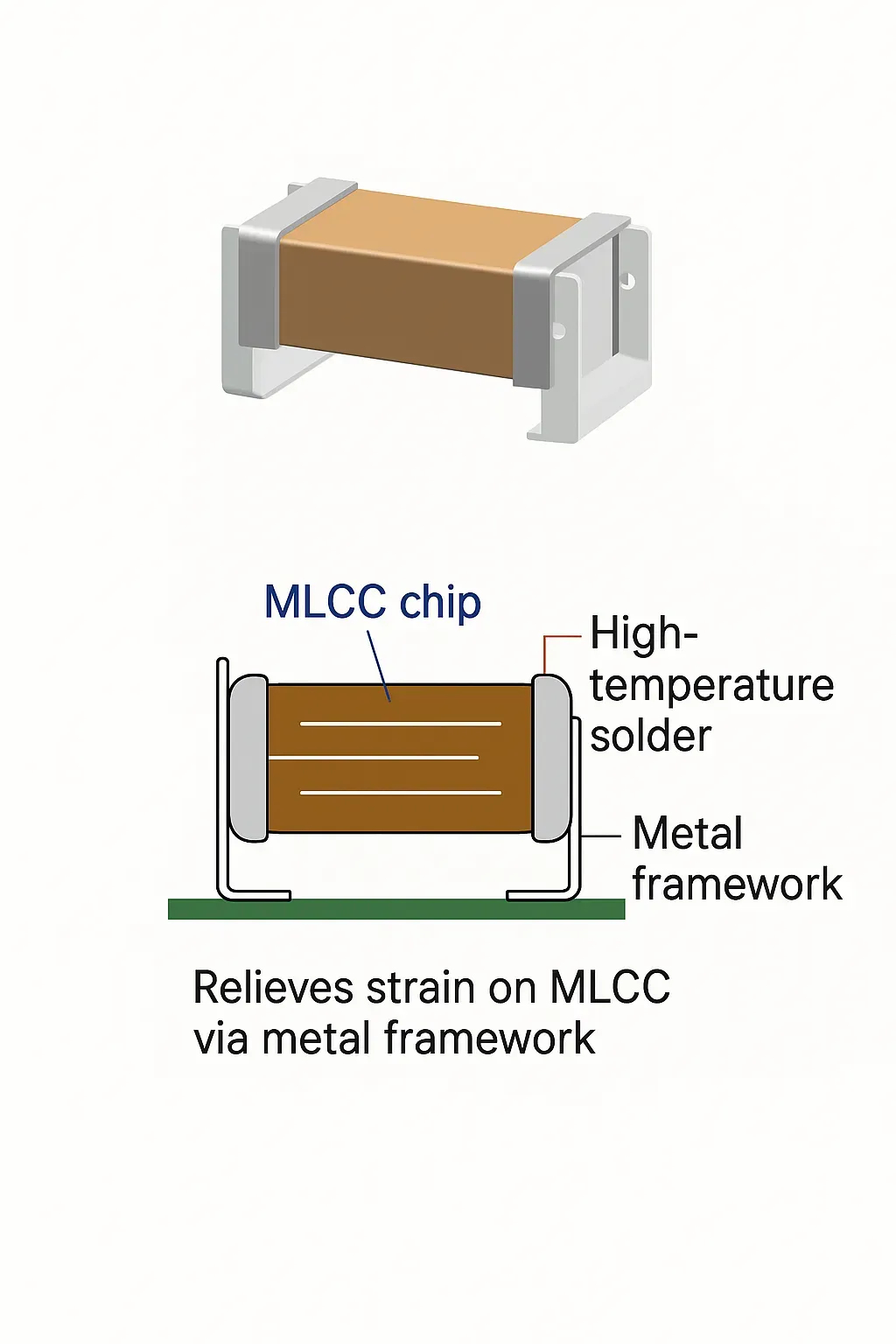
-2.Add a metal bracket structure
A metal bracket can support the MLCC so it is suspended above the PCB. The bracket elastically buffers deformation caused by the inverse piezoelectric effect, reducing transmission to the PCB and lowering audible noise.
-3. Use dielectric materials with weaker piezoelectric response
By further doping BaTiO3 and sacrificing some permittivity and temperature characteristics, manufacturers can produce dielectric materials with a significantly reduced piezoelectric effect. MLCCs made from these materials effectively lower audible noise. Several MLCC manufacturers offer low-noise material series.
How do readers address capacitor squeal in their electronic products?