The vehicle control system and the battery management system in battery-electric vehicles are two critical systems that perform distinct functions.
Battery management system
The battery management system is a key subsystem responsible for monitoring, managing, and protecting the traction battery pack. Its main functions include:
- Battery state monitoring: real-time monitoring of pack voltage, current, temperature, and state of charge (SOC).
- Cell balancing: maintaining balanced state of charge among individual cells to avoid capacity mismatch.
- Overcharge and overdischarge protection: preventing overcharge or overdischarge to extend battery life and ensure safety.
- Fault diagnosis and warning: detecting fault conditions in the battery pack and providing alerts.
Vehicle control system
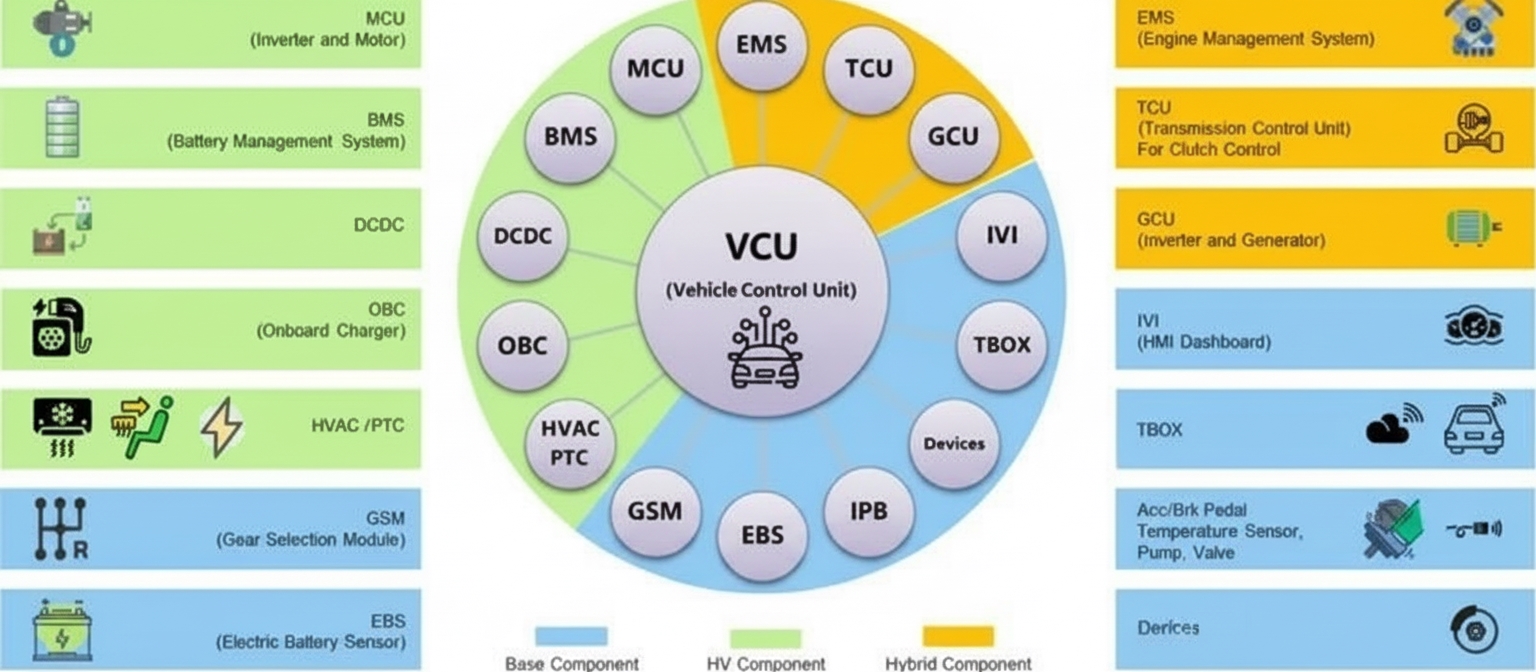
The vehicle control system acts as the vehicle's central controller, responsible for overall control and management. Its functions include:
- Motor control: managing motor speed, output torque, and power.
- Brake system control: overseeing the vehicle braking system, including regenerative braking.
- Energy management: controlling energy flow between the traction battery and other vehicle subsystems to optimize energy use.
- Power distribution: allocating propulsion power to various vehicle systems based on vehicle state and driving demands.
The battery management system and the vehicle control system are both essential, working together to ensure the safe, efficient, and reliable operation of electric vehicles.