Presentation summary
Christian Mecker, Executive Vice President of Bosch's Mobility Solutions in Japan, presented "Software-Defined Vehicles and the Architectures Needed for Future Mobility," discussing the concept, development trends, and the architecture Bosch proposes for future mobility.
Shortening development cycles and the need for a unified architecture
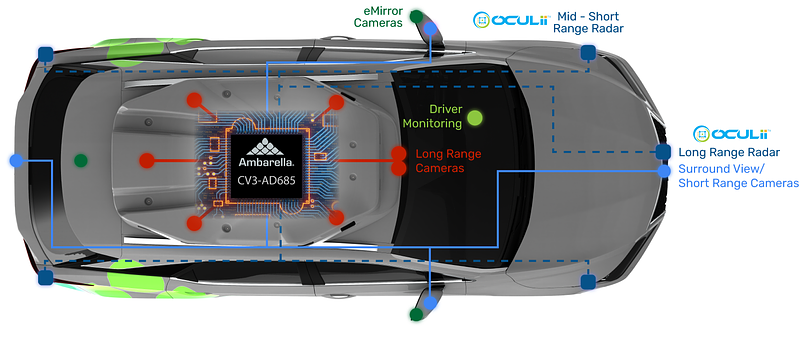
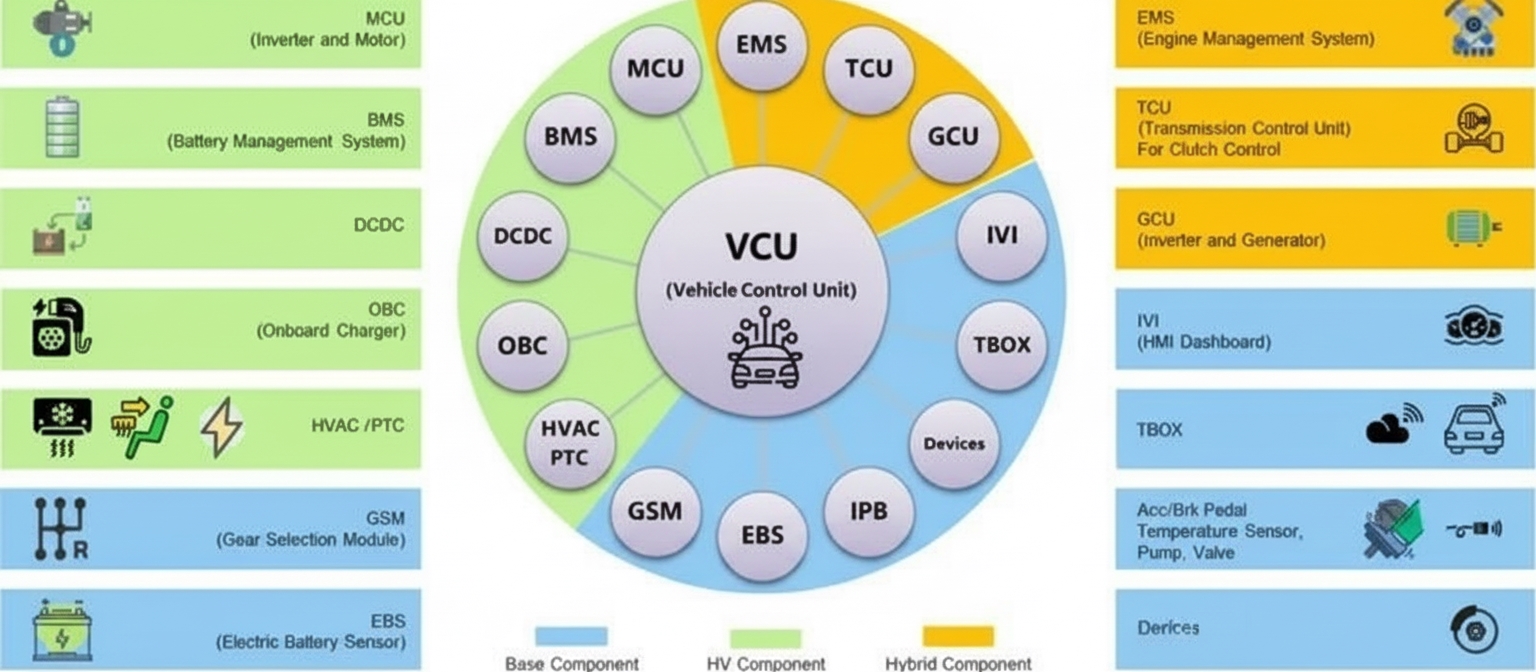
The global automotive industry faces pressure to shorten development cycles. Compared with other industries, such as semiconductors with a two-year development cadence, automotive development is relatively long. This has highlighted the need for a unified vehicle architecture and an operating system. A software-defined vehicle requires a central architecture that centrally manages vehicle domains, including automated driving, vehicle dynamics, energy management, body and comfort, and infotainment, using a layered structure to host functions and applications.
Industry collaboration and vehicle operating systems
Bosch has collaborated with Volkswagen on automated driving systems and has introduced a vehicle operating system, AOS. Software development is expected to change, with industry-wide collaboration becoming necessary to satisfy the increasing complexity of vehicle functions.
Multi-fleet layer concept
Bosch proposed a "multi-fleet layer" concept. This architecture supports management and deployment of software-defined vehicles by integrating controllers from different domains via a central architecture to form an efficient system. The cloud is divided into an automaker management layer, a fleet operator layer, and a multi-fleet layer to facilitate data collaboration and cross-OEM data sharing. The multi-tier operation model aims to support mobility solutions at the societal level.
API standardization and open interfaces
To enable efficient data sharing, Bosch emphasized the importance of API standardization and domain-specific API definitions. Each company and automaker is expected to create multiple APIs, with an estimate of around 200 APIs in total. There is a trend toward standardized, open APIs that are not restricted by industry or company boundaries. Future development will require cross-domain API definitions that are independent of individual automakers and that account for functional safety. The plan anticipates creating APIs per domain, with each company or automaker contributing three to five APIs, potentially totaling roughly 200 APIs. The need for standardized, open APIs is expected to become increasingly prominent, with integration across industries and companies.
Outlook
Bosch's transition illustrates its strategic approach to software-defined vehicles and future mobility architectures. Further developments in implementation and industry collaboration will be observed.