Overview
An engineer at Yole published a short article titled "WHAT’S IN THE BOX? – BYD’s 8-in-1 electrification system at a glance". BYD used stronger in-house design and system assembly capabilities and a self-sufficiency strategy to launch an integrated high-voltage powertrain. What does this 8-in-1 unit contain?
Note: All images are from "WHAT’S IN THE BOX? – BYD’s 8-in-1 electrification system at a glance". The text below is a summary based on that original article.
Component Integration
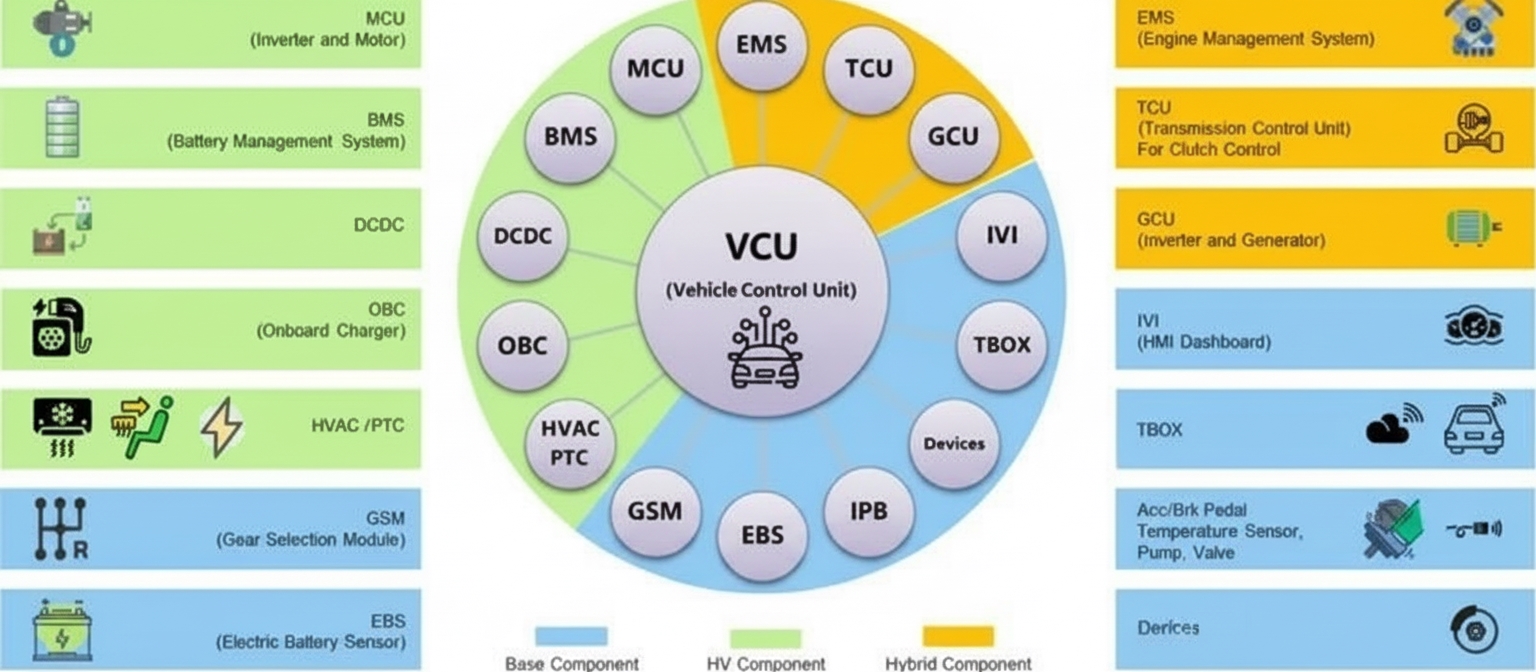
BYD’s 8-in-1 powertrain integrates six electrical subsystems into a single unit: BMS (battery management system), VCU (vehicle control unit), inverter, PDU (power distribution unit), OBC-DC/DC combined unit, plus the gearbox and motor packaged in a separate unit. This high level of integration delivers a compact system footprint, reduced weight, and savings in BOM and assembly costs.
Thermal Management
The system layout is optimized so components sit close together, reflecting an effective thermal management approach. Measures that improve thermal performance include using SiC technology on inverter and OBC-DC/DC MOSFETs, placing thermal pads and insulating sheets in critical areas, and employing a water-cooling system.
Sourcing and Key Power Components
Most of BYD’s electronic components are sourced from overseas suppliers, but the company applies a self-sufficiency strategy for key power components. These include inverter SiC power modules, output current sensor modules, power relays, and DC link capacitors. This in-house approach helps BYD remain competitive at the system level.
Benefits, Trade-offs, and Supply Chain
Compared with the previous generation of discrete systems, the 8-in-1 electrification system is more compact and 10% lighter, while also reducing BOM and assembly costs. Yole’s analysis compared volume, weight, and cost across six key functions—inverter, OBC (on-board charger), DC-DC converter, BMS, VCU, and PDU—and estimated that the super-integrated approach can yield component-level savings of about 25%, 20%, and 18% respectively.
The integration approach provides clear benefits such as saved space, the ability to integrate additional functions, and reduced energy consumption. However, it also introduces significant challenges. Complex vehicle packaging, large components, thermal management, and electromagnetic interference (EMI) all require careful engineering. A higher failure rate for the 8-in-1 assembly is a notable risk of heavy integration. At least 40% of material cost comes from parts manufactured or assembled in-house. Companies in China account for 79% of the total material cost, with Sinofuse and Chnbel supplying mechanical and key components, and Faratronic and Sun & Lynn Circuits serving as electronic component suppliers.
Summary
The high degree of system integration, notable technical highlights, and the self-sufficiency strategy expand possible directions for electric vehicle development. As these technologies continue to evolve, more innovative solutions are likely to emerge and advance the electric vehicle industry.