Introduction
This morning I attended a presentation on the Tuling intelligent chassis. The speaker was a former colleague, Liu.
The system uses the Huawei DriveONE 800V silicon carbide high-voltage power platform and a front double-wishbone / rear five-link independent suspension layout with anti-roll bars. It is equipped with CDC variable-damping shock absorbers and air suspension.
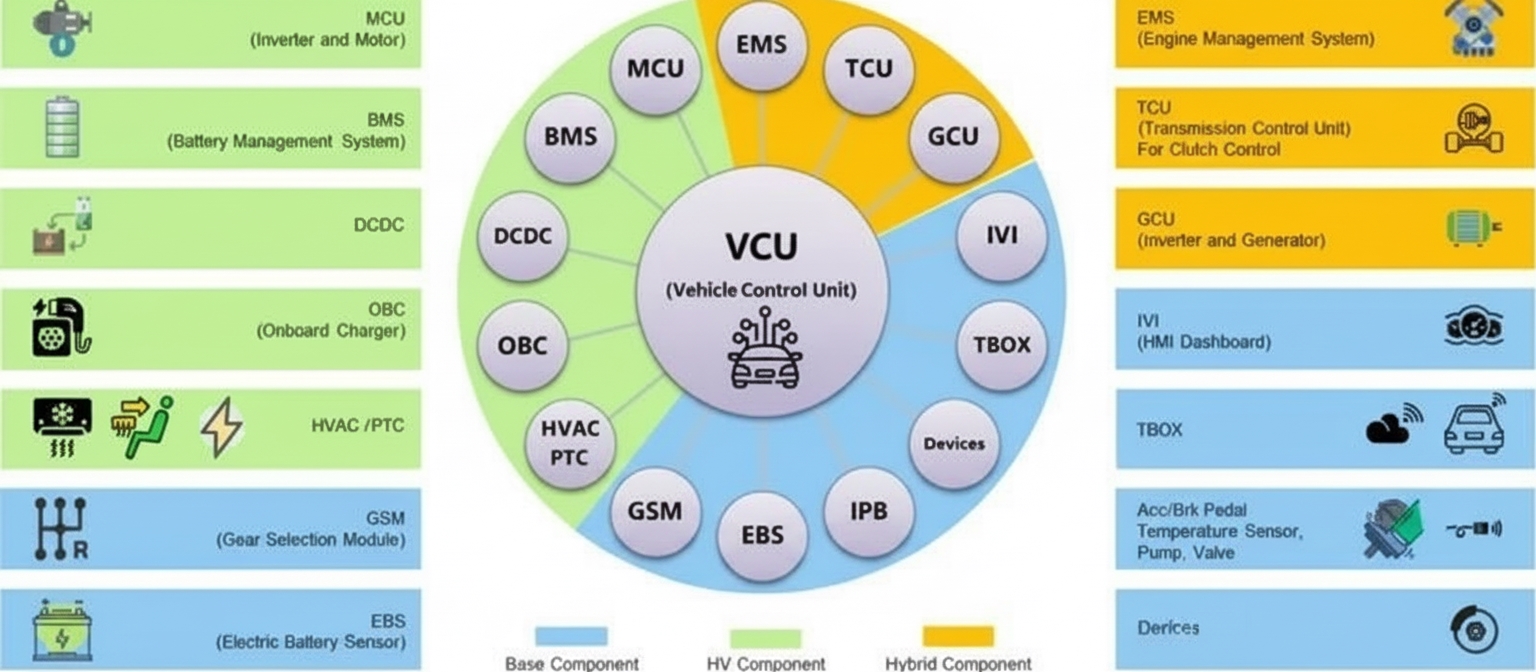
Under control from the vehicle intelligence center, the suspension stiffness is adjusted according to road conditions to improve passenger comfort while maintaining body support.
System focus
The Tuling intelligent chassis is built on a digital foundation to enable multi-domain collaborative control, emphasizing intelligent perception and control to provide easier handling, improved safety, and enhanced ride comfort. Key performance highlights across six evaluation metrics are as follows.
Key performance metrics
- Acceleration: 0–100 km/h in 3.3 s, delivering strong acceleration performance.
- Braking and safety: 100–0 km/h braking distance of 33.5 m, reducing collision risk during emergency stops.
- Handling stability: Excellent cornering performance demonstrated in a moose test, with competitive lateral acceleration and roll gradient characteristics.
- Ride height and smoothness: The chassis can adjust ride height with speed to balance stability and ground clearance at high speeds.
- Traction on poor surfaces: Reduced slipping on wet garages and mixed snow/ice surfaces, lowering the risk of spinouts and improving drivability across varied conditions.
- Vibration isolation: The chassis senses bumps and adjusts damping to reduce impact and improve ride smoothness.
- Intelligent perception and adjustment: The chassis can perceive obstacles and adjust to reduce impact when traversing them, while increasing sensing range and response speed to enhance safety.
Suspension and CDC
The virtual kingpin double-wishbone design reduces body roll, lowers impact, and improves stability. The virtual kingpin double-wishbone keeps the wheel movement closer to the steering kingpin, improving disturbance rejection and providing directional stability during strong acceleration or braking. Coupled with a five-link independent rear suspension, this balances comfort and handling.
CDC (Continuous Damping Control) refers to continuously adjustable damping shock absorbers. Damping levels are adjusted for different road conditions to change suspension stiffness. The system uses vehicle sensors to monitor driving state in real time and is capable of 1,000 road-surface sensing events per second and 100 damping adjustments per second. Collected data are sent to a control unit where they are processed and compared; the controller then commands the CDC valve to modulate an electromagnetic valve opening, adjusting the damper's damping force to match current road conditions. CDC dampers can reduce impact forces by up to nearly 60%.
Air suspension adjusts ride softness and body height via air springs and damping. It supports manual ride-height adjustment and can automatically adapt ride height to different speeds and driving conditions.
Intelligent core: MFSS, DATS, and xMotion
The vehicle perception and control center integrates HUAWEI MFSS multimodal fusion sensing system, HUAWEI DATS Dynamic Adaptive Torque System, and HUAWEI xMotion intelligent body collaborative control, along with other algorithms for coordinated vehicle control.
MFSS 1.0 multimodal fusion sensing system
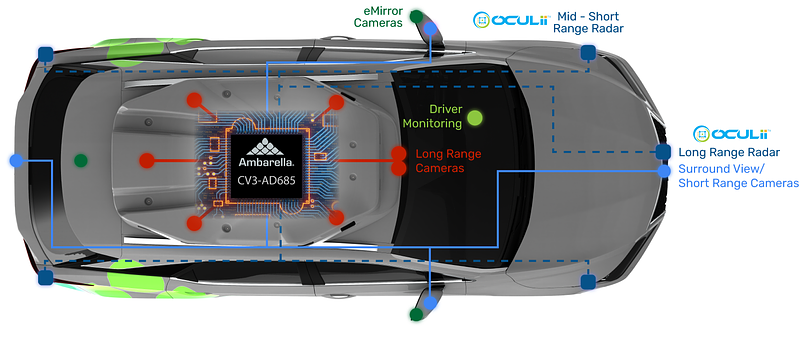
If the vehicle cannot accurately perceive its motion status and road conditions, it cannot react promptly to bumps, slips, or wheel lockup, which degrades performance and ride quality. To address this, the Tuling chassis uses HUAWEI MFSS 1.0 to enable vehicle posture and road preview sensing.
MFSS comprises two main parts:
1) Vehicle state estimation (iVSE)
iVSE uses multiple active and passive sensors to estimate vehicle state and identify road conditions and surface types. It provides accurate measurements and calculations of parameters such as vehicle speed, wheel speed, steering angle, and yaw rate to support vehicle control. For example, it can compensate motor speed and correct longitudinal slope estimates to improve speed estimation accuracy for stability control, ADS regulation, and safety driving control.
2) Road preview (RSS)
RSS uses perception sensors such as cameras and LiDAR to identify upcoming road features and adjust damper properties in advance based on road information and vehicle state. It can detect features like speed bumps, potholes, and slippery surfaces to enable better suspension decision-making and improve ride comfort. For example, RSS can preview a speed bump and initiate millisecond-level damping control to reduce vertical impact by about 15%; combined with torque-adaptive adjustments, overall obstacle impact can be reduced by about 31%.
Follow-up
The Dynamic Adaptive Torque System (DATS) and xMotion intelligent body collaborative control will be discussed in a subsequent report.