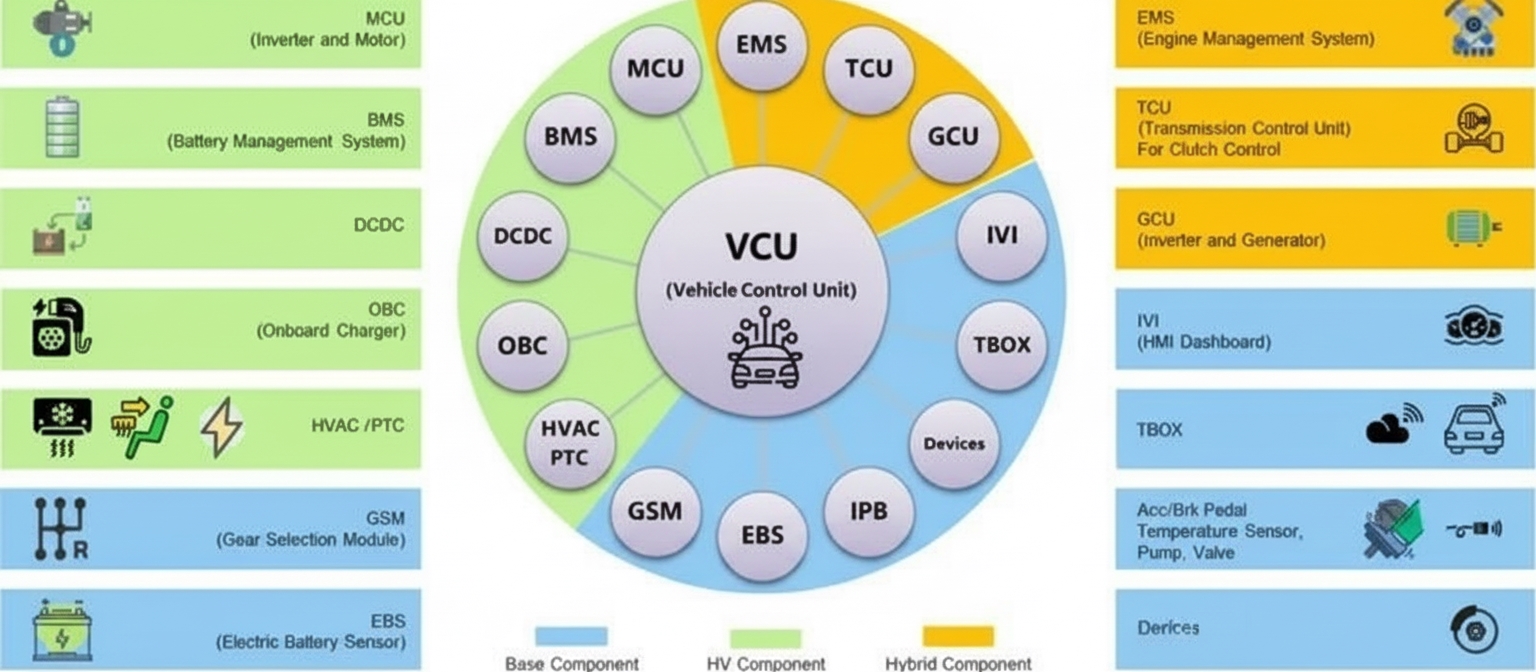
NIO's recently announced ET9 reflects over a year of system-level technical preparation across four areas: automated driving, a 900V electrical architecture, intelligent chassis, and system safety. This article focuses on the vehicle-wide 900V high-voltage architecture, covering battery cells, motors, wiring harnesses, HVAC, DC-DC converters, and onboard chargers.
Vehicle-wide 900V High-Voltage Architecture
The reported peak system voltage reaches 925V, with peak charging power of 600 kW and a peak charging current of 765 A. The architecture is intended to improve system efficiency, performance output, safety standards, and the overall energy replenishment experience.
1) 900V Architecture and Fast Charging / Battery Swap
The claims include support for 5C fast charging and rapid battery swap. There are technical questions around these claims: large-format cylindrical cells with mature high-rate 5C charging capability are not yet widely established. For reference, Tesla's cylindrical cells have demonstrated charging above 2C, but reliable 5C operation at scale remains an open challenge.
- New 900V platform: Claimed peak charging power of 600 kW and 5-minute energy addition of 255 km. Key technical questions are peak vs. average power and mass-production stability.
- On conventional fast chargers: The vehicle reportedly uses a high boost charging approach enabling up to 200 kW, capable of adding 200 km in 12 minutes, which aligns with conventional charging system capabilities.
- Battery swap and efficiency: A 3-minute battery swap is reported, equivalent to a 20C charge-rate in delivered energy; combined charging efficiency is reported above 93%, and a 10% reduction in energy loss compared with a 500 kW supercharger station is claimed.
2) 900V High-Voltage Cables and Weight Reduction
Reported cable diameter reduction of 30%, wiring harness weight reduction of 50%, and front/rear e-drive weight reduction of 34% are intended to significantly reduce the vehicle's electrical mass. These reductions lower power loss during energy transfer and can improve vehicle range.
In-house 46105 Large Cylindrical Cells and Battery Pack
NIO is reported to follow a battery definition approach similar to Tesla and BMW, developing an in-house 46105 large cylindrical cell aimed at scalability, safety, and high energy density.
- Fast charging: A 120 kWh 5C high-voltage ultra-fast charging battery pack, paired with a liquid-cooled ultra-fast charger, is claimed to enable 5-minute, 255 km charging intervals.
- High energy density: Single 5C cylindrical cell energy density reported at up to 292 Wh/kg.
- Low internal resistance: Single cell internal resistance reported at 1.6 mΩ, reducing energy loss and improving overall performance.
- Safety: A thermal-electric separation design and high-precision thermal runaway detection algorithms are reported to enhance single-cell safety and provide early prevention of abnormal conditions.
There remain uncertainties around these claims. NIO's stated role emphasizes R&D and design, with battery manufacturing and process integration handled through cooperating manufacturers.
900V High-Performance E-Drive Platform
The next-generation 900V high-performance e-drive platform reportedly uses an in-house carbon-silicon carbide (SiC) e-drive design. A dual-motor redundant layout is intended to ensure stable driving in adverse weather and low-traction conditions. The rear permanent magnet synchronous motor is claimed to deliver stronger output in a smaller package.
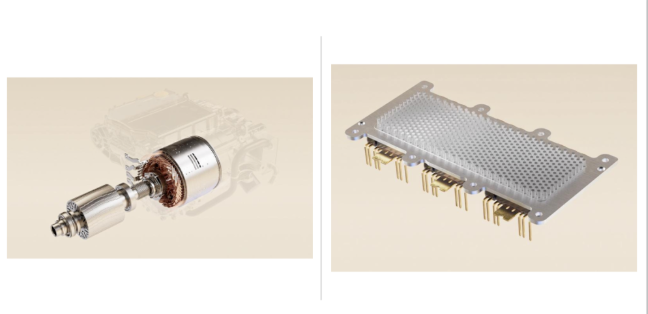
- Performance: The rear permanent magnet synchronous motor is reported as the world's first 925V continuous-wave wound motor, with a maximum speed above 20,000 rpm, peak torque of 5,000 Nm (reported +16% improvement), and a power density of 4.3 kW/kg.
- Efficiency: A 1200V SiC power module is reported to reduce electrical resistance by 15%, with low thermal resistance and low loop inductance to achieve lower loss.
- Integration: The motor uses a W-Pin winding process for high integration and improved packaging efficiency.
The SiC module and motor design are reported to be packaged and developed in-house. Continued R&D through XPT is cited as a basis for solid progress in this area.
Summary
The vehicle-wide 900V architecture contains multiple technical elements and several open questions. Key areas for further verification include large-format cell high-rate charging maturity, peak vs. sustained charging power in real-world conditions, mass-production stability, and the practical efficiency gains of the claimed electrical reductions.