Introduction
With rapid technological development, the automotive industry is entering a new era. In this era, autonomous driving vehicles are becoming a reality rather than a distant dream. The accompanying challenge is how to ensure occupant safety. Continental has proposed some concepts for the development of restraint systems. There are relatively few local companies in China that develop airbags and restraint systems, which makes this topic worth exploring.
Part 1
Drivers and Challenges for Restraint Systems in the Autonomous Era
Traditional airbag controllers have not changed significantly for many years.
The rise of autonomous vehicles introduces new challenges. For example, seats are no longer constrained by traditional restraint system layouts, and occupants can move more freely inside the cabin. In fact, as the seat reclines to a semi-reclined position, the effectiveness of traditional restraint systems is reduced.
This creates new requirements for restraint systems: they must be more advanced and intelligent to still protect occupants in a crash. Future restraint system architectures are based on modern concepts that combine artificial intelligence with physics-based algorithms to improve system trustworthiness and safety.
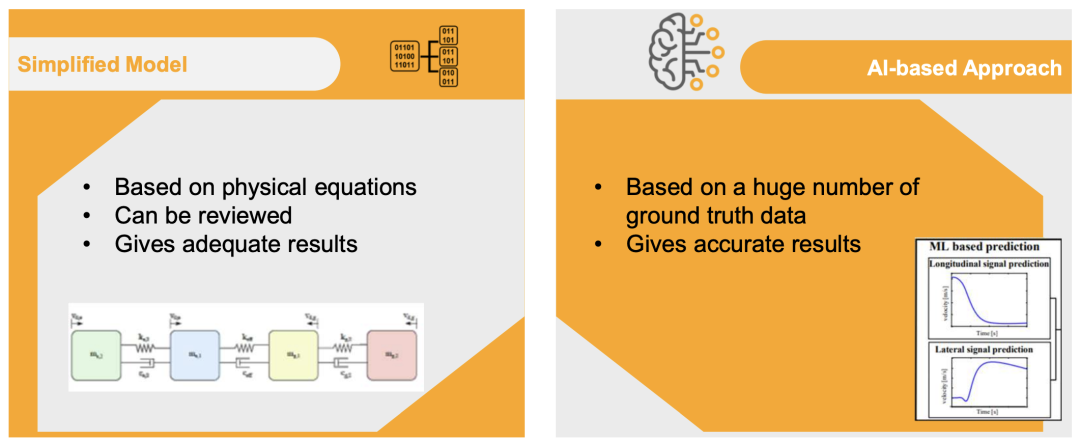
This design approach aims to transform the restraint system into an adaptive execution system that better accommodates the changes brought by autonomous driving and provides a solid foundation for future vehicle safety.
Part 2
Integrated Safety Systems and Intelligent Restraint Control Architecture
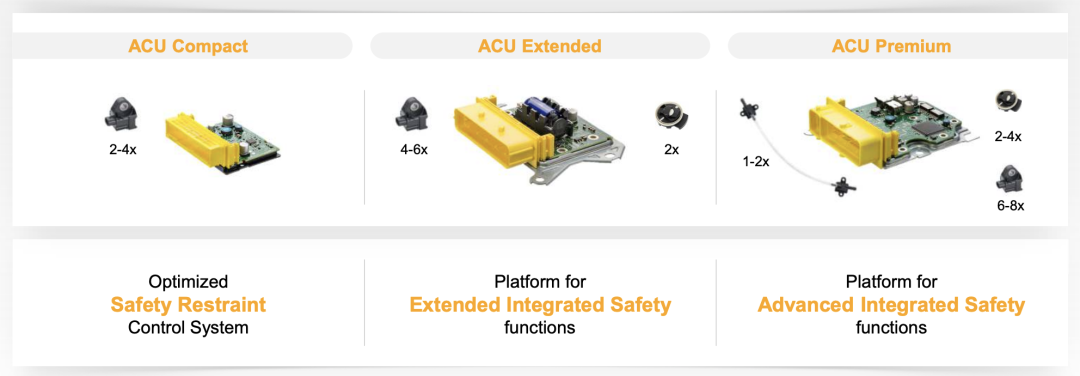
Future restraint system architectures adopt an integrated safety system design. By using different airbag control unit variants (ACU), they provide flexible and efficient restraint control for autonomous vehicles. This helps improve overall system performance and provides a platform for the phased introduction of new products and functions.
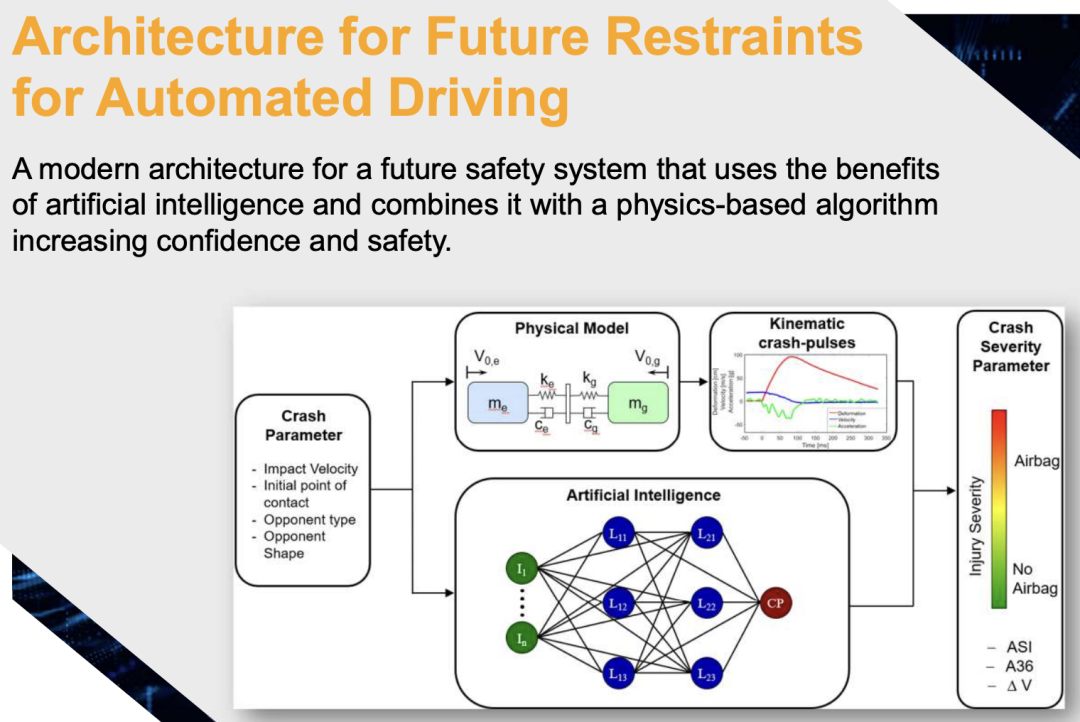
One major challenge in future driving is that traditional safety restraint systems, especially airbags, may not provide sufficient protection in autonomous driving scenarios. "Out of Position" occupant states will become common, so new interior concepts are needed to accommodate freer occupant movement. This requires configurable interior use and intelligent restraint systems. By accurately measuring collision parameters and intelligently estimating crash severity, the system can respond rapidly before or during an event. Combining physics-based models with artificial intelligence can deliver adequate results while ensuring system reliability.
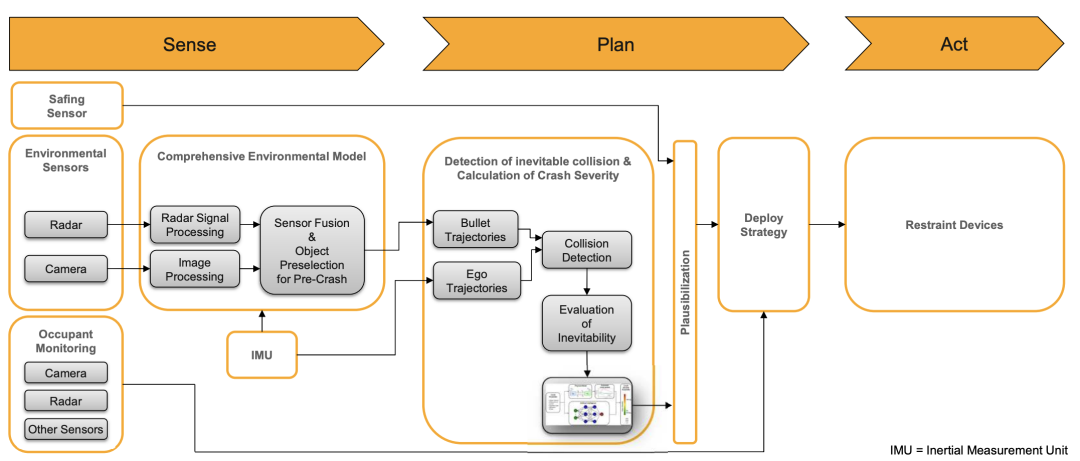
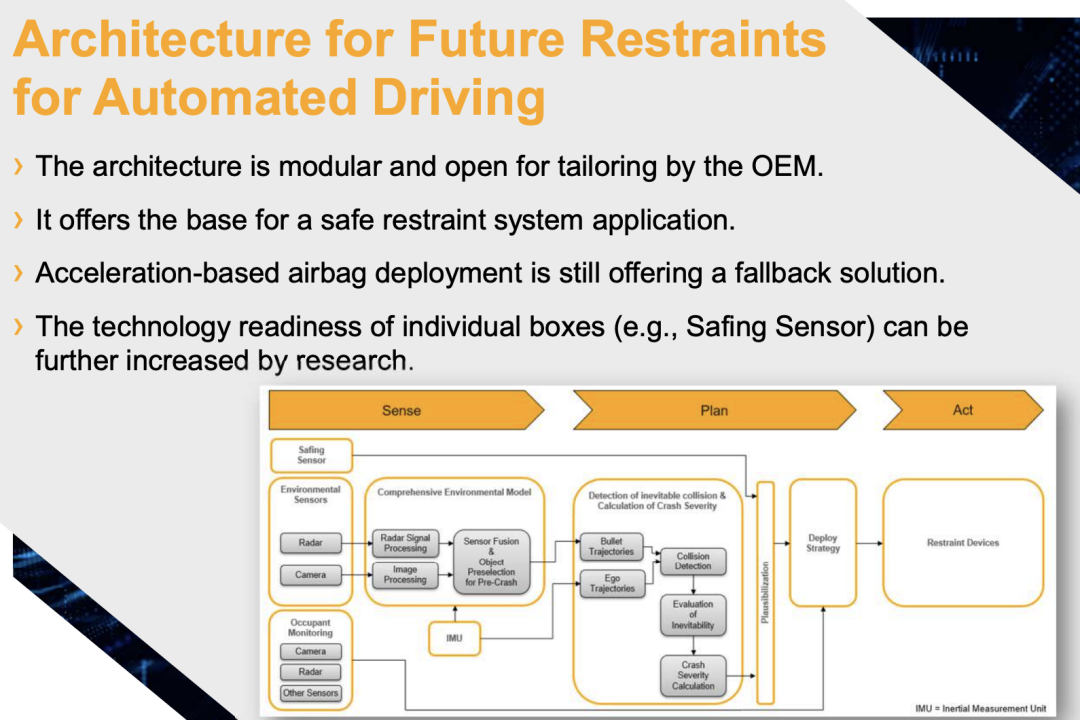
Technically, future restraint system architectures will be modular and open, allowing customization to automotive OEM requirements. The platform provides an ideal basis for safety restraint system applications, while acceleration-based airbag deployment still serves as a fallback solution. This can further raise the technology readiness of individual components to meet evolving technical and market demands.
Beyond basic restraint functions, future restraint systems also enable other vehicle innovation use cases.
For example, to reduce road noise, by introducing road-noise-cancellation sensors the system can generate counteracting sound waves to create a quieter, more comfortable cabin. This integrated sensor-enhancement approach allows existing sensors to serve new use cases while improving sensor quality through advanced software models.
Conclusion and Outlook
Future restraint systems are essentially algorithmic, and as safety items they will also have standalone safety programs. However, overall algorithm development will center on top-level central computer applications; extending them on individual ECUs is less likely. Although extending to ECUs is conceivable, software iteration at the central computer level is faster and more efficient. Execution-capable low-power compute on ECUs should be considered with redundancy and safety in mind.