Overview
Vehicle reliable operation depends not only on the stability and reliability of the controller itself, but also on the stability and reliability of the communication links between controllers. This article focuses on testing methods and principles for in-vehicle Ethernet transmission performance.
Transmission Performance Testing
Wiring harnesses are part of the vehicle communication and control infrastructure, and must meet OPEN criteria of "fast", "high", and "strong", meaning higher data rates, greater bandwidth, and stronger immunity to interference.
1. Test Object — Single Communication Channel (SCC)
For connector or cable manufacturers the tested item is the connector and cable. For harness factories or OEMs the tested item is the single communication channel (SCC).
2. OPEN TC9 Transmission Performance — Return Loss (RL)
Under the same transmission bandwidth (600 MHz), connector requirements are the most stringent. Harnesses (SCC) are 3 dB less strict than cable. Requirements are comparable to or more stringent than Category 7 cable (supporting 10 Gbps).
3. OPEN TC9 Transmission Performance — Longitudinal Conversion Loss (LCL)
Under the same transmission bandwidth (600 MHz), connector and cable requirements are the most stringent. Shielded (STP) harnesses are at least 9 dB less strict than unshielded (UTP) harnesses. Requirements are much more stringent than Category 8 cable (supporting 40 Gbps).
Testing Principles
1. Characteristic Impedance Test Principle
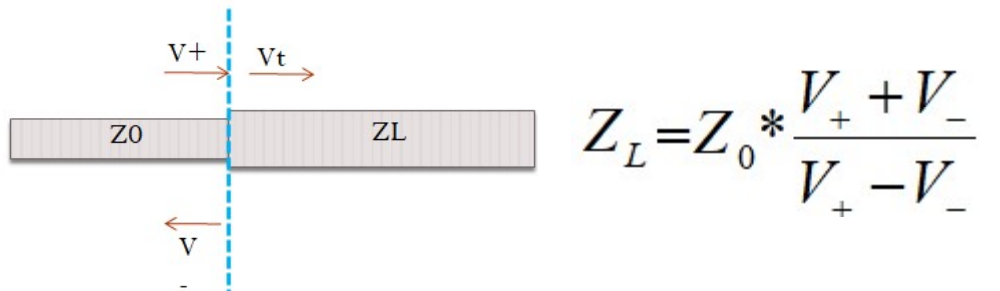
Characteristic impedance is measured by time-domain reflectometry (TDR). A pulse signal, not a continuous sine wave, is injected into the harness. Reflections occur at impedance discontinuities, allowing calculation of impedance values and localization of discontinuity positions.
2. Insertion Loss (IL) Test Principle
A-type link segment: supports four in-line connectors, length 15 m. B-type link segment: supports four in-line connectors, length 40 m.
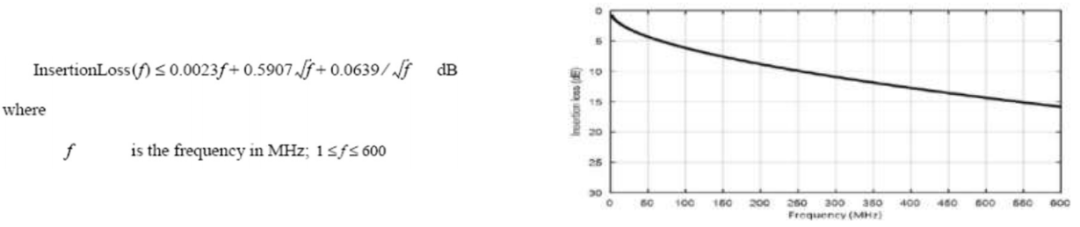
Insertion loss depends on conductor length and the number of connectors. Under the conditions of 15 m length and four connectors, insertion loss is a function of frequency. A test signal is injected at one end of the harness and received at the other end, i.e., Sdd21. The ratio of received signal to injected signal is calculated in dB at each frequency point.
3. Return Loss (RL) Test Principle
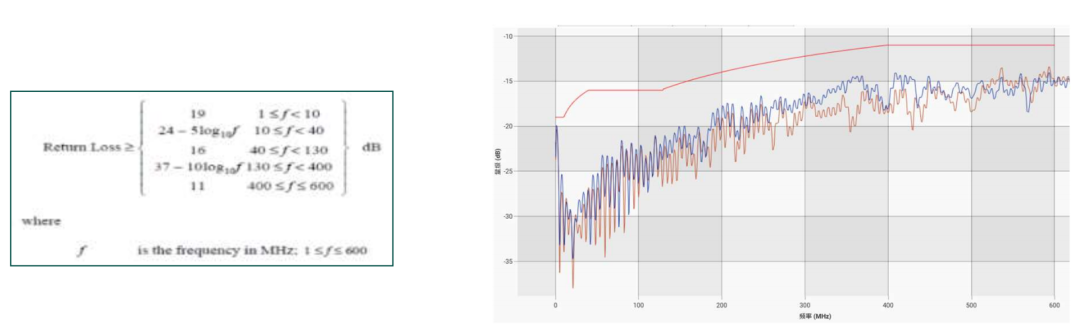
Return loss is a function of frequency. A test signal is injected at one end of the harness and the reflected signal is measured at the same end, i.e., Sdd11 and Sdd22. The ratio of reflected signal to injected signal is calculated in dB at each frequency point. Measurements are taken at both ends of the harness.
4. Longitudinal Conversion Loss (LCL) Test Principle
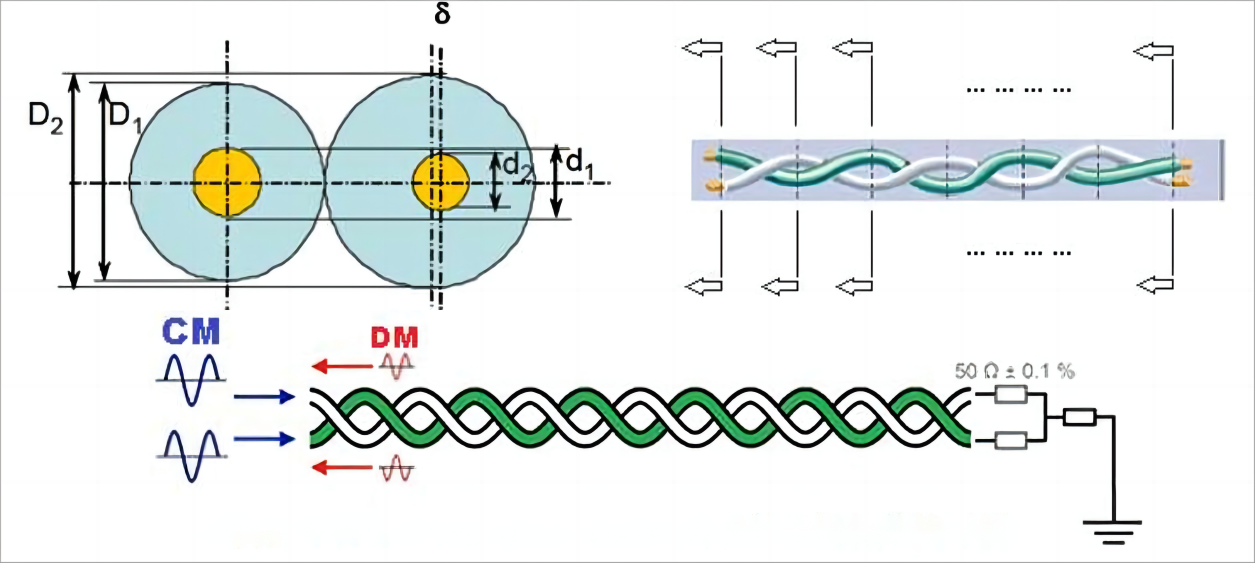
Ideal twisted pairs suppress common-mode interference through a balanced symmetrical structure. Real pairs exhibit imbalance and asymmetry. When common-mode input converts to differential mode, the greater the differential component, the poorer the immunity to interference.
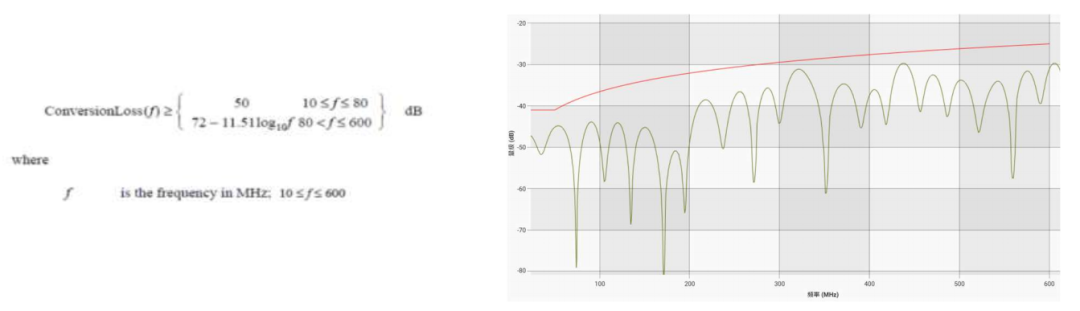
Longitudinal conversion loss, also called near-end balance attenuation, is a function of frequency. A common-mode signal is injected at one end and the differential reflected signal is received at the same end, i.e., Sdc11 or Sdc22. The ratio of reflected signal to injected signal is calculated in dB at each frequency point. Measurements are taken at both ends of the harness.
Longitudinal Conversion Transfer Loss (LCTL)

Longitudinal conversion transfer loss, also called far-end balance attenuation, measures conversion from injected common-mode at one end to differential at the other end, i.e., Sdc12 and Sdc21. The greater the differential component at the far end, the worse the interference immunity. The ratio of output to input signal is calculated in dB at each frequency point. Measurements are taken at both ends of the harness.