Introduction: New Tianxuan Debuts with i9-14900HX Processor
The Intel 14th Gen mobile HX series was officially released on January 9, 2024. As a core partner of Intel, Asus launched several gaming laptops using the new high-performance processors, including the Tianxuan and ROG series. This review covers the Tianxuan 5 Pro, which is the first Tianxuan model to use the H55 platform and is equipped with the high-end i9-14900HX.
Key Upgrades Compared with the Previous Generation
1. First laptop to ship with i9-14900HX
In short, the i9-14900HX is the mobile counterpart of the desktop i9-14900K. It features 8 P-cores and 16 E-cores for a total of 16 cores and 24 threads, 32 MB L2 cache and 36 MB L3 cache. These parameters match the i9-14900K. To fit the laptop platform, Intel reduced some frequencies and power limits: all-core frequency is 5.2 GHz and maximum boost frequency is 5.8 GHz. That means the all-core frequency is 400 MHz lower than the desktop part and the boost frequency is 200 MHz lower. Compared with the previous generation i9-13980HX, the boost frequency is 200 MHz higher.
2. 16:10 Display for the First Time
Previous Tianxuan laptops used a 16:9 panel, which left a relatively large lower bezel. The Tianxuan 5 Pro moves to a 16:10 display, increasing screen area by about 10% and reducing the bottom bezel, giving a screen-to-body ratio close to 90%. The panel brightness is also upgraded from 300 nits to 400 nits. The screen resolution is 2560×1600 with a 165 Hz refresh rate, 3 ms response time, and 100% sRGB coverage.
3. RTX 4060 Laptop with 130 W Performance
Desktop RTX 4060 typically targets around 110 W for gaming. The Tianxuan 5 Pro uses an RTX 4060 Laptop configured for a maximum of 130 W (105 W base power plus 25 W dynamic boost), which exceeds typical gaming power requirements. The laptop provides the full 130 W GPU power headroom. The cooling solution is dual fans with five heat pipes and four exhaust outlets, claiming more than 170 W system cooling capacity.
Tianxuan 5 Pro Specifications
Design and Cooling
The Tianxuan 5 Pro retains a sharp, aggressive design with clean lines, offered in two colors. The review unit is the blue variant. The chassis dimensions are 354 × 251 × 22.4 mm and the net weight is 2.2 kg.
The 16-inch IPS panel uses a three-sided narrow bezel design with 2560×1600 resolution, 3 ms response time and 165 Hz refresh rate. The panel claims 100% sRGB coverage and 400 nit brightness. The top bezel houses a webcam and microphone array.
The keyboard features a concave keycap profile and Over stroke precise key technology with a peak actuation force of 62 g, designed for faster, more accurate input. WASD keys use transparent keycaps with built-in mini LED indicators. The bottom surface has large ventilation grilles.
Most ports are on the left side, from left to right: power jack, RJ45, Thunderbolt 4, full-function Type-C, USB 3.2 Gen1, and combined 3.5 mm audio jack. The right side has a single USB 3.2 Gen1 port and an exhaust vent row.
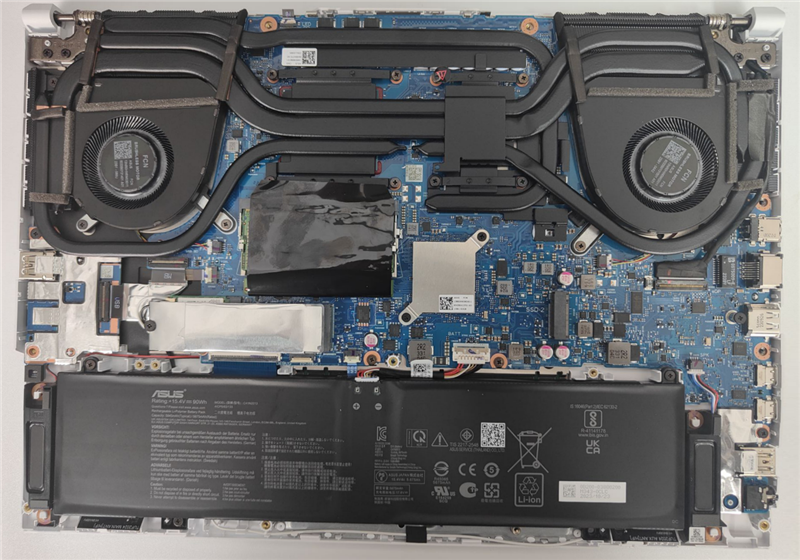
The internal layout shows the dual-fan, five-heat-pipe cooling system and a 90 Wh battery. There are two DDR5 SO-DIMM slots; the unit had one SK Hynix DDR5 5600 MHz 16 GB module installed and an identical module was added to reach 32 GB total. There are also two M.2 2280 PCIe 4.0 slots; one slot is populated with a Western Digital SN560 1 TB SSD and the other is empty.
CPU Performance: i9-14900HX
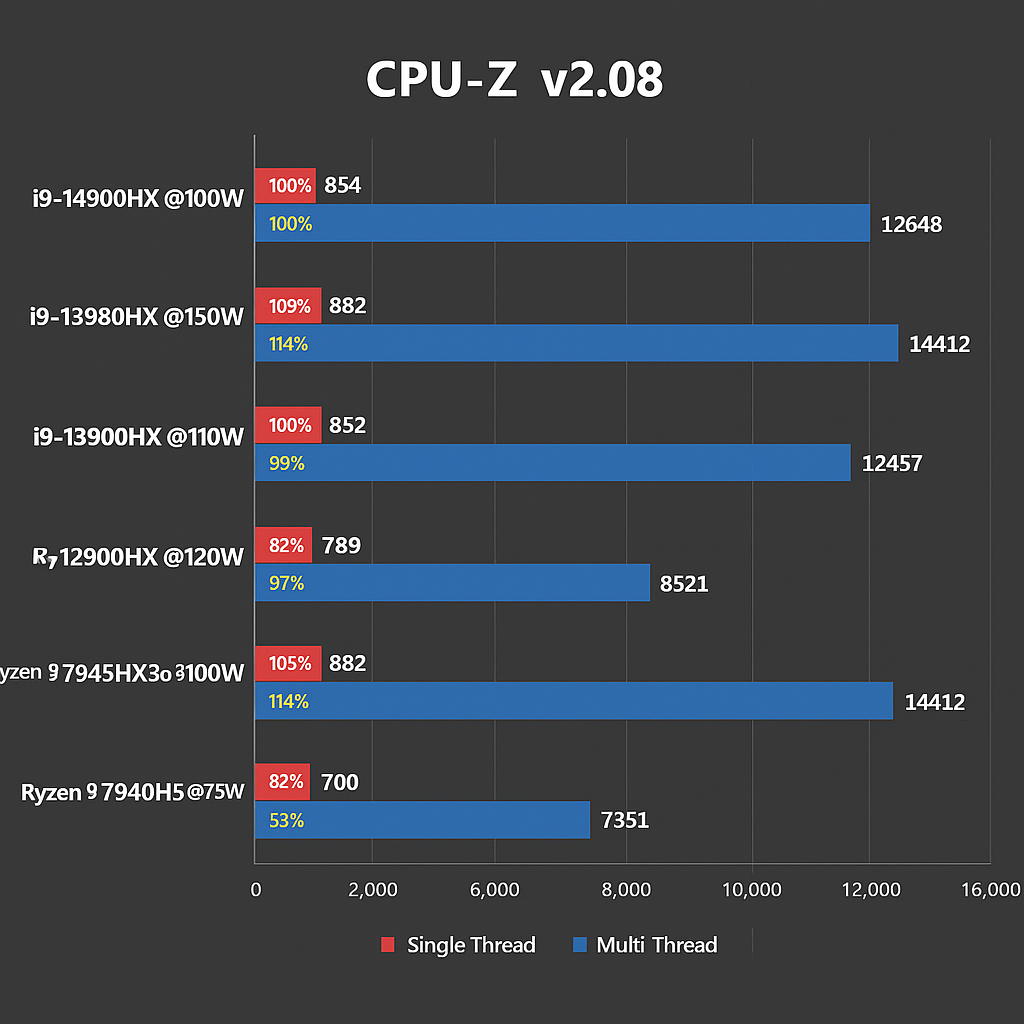
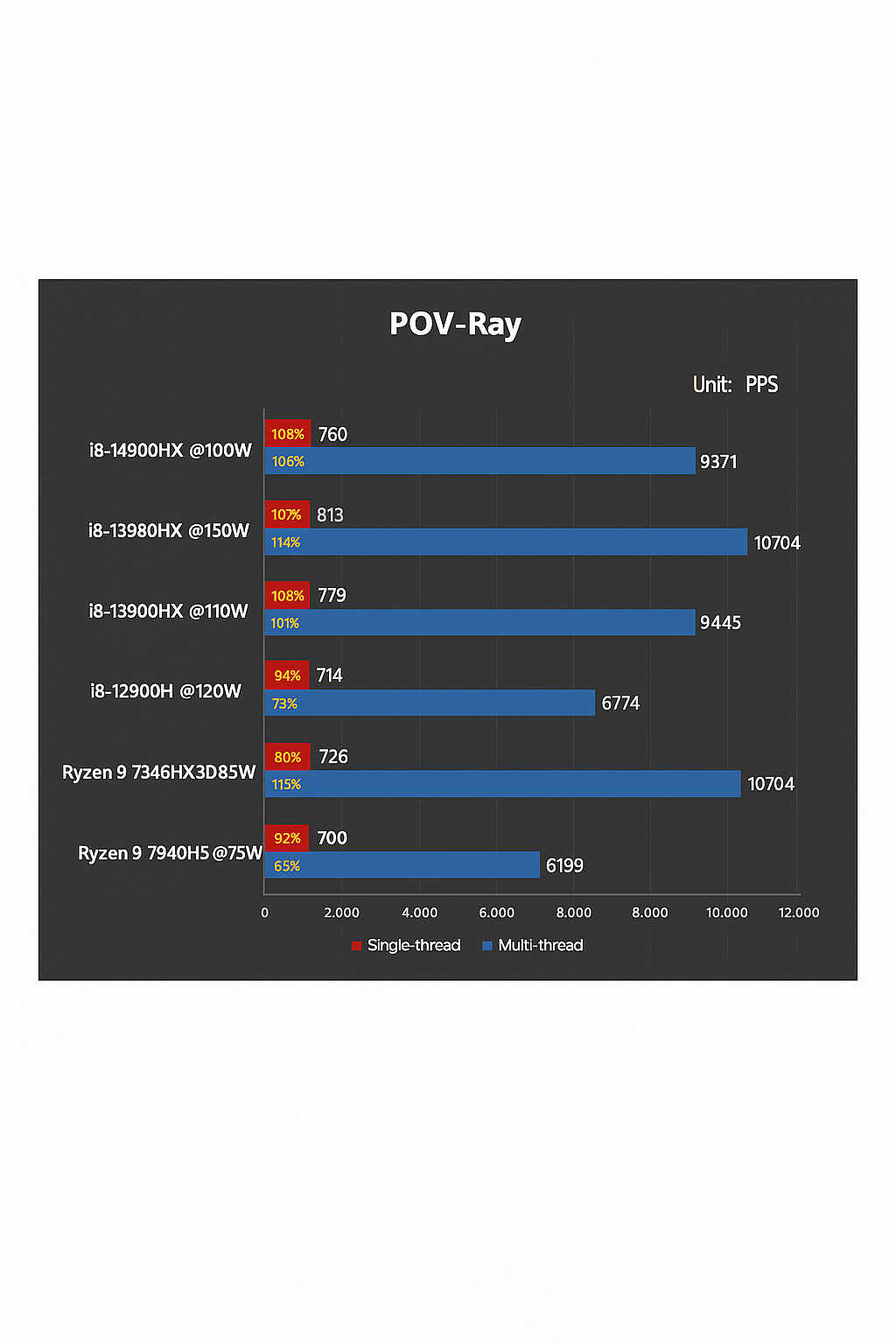
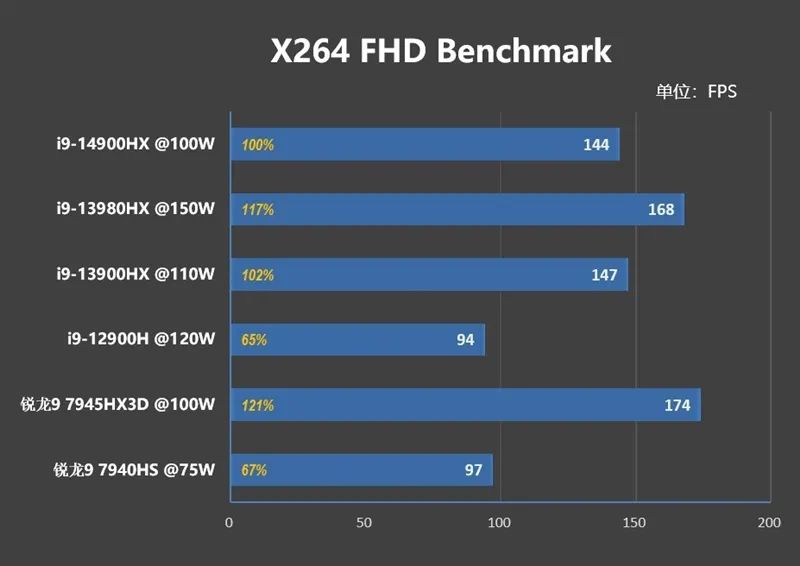
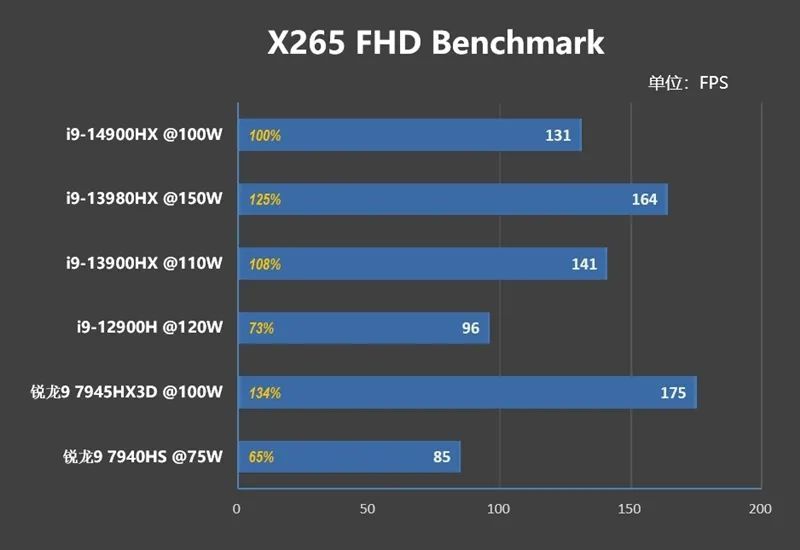
The i9-14900HX in this chassis is configured for 100 W sustained performance in testing. The CPU is competitive with the prior-generation i9-13900HX running at 110 W, delivering similar multi-core performance and slightly improved single-core scores.
CPU-Z
CPU-Z single-thread score: 854. Multi-thread score: 12648.
CineBench R15
Single-thread: 309 cb. Multi-thread: 4345 cb.
CineBench R20
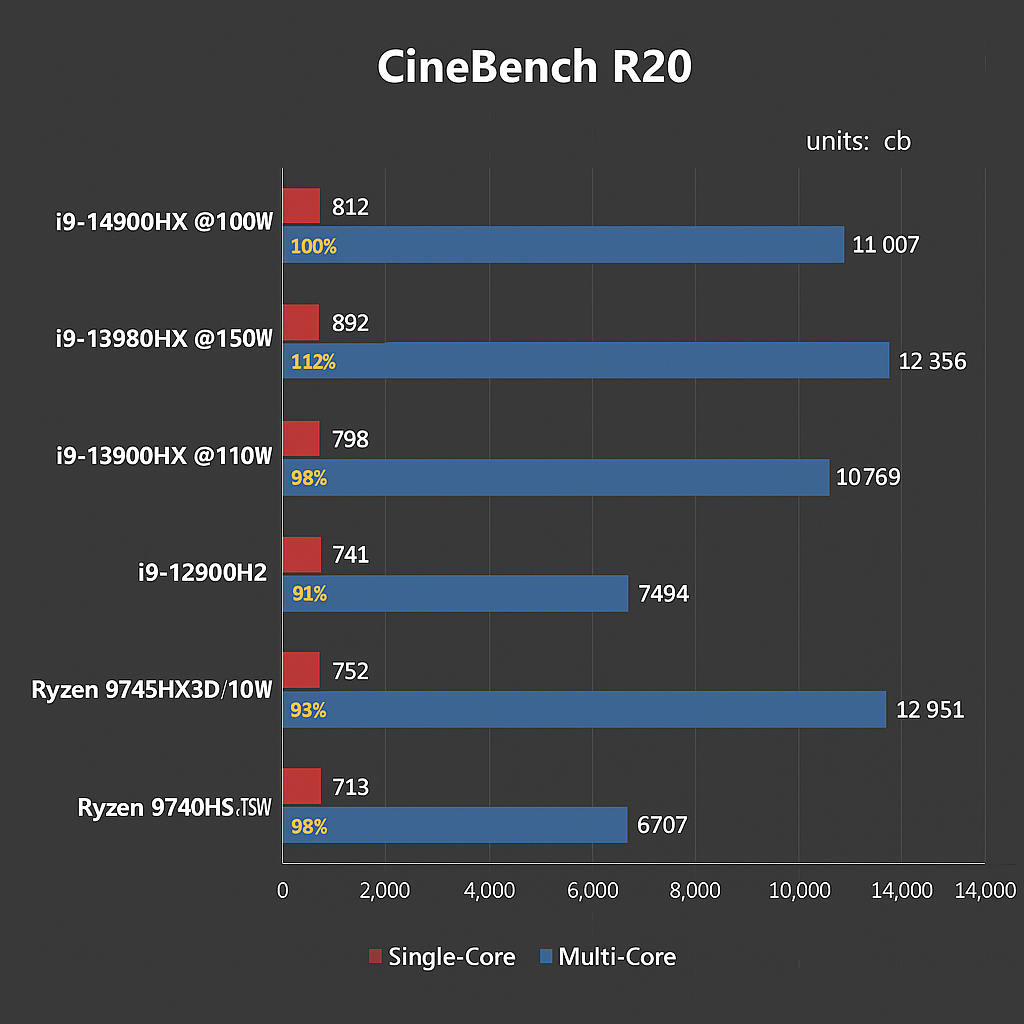
Single-thread: 812 cb. Multi-core: 11007 cb.
CineBench R23
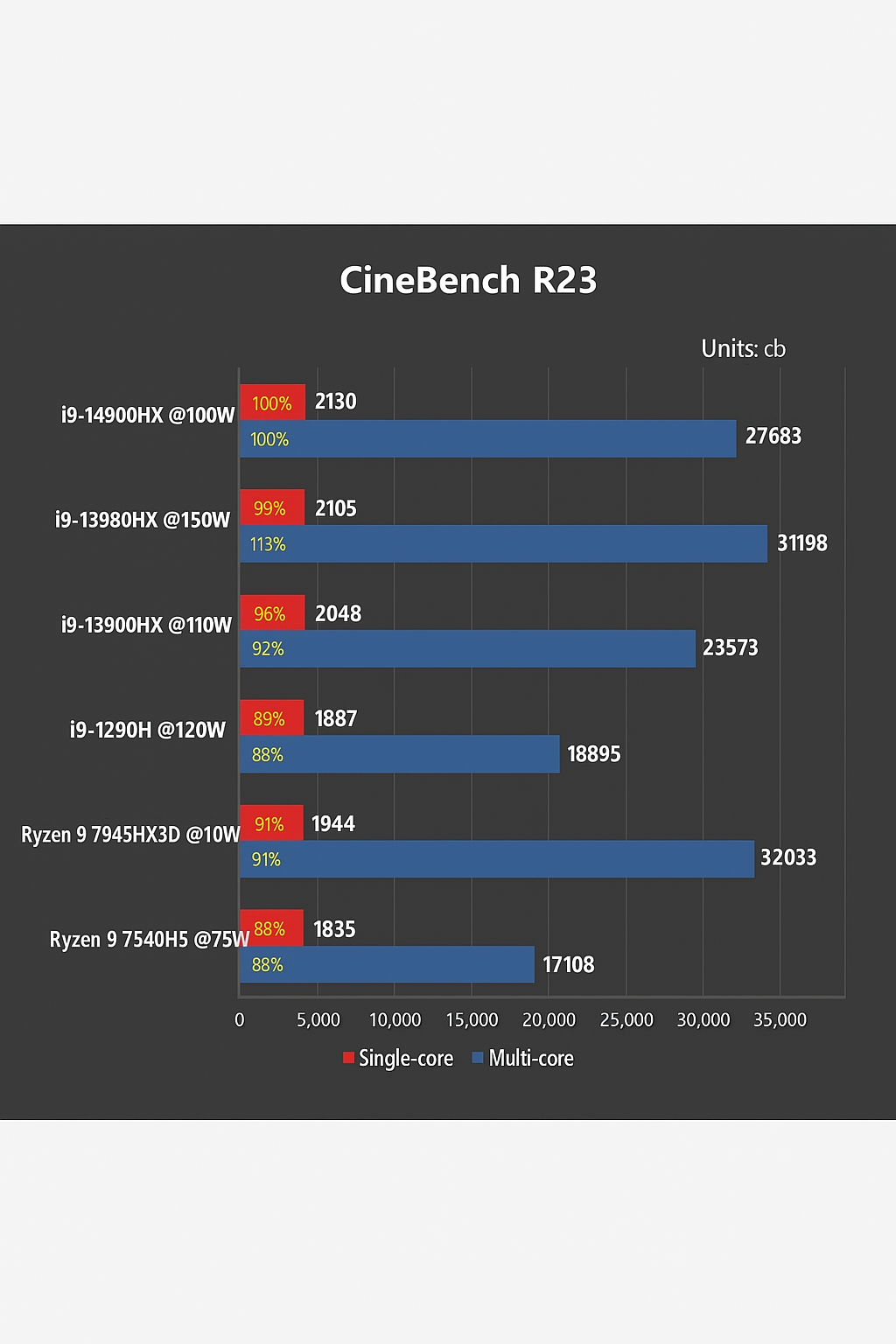
10-minute multi-loop test: single-thread: 2130 pts. Multi-thread: 27683 pts.
CineBench 2024
Single-thread: 123 pts. Multi-thread: 1469 pts.
POV-Ray
x264 / x265 Encoding
Hardware Diagnostic Suite
The hardware diagnostic tool used in testing provides a fast, comprehensive assessment of CPU, GPU, memory, and storage, and ranks system performance globally. The Tianxuan 5 Pro scored 746,157, outperforming 99% of users, with CPU at over 320,000 and GPU at 285,000.
The i9-14900HX in this unit achieves stable 100 W performance. Compared with the previous-generation i9-13900HX running at 110 W, single-core performance is about 1% higher while multi-core performance remains similar, indicating improved efficiency.
GPU and Gaming Performance: RTX 4060 Laptop
Most modern AAA titles at 1080p with high settings achieve over 100 FPS on this configuration, except for one tested title that averaged 78 FPS at max settings. Enabling frame-generation technologies such as DLSS Frame Generation can raise that title above 100 FPS.
3DMark
In 2560×1440 Fire Strike Extreme, the graphics score was 12,865. The RTX 4060 reached a maximum GPU frequency of 2640 MHz and peak power around 140 W, with maximum temperature up to 79°C.
In 3DMark Time Spy, the graphics score was 11,002, with similar peak frequency and temperature behavior.
From 3DMark results, the RTX 4060 Laptop in this chassis slightly surpasses the desktop RTX 4060 by around 3% in graphics performance.
Display and Storage
Display
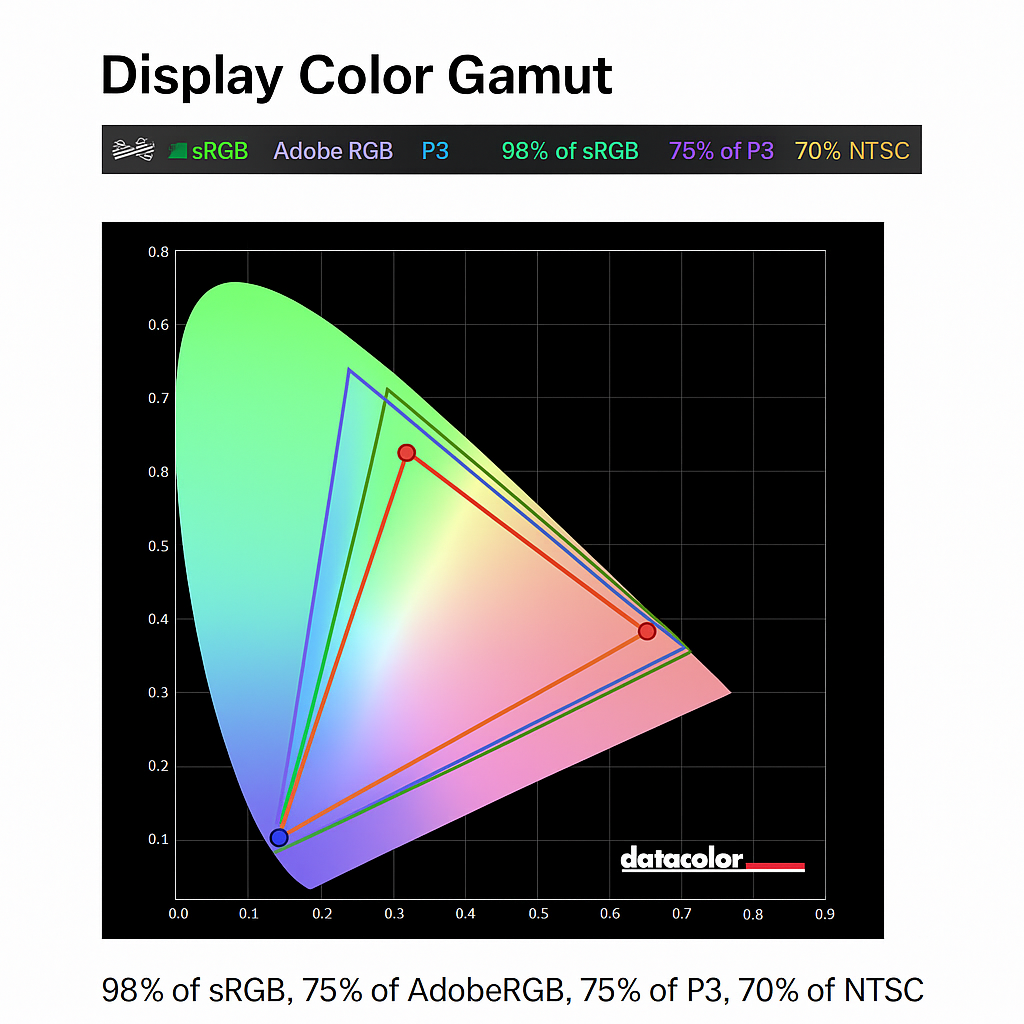
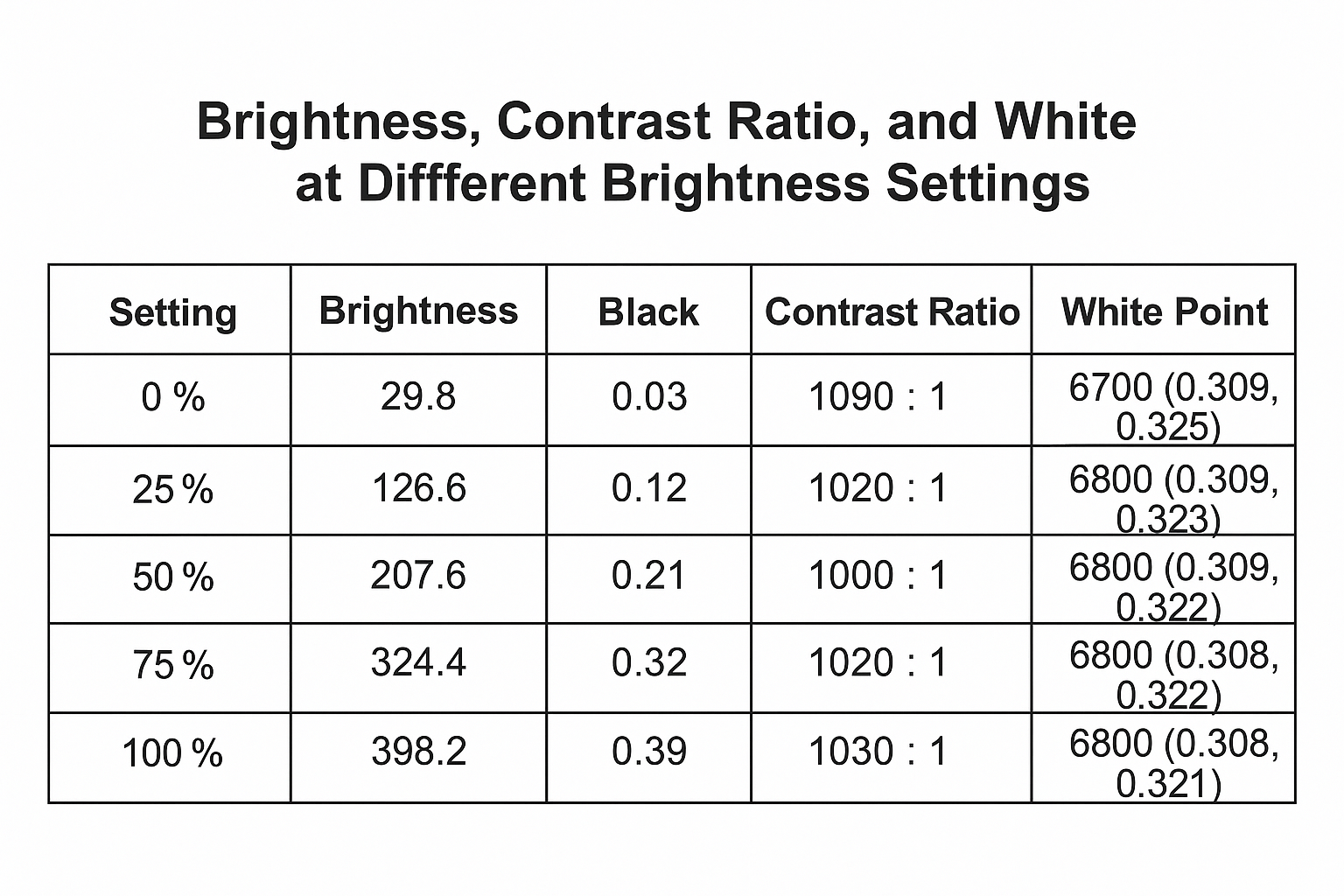
The Tianxuan 5 Pro uses a 16-inch IPS panel at 2560×1600 and 165 Hz. Claimed coverage includes 100% sRGB and 100% DCI-P3, with 400 nit brightness. Measured results with a colorimeter showed 98% sRGB, 75% Adobe RGB, 75% P3, and 70% NTSC coverage. Peak measured brightness was 398 nits and contrast ratio about 1000:1. The average Delta-E was 1.13, with a maximum of 3.71 and minimum of 0.37, indicating good color accuracy for a gaming laptop.
Storage
The unit ships with a Western Digital SN560 1 TB PCIe 4.0 SSD. In CrystalDiskMark 6 (4 GB test), sequential read/write were 4841 MB/s and 3293 MB/s respectively. 4K read was 37 MB/s and 4K write was 114 MB/s.
Memory
The system had one 16 GB DDR5 5600 MHz module (CL46-45-45-89 CR2), and a matched module was added to enable dual-channel. Measured memory performance: read 86,264 MB/s, write 77,699 MB/s, copy 78,265 MB/s, latency 87.5 ns.
Thermals, Stress Tests, and Battery Life
CPU Stress Test
Using AIDA64 FPU torture test, CPU power reached 130 W in the first 28 seconds. After 13 minutes, the i9-14900HX settled to about 100 W, with P-core frequency around 3.3 GHz, E-core around 2.7 GHz, and peak CPU temperature 89°C.
GPU Stress Test
Using FurMark, after 11 minutes the GPU temperature reached 86°C with Hot Spot at 98°C, and power fluctuated around 130 W.
Combined Stress Test
Under simultaneous CPU and GPU full load after 43 minutes, GPU power was around 106 W and CPU power stabilized near 55 W, for a combined power draw around 160 W. CPU peak temperature was 84°C and GPU temperature about 80°C. This confirms the cooling system can sustain roughly 170 W of combined dissipation.
Battery Life
The laptop includes a 90 Wh Li-ion polymer battery. Using PCMark 10 Modern Office scenario in integrated graphics mode, with background processes and network disabled and display brightness set to 50%, the measured battery life was 9 hours 8 minutes. That is strong endurance for a gaming laptop and comparable to many thin-and-light models, making the device viable for a full day of mobile office work in many cases.
Conclusion
Summary of key findings:
1. i9-14900HX Performance
The i9-14900HX is slightly stronger on paper than the i9-13980HX. In this implementation the CPU is configured with PL2 at 135 W and PL1 at 100 W, yielding stable 100 W sustained performance. In real tests, single-core performance is about 1% higher than the 110 W i9-13900HX while multi-core performance is essentially the same, indicating better efficiency from process and platform tuning.
2. Cooling Capability
The dual-fan, five-heat-pipe, four-exhaust cooling solution can handle more than 170 W combined thermal load. In testing the CPU sustained 100 W in a single-threaded stress for 15 minutes at up to 89°C, while the GPU could sustain around 133 W with temperatures near 85°C. During combined stress the platform stabilized at roughly 160 W total.
3. Battery Life
Measured battery life under the PCMark 10 Modern Office workload reached approximately 9 hours, with the panel set to 50% brightness. Given the brighter 400 nit panel compared with the prior generation, this endurance is a strong balance of performance and mobility for a gaming laptop.
4. RTX 4060 Laptop Performance
The RTX 4060 Laptop in this system is configured for 130 W and delivered strong gaming performance. In 12 tested AAA titles at 1080p and max settings, most games exceeded 100 FPS except one title at 78 FPS; enabling frame-generation features can push that title above 100 FPS as well.
5. Display
The 16:10 2560×1600 IPS panel provides a 10% larger screen area than 16:9, reduces bottom bezel size, and achieves near 400 nit peak brightness and a 1000:1 contrast ratio. Color accuracy is good, with average Delta-E around 1.13, close to professional monitor levels.