Overview
Most discussions about high-resolution music delivery, lossless audio, or spatial audio formats are premature. Few listeners can reliably distinguish between them unless they listen through high-resolution, solid-state speakers.
Background
Neil Young made a point when he demonstrated the PonoPlayer to David Letterman. In 2012, he expressed disappointment with compressed lossy MP3 audio and sought a platform that could play lossless, high-resolution music faithful to the original recording. He not only supported high-resolution digital content but also backed dedicated hardware designed to play that content faithfully. He recognized that hardware is critical to the experience.
Young focused on the digital playback chain. At the time he could not foresee the potential of a new speaker technology.
In the years since, widespread adoption of high-resolution audio has been driven by software: new streaming services and new audio formats. That is backwards. The PonoPlayer never became mainstream, but it remains an example of hardware innovation combined with software that could deliver lossless high-resolution audio to consumers.
In practice, very few people can tell the difference between today’s standard digital music and the high-priced hi-res music sold by some companies unless they listen using hardware capable of reproducing the higher fidelity. Specifically, they need high-resolution speakers.
How This Was Achieved
When music distribution went digital in the 1990s, consumers prioritized convenience (MP3) over audio fidelity. That choice is understandable: people could quickly download albums, load them onto small portable players, and listen on a variety of mobile devices including small wireless speakers and multifunction wireless headphones.
Digital files must be compressed to transmit over the internet, store efficiently on devices, and stream wirelessly to headphones. While streaming helps with storage limits, compressing digital music for any consumer model often sacrifices many recording details that artists carefully craft: timbre, nuance, and instrument detail.
Some noticed that difference, including Neil Young. Over time, interest in higher-quality audio grew. According to Qualcomm’s 2023 State of Sound report, 70% of consumers sought audio quality above MP3, up from 61% the previous year. Other indicators also show momentum for high-quality audio.
Vinyl record sales have recently exceeded CD sales. Observers attribute this partly to nostalgia and a preference for vinyl’s “warm” sound, but part of the reason is vinyl’s ability to convey more musical detail. As an analog medium, vinyl does not require digital sampling, which can weaken the original sound.
To meet quality expectations for digital media, the industry began adopting high-resolution audio: digital content sampled at higher rates to preserve fidelity and recorded with greater bit depth to capture more detail. The problem is that consumers often listen through small, built-in or standalone speakers and earbud drivers that cannot keep up. Those speakers are not designed to accurately present high-resolution content because their basic architecture has changed little in over a century.
Hearing the Difference Between High-Resolution and Standard Audio
The disconnect between content and playback traces back to the dawn of HD video. When high-resolution video became available, early viewers often watched it on non-HD TVs and missed the extra detail. Similarly, when services first offered ultra-HD video catalogs, many viewers lacked displays capable of revealing 4K detail.
The same dynamic applies to high-resolution audio. Since services such as Amazon, Apple, and Tidal began offering high-resolution audio (sometimes at a premium), consumers have questioned whether the higher price is justified. Researchers have tried to determine whether average listeners can distinguish standard-quality audio from high-resolution audio and found only a small but statistically significant ability to do so.
It is estimated that only about 5% of consumers can hear the difference. However, if listeners use speakers that can faithfully reproduce the music, many more reportedly detect the missed details.
Most people listen through headphones and earphones. At an AES conference in 2015 it was reported that 85% of people listen with headphones at home rather than on the go. These devices rely on miniature drivers based on traditional architectures using coils, magnets, and plastic diaphragms, driven by compact consumer electronics PCB audio stages. Such designs often lack the bandwidth, linearity, and low-noise performance required to present high-sample-rate, high-resolution audio with sufficient fidelity.
To allow more listeners to experience high-resolution audio, sound should be played through solid-state, silicon-based micro-speakers designed for the required fidelity.
Solid-State Speakers Designed for High Resolution
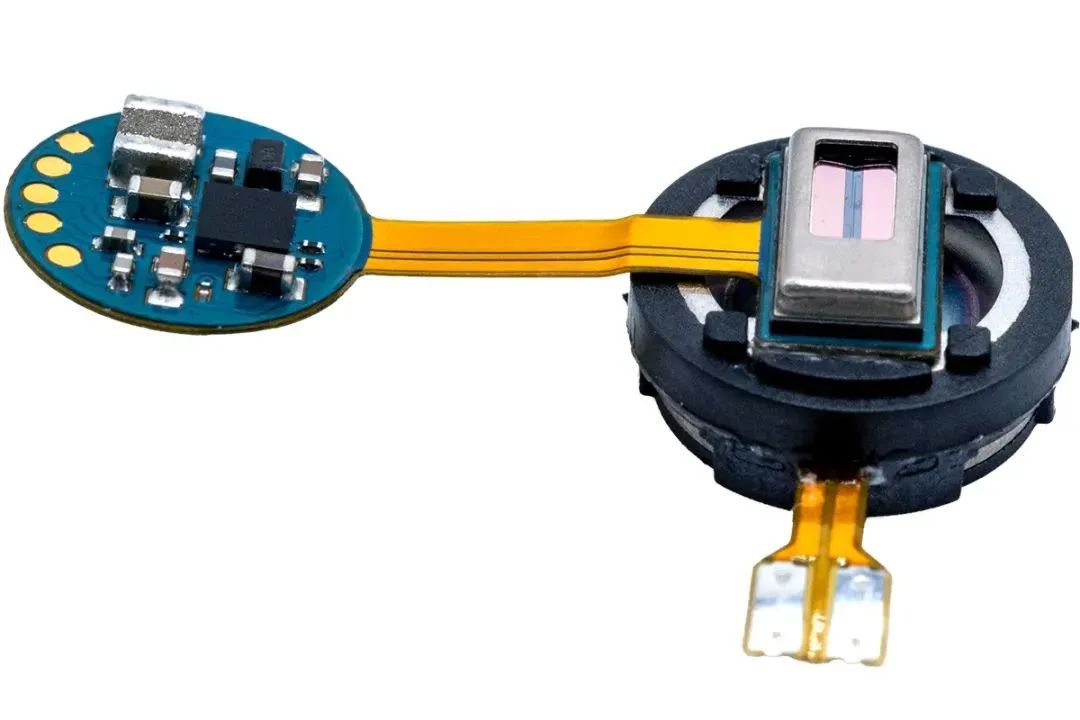
Cowell module (image source: xMEMS)
Solid-state audio devices are not new. The shift began around 2007 when microphones designed as MEMS accounted for only 5% of the market. By 2022 that percentage had risen to 72%. xMEMS engineers are leading a similar transition for speaker devices.
By using thin-film piezoelectric actuators (materials that convert electrical energy into mechanical energy) instead of coils and magnets, and replacing common plastic or paper diaphragms with silicon diaphragms, xMEMS engineers have created a solid-state speaker on chip whose size and weight are only a fraction of comparable coil-based drivers.
Solid-state speakers have several key characteristics that make them uniquely capable of presenting high-resolution music. First, their mechanical speed is much higher than coil speakers; their response speed can be about 150 times faster than traditional architectures. That speed is critical for reproducing high-bitrate material so listeners can hear enhanced detail, clarity, and instrument separation from the original recording.
They also minimize phase shift, which arises when different amplitude components of sound combine and can alter the audio. Traditional speaker architectures are prone to large phase shifts that color the sound and make it less natural. Solid-state speakers can achieve a flat phase response (within about 2 degrees), allowing faithful reproduction of the source audio.
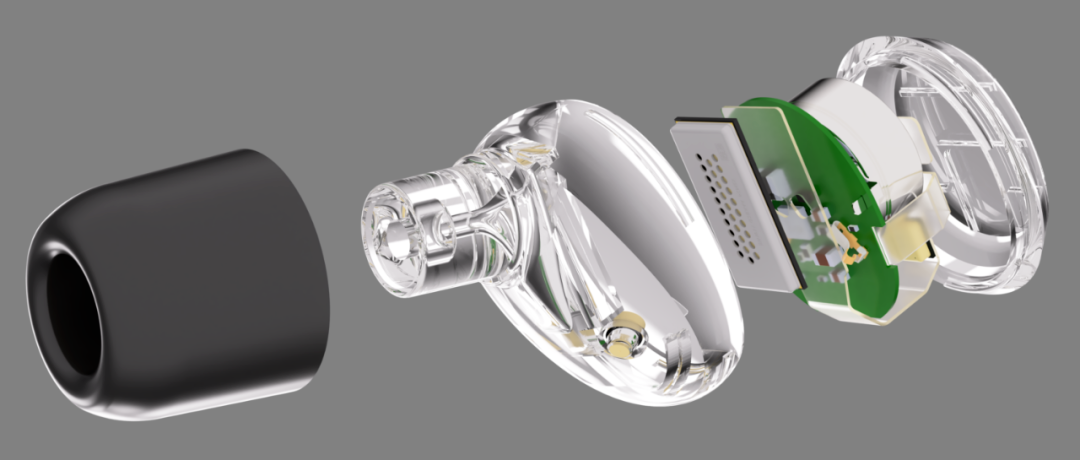
Montara Plus headphones (image source: xMEMS)
Because solid-state speakers are manufactured using semiconductor processes, they exhibit high phase consistency between units. When identical solid-state drivers are placed in left and right earphones, their phase alignment can be nearly perfect, maximizing clarity.
Finally, solid-state drivers do not exhibit breakup modes that cause distortion when a diaphragm is pushed to its mechanical limits. Silicon diaphragms are about 95 times stiffer than paper or plastic diaphragms, so they preserve their shape better and produce clearer, more detailed sound. To appreciate the clarity of high-resolution content, listening through speakers designed for clarity is important.
xMEMS engineers report that, based on feedback from hundreds of earphone listeners, solid-state high-resolution speakers can improve perceived audio quality. Evidence suggests that at least 80% of listeners can hear details in their favorite songs when using earphones with solid-state MEMS drivers that they had not noticed with traditional coil-based earphones. While these design attributes are especially suited to high-resolution audio, solid-state speakers can also improve playback of standard music and emerging formats such as spatial audio.