Overview
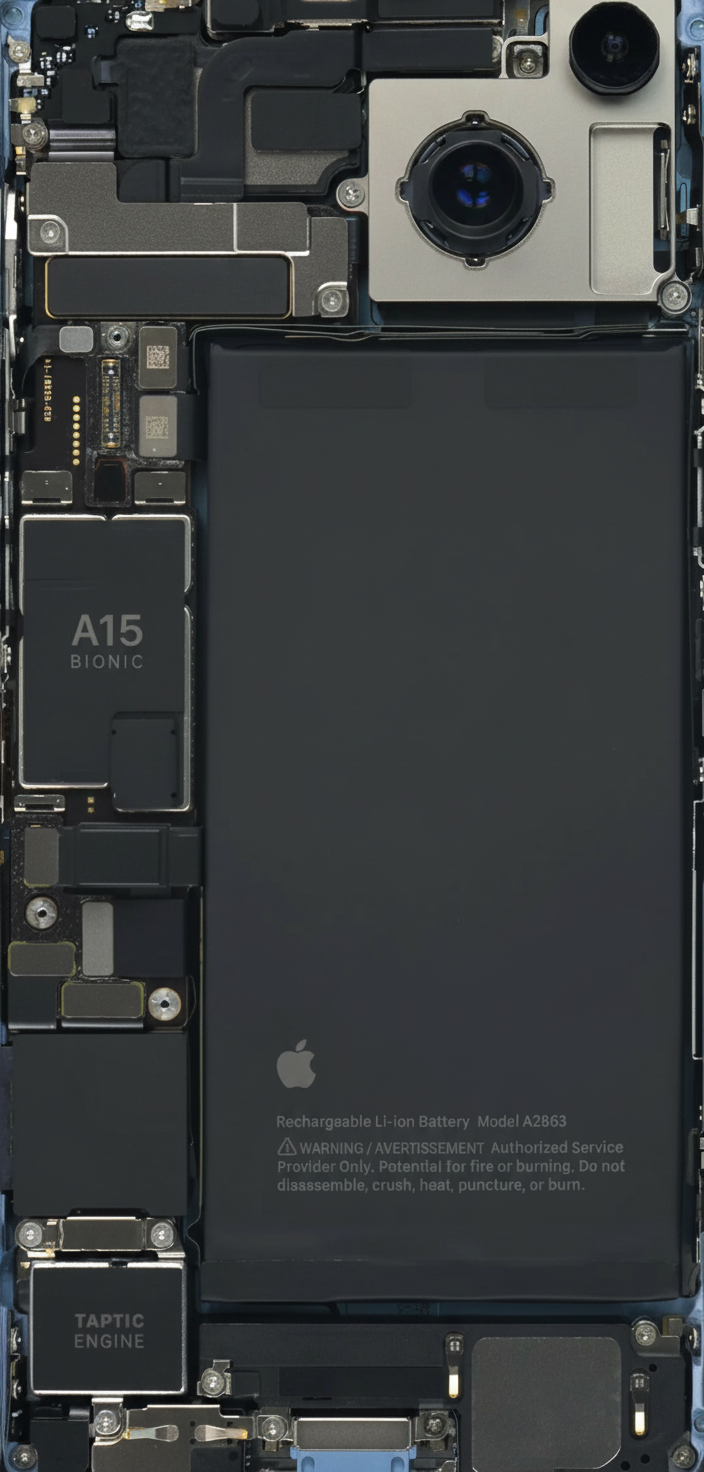
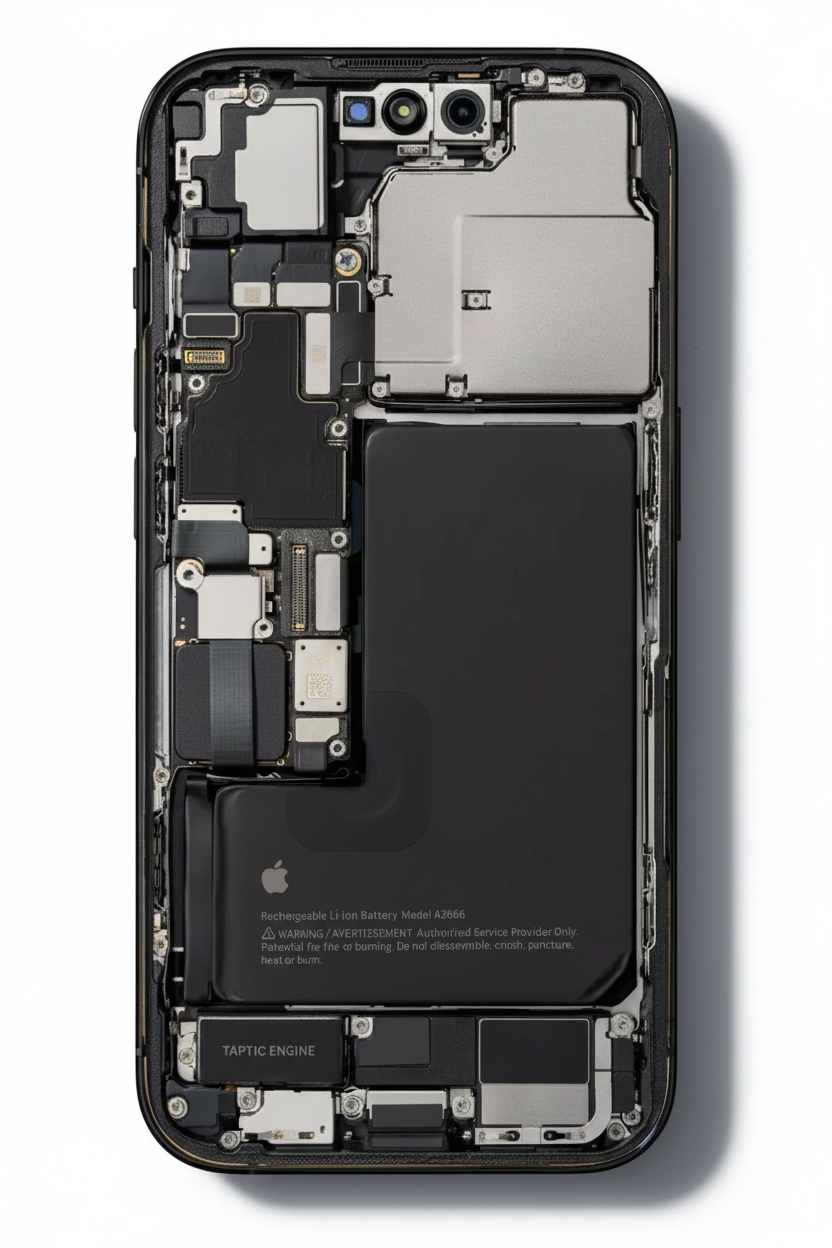
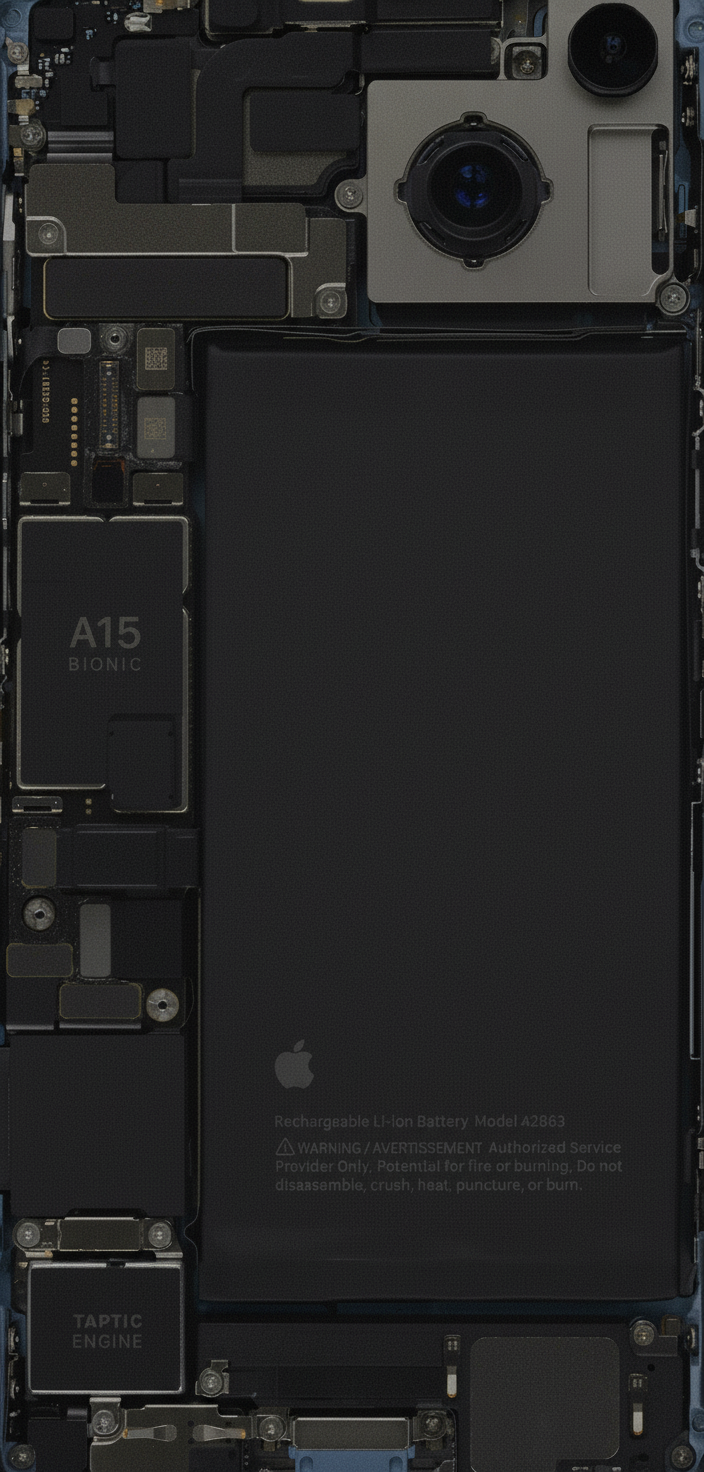
Apple upgraded the main rear camera on the standard iPhone 14 and revised the front-facing module on the iPhone 14 Pro/Max. The long-anticipated rear camera resolution increase appears only on the iPhone 14 Pro/Max.
Front-facing cameras and TrueDepth module
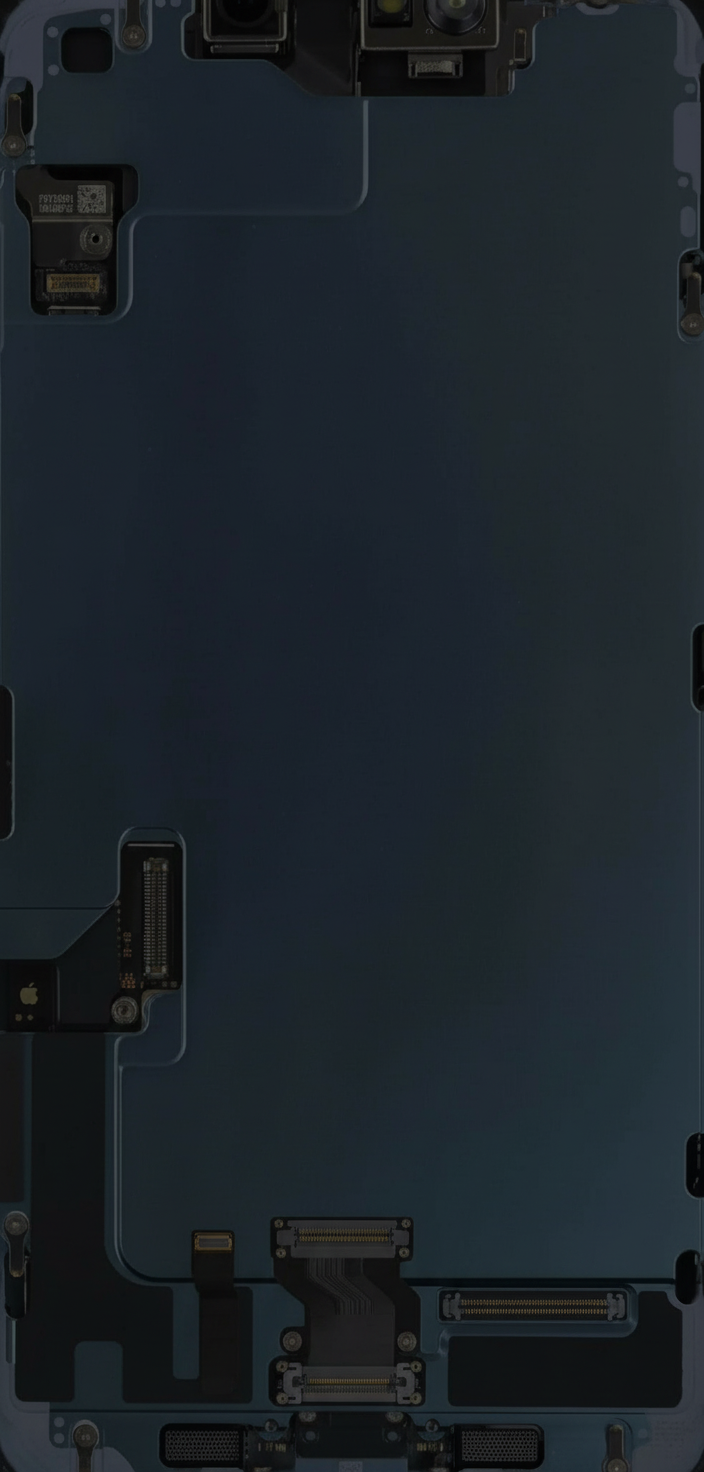
The front-facing module on the standard iPhone 14 and 14 Plus appears largely unchanged from the iPhone 13, at least in terms of notch layout and cutout shape. It is therefore reasonable to infer that the front TrueDepth sensor and the Face ID IR camera/emitter in the iPhone 14/Plus use sensors similar to those in the iPhone 13 series.
For the iPhone 14 Pro/Max, Apple redesigned the front-facing module around the so-called "Dynamic Island". The pill-shaped opaque area that hides the front TrueDepth and IR camera/emitter is now extended in a way that makes it look integrated with the display, visually reducing the prominence of the front camera area.
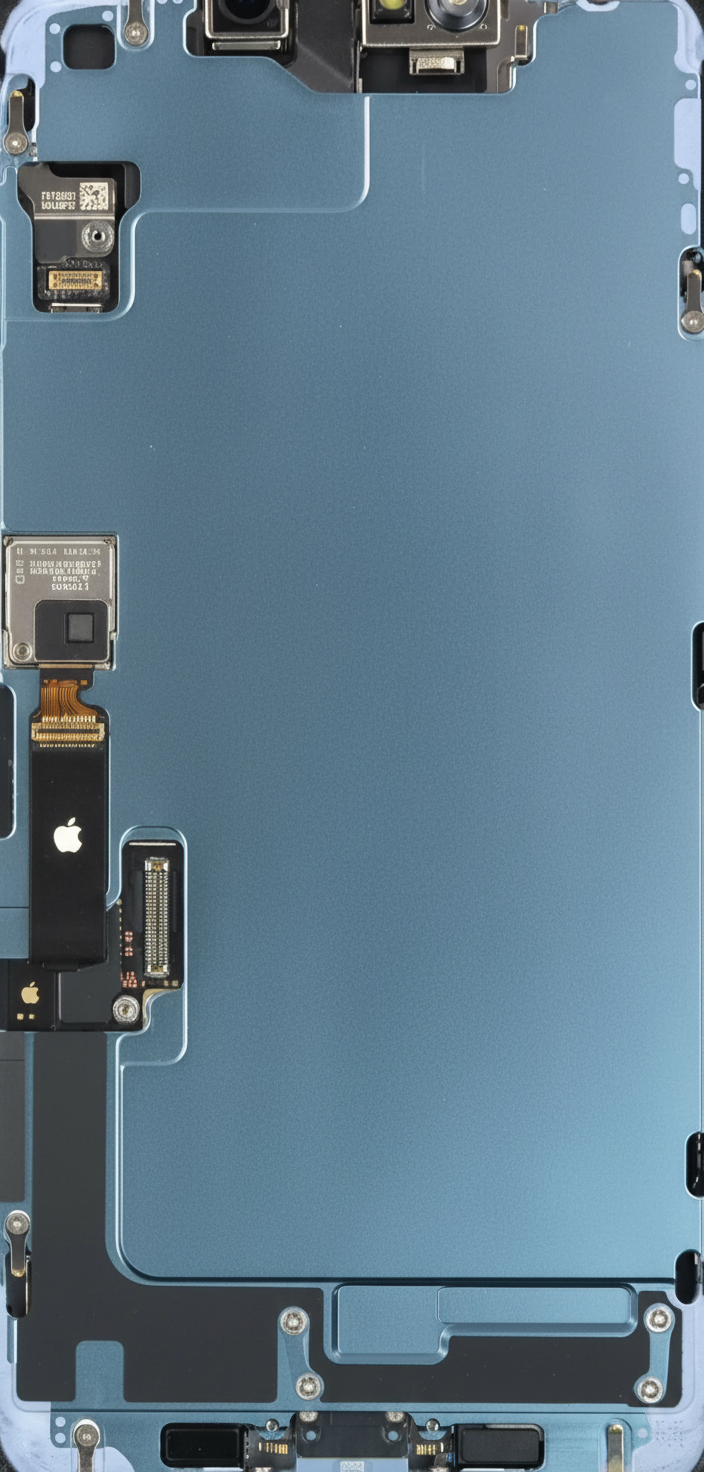
High-contrast images of the iPhone 14 Pro/Max show two distinct areas in the front module: one for TrueDepth and another for the IR camera/emitter. The Pro/Max module has been made more compact. The IR camera housing appears similar to that in the iPhone 13 Pro/Max, while the TrueDepth housing shows some differences.
Main rear camera changes on standard iPhone 14/Plus
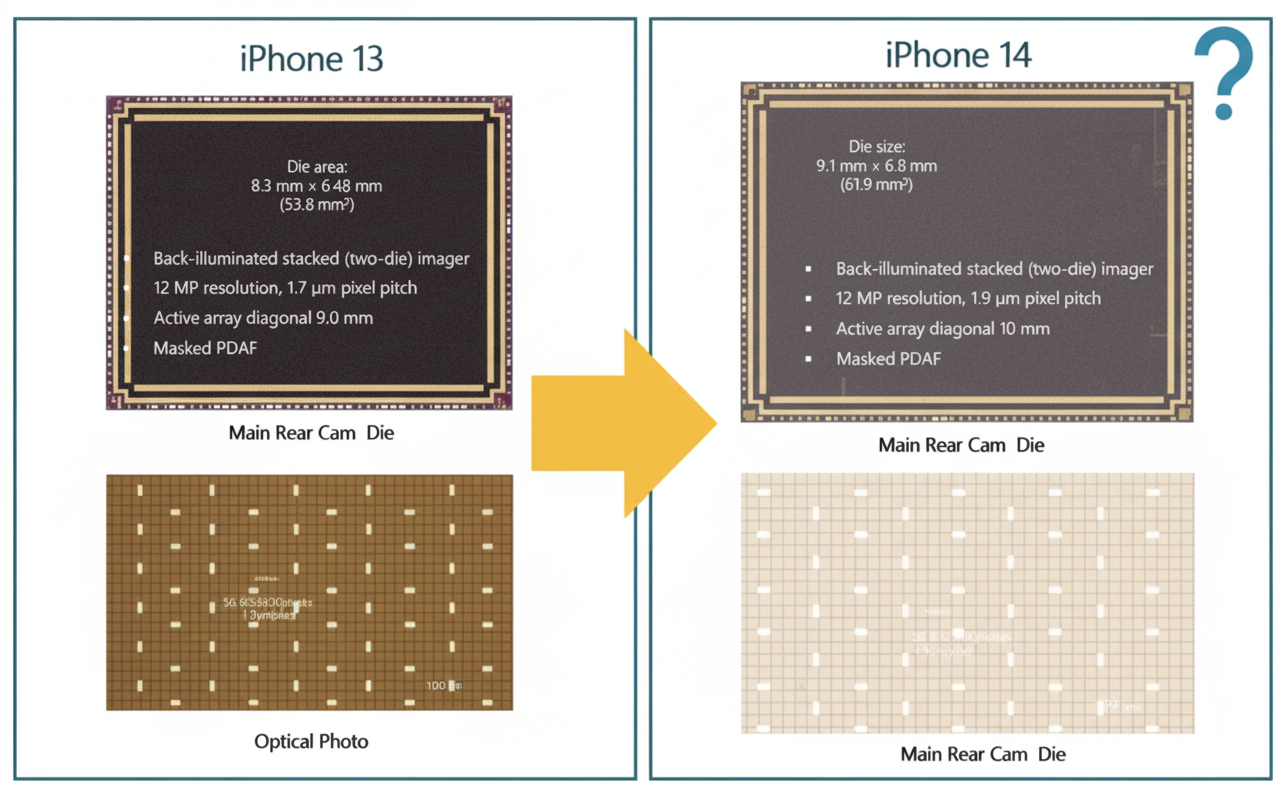
The main rear camera on the iPhone 14 and 14 Plus has been updated to a sensor with a 1.9 μm pixel pitch, up from the 1.7 μm pixel size used in the iPhone 13 base model. This larger 1.9 μm pixel sensor in the iPhone 14/Plus appears to be a reuse of the sensor previously used in the iPhone 13 Pro/Max. Both sensors are 12 MP masked PDAF autofocus designs.
48 MP main sensor in iPhone 14 Pro/Max
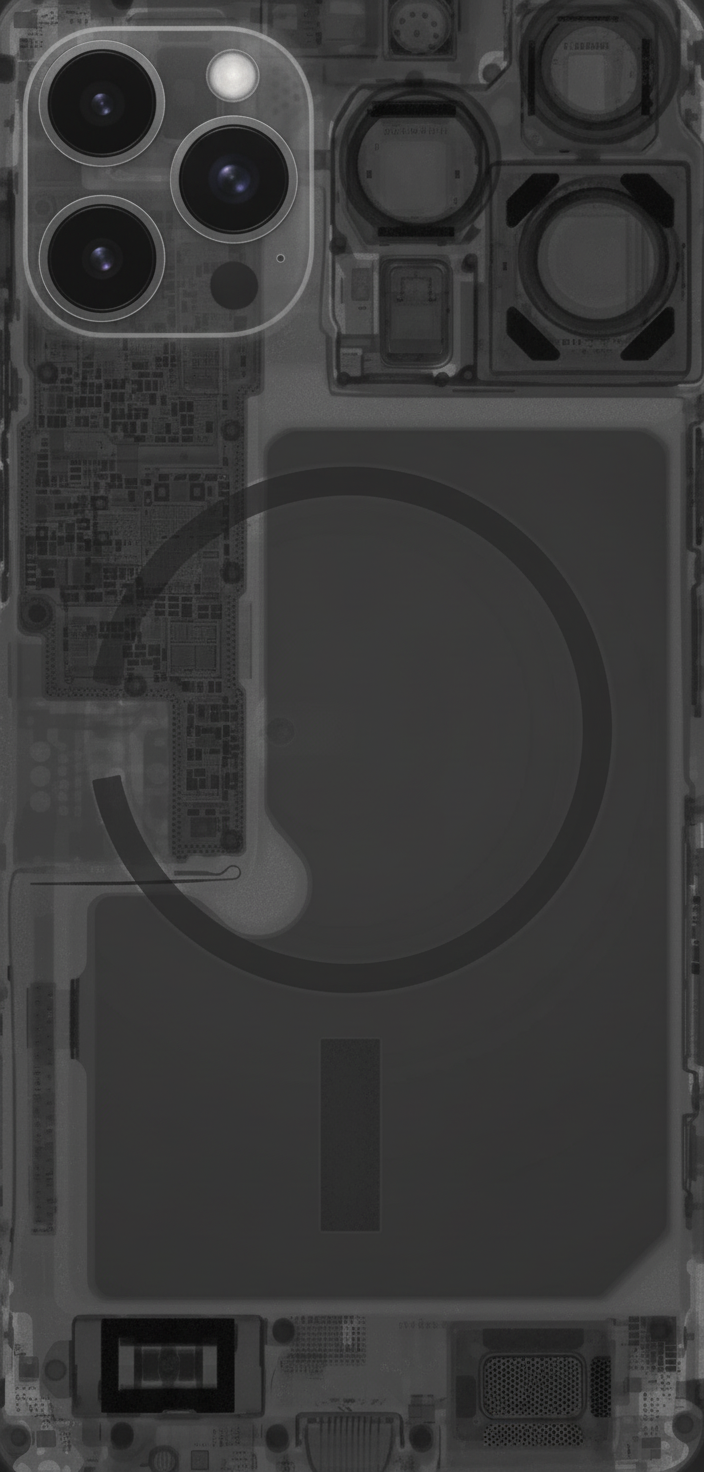
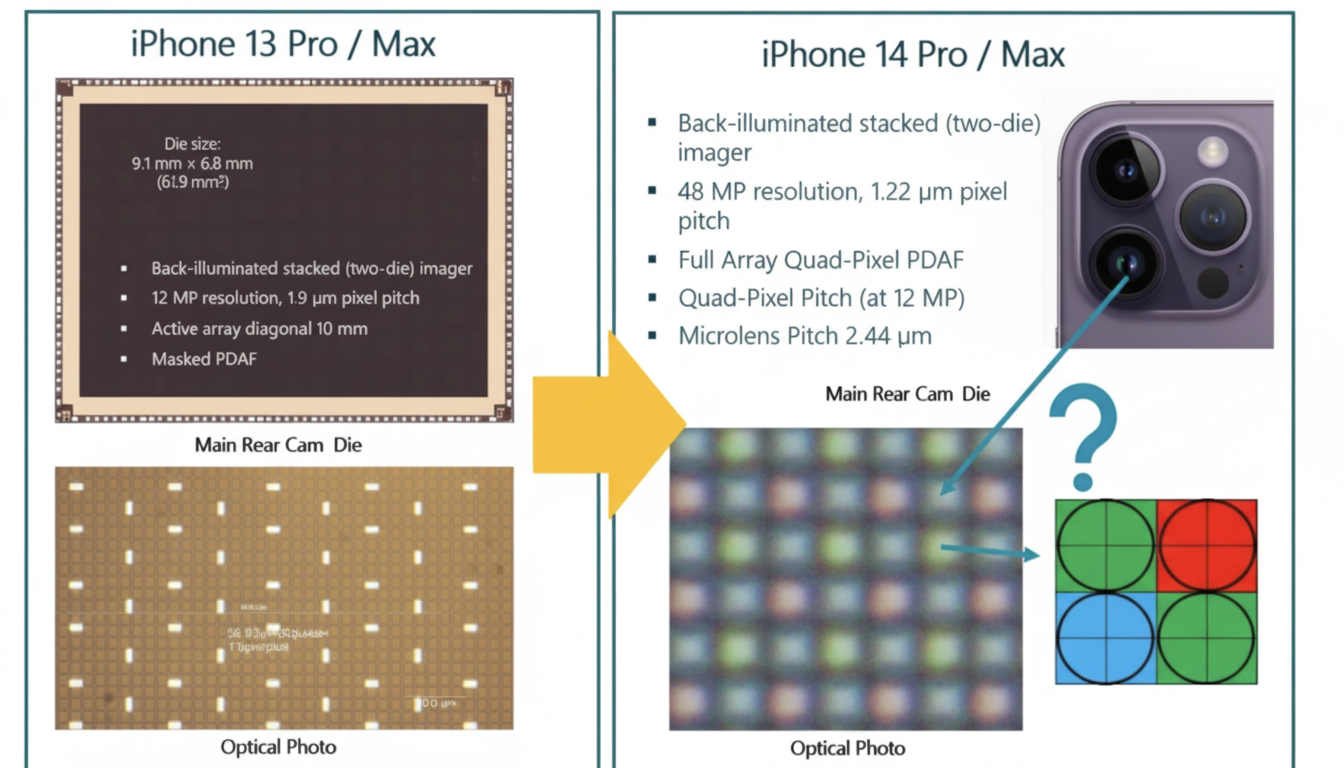
One of the most notable new features this year is the 48 MP main rear sensor in the iPhone 14 Pro/Max. Using 4-pixel binning, the reported effective pitch is 2.44 μm. Put another way, the absolute pixel pitch is 1.22 μm at 48 MP and 2.44 μm when binned to 12 MP. The 4-pixel binning returns images to Apple’s traditional 12 MP output. The quad-pixel arrangement also enables full-array autofocus, a new feature for Apple.
Compared with masked (partial) PDAF approaches, full-array autofocus improves image quality because many more pixels provide PDAF signals, which is particularly beneficial in low light. It is presumed that the 2×2 microlens spacing for the 48 MP sensor corresponds to the 2.44 μm effective pitch when using 2×2 binning.
Our analysis of the iPhone 14 Pro/Max indicates that the new 48 MP sensor still uses masked PDAF in its physical layout. Apple continues to favor incremental enhancements; here, dedicated autofocus pixels are arranged in 2×2 clusters rather than sparsely masked pixels.
Ultrawide camera
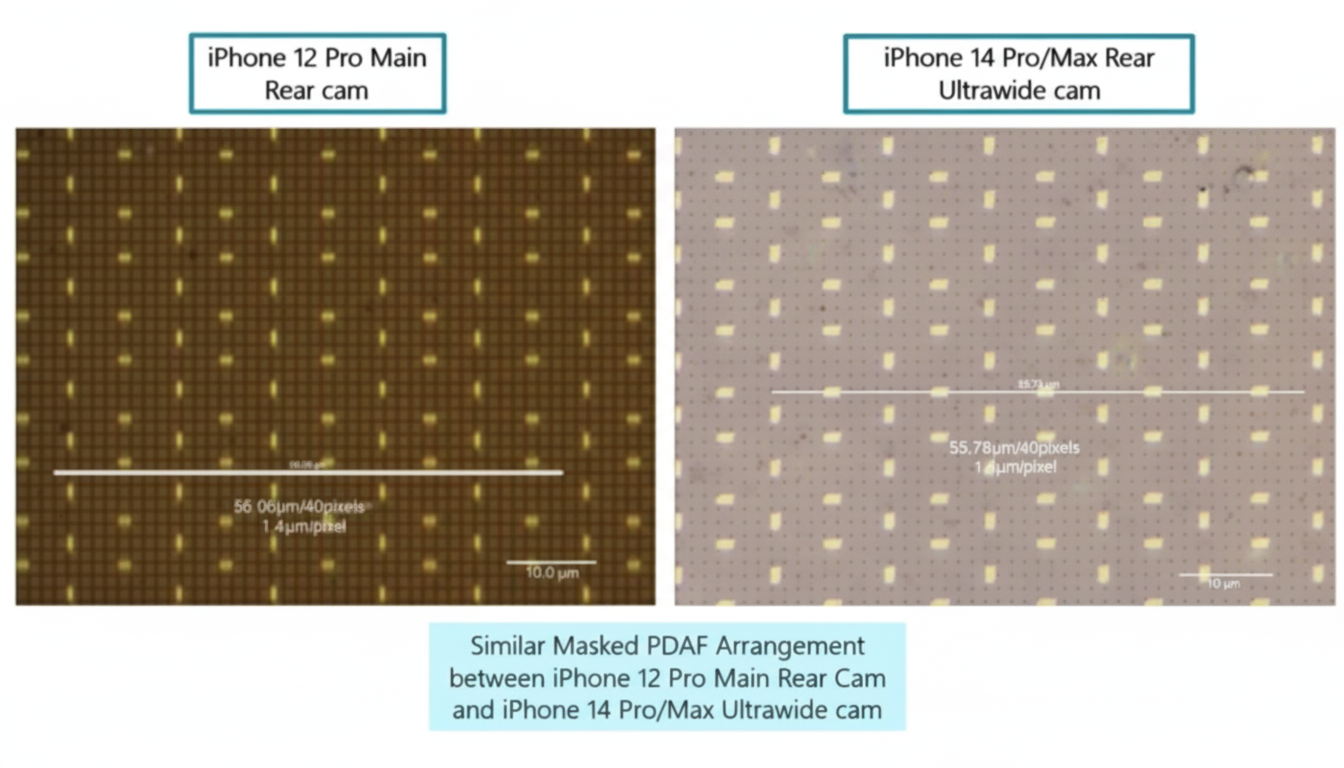
Reports suggested the iPhone 14 Pro/Max ultrawide camera would feature full-array autofocus pixels, but preliminary images do not support this. The iPhone 14 Pro/Max ultrawide image sensor appears to be the same sensor used in the iPhone 12 Pro main rear camera, likely a Sony 12 MP sensor with a 1.4 μm pixel pitch. Side-by-side optical photos confirm that the new ultrawide camera uses masked PDAF.
Additional teardown images