Overview
Following our previous review of the iQOO 10 Pro, which impressed with its 200W fast charging, we evaluated the iQOO 11 Pro to see what improvements it offers and how it differs from the standard iQOO 11.
Specifications
CPU: Snapdragon 8 Gen 2
GPU: Adreno 740
Display: 6.78-inch OLED, 3200×1440
Memory: 8GB / 12GB / 16GB
Storage: 128GB / 256GB / 512GB
Front camera: 16 MP
Rear cameras: 50 MP + 50 MP + 13 MP
Security: In-display fingerprint
Battery capacity: 5000 mAh
Dimensions: 164.76 mm × 75.30 mm × 9.10 mm (Track Edition thickness 8.89 mm)
Weight: 210.5 g (Track Edition 213 g)
Price: starting at CNY 4999
Design and Editions
The iQOO 11 Pro shares the same base color options as the standard iQOO 11, and adds a Manx special edition inspired by the Isle of Man TT motorcycle race. The special edition uses light green silicone leather with enhanced stain resistance and aging resistance compared with the standard synthetic leather.
The main physical difference between the iQOO 11 and the iQOO 11 Pro is the screen shape. Both models use a top-tier 2K resolution Samsung E6 OLED panel with a 144 Hz refresh rate, up to 1800 nit local peak brightness, and 1440 Hz high-frequency PWM dimming, plus a professional color management system and a proprietary screen color calibration algorithm. The iQOO 11 uses a flat display while the iQOO 11 Pro uses a curved display. The curved design of the Pro gives a smoother transition between screen and frame, a stronger sense of unity in hand, and visually reduces perceived thickness while keeping weight comparable.
Fingerprint and Biometric Differences
The standard iQOO 11 uses a mature optical fingerprint sensor, while the iQOO 11 Pro adopts a second-generation ultrasonic 3D wide-area fingerprint technology. The ultrasonic sensor offers a larger recognition area, faster unlock speed, and typically requires only one registration step. It remains accurate in bright light or when there is moisture on the screen, improving real-world reliability and increasing unlock success for users who operate the phone without looking.
Performance
Both iQOO 11 and iQOO 11 Pro share the same performance hardware: Snapdragon 8 Gen 2, LPDDR5X, and UFS 4.0, paired with the same system version. This results in comparable high-end performance across both models.
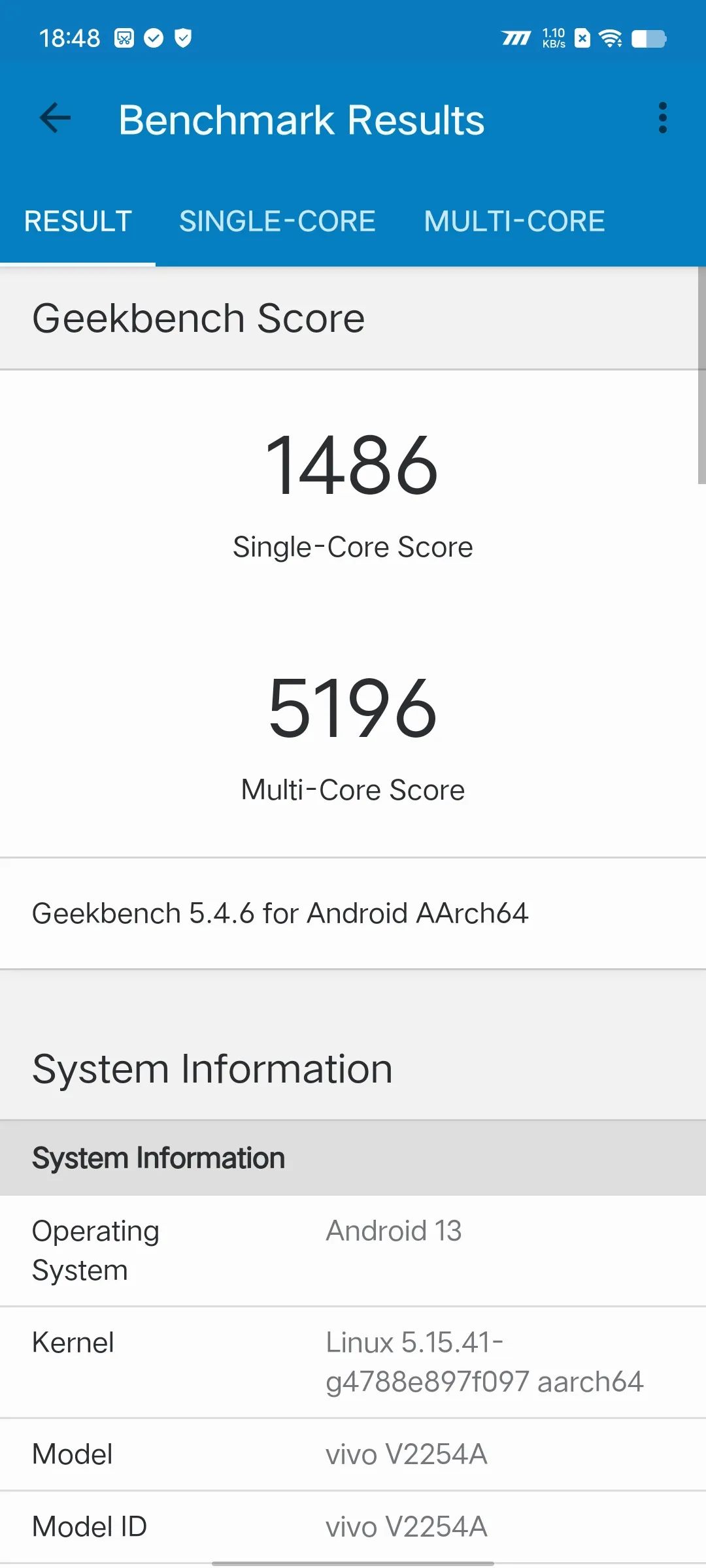
In benchmarks, the iQOO 11 Pro scored 1,300,864 in AnTuTu. Geekbench 5 results were 1486 single-core and 5196 multi-core. In AndroBench, sequential read/write reached 3424.6 MB/s and 2932.69 MB/s respectively. Compared with the previous iQOO 10 Pro (which used the first-generation Snapdragon 8+, enhanced LPDDR5 and UFS 3.1), the iQOO 11 Pro shows significant improvements across CPU, GPU, and storage throughput.
Gaming Performance
Gaming tests show strong results. In Honor of Kings at maximum graphics and maximum frame rate settings, the average frame rate reached 120 fps. In Call of Duty Mobile, at standard graphics and 144 fps target, a 30-minute run averaged 143.3 fps. In Genshin Impact, a 1-hour open-world run in Mondstadt averaged 60.1 fps, with smooth performance throughout the session.
Battery and Charging
Battery and charging are key differentiation points between the two models. The iQOO 11 has a 5000 mAh battery for longer runtime. The iQOO 11 Pro has a slightly smaller 4700 mAh battery, but supports up to 200W wired fast charging and 50W wireless charging, an upgrade over the iQOO 11's 120W wired charging and adds wireless charging capability.
The iQOO 11 Pro uses a dual-cell design with ultra-thin 10C pouch cells. In our tests, charging performance was: from 1% to 51% in about 5 minutes, to 83% in about 10 minutes, and a full charge in approximately 13 minutes. This speed reduces time spent charging for short top-ups. The device also supports 50W wireless fast charging and 10W reverse wireless charging, which add flexibility in certain scenarios.
Camera and Imaging
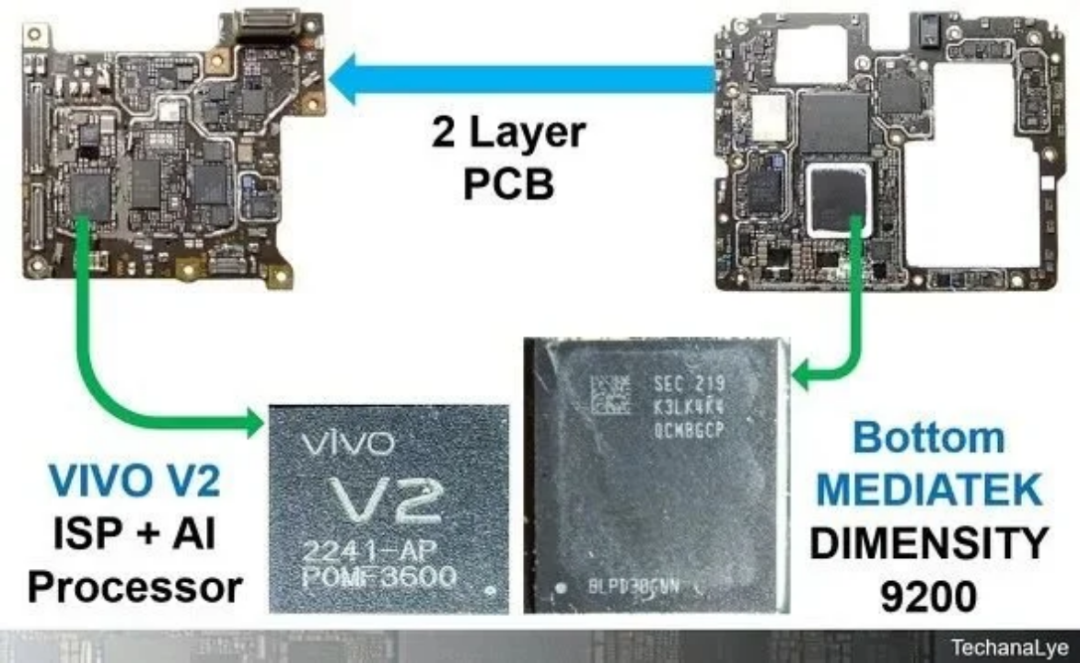
The iQOO 11 Pro includes imaging upgrades compared with the standard model. It pairs a high-quality CMOS sensor with a proprietary imaging chip V2. The main sensor is a Sony-customized VCS IMX866, sized 1/1.49 inch with 50 MP and a 16:11 aspect ratio to preserve a larger image area during video capture and reduce cropping. The VCS prefix denotes vivo's VCS bionic spectrum technology, which aims to improve color filter materials by mimicking cone cell color perception for better noise performance and color reproduction from the sensor stage.
The secondary camera is a Samsung JN1 ultra-wide with 50 MP and a fisheye mode that offers distinctive wide-angle results. The third camera is a Samsung 3L6 telephoto portrait lens with 13 MP and a 50 mm equivalent focal length, which helps produce pleasing subject separation for portraits.
In daylight, the iQOO 11 Pro produces colors close to human vision, with good detail retention. Bridge and architectural shots showed clear highlights and controlled shadows without color casts. The fisheye modes provide creative wide-angle options, and there are four fisheye effects available. In challenging low-light environments, the V2 imaging chip helps retain visible detail in dim indoor scenes.
Portrait mode performs well overall: subject separation and edge detection are generally good, and a variety of stylized filters are available such as natural, motion blur, retro film, and party modes. Night portrait performance shows solid background control and subject emphasis, though facial detail in some backlit night scenarios may still be improved.
Conclusion
The iQOO 11 and iQOO 11 Pro share the same high-quality display panel and flagship-level performance hardware. The Pro differentiates itself with a curved display, ultrasonic wide-area fingerprint, faster wired charging up to 200W, 50W wireless charging, and a stronger imaging subsystem including the V2 imaging chip and the Sony-custom IMX866 sensor. These differences position the iQOO 11 Pro for users who prioritize a curved screen, very fast charging, and enhanced camera capabilities.