Overview
Over the past year, MediaTek's Dimensity family has expanded its presence in Android smartphones, gaining notable market share relative to Qualcomm. The Dimensity 8100 was widely praised in 2022. Its successor, the Dimensity 8200, has debuted, and the iQOO Neo7 SE from vivo is the first commercial device using this chip. This review evaluates whether the Dimensity 8200 continues its predecessor's strong balance of performance and efficiency, and how the iQOO Neo7 SE compares in value and user experience.
Key Specifications
CPU: Dimensity 8200 octa-core
GPU: Mali-G610 MC6
RAM: 8GB / 12GB / 16GB LPDDR5
Storage: 128GB / 256GB / 512GB UFS 3.1
Display: 6.78 in, 2400×1080, up to 120 Hz
Rear cameras: 64 MP main + 2 MP depth + 2 MP macro
Front camera: 16 MP
Battery: equivalent 5000 mAh; 120 W fast charging
Dimensions: 164.81 mm × 76.90 mm × 8.58 mm
Weight: 193 g
Price: CNY 2099 and up
Design and Hardware
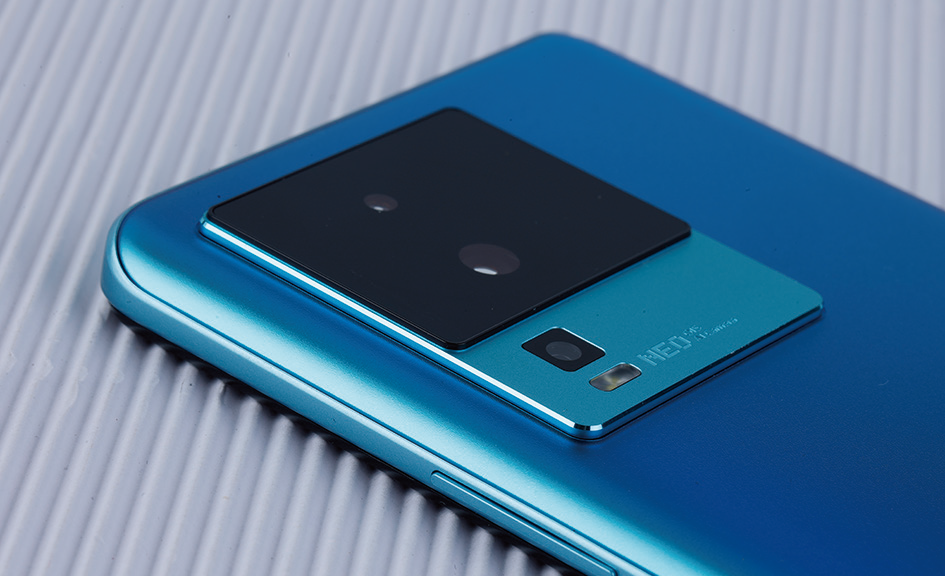
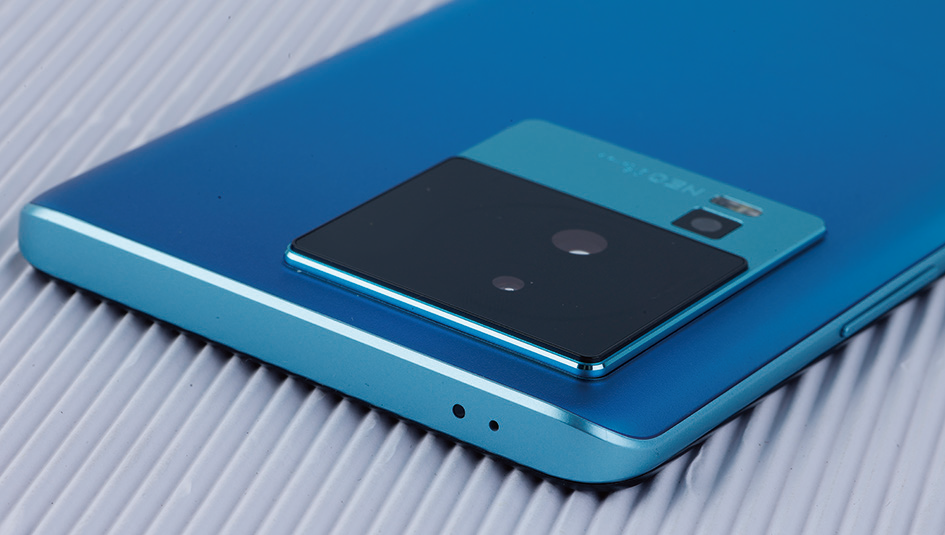
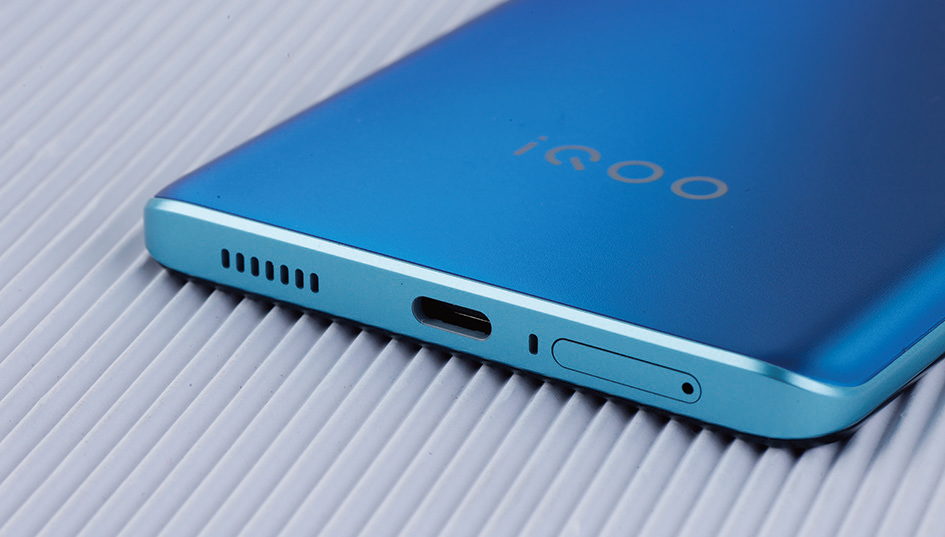
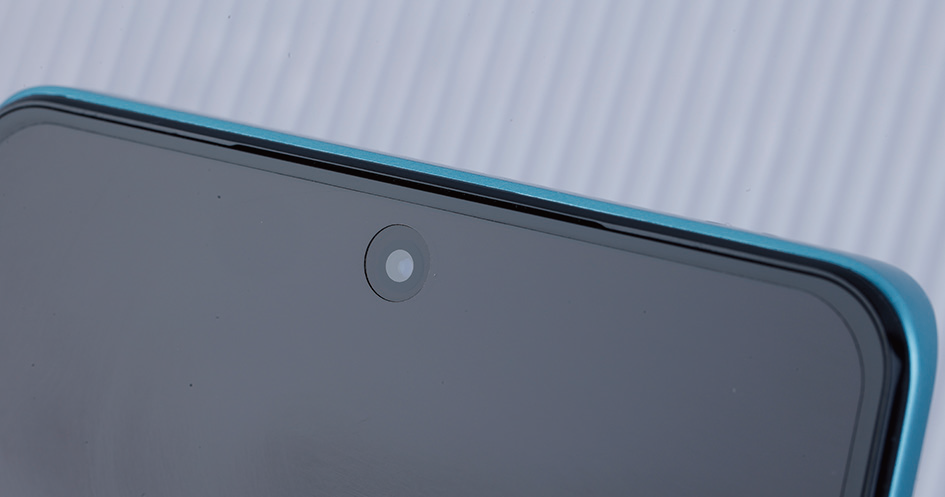
The Neo7 SE retains the film-like gradient finish and pixel-style "NEO" branding. The top of the chassis houses an infrared transmitter hole for remote control functions. The phone uses custom sealed stereo speakers with two 0.55 mm large-amplitude driver units, one at the top and one at the bottom. The front camera uses a centered punch-hole design.
Dimensity 8200: What Changed
The Dimensity 8200 is produced on TSMC's 4 nm process and uses a 1+3+4 core configuration: one 3.1 GHz Cortex-A78 performance core, three 3.0 GHz Cortex-A78 cores, and four 2.0 GHz Cortex-A55 efficiency cores. Compared with the Dimensity 8100, the A78 cores run at slightly higher frequencies. The GPU is upgraded to a Mali-G610 MC6 six-core GPU. MediaTek's official figures indicate roughly a 6% CPU performance uplift and an 8% GPU improvement over the Dimensity 8100.
Key internal upgrades focus on the APU, ISP, and display engine. The integrated fifth-generation APU (APU 580) increases AI throughput by about 13%. The IMAGIQ 785 ISP raises supported pixel processing from 200 MP to 320 MP. The MiraVision 785 display engine adds the same hardware low-blue-light technology used in higher-end chips and supports AI-driven SDR-to-HDR real-time enhancement. The HyperEngine 6.0 game engine adds features such as intelligent frame stabilization 2.0, AI-VRS variable-rate shading, multi-thread CPU optimization, and 5G quick channel support. The integrated modem supports Sub-6 GHz 5G with 3CC carrier aggregation.
Because the Dimensity 8200 supports LPDDR5 and UFS 3.1, vivo equipped the Neo7 SE with up to 16 GB LPDDR5 RAM and up to 512 GB UFS 3.1 storage. Models with 256 GB and above use a third-generation Samsung UFS 3.1 implementation with the new Solvit controller for higher read/write rates.
Performance Tests
At face value, some observers considered the Dimensity 8200 a modest update to the 8100. Benchmarks for the iQOO Neo7 SE (16 GB + 512 GB sample) showed Antutu scores above 880,000 and Master Lu scores around 1,050,000, about 6%–10% higher than Dimensity 8100 models. Geekbench results were about 1,054 single-core and 4,026 multi-core, each up by roughly 100 points versus the previous generation. AndroBench measured sequential read/write at about 1857 MB/s and 1764 MB/s, with random read/write at about 368 MB/s and 476 MB/s respectively.
Although synthetic results show only modest gains, real-world gaming tests revealed stronger performance. In a half-hour Genshin Impact run through Liyue with the phone in Monster mode, all graphics settings maxed and a 60 fps target, the device averaged 59.2 fps. In a more demanding 30-minute session that simulated realistic player behavior in the new 3.4 map area (exploration, collection, quests, and combat), the average frame rate remained 58.2 fps. Using Perfdog for telemetry, the stability index measured 2.1 and the stutter rate was only 0.4%. These results indicate that the Neo7 SE delivers flagship-level sustained gaming performance in this title.
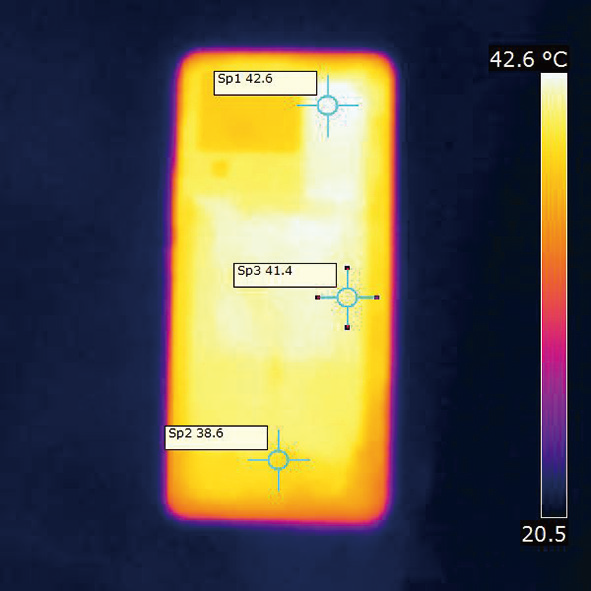
After the 30-minute test, the highest rear surface temperature measured 42.6°C. The Dimensity series' power-efficiency characteristics help avoid frequent thermal throttling during gameplay.
vivo's System-Level Optimization
vivo's experience tuning Dimensity processors appears to benefit sustained gaming. Past updates to Dimensity 8100 devices improved Genshin Impact frame rates through vendor-level optimizations, and vivo's tuning for the Neo7 SE contributes significantly to the observed in-game stability. Beyond the chipset, the Neo7 SE's software includes a "Game Box" with features such as an e-sports coach, voice changer, enhanced sighting modes, and custom audio enhancements, plus a floating timer and touch sampling rate adjustment. The X-axis linear motor provides tactile feedback and game-specific vibration presets for titles like Honor of Kings and PUBG Mobile.
Thermal design includes a high-conductivity aluminum frame for the phone stand, a large 2396 mm2 VC vapor chamber heat spreader, layered graphite, and close contact with heat sources for multi-dimensional heat dissipation. The device uses 11 NTC high-precision temperature sensors to avoid premature or delayed thermal control that could affect performance or exterior temperature.
Audio is handled by a custom sealed stereo setup with two 0.55 mm large-amplitude drivers and enlarged chamber volumes (equivalent 0.55 cc and 0.9 cc). The sealed design reduces mechanical resonance and aims for balanced, full stereo reproduction with improved bass for gaming and positional audio.
Camera and Imaging
The Neo7 SE differs from its Neo7 siblings mainly in imaging. The rear array is 64 MP main + 2 MP depth + 2 MP macro. The main sensor is the same 64 MP Samsung S5KGW1 with a 1/1.97-inch photosensitive area, 0.8 μm pixel size (4-in-1 binning to 16 MP by default), and support for PDAF and OIS optical stabilization.
Image processing on the Neo7 SE produces mature results in color, sharpness, distortion control, and noise suppression, though performance can be weaker under complex high-contrast scenes. Default photo mode applies conservative exposure and color tuning with a slightly warm bias. HDR performance is adequate but not class-leading. The 64 MP mode yields decent detail. However, there is no ultra-wide lens, which limits framing options. Night shots are typically algorithmically brightened by the ISP; thanks to OIS and modern noise-reduction algorithms, noise levels are generally controlled. For users not prioritizing flagship-level photography, the camera system is adequate for everyday scenarios given the device's price point.
Display, Battery, and Charging
The Neo7 SE uses a 6.78-inch flexible OLED flat panel with a static contrast ratio up to 8,000,000:1 and a local peak brightness of 1300 nits. It supports a 120 Hz maximum refresh rate with adjustable steps at 30/60/90/120 Hz and a 1200 Hz instantaneous touch sampling rate in game mode. Color gamut reaches 100% P3, and the panel carries HDR10+ and SGS low-blue-light certifications.
The battery uses a dual-cell 2500 mAh (7.78 V) series configuration for an effective 5000 mAh. In a simulated daily-use test at 50% screen brightness, the phone lasted 6 hours 50 minutes before hitting a 20% low-battery warning. The 120 W fast charger refilled the device from 1% to 100% in about 25 minutes in our test.
Conclusion
Measured across synthetic benchmarks and real-world gaming, the Dimensity 8200 shows more practical improvement than its paper specifications alone suggest. Combined with vivo's software and thermal tuning, the iQOO Neo7 SE delivers sustained gaming performance comparable to higher-end models, a high-quality OLED display, and rapid charging in a sub-flagship price tier. The availability of multiple Neo7 variants with different processors provides more options for consumers with varying budgets and performance priorities.
This review omits promotional language and focuses on measured performance, thermal behavior, display and imaging characteristics, and system-level optimizations observed in testing.