1. Smart Audio technical overview
With the rise of smartphones, demands for thinner, smarter, and more power-efficient designs have driven mobile speakers toward ever slimmer profiles, which challenges audio quality. NXP's Smart Audio approach uses embedded algorithms to increase micro-speaker output by more than 5x, enabling higher perceived volume and improved sound quality in mobile devices.
2. Smart Audio chipset
The NXP TFA9887/TFA9890 ICs can deliver over 2.6 W RMS power to a micro speaker (previous practical limit around 0.5 W), providing higher volume, stronger bass, and improved audio quality for mobile phones, portable music players, and tablets without risking speaker damage. The TFA9887 integrates amplitude control and real-time temperature protection, and its current-sense amplifier monitors the speaker so the device can operate safely even near peak output.
Interfaces
- I2S
- I2C
Key features
- Embedded processor
- Class-D amplifier
- Integrated current sensing
- Very small solution footprint
3. TFA9887 implementation details
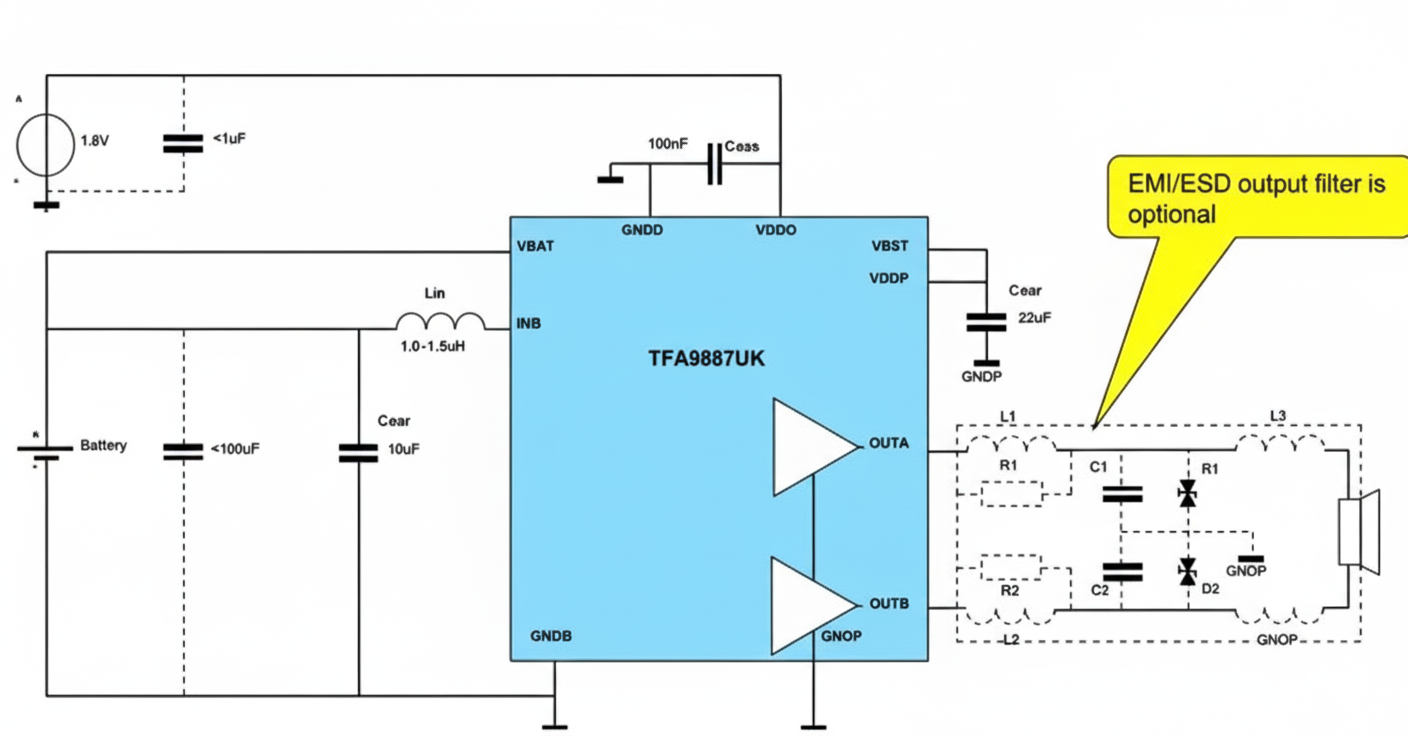
Hardware schematic:
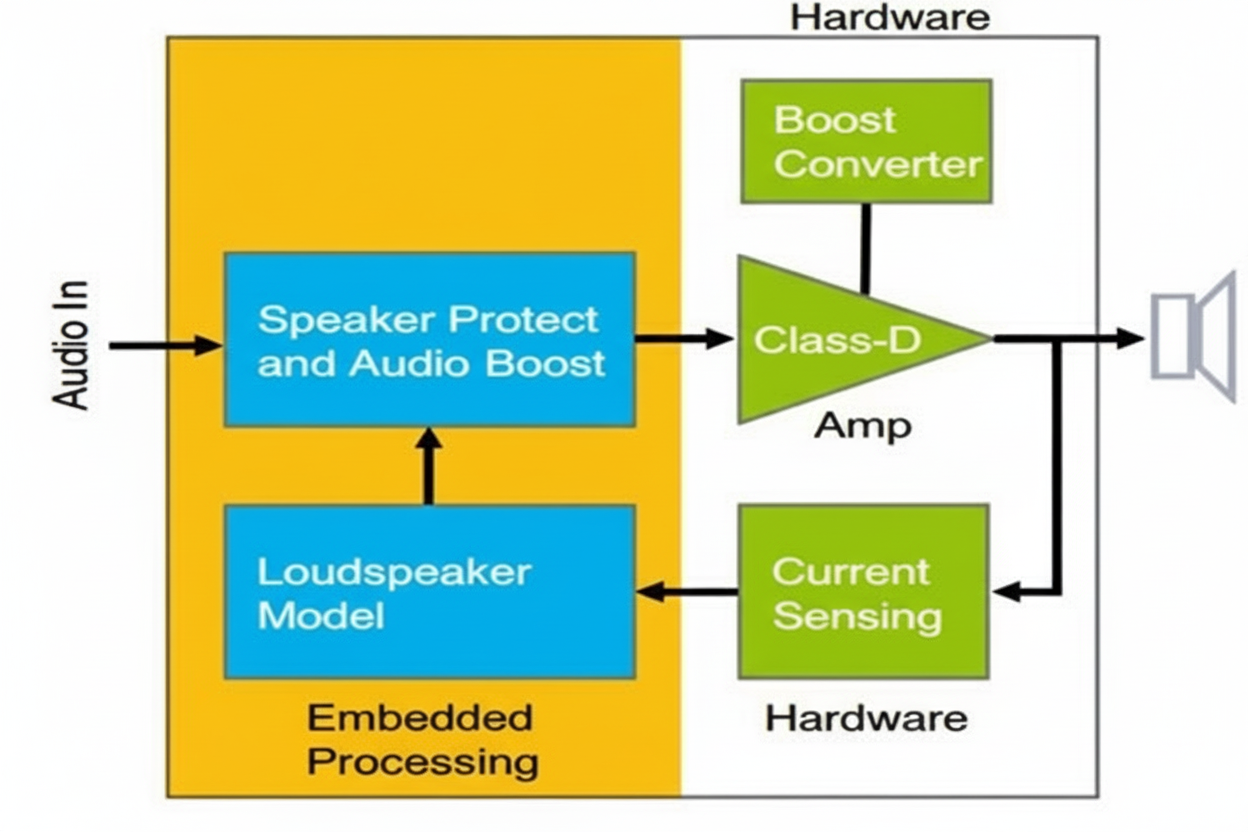
Real-time speaker monitoring tracks:
- Speaker temperature
- Diaphragm offset
- Amplifier clipping
Real-time monitoring purposes:
- Protect the speaker
- Optimize audio characteristics
Class-D amplifier functions:
- Current-sense feedback system
- CoolFlux Audio DSP
Adaptive speaker modes:
- Sealed enclosure
- Bass-reflex (ported) enclosure
- Open baffle
The boost circuit provides additional energy when battery voltage is low. Because Smart PA integrates a DC/DC boost converter, Class-D amplifier, and intelligent speaker protection, correct schematic connections, component selection, and PCB layout are essential to achieve optimal performance.
4. Software tuning
Achieving the expected performance requires proper PCB and hardware design, consistent speaker characteristics, and software tuning. Tuning is a critical and technically challenging step.
Tuning tools and GUI:
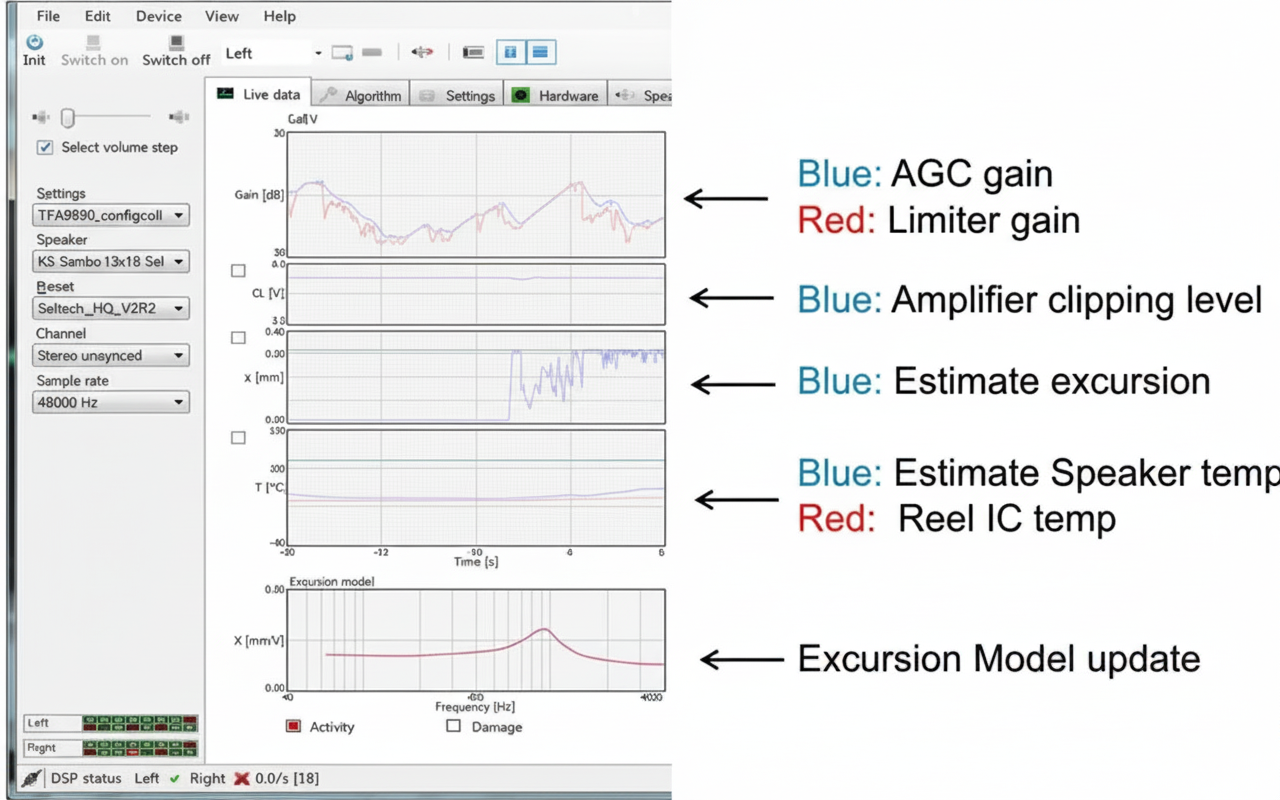
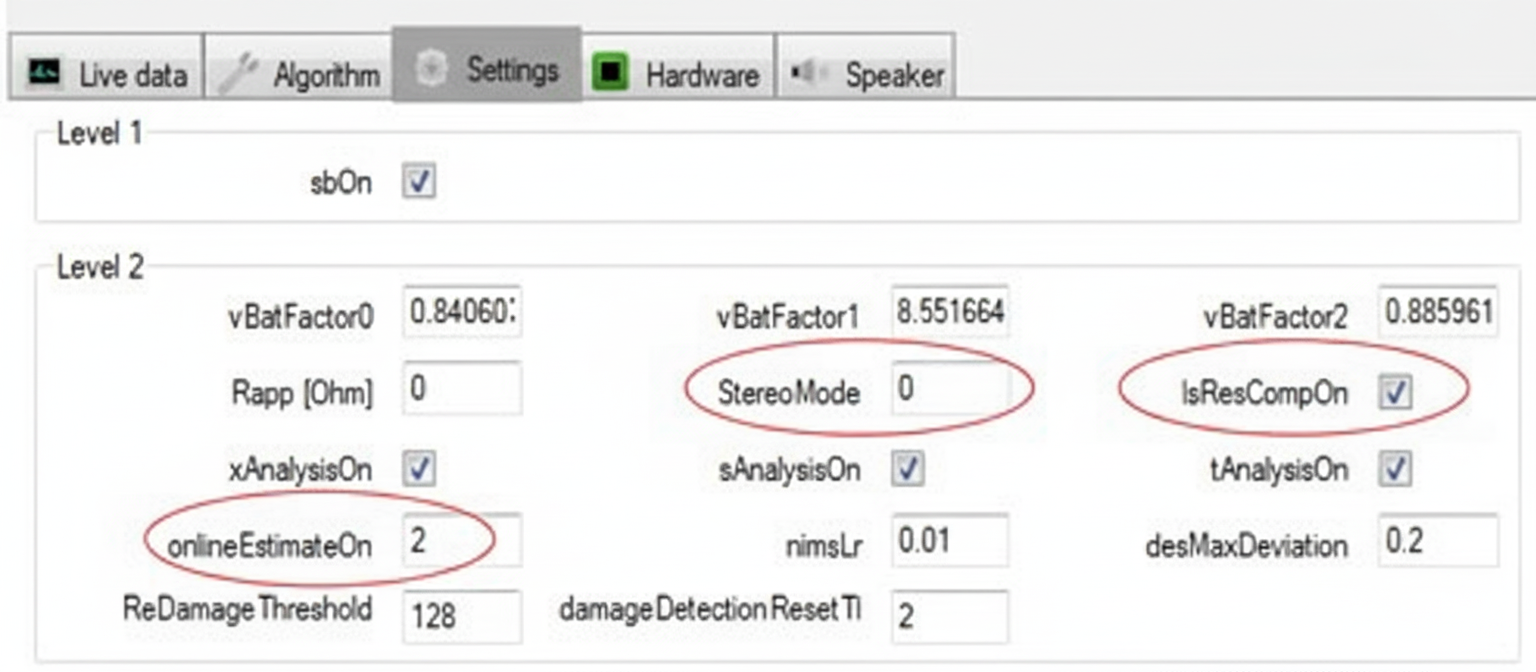
Process flow diagram:
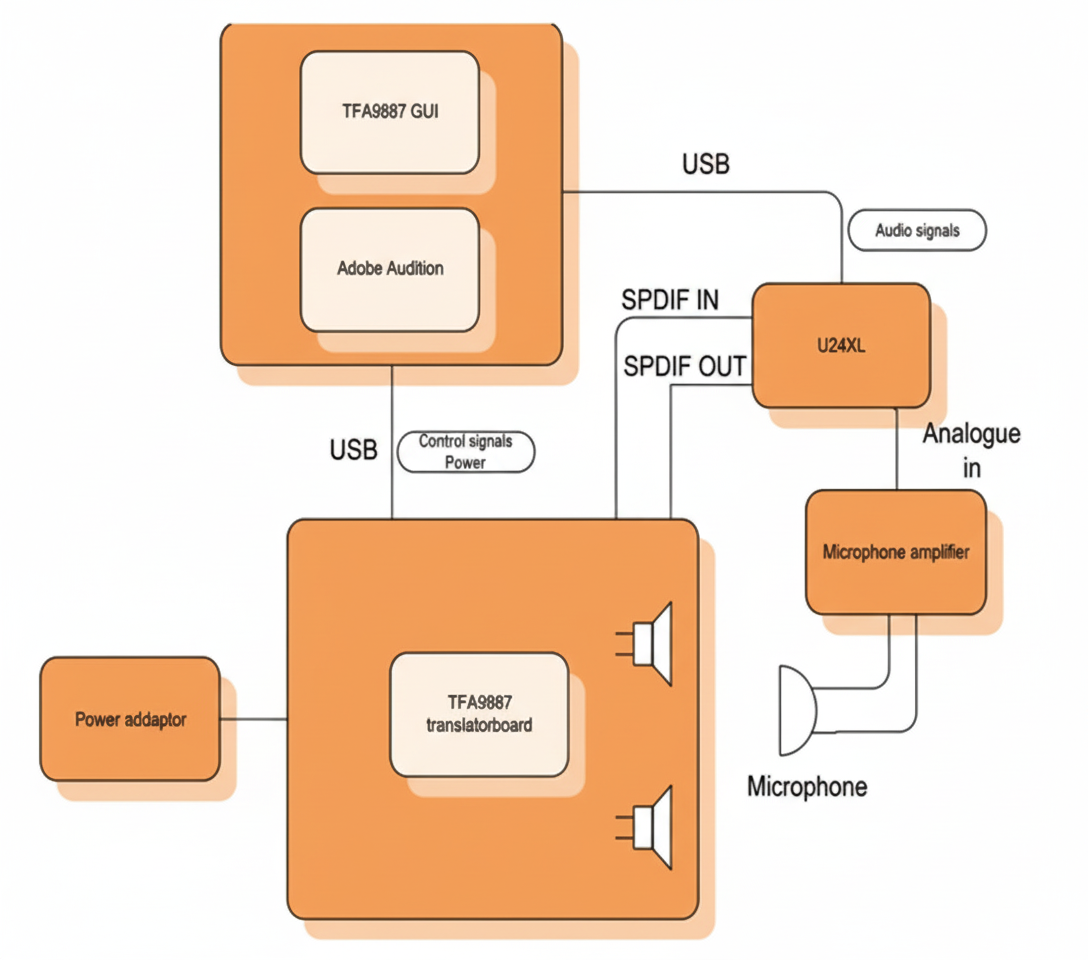
Decibel meter testing is typically used during tuning and validation.
Conclusion
This solution is primarily aimed at smartphones and tablets. Implementations exist on platforms such as MTK and Qualcomm. Wider adoption could lead to significant improvements in audio output for mobile devices.