Overview
ThinkPad has long been associated with high-end business laptops known for reliability and security. The ThinkPad Z series adopts a new industrial design aimed at younger users while retaining ThinkPad's core strengths. The Z13 model pairs the redesigned chassis with a custom AMD Ryzen 7 PRO 6860Z processor. The sections below summarize the Z13's design, display, input, performance, thermals, and battery life.
Product Specifications
Operating system: Windows 11 Home (64-bit)
Display: 13.3" OLED touch, 2880×1800, 100% DCI-P3
Processor: AMD Ryzen 7 PRO 6860Z (8 cores / 16 threads, 2.7 GHz–4.75 GHz)
Memory: 16 GB LPDDR5-6400 dual channel (soldered)
Storage: 512 GB PCIe 4.0 SSD
Graphics: AMD Radeon 680M (RDNA 2)
Battery: 51.5 Wh
Dimensions: 294.4 mm × 199.6 mm × 13.99 mm
Weight: 1.25 kg
Reference price: 10,999 RMB
New ID and Materials
Recycled materials and leather-like cover
The Z13 adopts a new ID language that blends recycled materials with a fashionable finish. The lid uses recyclable aluminum and, on the leather-black unit tested, a recyclable vegan leather cover. The vegan leather adds tactile texture and a premium appearance uncommon on traditional ThinkPad models, reflecting a shift toward a different aesthetic direction.
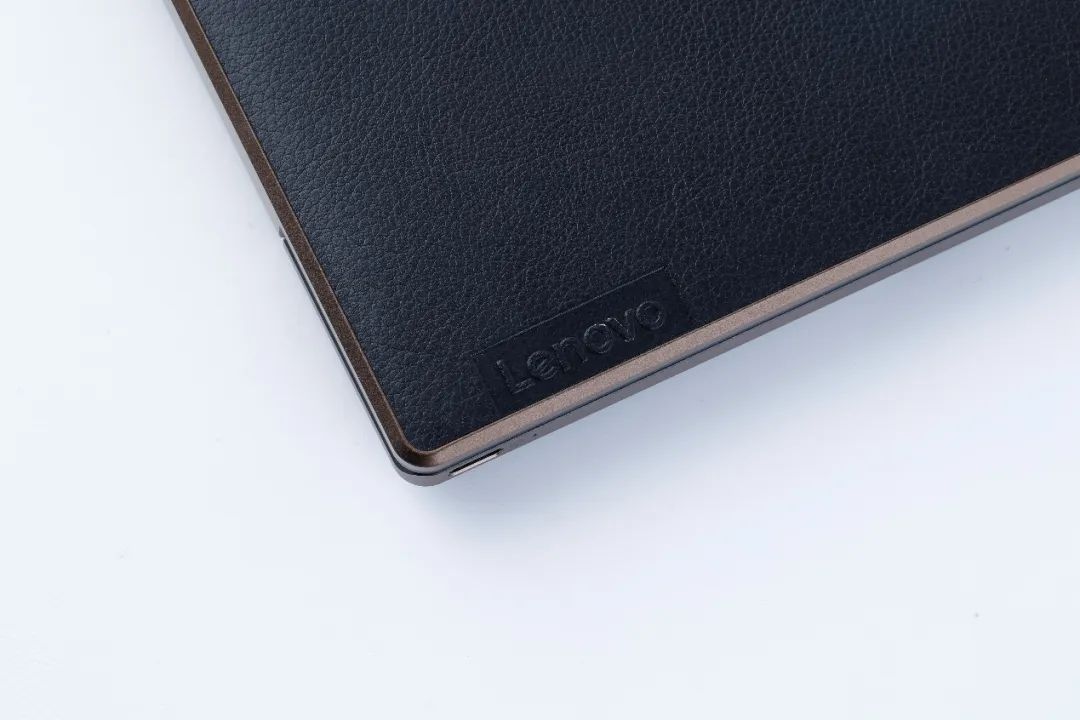
The lid's edge fully wraps the vegan leather, reducing wear over time.
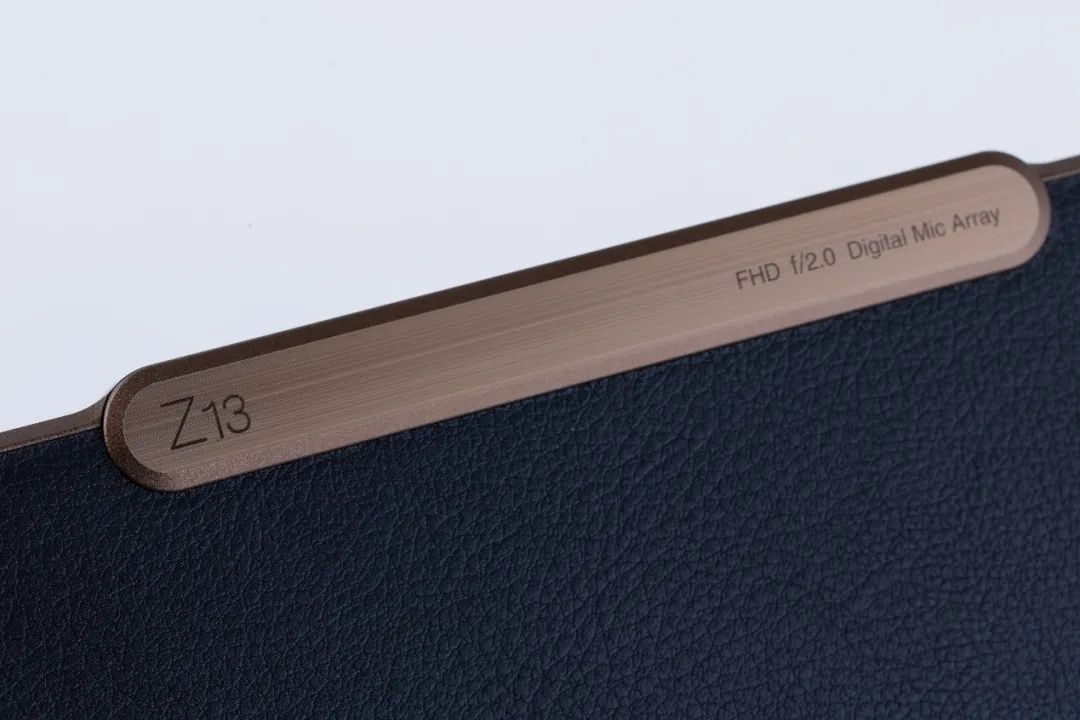
The screen bezel rises above the panel, increasing product recognition; the raised area includes the product name and identifiers.
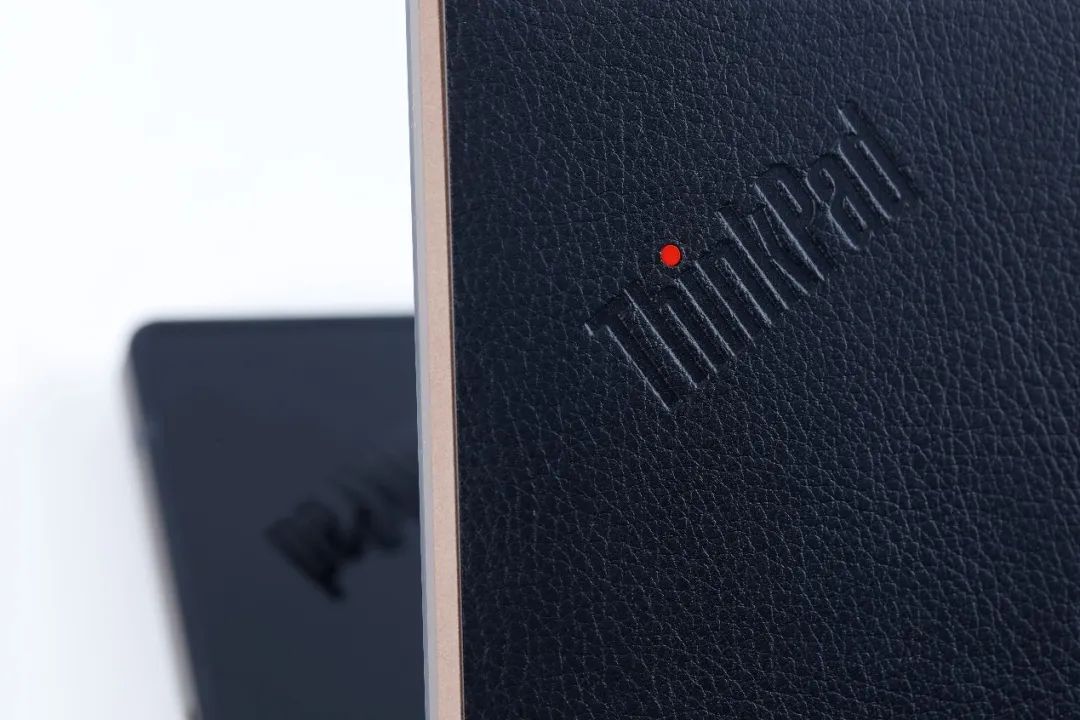
The recessed logo on the lid is stamped into the vegan leather and retains the illuminated red dot.
To protect the vegan leather during daily use, the lid is surrounded by a CNC-machined dark-gold frame that fully covers the edge of the leather, preventing abrasion. The lid also features a small raised "smile arc" at the top that houses a 1080p infrared camera and dual noise-reduction microphones, facilitates one-handed opening, and acts as a distinct design element with the product name marked on it.
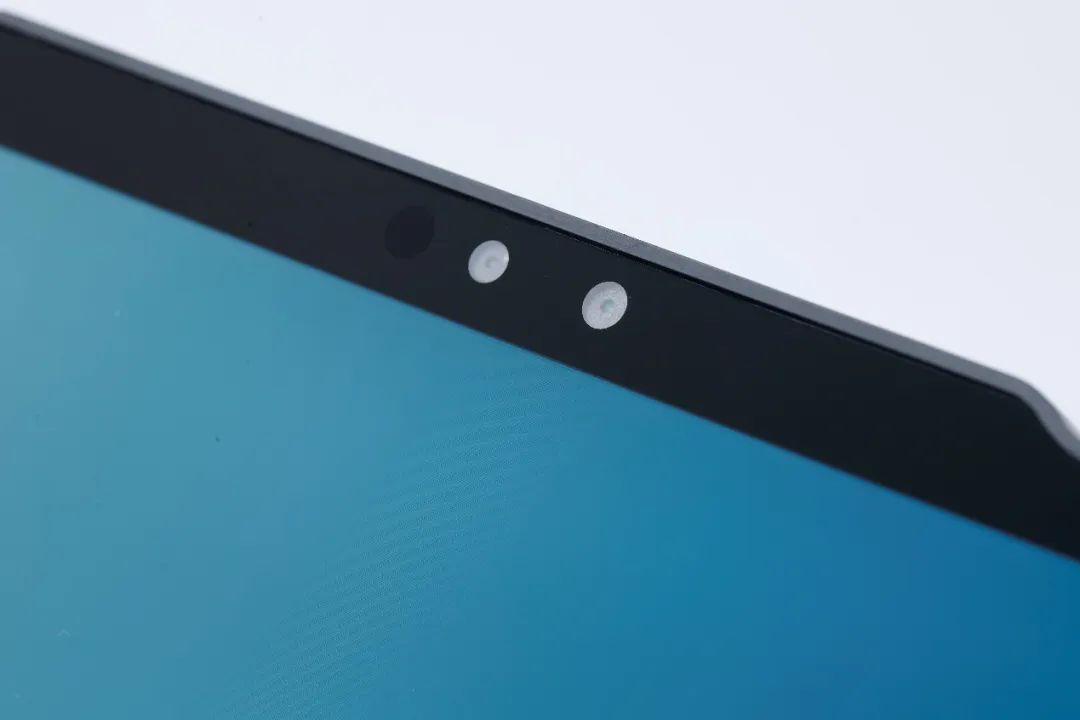
The top-bezel area includes a 1080p infrared camera supporting face login and a ThinkShutter electronic cover.
Display
The Z13 uses a 13.3" 2880×1800 OLED touch panel with a listed peak brightness of 400 nits. Measured with a Spyder5 Pro, the display covers 100% DCI-P3 and 99% Adobe RGB, supporting Dolby Vision and hardware-level low-blue-light certification. The narrow bezels yield a 91.6% screen-to-body ratio for a more immersive viewing experience.
Keyboard and Touchpad
The Z13 retains a full-size backlit ThinkPad keyboard with 1.35 mm key travel. The keyboard area extends toward the chassis edges to maximize usable key area and avoid cramped typing. The power button is located on the right side of the chassis, and a fingerprint reader is integrated into the main keyboard area. The arrow keys are not full-size, which may require adaptation for some users.
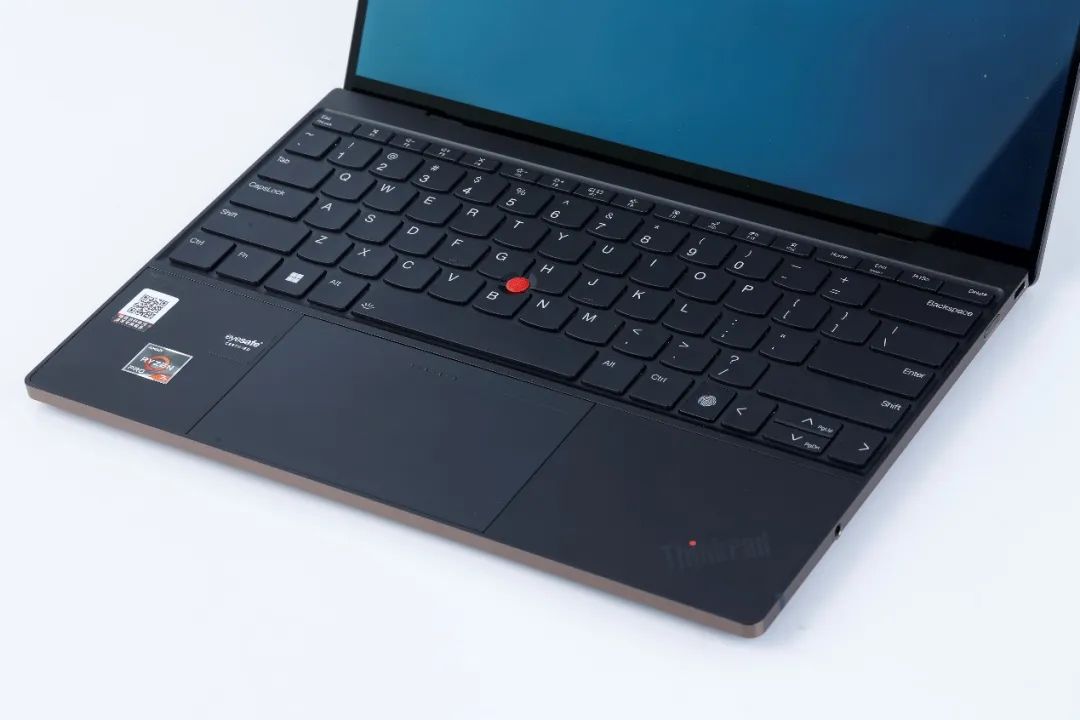
The Z13 includes the classic TrackPoint and an integrated force-sensing haptic touchpad. Both the pointing stick and the touchpad offer good precision and feel.
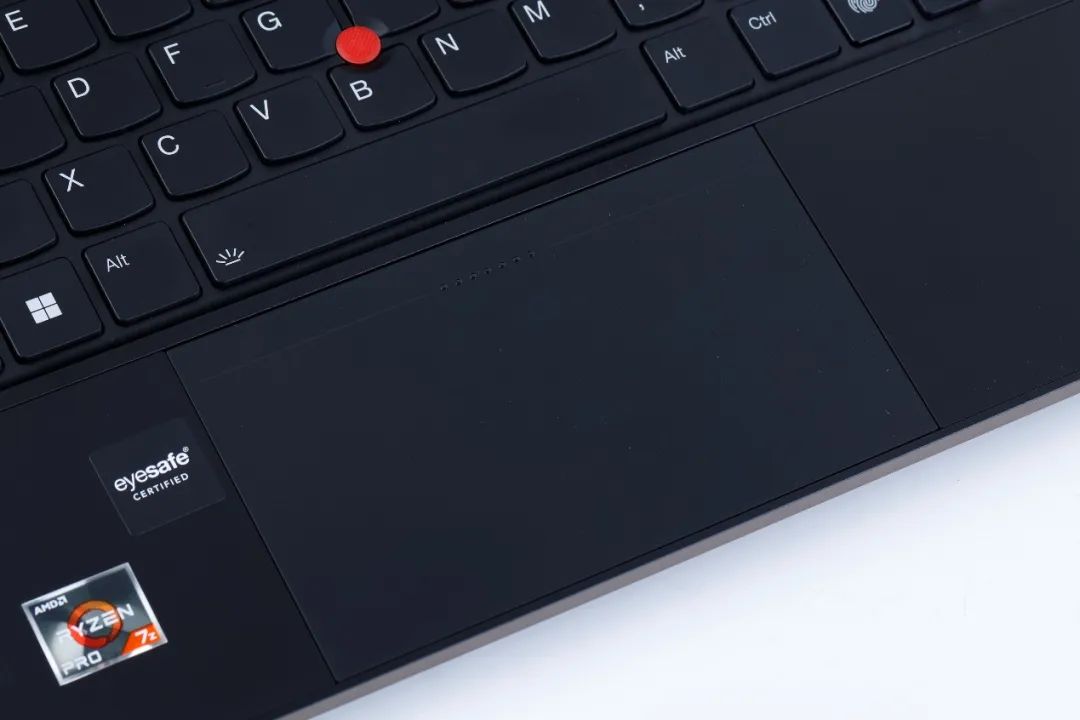
The touchpad is a single-piece force-sensing design, eliminating physical three-button keys. Long-time ThinkPad users accustomed to physical TrackPoint buttons may need time to adjust, but the larger touchpad area and refined haptic feedback provide accurate control.
Double-clicking the TrackPoint offers a UX design quick menu for adjusting brightness, microphone mode, and other system settings.
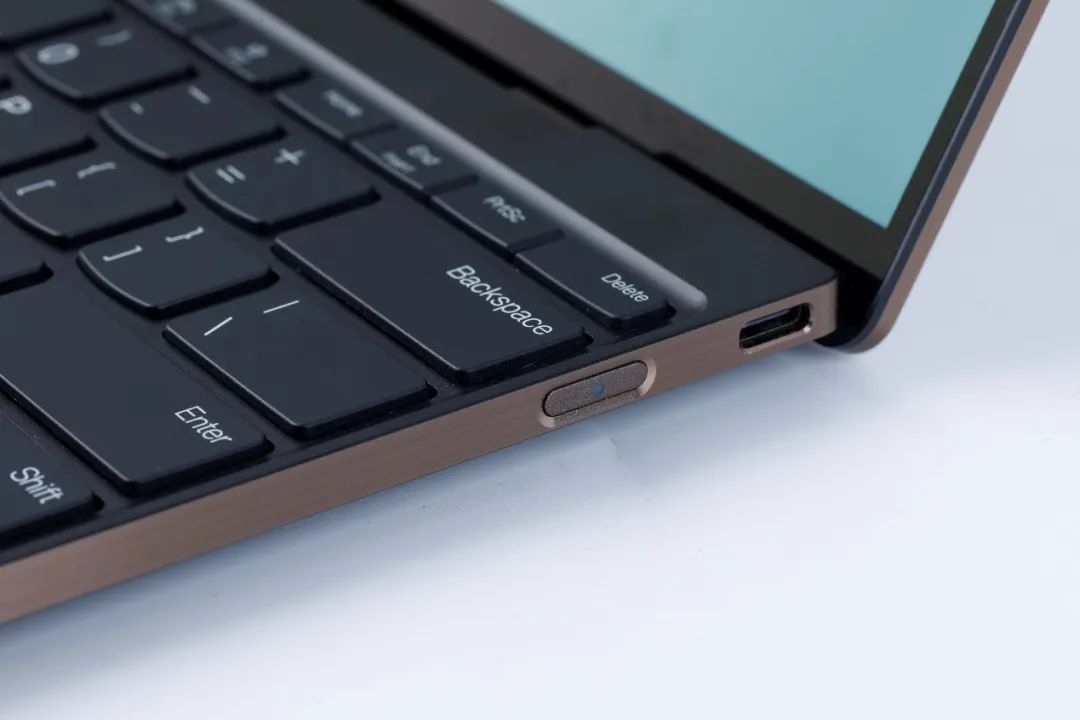
The power button is located on the right side of the chassis; the fingerprint sensor sits within the main keyboard area.
Ports
The Z13 provides a USB4 port on each side, a capability enabled by the AMD Ryzen PRO 6000 series mobile platform. USB4 is based on the Thunderbolt 3 protocol with up to 40 Gbps bandwidth, video expansion capability, and PD charging support, enabling broad external expansion options.
Custom AMD Ryzen 7 PRO 6860Z Processor
The Z13 is equipped with a custom AMD Ryzen 7 PRO 6860Z. Like the Ryzen 7 PRO 6850U, it uses an optimized Zen 3+ architecture manufactured on TSMC's 6 nm process for an improved balance of performance and efficiency.
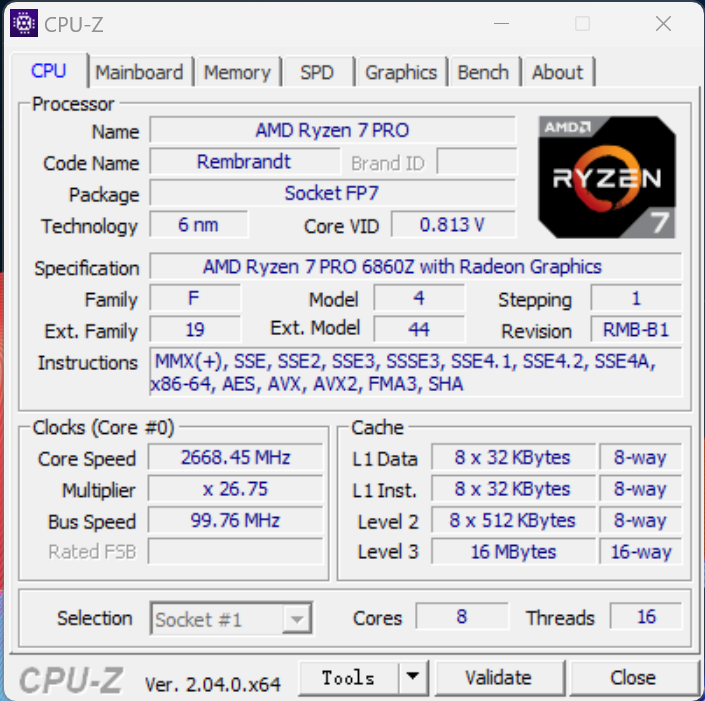
The Ryzen 7 PRO 6860Z is an all-big-core design with 8 cores and 16 threads, a default TDP of 28 W, 16 MB L3 cache, and an integrated RDNA 2 Radeon 680M GPU. Its peak boost frequency is 4.75 GHz, slightly higher than the standard Ryzen 7 PRO 6850U. It also supports AMD PRO commercial features for enterprise-class manageability and security.
Memory and Storage
The test unit includes 16 GB LPDDR5-6400 (soldered) and a 512 GB PCIe 4.0 SSD. In CrystalDiskMark 8.0.4 (1 GB test), the SSD achieved sequential read speeds up to 3251.22 MB/s and sequential write speeds of 1788.79 MB/s, adequate for typical office workloads and application loading, though not class-leading.
CPU Performance
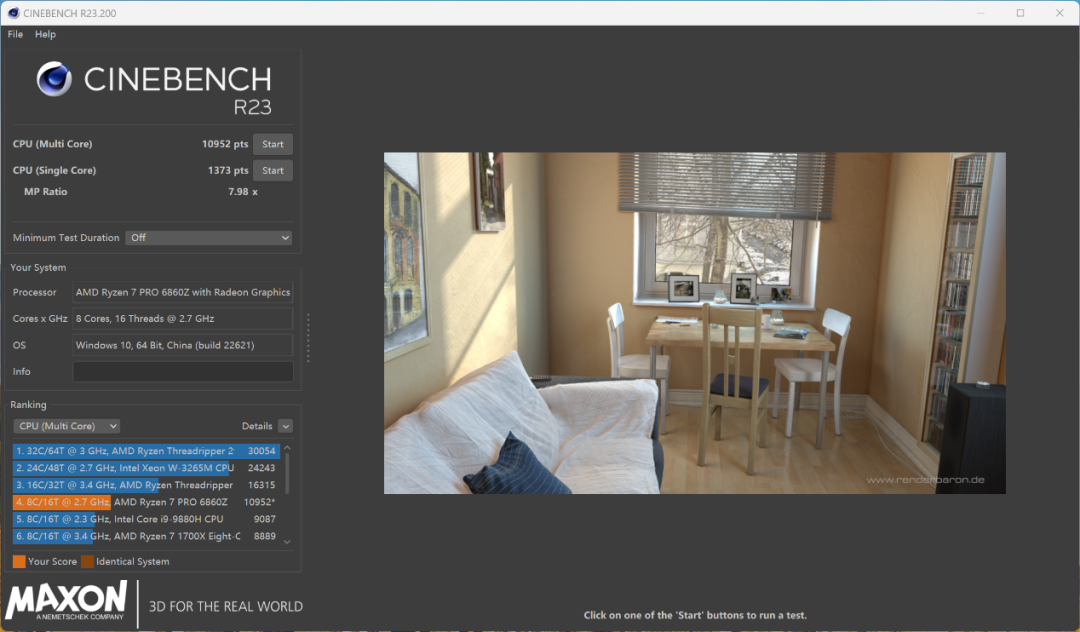
In "Best Performance" battery mode, the Z13 achieved 1373 pts single-thread and 10,952 pts multi-thread in Cinebench R23. Compared with laptops using an Intel Core i7-1260P (for example, certain X1 Carbon and XPS 13 Plus models), the Z13 shows competitive single-thread results and substantially stronger multi-threaded performance, with multi-thread advantages up to around 19% in our tests.
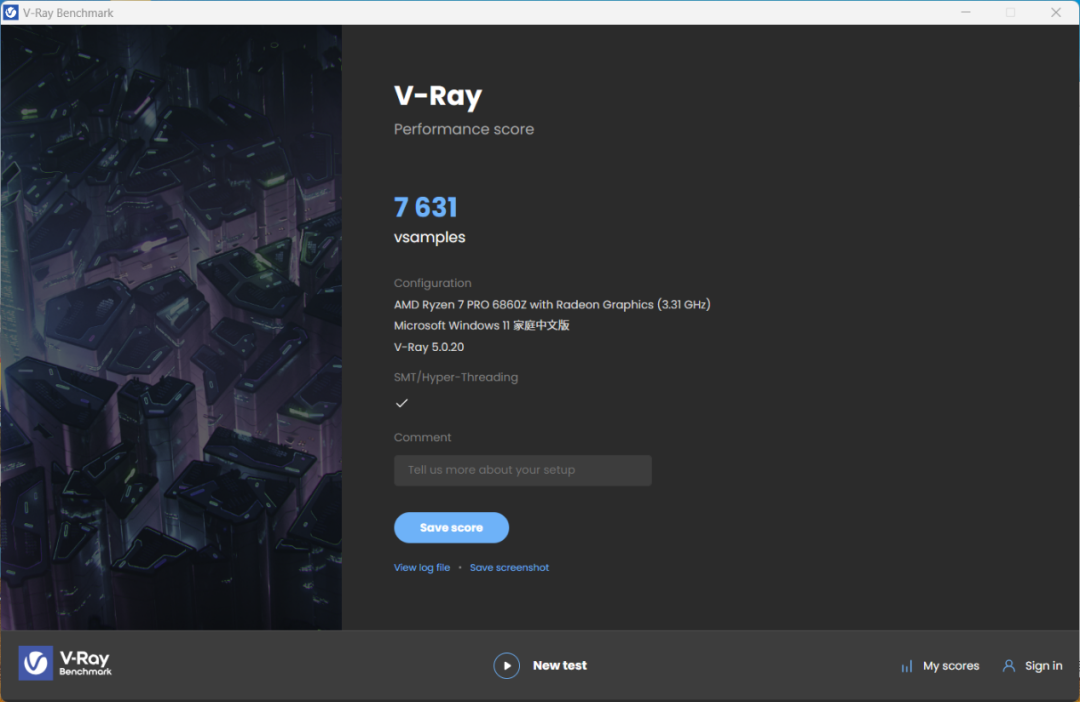
In V-Ray CPU rendering, the unit scored 7,631 points, outperforming the M1 MacBook Air and many laptops with Core i7-1260P. In Blender 3.3 classroom rendering, it completed the render in 35.8 seconds. In PCMark 10, the Z13 scored 6,351 overall, approximately 14% higher than a comparable system based on Core i7-1260P, indicating strong system-level performance for medium to heavy office tasks.
Graphics Performance (Radeon 680M)
The integrated Radeon 680M is built on RDNA 2, with 768 shaders and a GPU clock up to 2200 MHz. In 3DMark Time Spy, the Z13 scored 2,274 graphics points, about 76% higher than an integrated Intel Iris Xe result of 1,287 (same-memory configuration). In 3DMark Fire Strike, the Z13 scored 6,965 versus 4,813 for the Iris Xe, a roughly 44% advantage.
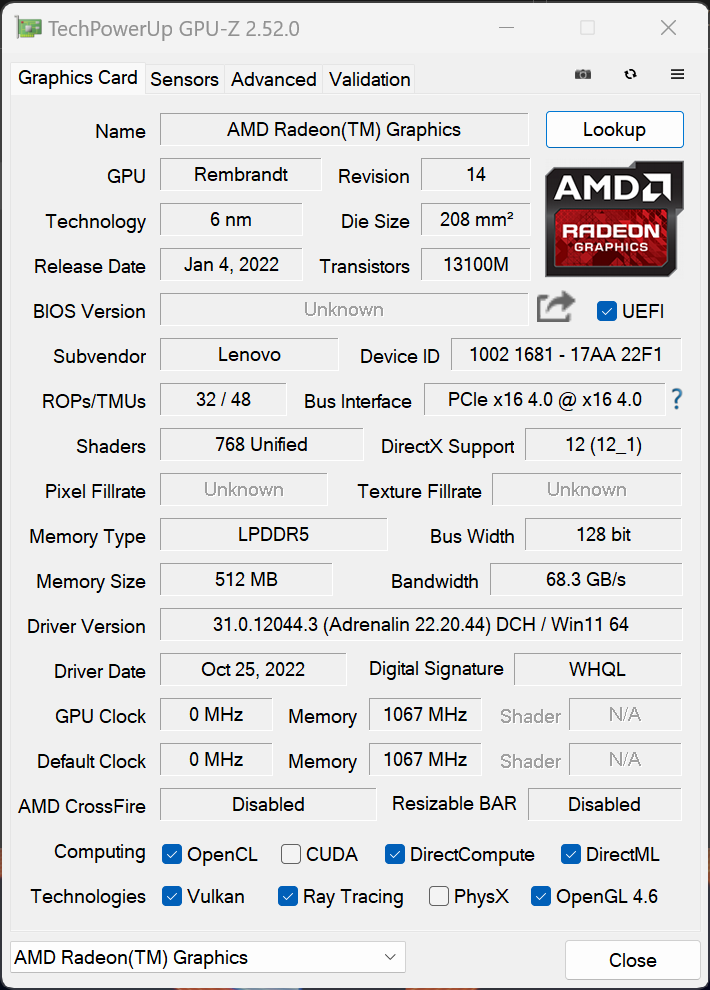
With this relatively powerful integrated GPU, the Z13 can handle many popular games at playable frame rates. For example, CS:GO at 1080p and high settings (8x MSAA) averaged 121.1 fps, and F1 22 at 1080p low settings averaged 66 fps. Enabling AMD FSR or RSR can further improve game frame rates. The GPU also handles common graphics workloads with ease.
Thermals and Battery Life
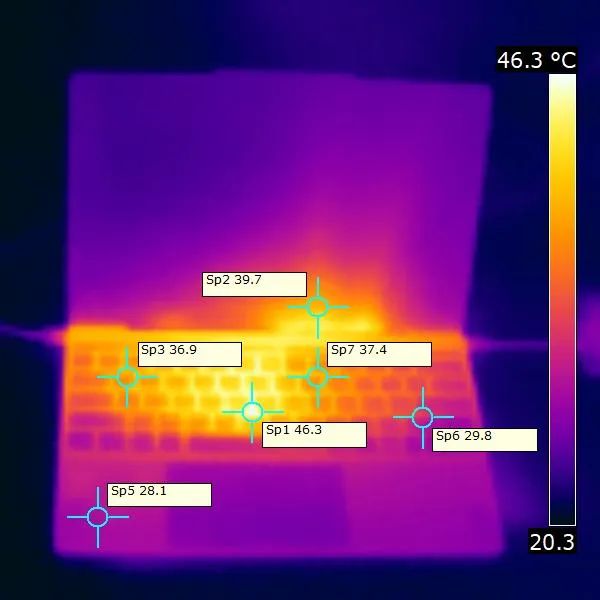
The chassis uses a dual-fan layout with a large vapor chamber. In a controlled 20.1°C environment, a 30-minute single-CPU stress test produced a maximum external temperature of 46.3°C centered on the keyboard; most of the keyboard remained around 37°C, which feels warm to the touch. The palm-rest area stayed around 28°C and did not cause wrist discomfort.
With the 51.5 Wh battery, using 2880×1800 resolution, 50% brightness, 20% speaker volume, airplane mode, and the "Best Efficiency" power profile, the Z13 ran PCMark 10's Modern Office scenario for 7 hours 27 minutes. This runtime supports a typical day of mobile use, and the system supports fast charging capable of reaching approximately 80% charge in one hour.
Conclusion
The ThinkPad Z13 represents a notable design and hardware departure from traditional ThinkPad models, integrating recyclable materials, a vegan leather lid, a narrow-bezel OLED display, a haptic force-sensing touchpad, and a custom AMD Ryzen 7 PRO 6860Z processor. The system delivers strong multi-threaded CPU performance, above-average integrated graphics, good display quality, reasonable SSD performance, solid thermal control, and a battery life suitable for a day of mobile work.
As a premium business ultraportable with an updated aesthetic and robust performance, the Z13 competes with other high-end thin-and-light laptops in its class.