Standard micrometers and calipers are common tools for measuring planar and parallel features or internal/external diameters. However, when measuring complex shapes such as curved surfaces or narrow grooves, general-purpose gauges may not reach the correct position. Specialized or dedicated gauges are often simpler and more economical for these cases.
1. Pipe wall thickness
Recommended: wall-thickness micrometer
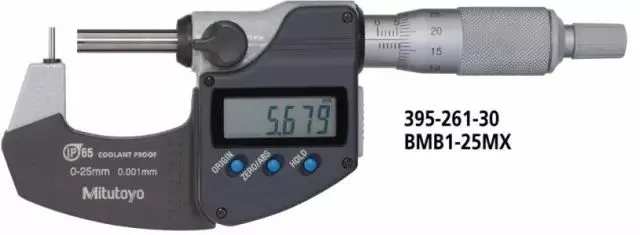
Reason: Cylindrical anvils can reach inside the tube to measure wall thickness accurately.
Also recommended: pipe wall thickness caliper
Reason: The caliper jaws are cylindrical to measure pipe wall thickness precisely.
Also recommended: tube thickness gauge
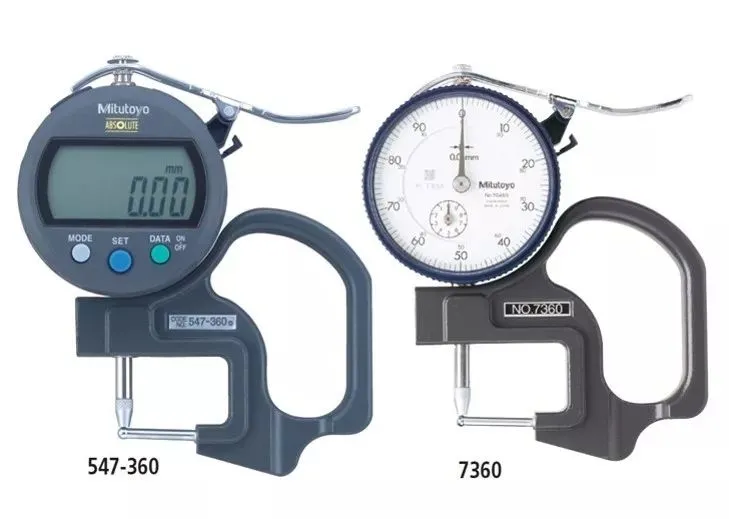
Reason: Anvil at 90 degrees can measure pipe wall thickness or bent plate thickness.
2. Internal diameter
Recommended: inside caliper
Reason: Blade-shaped jaws access difficult internal positions. Other jaw shapes in the series include pointed and recessed types.
Recommended: caliper-type inside micrometer
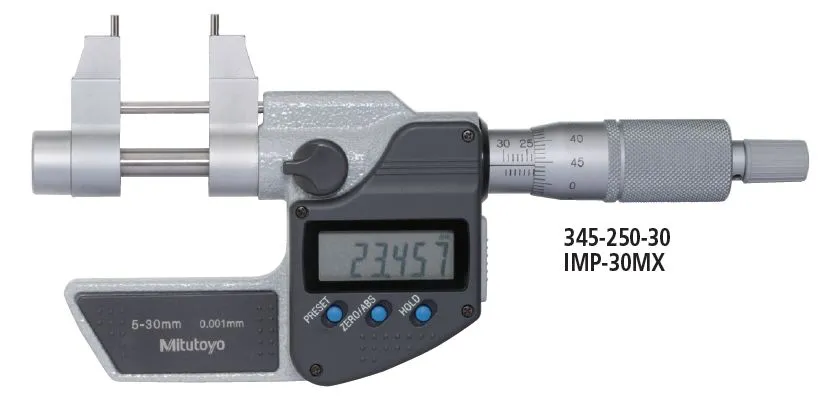
Reason: Caliper-shaped measuring faces enable internal diameter measurements not possible with standard micrometers.
Recommended: bore gauge
Reason: Measures diameters at the bottom of a bore; with extension rods it can measure deep-hole internal diameters.
3. Groove diameter
Recommended: blade-type micrometer
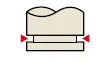
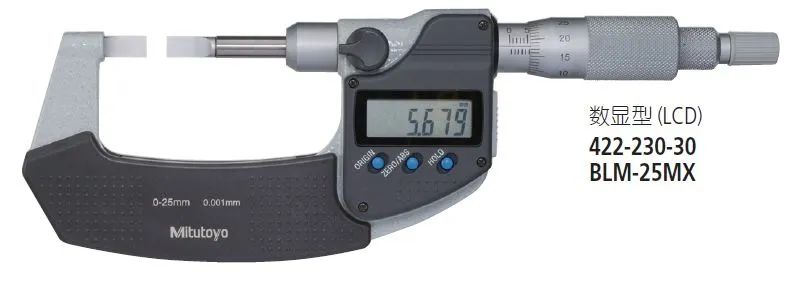
Reason: Thin, blade-like measuring faces easily and accurately measure narrow groove diameters.
Recommended: blade caliper
Reason: Thin jaw tips reach narrow grooves to complete measurements.
Recommended: knife-edge thickness gauge
Reason: Flat, blade-like jaws access narrow grooves for thickness measurement.
4. Internal diameter with a recess
Recommended: groove micrometer
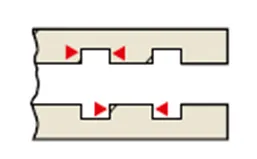
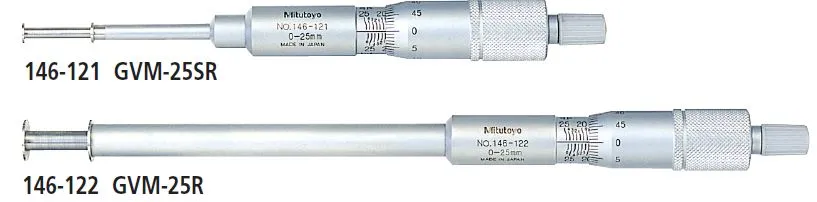
Reason: Anvils and spindles with flanges measure recessed internal diameters and the depth/position relationship of internal grooves.
Recommended: hook-type vernier caliper
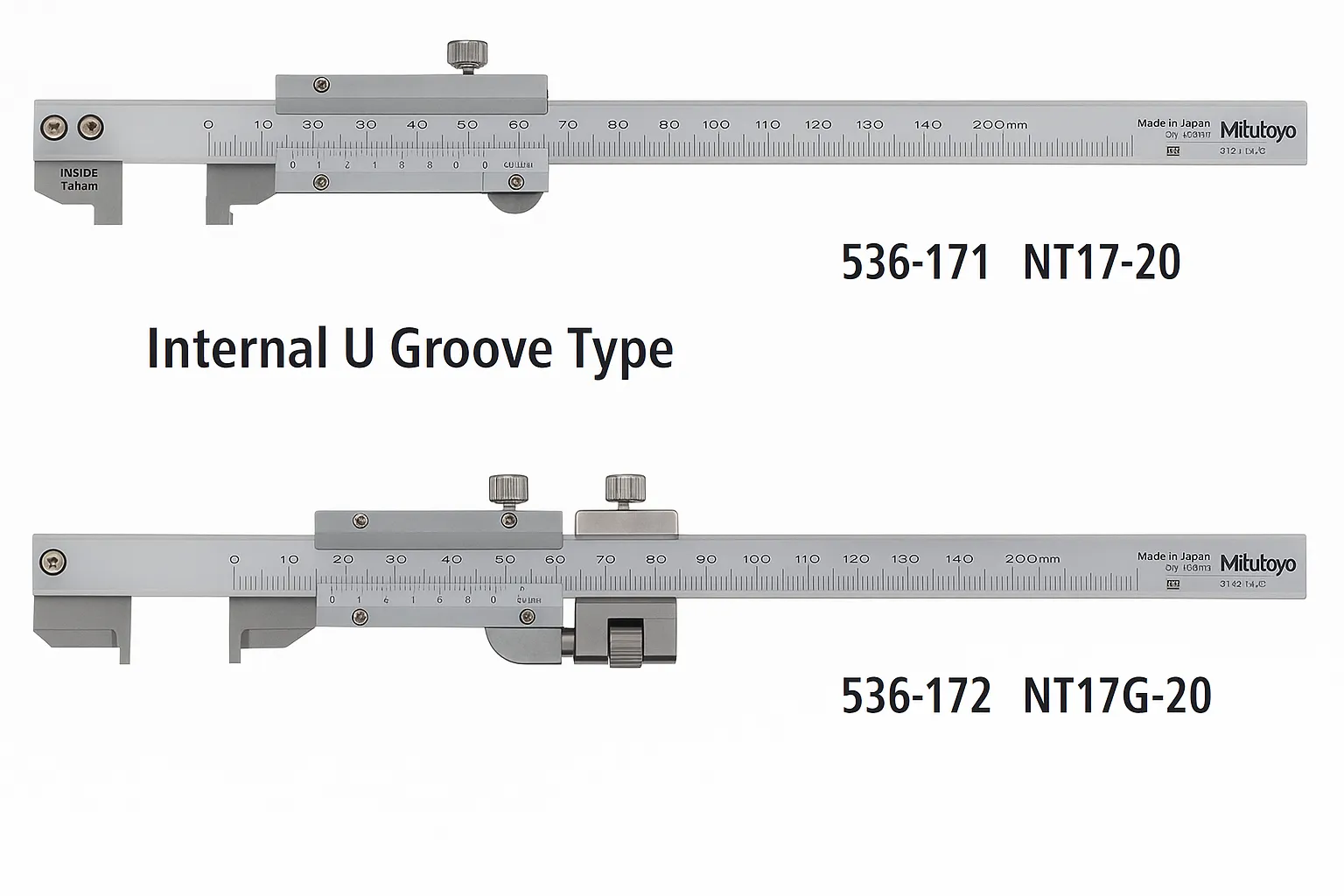
Reason: Hook-shaped jaws measure stepped grooves inside cylinders.
5. Spline measurement
Recommended: spline micrometer

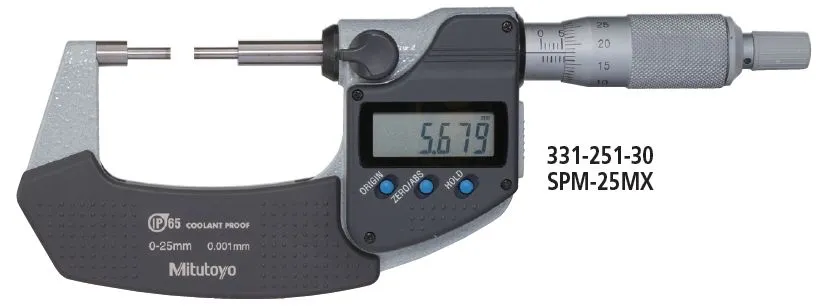
Reason: Small-diameter anvils make it easy to measure spline shaft and slot diameters.
6. External diameter of odd-numbered fluted taps or reamers
Recommended: V-anvil micrometer

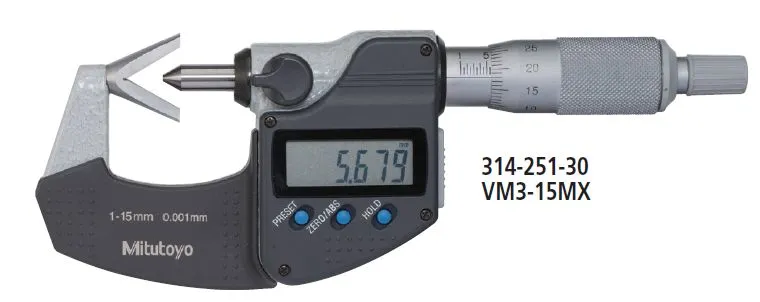
Reason: V-anvils suit measuring outer diameters of odd-fluted taps, reamers, and cutters; a single probe can measure the pitch diameter.
7. Sheet metal center thickness
Recommended: plate-thickness micrometer
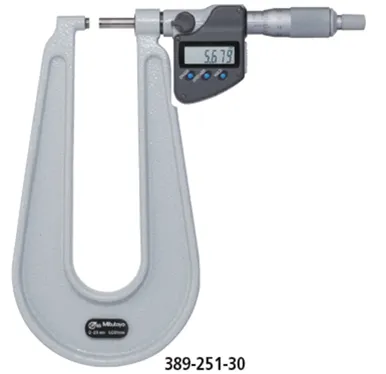
Reason: Extra-large frames easily measure plate thickness.
8. Tooth base normal length
Recommended: disc-anvil micrometer

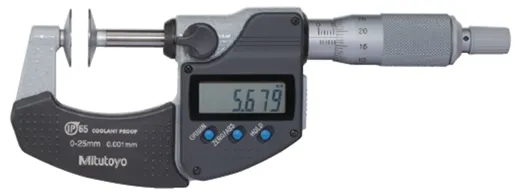
Reason: Disc anvils reach into tooth roots and are suitable for measuring root-normal lengths on spur and helical gears.
9. Gear ball diameter
Recommended: gear outside micrometer
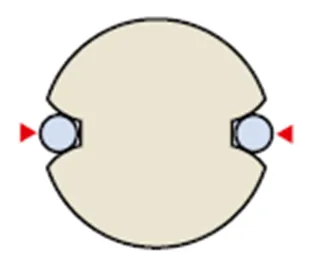
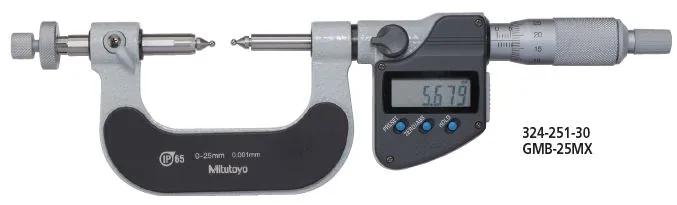
Reason: Interchangeable spherical anvils and spindle tip shapes allow measurement of gears across various module ranges (0.5 - 5.25).
10. Thread effective diameter
Recommended: thread micrometer

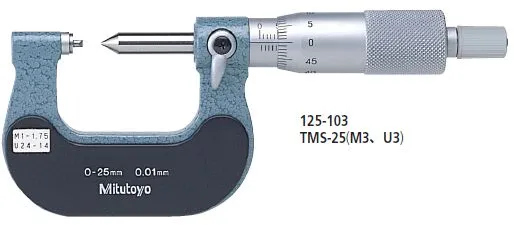
Reason: Fixed anvils measure 60° threads and provide direct reading of effective thread diameter without calculation.
Recommended: thread micrometer with interchangeable anvils
Reason: Interchangeable anvils/spindle tips suit different thread forms and provide direct reading of effective diameter without calculation.
11. Center-to-center distance between holes
Recommended: offset centerline caliper

Reason: Built-in offset setting allows direct reading of spacing measurements.
Recommended: center-to-center offset caliper with rear jaws
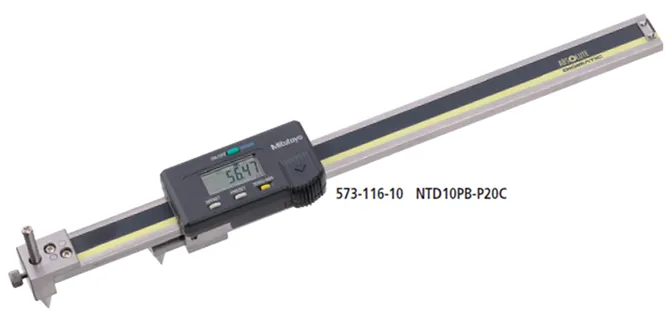
Reason: Offset setting and rear-mounted jaws enable direct reading of spacing measurements.
12. Single-hole spacing
Recommended: edge-to-center offset caliper with rear jaws
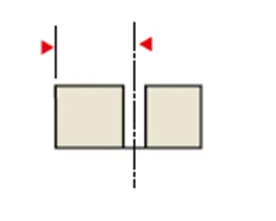
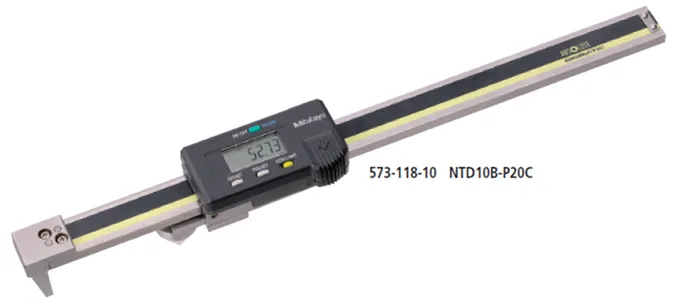
Reason: Edge-to-center jaw geometry suits single-hole spacing; the frame back has jaws for top-side reading of results.
13. Irregular narrow features
Recommended: pointed-jaw caliper
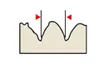
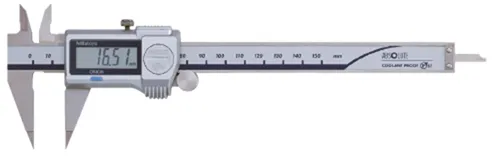
Reason: Pointed jaws penetrate small recesses or tracks and can measure external diameter, internal diameter, depth, and step differences.
14. Thickness in narrow areas
Recommended: pointed-anvil micrometer
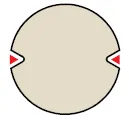
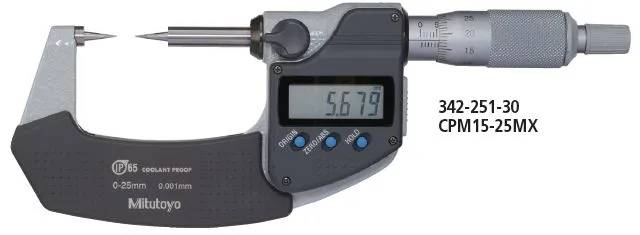
Reason: Anvil tip radius around 0.3 mm can measure wall thicknesses in drilled holes, small grooves, keyways, and other hard-to-reach spots.
15. Step features
Recommended: offset caliper
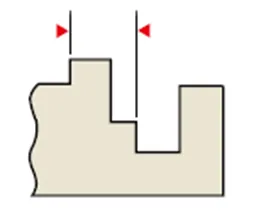
Reason: Jaws designed for height differences are suitable for measuring stepped cross-sections and other hard-to-measure workpiece features.
16. Wall thickness in concave features
Recommended: ball-anvil wall-thickness micrometer

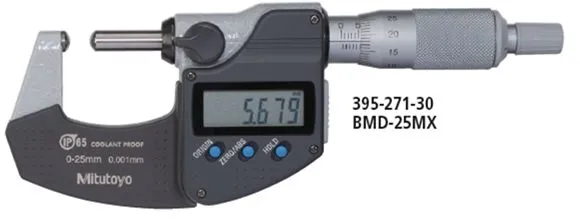
Reason: Spherical measuring faces can measure wall thickness inside concave surfaces.