Overview
The Mars Mineral Spectrometer (MMS) is one of the scientific payloads on China’s first Mars exploration mission. Installed on the Mars orbiter, it performs spectral remote sensing of surface targets during flight. The 512×320 short-wave infrared focal-plane cooler assembly is a key component of the MMS used for hyperspectral imaging. The instrument addresses key technical challenges such as infrared background suppression, an efficient dispersive element, and on-instrument combined calibration, and targets a compact, lightweight, low-power, and high-performance design to meet precise scientific detection requirements.
A research team from the Shanghai Institute of Technical Physics, Chinese Academy of Sciences, and the University of Chinese Academy of Sciences published an article on the short-wave infrared focal-plane cooler assembly for Tianwen-1’s mineral spectrometer in the journal Infrared and Laser Engineering. The first author is Associate Researcher Zeng Zhijiang, whose research focuses on infrared detector packaging and integration technologies. The corresponding author is Researcher Li Xue, whose work focuses on infrared optoelectronic detectors for aerospace remote sensing and component technologies.
This article analyzes the characteristics of the 512×320 infrared detector cooler assembly used by the Mars mineral spectrometer, with emphasis on the development and technical challenges of the infrared focal-plane detector, the integrated Dewar assembly, and the cooler. The infrared assembly was successfully used on Tianwen-1 and provides a reference for the development of infrared components for China’s future deep-space exploration.
Overall Technology for the SWIR Focal-Plane Cooler Assembly
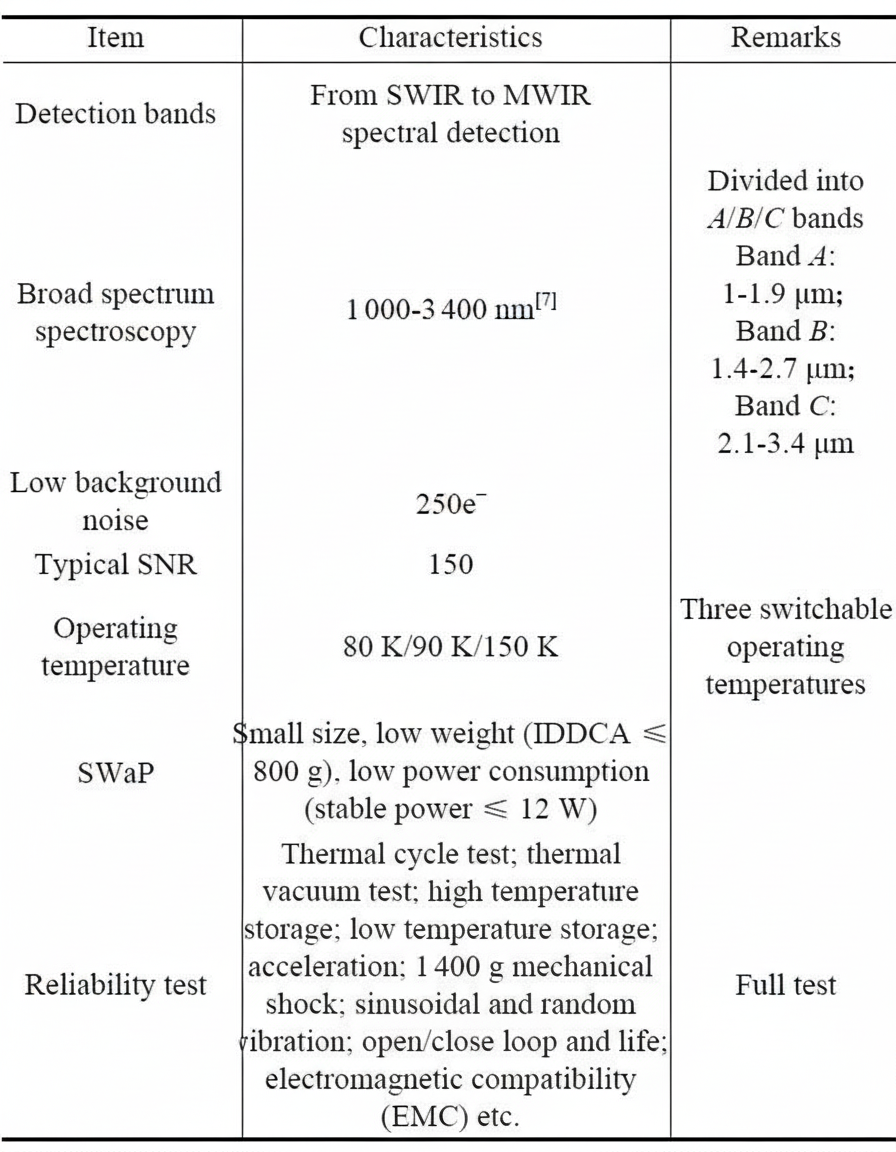
Because Mars missions carry multiple payloads and launch requires high-thrust rockets to achieve Earth escape trajectory, the MMS payload needs to be as lightweight and highly integrated as possible. Therefore, the SWIR integrated detector Dewar cooler assembly (IDCA) for the MMS was designed as a compact, lightweight, and low-power integrated unit (Low SWaP). The overall technical requirements for the IDCA are presented in Table 1.
Table 1 MMS integrated detector Dewar cooler assembly overall technical requirements
Integrated Detector Dewar Assembly Features
Short-wave Infrared Detector Design
The MMS uses a 512×320 short-wave infrared focal-plane detector. The focal-plane chip is fabricated from HgCdTe epitaxial material using an n-on-p planar junction process. A CTIA input-stage readout circuit is used. The array is assembled using indium bump flip-chip interconnects to form the 512×320 focal-plane device. In windowed mode, the detector signal is integrated, stored, converted, and output; the circuit operates in a frame-integration mode. Table 2 lists the main optical parameters of the MMS system.
Table 2 Main optical parameters of the MMS system
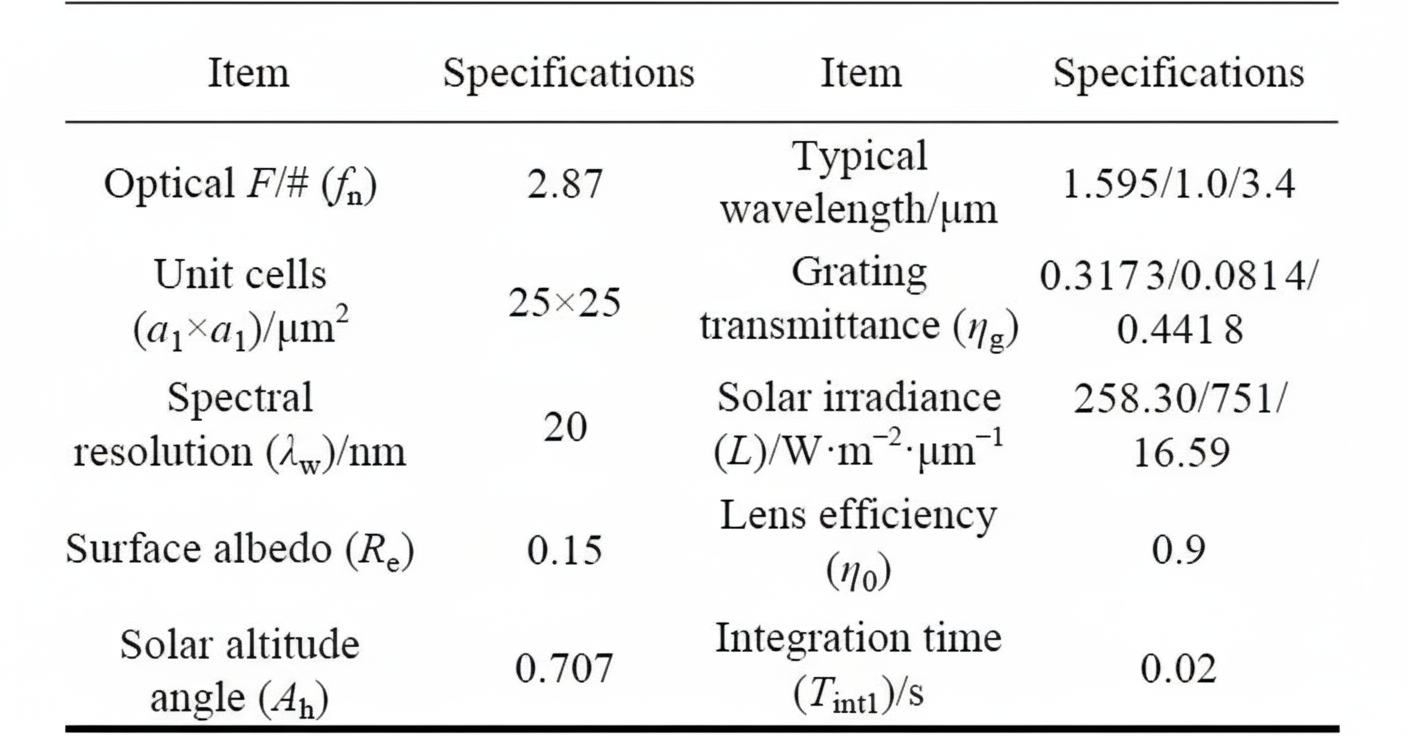
From the optical system requirements, the input photon energy at the detector inside the Dewar can be derived. For the overall SWIR focal-plane design, when the wavelength is 3.4 μm, the total noise equals that at the 1.595 μm band. A quantum efficiency (QE) of 0.3 was used (the QE requirement in this band is at least 30%). From the incident photon count the signal-to-noise ratio can be calculated.
Integrated Infrared Dewar
The MMS integrated Dewar provides the vacuum and cryogenic environment required for the infrared detector and serves as the optical interface to the instrument optical path. The focal plane detector, filter supports, filters, and cold aperture are mounted on the Dewar cold platform. The cold-platform mechanical support uses a high-strength single-point cold-finger structure plus inclined radial-support design for impact resistance, as shown in Figure 2. The Dewar design emphasizes three areas: 1) lightweight, impact-resistant integrated packaging; 2) in-assembly spectral splitting; and 3) nonstandard cold-platform geometry.
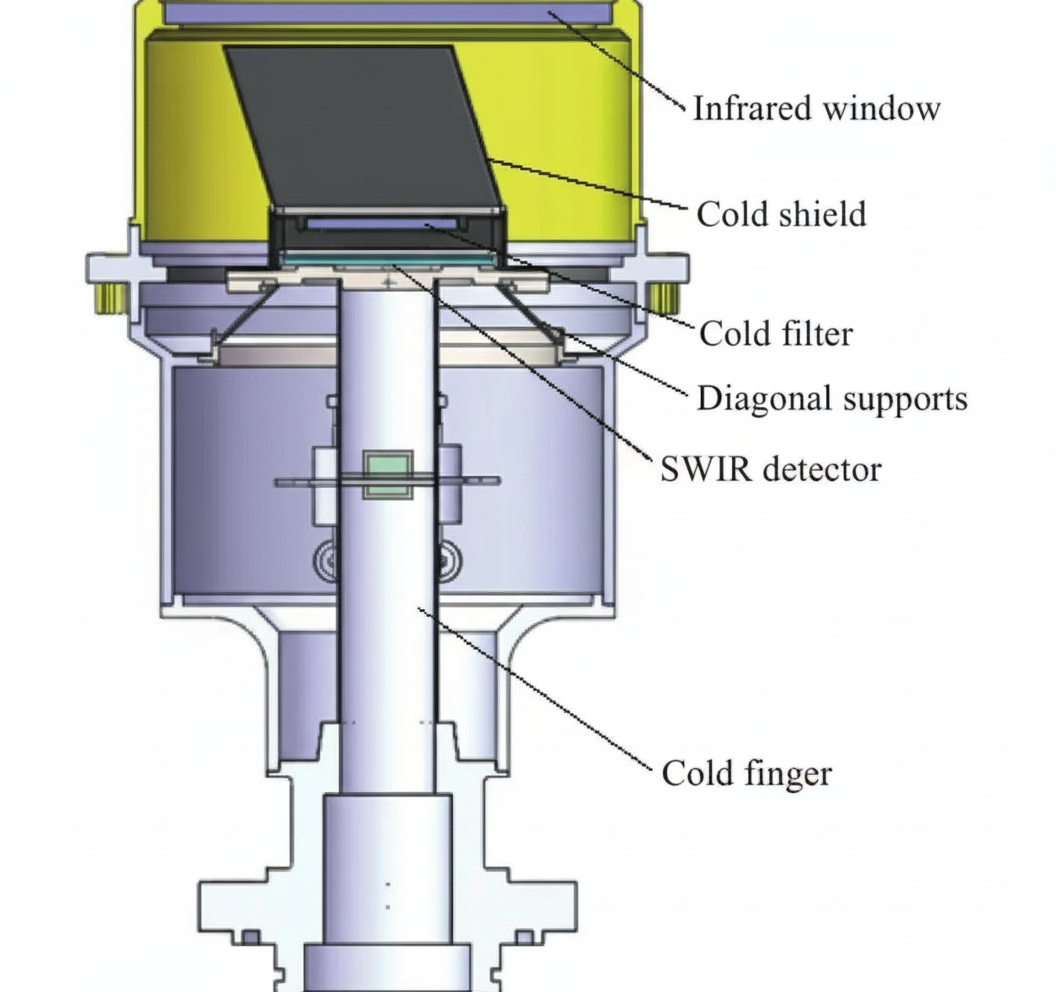
Figure 1 512×320 SWIR detector Dewar assembly structural design
The Dewar and detector must meet mission-specific mechanical requirements, including random vibration levels of 14 g rms (20–2000 Hz) and mechanical shock on the order of 1400 g. Cold-platform mass reduction and cold-shield lightweighting improve impact resistance and reduce cold-finger load, increasing post-environment mechanical margin.
Before topology optimization the cold platform mass was 10.74 g; after optimization it was 6.92 g. The cold shield was produced by electroforming with a thickness of 0.1 mm, reducing its mass by about half compared with a machined cold shield (about 2.57 g).
To achieve effective spectral splitting inside the Dewar while minimizing filter-frame obstruction and meeting miniaturization and integration requirements, a one-piece, three-band integrated substrate with partitioned coating was adopted. The design requirements are shown in Figure 3 (dimensions in mm). The filter coating regions A, B, and C correspond to the passbands listed in Table 1.
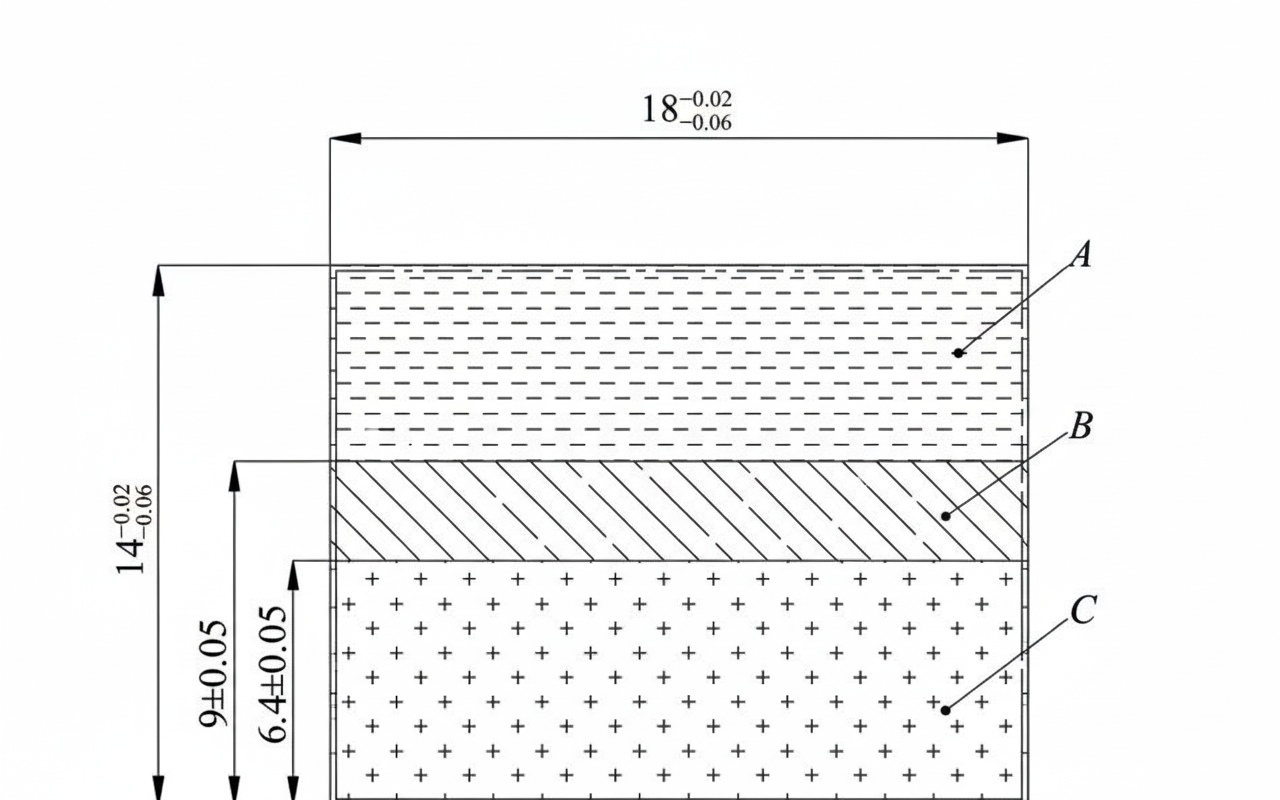
Figure 2 Filter partitioning design requirements
Because the spectrometer targets are weak, relatively long integration times are required. The MMS infrared detector typical integration time is 40 ms. If the detector is bonded directly to a circular cold platform, circular noise patterns can appear during the 40 ms integration.
Considering the separation of the Tianwen-1 orbiter and lander in Mars orbit, the detector assembly must withstand 1400 g shock. Therefore, the detector-coupling support cold platform requires a lightweight, integrated design. Figure 5 shows the cold-platform structure used to mount the detector; the central region uses a stress-isolation design that effectively eliminates thermal noise induced by cyclic motion of the cooler. Measured diameters of thermal-noise spots produced by different integrated coolers are about 0.83 times the cold-finger diameter. Reducing cooler fill pressure weakens the noise intensity. Thermal-noise generation is likely related to cyclic pressure variations caused by gas expansion in the cylinder acting on the cold platform.
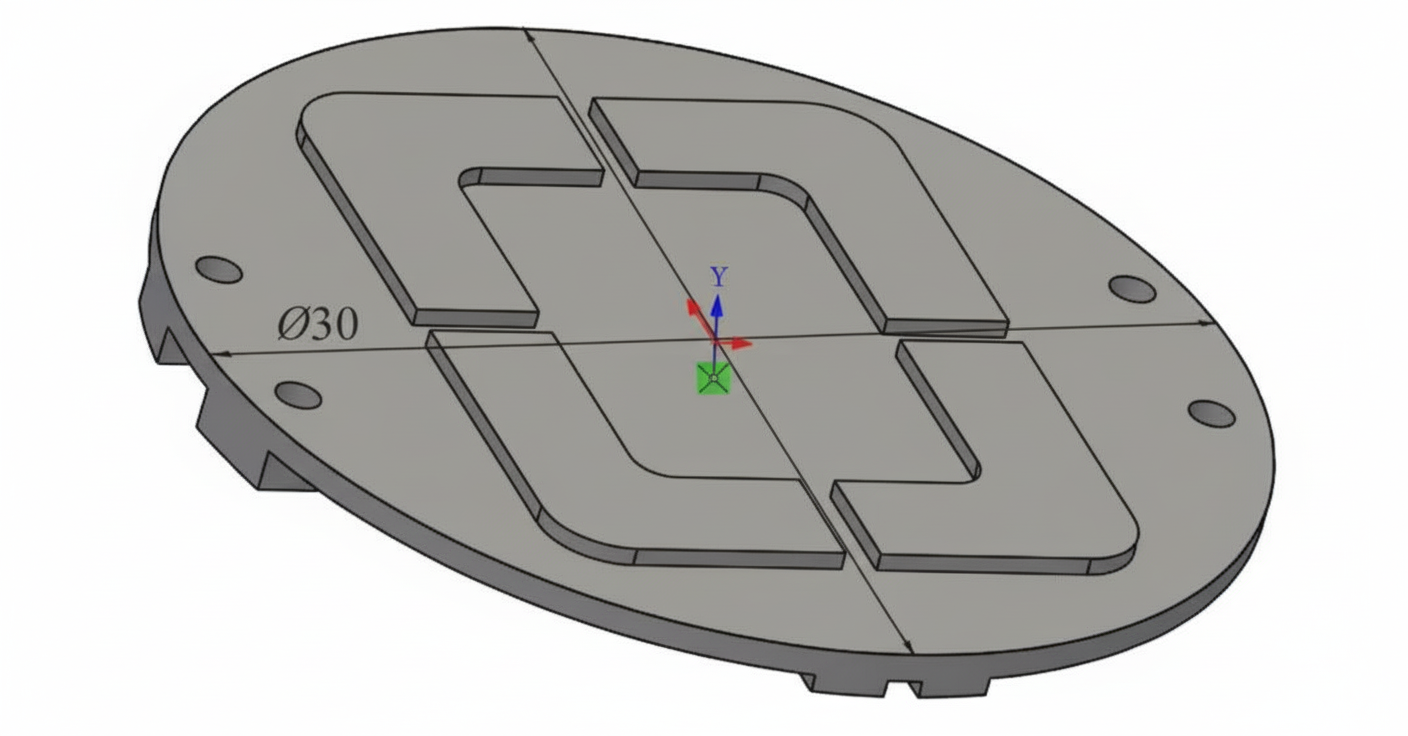
Figure 3 Noise-isolation cold-platform schematic
Integrated Cooler
The integrated assembly uses a monolithic Stirling cooler layout. A rotary motor drives both a compressor and an expander simultaneously; the control circuit uses a dedicated thick-film board. The motor, expander, and compressor are arranged orthogonally. The working fluid flows through connecting ducts between the compressor and expander, alternately compressing and expanding in the working spaces to achieve cooling. High-purity helium is used as the working gas. The cooler consists mainly of the cooler body, motor, and thick-film control circuit. The cooler was optimized for space application and uses a customized thick-film control circuit. The cooler assembly is shown in Figure 4.
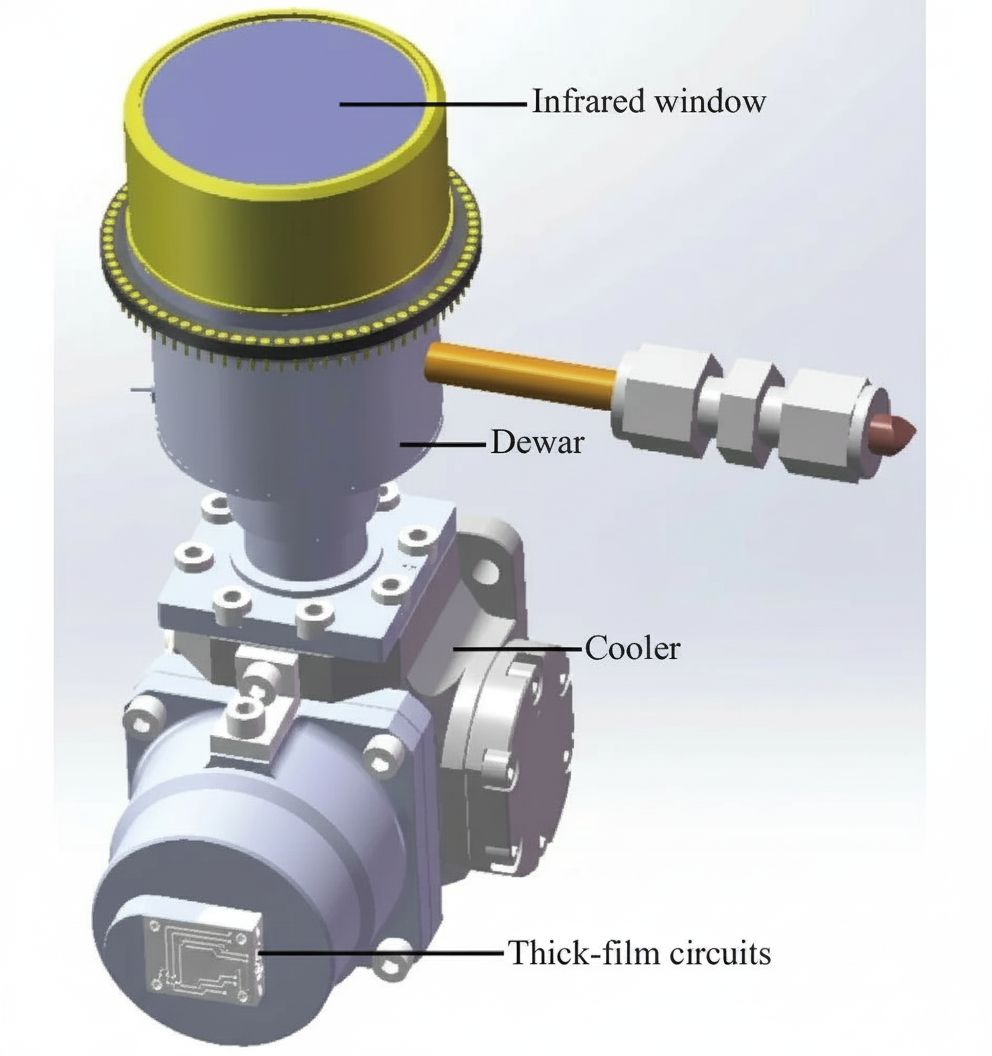
Figure 4 MMS integrated detector Dewar cooler assembly schematic
To meet space radiation-hardness requirements, the cooler control circuit was specially designed using multi-layer thick-film technology and a metal-sealed dual-row through-hole package to achieve high assembly density, small size, and high reliability. The final thick-film circuit dimensions (excluding flange) are 48 mm × 45 mm × 7 mm, mass 56 g.
Product Performance and Test Results
Using the developed key subsystems, a well-performing infrared focal-plane cooler assembly was produced.
Per the Mars mission environmental test requirements, the infrared focal-plane detector cooler assembly passed thermal tests including thermal cycling and thermal vacuum, and mechanical environmental tests including qualification-level sine vibration, random vibration, mechanical shock, and acceleration. Test results indicate normal detector operation and normal Dewar-cooler performance.
Cooling times were compared at different fill pressures: cooling start to stable control times are 12 min at 42 bar, 15 min at 32 bar, 18.5 min at 25 bar, and 24 min at 20 bar, as shown in the cooldown curves in Figure 5.
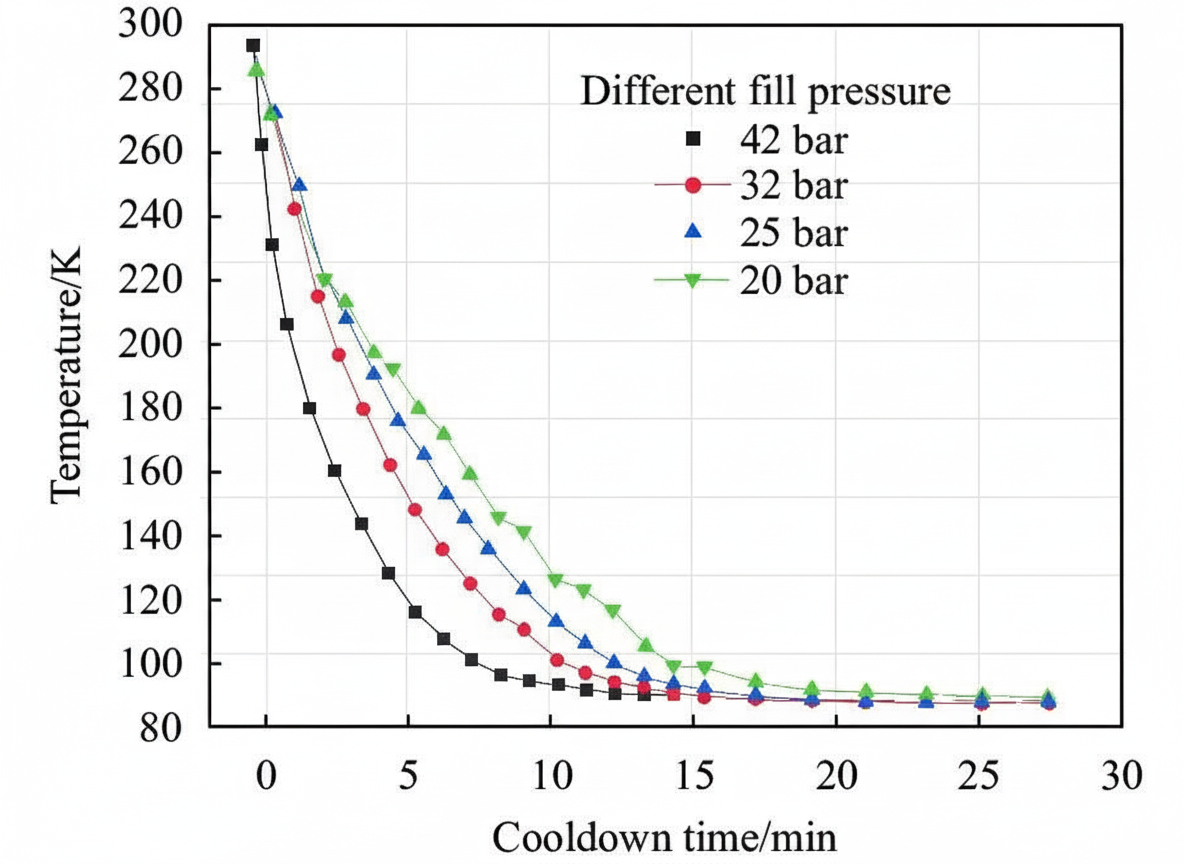
Figure 5 Cooldown curves of the integrated detector Dewar cooler assembly at different fill pressures
Conclusion
The integrated infrared detector Dewar cooler assembly offers compact structure, small volume, low mass, and low power consumption, which are advantageous for deep-space and interplanetary aerospace applications. This engineering development demonstrates important capabilities for aerospace components. The work focused on design and realization of key technologies including high-sensitivity, high-SNR focal-plane arrays, Dewar structures that mitigate noise during long integrations, and an integrated, long-life miniature cooler. A series of mechanical and thermal environment qualification tests were completed. With the successful launch and Mars orbital insertion of Tianwen-1, this research provides a reference for future deep-space infrared spectrometer component development.
This research was supported by the National Natural Science Foundation project (11427901).