Introduction
Underfloor heating is typically embedded in the floor, so fault diagnosis often requires breaking the floor, which imposes both time and financial costs. Infrared thermography, with its non-contact temperature measurement capability, can quickly locate faults without damaging the floor.
1. Types of underfloor heating
Underfloor systems are mainly classified by heat supply into low-temperature hot-water radiant floor heating (water-based) and electric heating cable radiant floor heating (electric).
Low-temperature hot-water radiant floor heating uses hot water at temperatures not exceeding 60°C circulating through heating pipes to warm the floor, supplying heat to the interior by radiation and convection.
Electric heating cable radiant floor heating uses low-temperature heating cables as the heat source to warm the floor, supplying heat to the interior by radiation and convection.
2. Common faults and thermography advantages
Underfloor heating can develop faults over time, such as leaks in water systems, abnormal heating of electric cables, scaling in supply pipes, or uneven floor temperature distribution. Traditional diagnostics often involve prying up flooring to inspect cables or pipes, which is time-consuming, costly, and often fails to reveal faults visible to the naked eye.
Infrared thermography helps address these issues because it can measure surface temperature without direct contact. By comparing temperature patterns, it can locate faults quickly, safely, and with lower cost and manpower requirements.
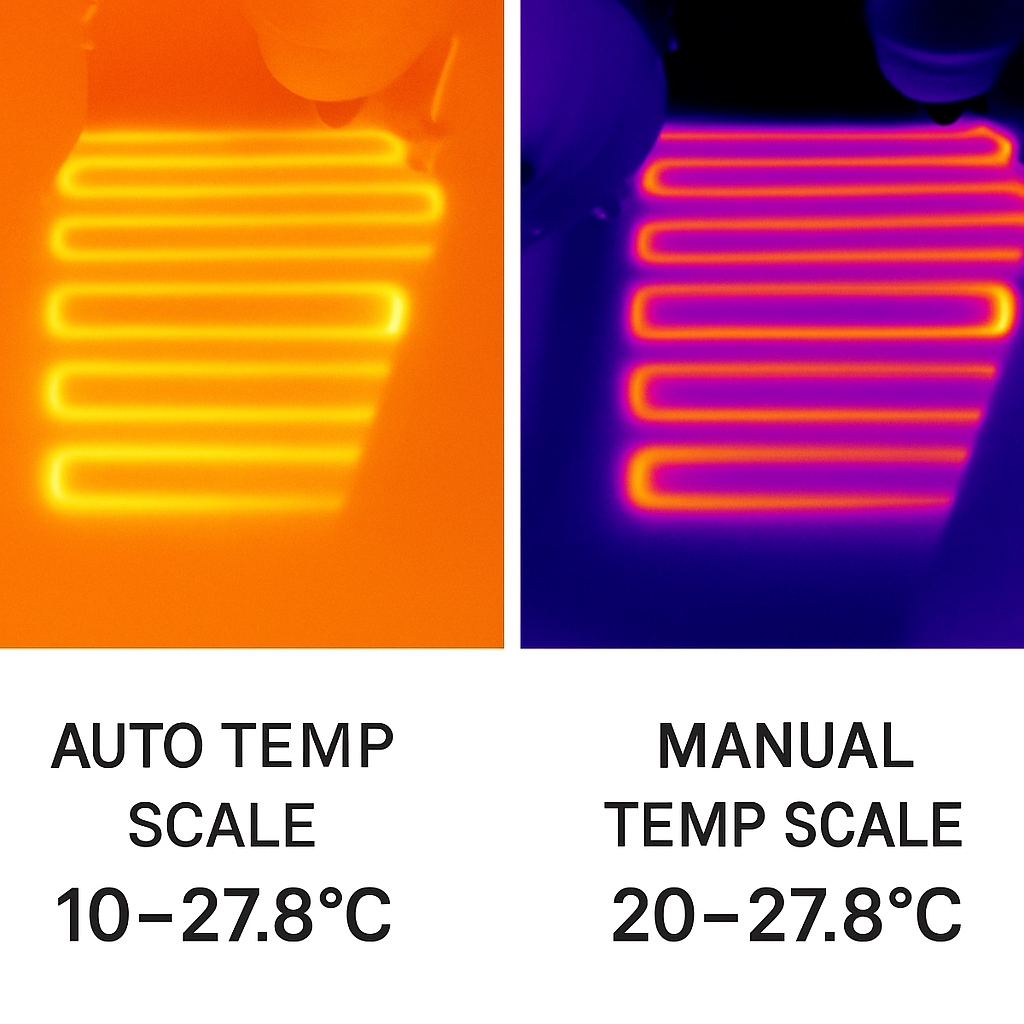
Underfloor heating thermal image
3. How thermography solves key diagnostic challenges
Abnormal heating of electric cables can lead to elevated cable temperatures and accelerated aging, reducing heating performance. Infrared inspection of electric underfloor systems enables early detection of such anomalies.
Scaling in supply pipes can reduce flow and impair heat transfer, lowering overall heating effectiveness. Infrared inspection can detect temperature anomalies caused by scaling, allowing early intervention.
Thermography easily reveals floor temperature distribution, enabling detection of uneven heating that leads to wasted energy and permitting timely corrective measures.
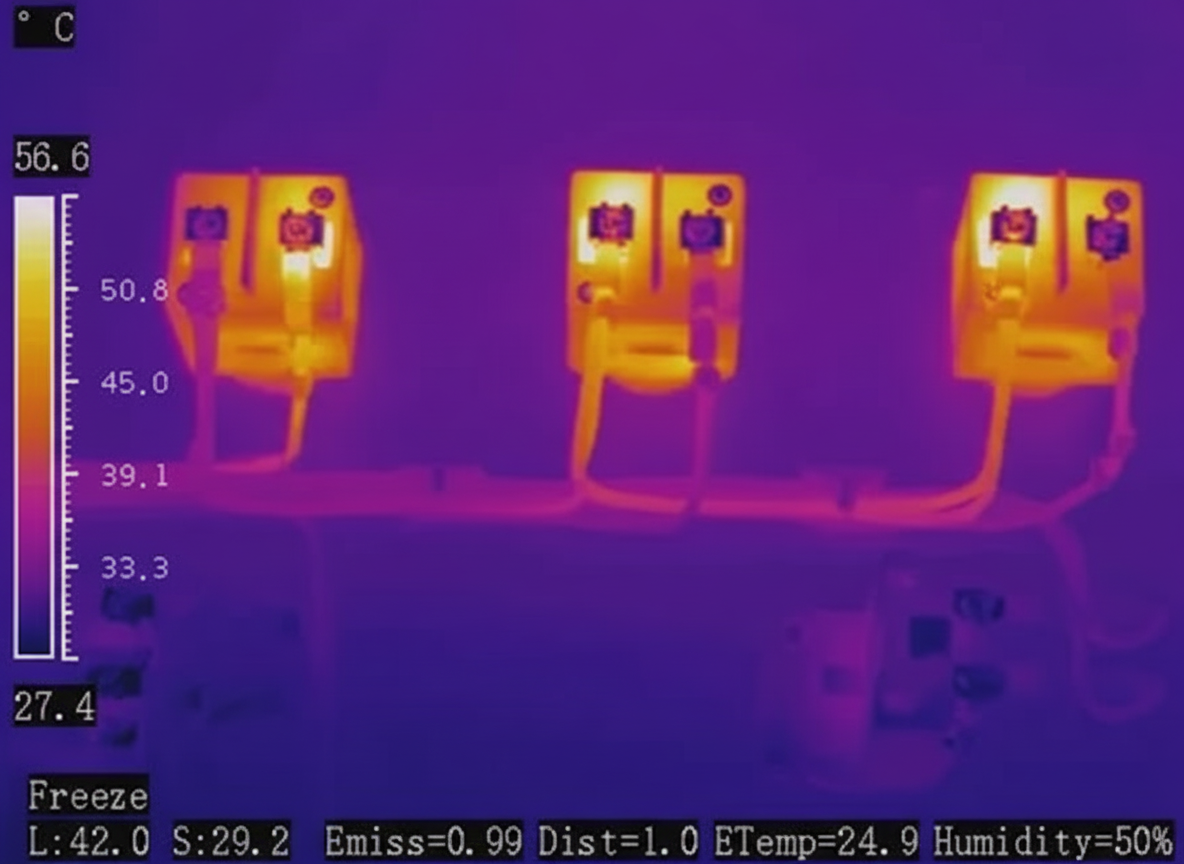
Underfloor heating electrical joint thermal image
In addition, thermography can be used to inspect temperatures of electrical components in the underfloor heating control system to identify risks such as overloads, short circuits, or open circuits, supporting preventive maintenance.