Background
Modern information-age warfare emphasizes battlefield transparency through multiple reconnaissance means. Infrared detection and radar are widely used, which has driven research into infrared and radar-compatible stealth. Compared with traditional infrared and radar-compatible materials, metamaterial-based solutions show superior performance in many aspects.
A recent paper in Materials Review reported work by researchers from the National University of Defense Technology and PLA Unit 96901 on metamaterial approaches to infrared/radar-compatible stealth. The study reviews principles and implementation routes, and summarizes progress on photonic crystal, absorbing metamaterial, and coding metasurface approaches, as well as development trends for these materials.
Principles and Implementation Routes for Infrared and Radar-Compatible Stealth
Infrared stealth aims to reduce the probability of detection by infrared detectors. Infrared detectors form images from infrared radiation emitted by objects, and detect locations with significant emission contrast relative to the background. Combat equipment and personnel usually emit stronger infrared radiation than the environment. Two basic approaches control infrared emission: regulating surface emissivity, and controlling surface temperature. For military targets, the objective is to minimize surface temperature and use materials with low infrared emissivity.
Radar detects targets by transmitting electromagnetic waves and receiving their reflections. Radar stealth seeks to reduce the probability of detection. Radar cross section (RCS) quantifies a target's ability to scatter incident electromagnetic energy toward the radar receiver. Reducing RCS decreases detection range and lowers discovery probability. Main RCS reduction methods include shaping to redirect scattered waves and radar-absorbing materials to absorb incident waves.
Infrared and radar-compatible stealth materials must perform in both bands simultaneously. However, different bands impose conflicting electromagnetic requirements. Infrared stealth requires low emissivity, which by Kirchhoff's law implies low absorptivity, while radar stealth generally requires high absorptivity to attenuate incident radar waves. This creates a fundamental contradiction in absorptivity requirements and constitutes a scientific challenge for compatibility. Research therefore focuses on minimizing mutual interference between infrared and radar stealth mechanisms. Two common implementation routes are: (1) develop a single multifunctional material that achieves low infrared emission and high radar absorption; (2) composite different materials that separately provide infrared and radar stealth while preserving each function after integration.
Because of the absorptivity contradiction, achieving compatibility with a single conventional material is difficult. Nevertheless, extensive research has explored single-material solutions. Common traditional material classes investigated include conductive polymers, nanomaterials, and doped oxide semiconductors.
Metamaterials are artificial structures comprised of subwavelength periodic or aperiodic unit cells. Their effective properties derive from unit-cell geometry rather than inherent chemical composition, enabling engineered electromagnetic responses not found in natural materials. The metamaterial concept has expanded to include electromagnetic metastructures, optical metamaterials, acoustic metamaterials, and mechanical metamaterials.
Electromagnetic metamaterials allow free design of effective electromagnetic parameters by adjusting unit-cell geometry, enabling control of phase, amplitude, and polarization of propagating waves. Photonic crystals are periodic arrangements of media with different dielectric constants that create photonic bandgaps, and are typically considered a branch of electromagnetic metamaterials. Absorbing metamaterials, also called metamaterial absorbers, combine metamaterial structures with dielectric substrates to achieve near-perfect absorption through impedance matching and resonant mechanisms. Compared with traditional absorbers, metamaterial absorbers offer reduced thickness, lower mass, stronger absorption, and tunable electromagnetic parameters. Coding metasurfaces introduce digital coding concepts into metasurface design by arranging unit cells with distinct phase responses to control electromagnetic scattering via designed coding sequences.
Photonic crystals, absorbing metamaterials, and coding metasurfaces share subwavelength artificial periodic structures and design-driven electromagnetic control, but differ in mechanism: photonic crystals control reflection and transmission via bandgap engineering; absorbing metamaterials use impedance matching and resonances for high absorption; coding metasurfaces manipulate reflection phase to control scattering. Because metamaterials enable flexible wave control, they have become increasingly valuable for stealth applications and offer new design strategies for infrared and radar compatibility.
Metamaterial-Based Infrared and Radar-Compatible Stealth Materials
Photonic Crystal-Based Approaches
Photonic crystals are periodic structures of materials with differing dielectric constants that produce photonic bandgaps. Photonic bandgap regions reflect strongly, while passband regions transmit. By designing material composition, dielectric constants, and lattice parameters, bandgap positions can be tuned. If the bandgap is engineered into infrared detector bands, infrared emission can be suppressed to achieve infrared stealth. Designing photonic crystals using radar-transmissive materials is a common route to combine infrared suppression with radar transparency.
For example, Wang et al. used transfer-matrix methods to study transmission in structures made by alternating Ge and ZnS layers of different thicknesses, and developed a one-dimensional double-heterostructure composite photonic crystal (CPC). A cross-section SEM image of the CPC sample shows the multilayer structure. Later work proposed multilayer photonic-crystal-based cloaks composed of an optical infrared composite layer and a flexible radar-absorbing base layer. Integration of a plasma layer for radar stealth with a photonic-crystal thin film that permits radar transmission enabled combined infrared and radar-compatible stealth.
Photonic crystals have also been used for multispectral compatibility including visible and laser bands. Their strong designability and tunability make them attractive for infrared stealth. Combining microwave-transmissive materials with radar-absorbing materials can yield IR and radar compatibility. Using spectral hole engineering and thin-film interference, photonic crystals can also be designed to be compatible with laser and visible-band stealth. However, photonic crystals impose strict requirements on material systems, many semiconductor materials remain costly, and large-scale manufacturing is expensive. Film thickness and uniformity critically affect performance, posing fabrication challenges. Current research is concentrated on one-dimensional photonic crystals; expanding to two- and three-dimensional photonic crystal designs would broaden application potential.
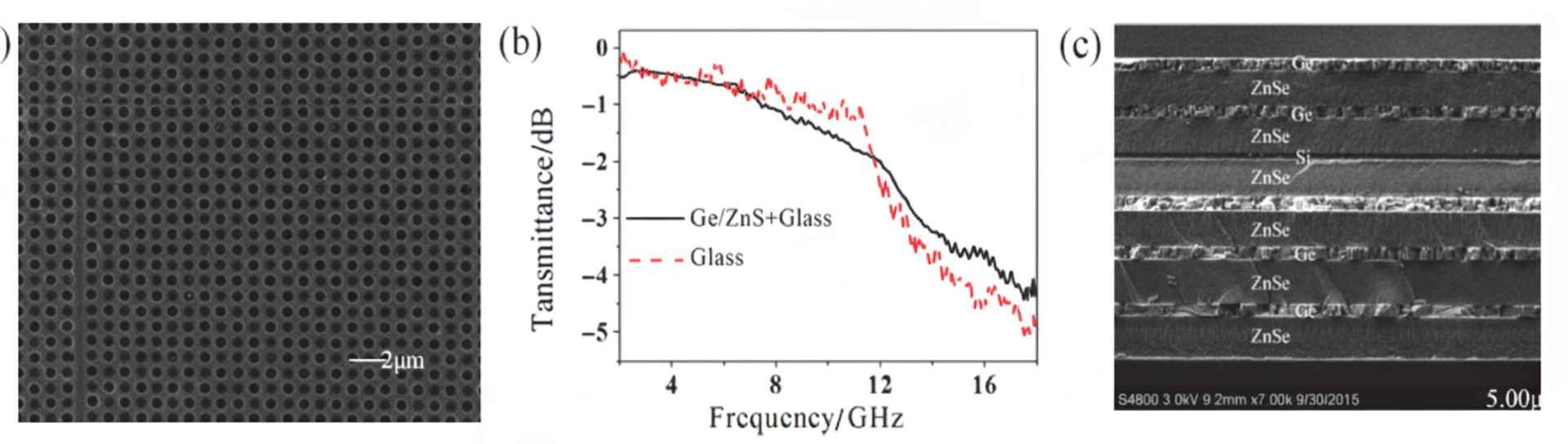
Figure 1: (a) Cross-sectional SEM image of CPC sample; (b) transmission comparison between glass-based CPC and glass substrate from 2 to 18 GHz; (c) microstructure of the doped one-dimensional photonic crystal.
Absorbing Metamaterial Approaches
Absorbing metamaterials achieve near-perfect absorption of incident electromagnetic waves via impedance matching and electromagnetic resonances. Landy et al. first designed a GHz-band metamaterial absorber approaching 100% absorption, with unit cells containing electric and magnetic resonators that couple to the electric and magnetic fields respectively. Such absorbers efficiently attenuate incident waves, significantly reducing backscatter and lowering RCS for radar stealth.
In 2013, Tian et al. proposed covering radar absorbers with a microwave-transmissive and infrared-reflective frequency-selective surface (FSS) to achieve infrared and radar compatibility. An FSS is a two-dimensional periodic structure that can be engineered as a bandpass or bandstop spatial filter for specific frequency bands, and is a type of metamaterial often used for radar antenna radomes. In 2019, Liu et al. designed a capacitive FSS using an Ag/Ge thin-film stack with selective infrared radiation characteristics and integrated it with a radar-absorbing layer, producing selective infrared emissivity (low in 3–5 μm and 8–14 μm, high in 5–8 μm) while maintaining high absorption in X and Ku radar bands. In the same year, Kim et al. used a layered metamaterial (HMM) to combine infrared selective emission with radar absorption. Layers I and II form an infrared selective emitter that lets microwaves pass into a microwave-absorbing assembly formed by layers II and III, achieving high microwave absorption after transmission. The HMM showed a 1570% higher emissivity in 5–8 μm compared with Au, and feature signal reductions of 95% in 8–12 μm infrared and 99% in a microwave band around 2.5–3.8 cm.
Subsequent groups explored flexible, transparent, and multispectral designs. Zhang et al. proposed a flexible transparent IR and radar-compatible structure that simultaneously achieved high microwave absorption, low IR emissivity, and optical transparency. Feng et al. proposed a layered metamaterial that combined a full-metal metasurface array with a microwave absorber; the metasurface acted as an IR shield and microwave-transmissive layer while redirecting reflected energy to non-specular angles, reducing mirror-like reflection at 1.06 μm laser wavelength below 5%, thus extending compatibility to laser stealth.
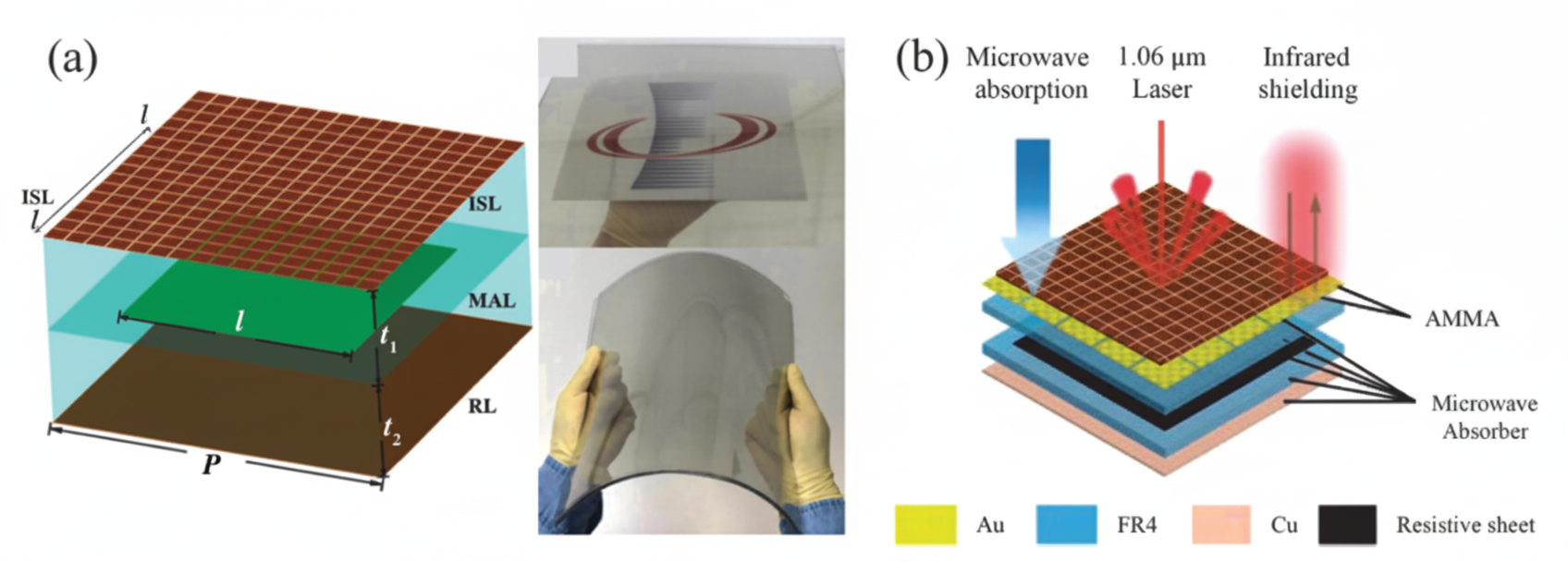
Figure 2: (a) IR and radar dual-stealth structure schematic and sample image; (b) HMM working principle showing incident microwave, reflected IR, and scattered incident laser in the upper half-space.
To simplify overall structures, Xu et al. proposed an optically transparent ITO/dielectric/ITO sandwich structure that achieves IR and radar compatibility without a separate IR stealth layer. Zhu et al. extended IR and radar compatibility toward multispectral compatibility with a Ge/ZnS multilayer designed to operate across visible, infrared, and laser bands.
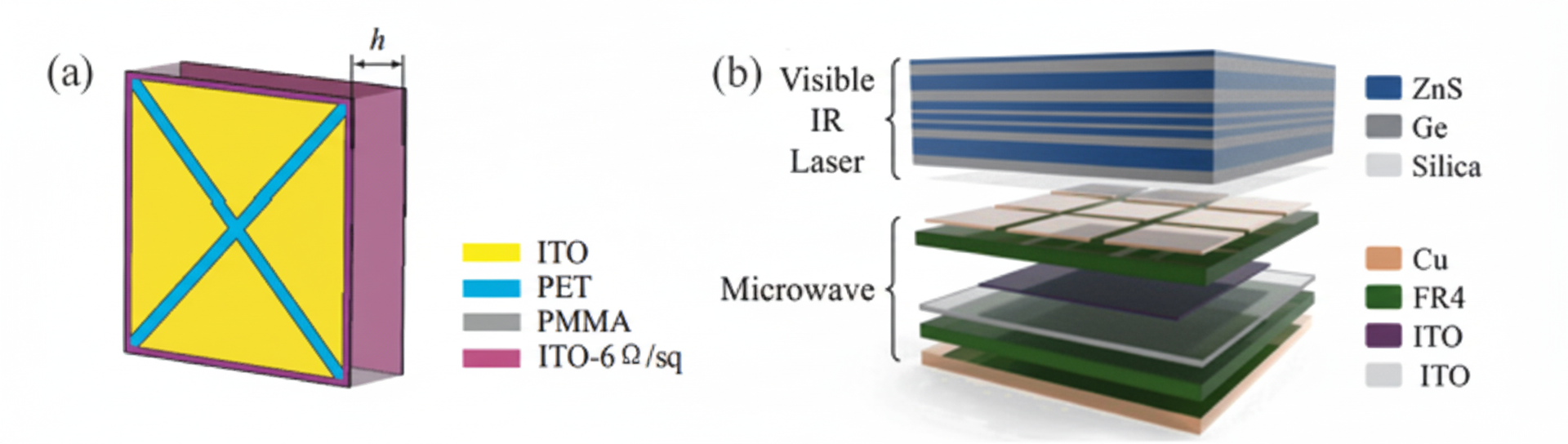
Figure 3: (a) Integrated IR and radar-compatible structure schematic; (b) multispectral-compatible stealth structure schematic.
In addition to low-emissivity materials, some works achieve IR control by regulating temperature. Shen et al. proposed a water-based transparent metamaterial absorber with a circulating water system that tunes injected water temperature to realize tunable infrared emission, enabling broadband radar absorption with tunable IR compatibility. Li et al. proposed a water-based optically transparent structure combining low IR emission and switchable broadband radar absorption/reflectance.
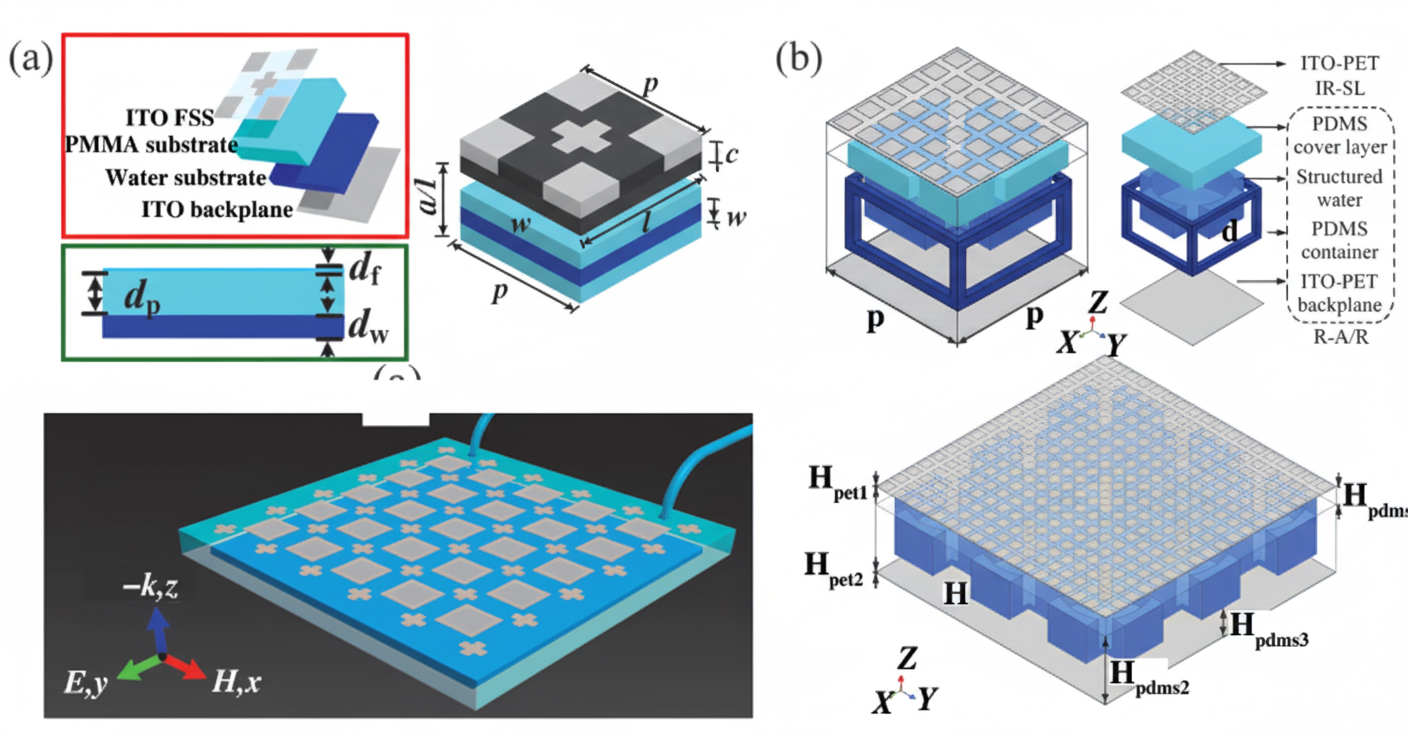
Figure 4: (a) Transparent water-based metamaterial absorber schematic; (b) optically transparent water-based broadband switchable radar absorber/reflector with low IR emission.
Coding Metasurface Approaches
Radar stealth can also be achieved by shaping scattered waves rather than absorption. Paquay et al. showed that arranging artificial magnetic conductor (AMC) and perfect electric conductor (PEC) unit cells in a checkerboard pattern, with opposing reflection phases, results in phase cancellation and RCS reduction. In 2019, Xie et al. proposed a high-temperature-tolerant metasurface composed of subwavelength metal gratings with spatially varied orientations to achieve infrared and radar-compatible stealth. The metallic metasurface leverages inherent metal properties for high-temperature resistance and low IR emissivity, while spatial layout of differently oriented gratings reduces RCS; measured performance validated RCS reduction and IR emission control.
Zhong et al. combined random metal grids with coding metasurfaces to design a random-grid coding metasurface that maintains high transmittance from visible to infrared while providing flexible microwave control. Liu et al. designed a unit composed of an infrared shielding layer (ISL) and a microwave anomalous reflection layer (MARL) that together provide low IR emissivity and low microwave reflection. The unit and supercell designs, as well as simulated reflection amplitude and phase for component units, demonstrate control over both spectral ranges.
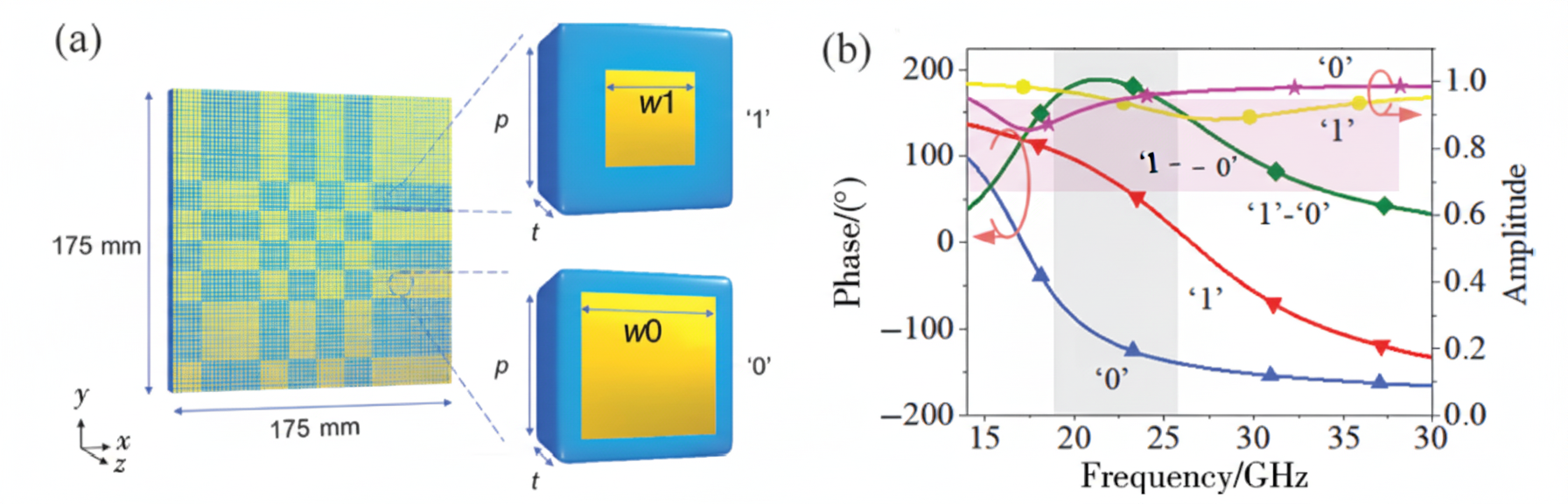
Figure 5: (a) Random metal grid coding metasurface schematic; (b) reflection phase and amplitude of digital units '0' and '1'.
Trends and Challenges
As research progresses, metamaterial-based IR and radar-compatible stealth materials show these trends: (1) enhanced compatibility performance, expanding from broadband IR emissivity control (3–14 μm) to temperature control and selective IR emission, while radar absorption bandwidth increases; (2) expanded multispectral compatibility, including visible transparency, color change, and laser stealth; (3) integrated designs that simplify structure and reduce complexity. Compared with traditional materials, metamaterial-based solutions generally exhibit superior radar absorption bandwidth and lower IR emissivity, and offer advantages for visible and laser compatibility.
However, most metamaterial research remains at laboratory scale. Common fabrication methods such as photolithography, planar etching (ion beam, electron beam, X-ray etching), screen printing, and 3D printing face issues of high cost, complex processes, and strong dependence on high-precision equipment, which limit broader application. Advancing high-precision manufacturing, lowering production cost, and improving stability under operational conditions are necessary for practical deployment.
With rapid development of artificial intelligence detection techniques, threats to platforms have increased, making spectrally tunable stealth essential. Tunable metamaterials, phase-change materials, and electrochromic/emissivity-switching devices have advanced rapidly, but most infrared and radar-compatible stealth research still focuses on static camouflage. Once designed and fabricated, infrared emissivity and radar absorption characteristics are fixed, limiting applicability to specific background environments. Therefore, spectrally tunable dynamic IR and radar-compatible materials will be a future research focus.
Conclusion
Metamaterial-based infrared and radar-compatible stealth materials offer improved compatibility performance compared with traditional approaches, with strong designability and high degrees of freedom. Nevertheless, challenges remain in material stability, fabrication cost, and manufacturing processes that must be addressed before widespread engineering application. Considering future detection capabilities, spectrally tunable multispectral stealth materials will present broad research opportunities.