An oscilloscope is a common electronic measurement instrument used to observe changes in electrical signal waveforms. It is mainly composed of three parts: a vertical signal amplifier, a horizontal sweep generator, and a display tube. The oscilloscope's working principle is that the vertical signal amplifier amplifies the input electrical signal to a certain amplitude, the horizontal sweep generator converts the amplified signal into the position of a light spot on the screen, and the display tube shows the light spot position to form the waveform. This article briefly introduces oscilloscope technical features, usage methods, and application areas.
Technical characteristics
1. High sensitivity: Sensitivity refers to the smallest voltage change the oscilloscope can measure. Sensitivity is typically expressed in V/cm. Higher sensitivity allows detection of smaller signal changes and reduces measurement error.
2. Bandwidth: Bandwidth refers to the highest frequency signal the oscilloscope can effectively measure. Larger bandwidth extends the measurable frequency range and improves the ability to measure high-frequency signals.
3. Sampling rate: Sampling rate is the number of samples the oscilloscope takes per second, measured in Hz. Higher sampling rates provide more accurate signal reconstruction and allow finer observation of signal details.
4. Triggering: Triggering lets the oscilloscope start acquisition automatically based on user-defined conditions. Triggering helps locate signals of interest quickly and improves measurement efficiency.
5. Versatility: An oscilloscope can measure analog signals and digital signals. In addition, oscilloscopes often offer storage, display, and printing functions, facilitating analysis and processing of measurement results.
How to use
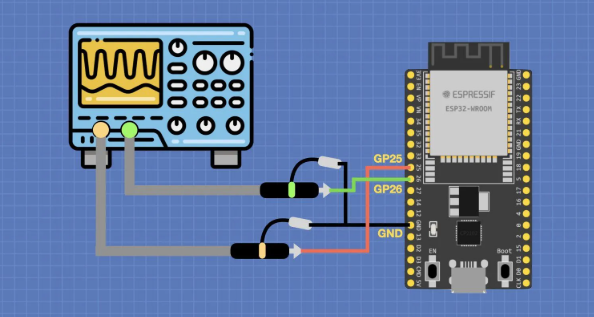
1. Connect the power and the signal source: First connect the oscilloscope power cord to the power supply, then connect the signal source output port (for example, a probe or a function generator) to the oscilloscope input port.
2. Set the trigger conditions: Configure the trigger conditions as needed. Trigger conditions can be based on time, voltage, waveform, etc. Once set, the oscilloscope will start acquisition when the conditions are met.
3. Adjust vertical and horizontal controls: To clearly observe the waveform, adjust the vertical and horizontal controls so the waveform occupies a suitable position on the screen.
4. Observe and analyze the waveform: After parameter adjustment, observe and analyze the waveform. If waveform data needs to be saved, export the oscilloscope data to a computer for further processing.
Application areas
1. Electronic design: During electronic product design, oscilloscopes are widely used for circuit debugging and testing. Observing signal waveforms in a circuit helps determine operating status and identify and resolve problems.
2. Communication engineering: In communication systems, oscilloscopes are used to observe modulator and demodulator output waveforms to assess system performance. Oscilloscopes also observe transmit and receive waveforms of wireless communication equipment.
3. Educational labs: In electronics laboratory courses, oscilloscopes teach students basic methods for observing and analyzing electrical signal waveforms. Laboratory exercises help students understand fundamental electronic principles and applications.
4. Repair and diagnostics: In equipment repair, oscilloscopes are used to locate faults in circuits. Observing waveform changes helps identify causes of failures and supports targeted repairs.
In summary, oscilloscopes are important electronic measurement instruments with broad applications in electronics. Understanding their working principle and technical characteristics and mastering correct usage methods enables effective application of oscilloscopes in research and practice.