Overview
An oscilloscope is an instrument used to measure and display electrical signal waveforms. It is commonly used in electronic engineering, communications engineering, and related fields. The display shows parameters such as amplitude, frequency, and phase, making the oscilloscope an essential tool for circuit debugging and fault diagnosis.
1. Basic principle
An oscilloscope displays electrical waveforms by converting the measured voltage into a visual representation on the screen. A probe contacts the circuit under test and picks up the electrical signal, which is then conditioned and amplified by the oscilloscope. The processed signal is rendered on the display so that engineers can observe amplitude, frequency, and phase relationships for circuit analysis and troubleshooting.
2. Main components
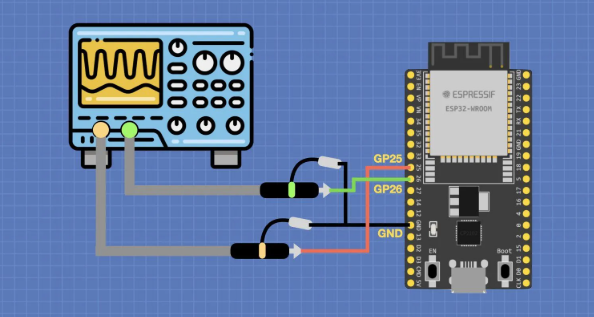
1. Probe: The probe interfaces the oscilloscope with the circuit under test. It converts the circuit signal into a voltage suitable for the oscilloscope input and transmits it for processing. A typical probe includes a contact tip for the signal connection and a ground clip for the circuit ground.
2. Vertical deflection system: This includes the vertical sweep generator, vertical deflection coils, and vertical position sensor. The vertical sweep generator produces a periodic waveform that drives the deflection coils. The resulting magnetic field changes are translated by the position sensor into vertical movement of the trace on the display, producing vertical deflection that corresponds to signal amplitude.
3. Horizontal deflection system: This includes the horizontal sweep generator, horizontal deflection coils, and horizontal position sensor. The horizontal sweep generator produces a periodic waveform that drives the horizontal deflection coils. The resulting changes are translated by the position sensor into horizontal movement of the trace, corresponding to time base or sweep.
4. Control circuitry: Control circuitry manages the operation of the vertical and horizontal deflection systems and provides functions such as scaling, smoothing, and adjustments. Modern control circuits typically include a microprocessor and memory to implement more complex functions and algorithms.
3. Types and application areas
Oscilloscopes are available in several types to suit different use cases, including digital oscilloscopes, analog oscilloscopes, and storage oscilloscopes. Digital oscilloscopes offer higher accuracy and more features and are widely used in electronic and communications engineering. Analog oscilloscopes are mainly used for testing and analyzing analog circuits. Storage oscilloscopes are used when signal capture and later analysis are required. There are also specialized oscilloscopes for particular tasks, such as CRT-based displays or models with infrared temperature measurement features.
4. Usage precautions
When using an oscilloscope, observe the following:
1. Select the appropriate probe: Different probes are suited to different signal types and measurement requirements, so choose the probe that matches the characteristics of the circuit under test.
2. Ensure correct connections: Probe connections to the circuit must be correct to avoid inaccurate measurements or damage to the probe.
3. Set an appropriate trigger: Triggering determines when the oscilloscope begins acquiring data based on the input signal level or condition. Different trigger modes are suitable for different signal types, so select the trigger that fits the measurement scenario.
4. Observe safety: Take precautions to avoid electric shock or equipment damage. Follow relevant operating procedures and standards to ensure measurement accuracy and reliability.