Spectrum analyzers are used by RF engineers to test and analyze components in wireless transceiver systems. Beyond common measurements such as gain, harmonics, spurious, and intermodulation distortion, modern spectrum analyzers offer additional functions. The following sections describe these functions and their applications in RF engineering.
1. Measuring Occupied Bandwidth
In wireless communication systems, evaluating occupied bandwidth is an important engineering task. A spectrum analyzer can measure occupied bandwidth via the measurement-OBW path, typically calculating the bandwidth that contains 99% of the signal power within the band. This measurement helps guide system optimization.
2. Measuring Peak-to-Average Power Ratio (PAPR)
PAPR is an important metric for assessing whether a transmitter's EVM (bit error rate) meets requirements. The CCDF (complementary cumulative distribution function) function in a spectrum analyzer is used to measure PAPR, assisting engineers in verifying transmitter performance and optimizing system design.
3. Spurious Suppression Testing
Spurious suppression is a key parameter for RF systems, evaluating the level of emissions outside the main signal. A spectrum analyzer can perform precise spurious measurements, but results depend on factors such as the type of detector and the number of measurement points.
4. Vector Signal Analysis
Maintaining signal fidelity through RF channels is a core objective. Spectrum analyzers with vector signal analysis capabilities can evaluate deviations introduced by the RF path, including amplitude and phase errors, EVM, and constellation diagrams, helping engineers optimize RF channels and improve signal quality.
5. Measuring Device Noise Figure
Historically, measuring a device noise figure with a spectrum analyzer required the device under test to have a minimum gain. Modern spectrum analyzers can measure environmental noise directly without additional prerequisites. Enabling the amplitude--preamplifier function allows engineers to measure noise figure accurately for performance assessment and troubleshooting.
6. Testing Power Amplifier Ramp-Up Time
Spectrum analyzers can also measure power amplifier ramp-up time. By configuring trigger mode, trigger threshold, and trigger delay parameters, engineers can accurately measure amplifier response time and evaluate performance.
7. Other Integrated Functions
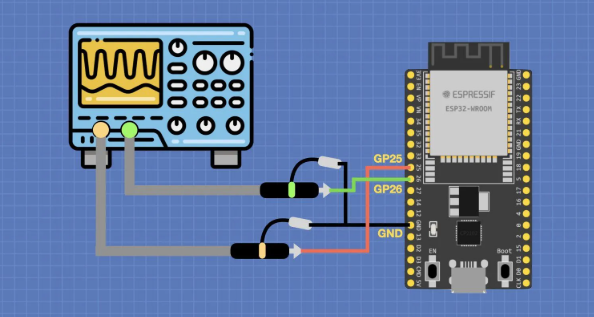
Modern spectrum analyzers often integrate oscilloscope, signal analysis, and vector analysis capabilities, expanding their application range. They can be used to analyze and characterize system distortion, providing a more comprehensive assessment of signal quality and system performance.
Spectrum analyzers support occupied bandwidth measurement, PAPR testing, spurious suppression evaluation, vector signal analysis, device noise figure measurement, and power amplifier ramp-up time measurement. These functions provide engineers with more comprehensive and accurate RF test methods for system design and performance evaluation. As instrumentation technology evolves, spectrum analyzer capabilities are likely to continue expanding.