Introduction
With rising living pressures and an aging population in China, more elderly people are living alone. When such individuals experience sudden conditions like cardiac events or hypertension, they often suffer impaired consciousness, loss of mobility, or falls. In many cases the patient cannot initiate an emergency call, which may cause missed treatment windows. This article describes a GSM-based remote medical automatic emergency alert system designed to assist elderly people living alone.
System Description
The GSM-based remote medical emergency alert system consists of multiple slave nodes and a single master station. The network topology is shown in Figure 1. Each slave node comprises several medical monitoring devices, a controller, and a GSM module to monitor vital signs and transmit them wirelessly. The master station communicates with slave nodes via GSM modules, analyzes received data, and provides references for subsequent medical assistance.
Wearable slave nodes periodically wake the monitoring devices to sample the user’s vital signs. The slave node controller compares the measurements with preconfigured normal ranges. If a value falls outside the normal range, the controller uses the GSM module to send the user ID (to identify individual users) and current vital signs to the master station (medical provider), and simultaneously sends an alert to the user’s relatives' mobile phones. The master station can retrieve the user's medical history using the user ID and combine that with current vital signs to formulate an appropriate response.
Hardware Design
Typical slave node hardware includes an electronic blood pressure monitor, a fall-detection module, a GSM module, and a microcontroller (CPU). The master station includes a GSM module, a microcontroller (CPU), and display and alarm circuitry (or a serial interface to a computer). The system hardware block diagram is shown in Figure 2.
Monitoring devices should be selected according to the subject being monitored. This design focuses on common conditions among the elderly, such as cardiac disease and hypertension, so it uses an electronic blood pressure monitor and a fall-detection module. To reduce power consumption and the frequency of battery replacement in the slave node, an MSP430 series ultra-low-power microcontroller is used.
Wireless Communication Module
The design uses Siemens TC35 wireless data transmission module, which supports reliable data, voice, and SMS services. The module integrates RF and baseband circuitry, operates at 3.3-5.5 V, and supports 900 MHz and 1800 MHz bands. It provides a standard AT command interface for application development and an RS232 data interface for serial communication with a microcontroller.
Microcontroller and GSM Interface
The system uses an MSP430 series microcontroller. This ultra-low-power mixed-signal controller integrates a rich set of on-chip and off-chip peripherals, minimizing circuit complexity, power consumption, and size.
The microcontroller and the GSM module connect via a MAX232 level-shifting interface (MAX232 provides drive capability without additional drive circuitry). Note that communication between master and slave nodes is bidirectional and slave nodes are distinguished by user address codes. Slave nodes do not communicate directly with each other.
Fall Detection Module
The system uses the GY-29-ADXL345 digital accelerometer module for fall detection. The module centers on the low-power 3-axis ADXL345 accelerometer, with a measurement range up to ±16 g and 16-bit two's complement digital output. It is accessible via SPI or I2C interfaces. It can measure static gravitational acceleration for tilt detection and dynamic acceleration from motion or impact, with high resolution capable of detecting tilt changes smaller than 1.0°.
Fall detection is based on measuring acceleration changes along three orthogonal axes during user movement to infer body posture changes and determine whether a fall has occurred.
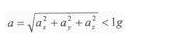
The resultant acceleration during a free-fall event decreases and is roughly proportional to the fall height, which helps assess fall severity. After a fall, the body typically remains briefly motionless; if unconsciousness occurs, the motionless period may be longer. A fall induces a rapid change in posture compared with the previous instant. In this system, fall detection is determined using the current resultant acceleration, the change in posture between consecutive samples, the duration that the resultant acceleration remains below 1 g, and the duration of the subsequent motionless state to assess fall severity.
Vital Signs Monitoring
Considering common conditions such as cardiac disease and hypertension, the system uses a PAL-901 wrist electronic blood pressure monitor to measure vital signs. The monitor measures heart rate, systolic pressure, and diastolic pressure, and outputs measurement data via a serial port as a 6-byte packet at 19,200 bit/s with a 2.8 V signal level. The device is compact and battery-powered, making it convenient for wearable use.
Software Design
Communication Protocol
Wireless transmissions can suffer frame loss or bit errors due to weather, interference, and noise. To ensure reliable transmission, a communication protocol is required.
The GSM data frame used in this system consists of a frame header, user address code, fall flag, vital signs data, and CRC checksum. The GSM data frame structure is shown in Figure 4.
In practice, the probability of noise producing the specific pattern 1111111100000000 is very low, so 0xFF and 0x00 are used as the frame header to avoid false reception. A one-byte address code distinguishes different user slave nodes. CRC is used for error detection. The receiver treats a frame as valid when it detects 0xFF followed by 0x00. If the CRC is correct, the frame is accepted; otherwise it is discarded.
Program Flow
The program flow for the GSM-based remote medical emergency alert system is shown in Figures 5 and 6.
Slave nodes periodically wake the blood pressure monitor to collect vital signs and compare them with predefined normal values. If a value is outside the normal range, the slave node sends the user ID and current vital signs to the master station via the GSM module and sends an alert to the user's relatives' mobile phones. Upon receiving data, the master station verifies data validity and integrity, then issues an alarm and displays the user ID and vital signs if validation succeeds.
Conclusion
This design presents a GSM-based remote medical automatic emergency alert system. It uses accelerometer sensors to capture fall signatures and proposes a fall-detection algorithm. Vital signs are monitored with an electronic blood pressure monitor, and GSM wireless modules are used for data transmission and alerting. The system is portable, reliable, and supports long-range communication, offering a practical solution for medical assistance to elderly people living alone.